






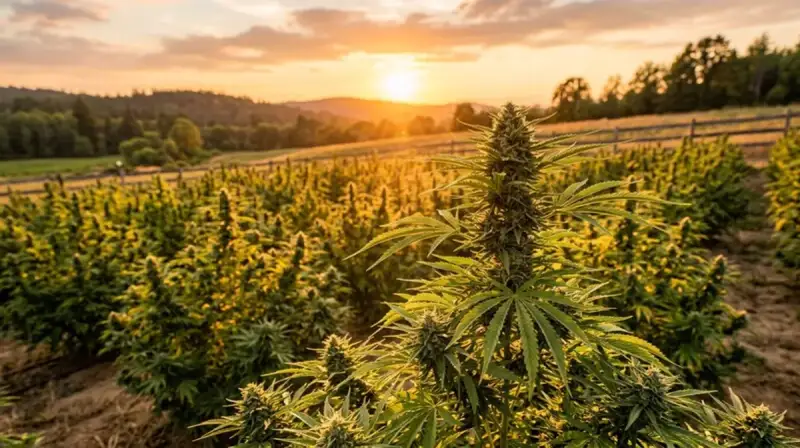
Quick Comparison: Key Findings
- Origin: Equatorial regions (Colombia, SE Asia, Africa)
- Plant height: Very tall (2–4m outdoor)
- Leaf shape: Long, narrow, light green
- Flowering: 10–16 weeks
- Primary terpenes: Terpinolene, limonene
- Effect tendency: Cerebral, uplifting, energizing
- THC range: Varies widely (8–30%)
- Origin: Intentionally crossbred (any region)
- Plant height: Variable (60cm–2m+)
- Leaf shape: Variable (sativa-like to indica-like)
- Flowering: 8–10 weeks typically
- Primary terpenes: Any — breeder-determined
- Effect tendency: Balanced, customizable
- THC range: Varies widely (10–30%+)
The Origins of Sativa and Hybrid Classification
What a True Sativa Is
Cannabis sativa as a botanical classification refers to plants originating from equatorial regions — Thailand, Colombia, Mexico, Jamaica, Central Africa. These plants evolved to thrive in hot, humid climates with long growing seasons, developing tall, airy structures with long internodal spacing, narrow leaves, and long flowering times (10–16 weeks) to maximize seed production in environments without early frosts.
Classic sativa landraces include Thai sticks, Colombian Gold, Durban Poison, Panama Red, and Acapulco Gold. These are genetically distinct plants with unique terpene profiles dominated by terpinolene, limonene, and ocimene — compounds associated with uplifting, cerebral psychoactive experiences. Their THC content was historically moderate (8–15%), but their unique terpene-cannabinoid interactions produced noticeably energizing, cerebral effects.
The problem is that very few strains sold in dispensaries today are genetically "pure" sativas. Decades of crossbreeding for shorter flowering times, higher THC, and better indoor growing traits have infused most "sativa" strains with significant indica genetics. A dispensary label of "sativa" today typically means sativa-dominant hybrid — a plant that leans toward sativa morphology and effect tendencies without being a true landrace.
What a Hybrid Is — And Why Almost Everything Is One
A hybrid is any strain created by crossing two or more genetically distinct cannabis varieties. In practice, this means crossing sativa and indica strains — or crossing two hybrids — to combine desired traits. Modern cannabis breeding aims to capture the best characteristics of both: the cerebral effects of sativa genetics combined with the shorter flowering time, higher yield, and body relaxation of indica genetics.
The cannabis industry conventionally divides hybrids into three categories: sativa-dominant hybrid, indica-dominant hybrid, and balanced hybrid (50/50). But this classification is largely subjective and varies between breeders and dispensaries. What matters for consumers is not the ratio percentage but the actual terpene profile and THC/CBD ratio — which directly predicts the effects far more accurately than the sativa/hybrid label.
The Science: Why the Label Is Oversimplified
A landmark study from cannabis researcher Ethan Russo (and corroborated by multiple subsequent studies) found that the sativa/indica morphological distinction does not reliably predict the cannabinoid or terpene profile of a strain. The chemical composition — the chemotype — is a far better predictor of effects.
| Classification Method | Reliability | Based On |
|---|---|---|
| Sativa / Indica / Hybrid Label | Low (30–50%) | Plant morphology, breeder designation |
| THC % alone | Moderate (40–60%) | Potency, but not effect quality |
| Terpene Profile | High (70–85%) | Aroma, effect modulation, entourage |
| Full Chemotype (THC+CBD+Terpenes) | Very High (85%+) | Complete chemical fingerprint |
Terpene Profiles: The Real Effect Predictor
| Terpene | Common In | Effect Association |
|---|---|---|
| Terpinolene | Sativa-dominant strains | Uplifting, energizing, slightly psychedelic |
| Limonene | Many sativas & hybrids | Mood elevation, anti-anxiety, energizing |
| Myrcene | Most indicas & many hybrids | Sedating, relaxing, "couch-lock" |
| Caryophyllene | Many hybrids | Anti-anxiety, anti-inflammatory, balanced |
| Pinene | Many sativas & hybrids | Alertness, memory retention, bronchodilator |
Effects: What the Labels Actually Predict
When dispensary staff describe sativa effects as "energizing, cerebral, and uplifting" and hybrid effects as "balanced," they’re drawing on a general pattern that holds roughly true — but with significant individual variation. The mechanism is not plant morphology but rather the average terpene expression that tends to be found in plants grown from sativa-dominant genetics.
Typical sativa-dominant strain effects include mental clarity, energy, sociability, creativity, and mood elevation. These effects are largely driven by terpinolene and limonene — terpenes that genuinely modulate the endocannabinoid response toward more stimulating, less sedating outcomes. However, a sativa-labeled strain with high myrcene content will not produce these effects regardless of its label.
Typical hybrid strain effects range from nearly-sativa to nearly-indica depending on the specific genetics. Balanced hybrids aim to provide mental engagement alongside physical relaxation — a sought-after combination for most recreational users. The customizability of hybrid genetics means breeders can engineer strains toward specific effect profiles that pure landraces cannot achieve.
- Mental energy and focus
- Uplifted, euphoric mood
- Social, talkative
- Creative thought enhancement
- Minimal body sedation
- Appetite suppression or mild stimulation
- Best for daytime use
- Mental engagement with body ease
- Versatile — morning to evening use
- Stress relief without sedation
- Mild to moderate euphoria
- Often good for social settings
- Appetite stimulation common
- Highly strain-dependent
Video: Sativa vs Hybrid — The Science Explained
Why the sativa/indica classification matters less than you think, and what to look for instead.
Flavor Profiles: Sativa vs Hybrid
True sativa landraces tend to have complex, sometimes unusual flavor profiles — the spicy, floral, citrusy complexity of Haze, the sweet tropical notes of Thai, or the anise-like quality of certain African sativas. These are generally described as more exotic and interesting but sometimes less immediately pleasant than modern hybrids.
Hybrid strains have been bred with consumer taste preferences in mind. Modern hybrid breeding actively selects for popular flavor profiles — berry, citrus, gas, pine, cookies, cream — resulting in strains that are often more immediately appealing to a broad audience. The depth of flavor complexity in some premium hybrids (Gelato, Wedding Cake, Runtz) rivals or exceeds classic sativas.
| Flavor Category | Sativa (Landrace/Traditional) | Modern Hybrid |
|---|---|---|
| Citrus | Common (limonene-rich) | Bred in selectively (Tangie, Lemon Haze) |
| Berry/Fruit | Rare in pure sativas | Very common (Blueberry, Gelato hybrids) |
| Earthy/Herbal | Prominent | Moderate |
| Sweet/Dessert | Rare | Very common (GSC, Wedding Cake) |
Medical Cannabis: Sativa vs Hybrid
From a medical perspective, the sativa/hybrid distinction matters primarily in terms of the energizing vs. sedating spectrum. Patients treating daytime conditions — depression, ADHD, fatigue, chronic pain that shouldn’t impair function — often prefer sativa-dominant strains or hybrids with sativa-leaning terpene profiles.
Hybrid strains have become the medical community’s workhorse precisely because of their versatility. A well-crafted hybrid can provide anxiety relief without the sedation of indica genetics, or pain management without the mental fog that can accompany pure sativas. The ability to combine therapeutic cannabinoid ratios with specific terpene profiles makes modern hybrids especially valuable for custom treatment protocols.
- Depression (daytime management)
- ADD/ADHD focus support
- Chronic fatigue syndrome
- Migraine prevention
- Mood disorders (bipolar depressive phase)
- Anxiety with pain comorbidity
- PTSD (balanced exposure therapy)
- Multiple sclerosis spasticity
- Fibromyalgia
- Cancer-related pain and nausea
Growing Sativa vs Hybrid Strains
For home cultivators, the choice between sativa-dominant and hybrid strains has significant practical implications.
| Grow Characteristic | Sativa-Dominant | Hybrid |
|---|---|---|
| Flowering Time | 10–16 weeks | 8–10 weeks |
| Indoor Height | 150–250cm+ | 60–150cm (usually) |
| Indoor Suitability | Challenging | Excellent |
| Yield (Indoor) | 350–500g/m² | 400–600g/m² |
| Autoflower Versions | Available | Very common |
| Outdoor Climate | Tropical/warm | Wide range (temperate-tropical) |
The practical winner for most indoor growers is clearly the hybrid. Shorter flowering times, manageable height, and higher yields make hybrids the dominant choice in home and commercial cultivation. True sativa genetics are best suited for outdoor grows in warm climates with long growing seasons.
Practical Dispensary Buying Guide
- Dominant terpenes — ask for the lab report or at minimum the top 3 terpenes
- THC and CBD percentages — verify for your tolerance level
- Effect description from the budtender — energizing vs. relaxing, focused vs. dreamy
- Lineage/parent strains — knowing the genetic heritage predicts effects better than the label
- Aroma when jar is opened — earthy/musky = myrcene heavy (more sedating); citrus/pine = limonene/pinene heavy (more uplifting)
- Maximum daytime energy and focus
- The classic, cerebral "head high"
- Social or creative sessions
- Morning or early afternoon use
- Exploring heritage cannabis genetics
- Versatile any-time use
- A specific terpene-targeted effect profile
- Shorter growing time
- Higher-yield cultivation
- The best of modern cannabis breeding
Jordan Price has spent over a decade studying cannabis genetics, chemotype classification, and the science of terpene-effect relationships. With hands-on cultivation experience across dozens of sativa and hybrid varieties, Jordan bridges the gap between botanical science and everyday consumer guidance.
Frequently Asked Questions
For practical purposes, yes. True landrace sativas are extremely rare in commercial dispensaries. Almost every "sativa" sold at retail is a sativa-dominant hybrid with some degree of indica genetics. This doesn’t diminish their quality — many have exceptional effect profiles — but the purist definition of a 100% pure sativa is nearly impossible to find outside of specialized seed banks selling heritage genetics.
Several factors contribute. Very high-THC sativa strains without CBD can amplify anxiety in sensitive individuals — THC at high doses is anxiogenic. Additionally, the stimulating terpene profile (terpinolene, limonene) in sativa-dominant strains may feel overwhelming if you’re already stressed. Choosing a lower-THC sativa, ensuring some CBD content, or opting for a balanced hybrid with calming caryophyllene can significantly reduce anxiety risk.
Absolutely. A sativa-dominant hybrid with a terpinolene-dominant profile (like Jack Herer or Super Lemon Haze) can provide an experience virtually indistinguishable from a classic sativa. In fact, many of these hybrids outperform landraces in intensity, consistency, and flavour complexity. What makes the experience feel "sativa-like" is the chemical composition, not the classification label.
Hybrid breeding involves pollinating a female plant (the mother) of one variety with pollen from a male plant of another variety. The seeds produce F1 hybrids (first filial generation), which express traits from both parents. Breeders then select for desired characteristics — specific terpene profiles, potency, yield, structure — and stabilize the genetics through multiple generations of backcrossing and selection before releasing a strain commercially.