




- THC is psychoactive; CBD is not. THC binds CB1 receptors in the brain, producing the “high.” CBD does not produce intoxication.
- Same formula, different structure: Both share molecular formula C&sub2;&sub1;H&sub3;&sup0;O&sub2; — a single hydroxyl group placement creates completely different pharmacology.
- Receptor binding: THC = strong CB1 agonist (psychoactive). CBD = CB1 negative allosteric modulator + CB2 partial agonist (non-psychoactive).
- Drug tests: Standard tests detect THC metabolites, not CBD. But full-spectrum CBD can contain trace THC that accumulates.
- Entourage effect: CBD can moderate THC’s psychoactive intensity. Combined use is often more therapeutically effective than either alone.
- Legal status: Hemp-derived CBD is federally legal in the US. THC remains federally Schedule I. State laws vary significantly.
- Medical evidence: Both have strong evidence bases for specific conditions — but they are not interchangeable treatments.
The Endocannabinoid System: The Foundation
To understand how THC and CBD differ, you first need to understand the endocannabinoid system (ECS) — the biological infrastructure both compounds interact with. The ECS is a complex cell-signaling network present throughout the human body and brain, consisting of endogenous cannabinoids (anandamide and 2-AG), cannabinoid receptors (primarily CB1 and CB2), and metabolic enzymes that synthesize and break down endocannabinoids.
The ECS plays a regulatory role in dozens of physiological processes including mood, memory, appetite, pain perception, immune function, sleep, and reproductive health. When THC or CBD enters the body, they interact with this existing system — which is why cannabis compounds can affect such a broad range of functions. The difference between how THC and CBD interact with the ECS explains virtually everything about their contrasting pharmacological profiles. For a deeper overview, see our cannabis science section.
Molecular Structure: Almost Identical, Completely Different
THC (tetrahydrocannabinol) and CBD (cannabidiol) share the same molecular formula: C&sub2;&sub1;H&sub3;&sup0;O&sub2;. They are structural isomers — they contain exactly the same atoms but arranged differently. The critical difference is the position of a single hydroxyl (-OH) group: in THC this creates a cyclic ring structure that allows it to bind tightly to CB1 receptors; in CBD the ring remains open, preventing strong CB1 binding. This single structural difference is the reason THC gets you high and CBD does not.
Both compounds are biosynthesized from the same precursor in the cannabis plant — cannabigerolic acid (CBGA) — which breaks down into THCA and CBDA under enzymatic action. Heating (decarboxylation) then converts these acid forms into active THC and CBD. This means the cannabis plant essentially “chooses” a ratio of THC to CBD based on which enzymes are active, which is why selective breeding can shift a cultivar toward high-THC (psychoactive) or high-CBD (non-psychoactive) profiles.
Side-by-Side Comparison Table
| Property | THC | CBD |
|---|---|---|
| Full Name | Tetrahydrocannabinol | Cannabidiol |
| Molecular Formula | C&sub2;&sub1;H&sub3;&sup0;O&sub2; | C&sub2;&sub1;H&sub3;&sup0;O&sub2; |
| Psychoactive? | Yes — produces the “high” | No — non-intoxicating |
| CB1 Receptor Binding | Strong agonist (full binding) | Negative allosteric modulator (reduces binding) |
| CB2 Receptor Binding | Partial agonist | Partial agonist |
| Other Receptor Targets | GPR55, TRPV1, 5-HT1A | TRPV1, 5-HT1A, GPR55, PPARγ, adenosine |
| Euphoria | Yes | No |
| Anxiety Risk | Dose-dependent (especially high-THC) | Generally anxiolytic (reduces anxiety) |
| Drug Test Detection | Yes (THC-COOH metabolite) | No (standard tests) |
| Memory Impairment | Short-term, dose-dependent | No; may counteract THC-induced impairment |
| FDA-Approved Drug | Yes (Dronabinol, Nabilone — synthetic) | Yes (Epidiolex — for epilepsy) |
| Federal US Legal Status | Schedule I (cannabis); Schedule III (FDA-approved synthetics) | Legal when hemp-derived (<0.3% THC) |
| Available Product Forms | Flower, edibles, concentrates, tinctures, capsules, patches | Oil, gummies, capsules, topicals, flower, isolate |
| Onset (inhaled) | 2–5 minutes | 2–5 minutes |
| Duration (inhaled) | 2–4 hours | 2–6 hours |
| Onset (oral) | 30 min–2 hours | 30 min–2 hours |
Receptor Binding: Why THC Gets You High and CBD Does Not
THC and CB1 Receptors
CB1 receptors are the most abundant G-protein-coupled receptors in the human brain — concentrated in the prefrontal cortex (decision-making, inhibition), hippocampus (memory formation), amygdala (emotion processing), basal ganglia (movement, reward), and cerebellum (coordination). When THC binds CB1 receptors, it mimics the endogenous cannabinoid anandamide — but far more potently and for much longer duration. This over-activation of CB1 signaling produces the well-known psychoactive effects: euphoria, altered time perception, heightened sensory awareness, increased appetite, and at high doses, potential anxiety, paranoia, and short-term memory disruption.
The CB1 distribution in the brain also explains why THC can be medically valuable: CB1 receptors in pain-processing regions contribute to THC’s analgesic properties; CB1 in the brainstem contributes to antiemetic effects; CB1 in appetite-regulating regions explains the “munchies.” THC’s psychoactivity is inseparable from its therapeutic mechanism — the same receptor binding that gets you high is what relieves pain.
CBD and the Endocannabinoid System
CBD’s interaction with the ECS is considerably more complex and less direct than THC’s. Rather than binding strongly to CB1, CBD acts as a negative allosteric modulator — it changes the shape of the CB1 receptor in a way that reduces THC’s ability to bind to it. This is the biochemical basis of CBD’s ability to reduce THC-induced anxiety: CBD essentially competes with THC for CB1 access and moderates its effects.
CBD also acts as a partial agonist at CB2 receptors (found predominantly in immune tissue and peripheral organs), binds TRPV1 receptors (involved in pain and inflammation), acts on serotonin 5-HT1A receptors (potentially explaining its anxiolytic and antidepressant effects), inhibits FAAH (the enzyme that breaks down anandamide, thereby increasing endocannabinoid levels), and interacts with PPARγ receptors (involved in inflammation and metabolic regulation). This broad, multi-target pharmacology explains why CBD research has identified potential benefits across such a wide range of conditions.
Medical Applications: Evidence Overview
| Medical Use | THC Evidence Level | CBD Evidence Level | Recommended Cannabinoid |
|---|---|---|---|
| Epilepsy / seizures | Limited | Strong (FDA-approved: Epidiolex) | CBD |
| Chronic neuropathic pain | Strong | Moderate | THC or THC+CBD |
| Nausea / vomiting (chemotherapy) | Strong | Moderate | THC (FDA-approved synthetics) |
| Appetite stimulation (cachexia) | Strong | Limited | THC |
| Multiple sclerosis spasticity | Strong (Sativex = THC+CBD) | Moderate | THC+CBD combination |
| Generalized anxiety | Moderate (low doses only) | Strong | CBD |
| Social anxiety disorder | Not recommended | Strong | CBD |
| PTSD | Moderate | Emerging | THC (established), CBD (emerging) |
| Insomnia | Strong | Moderate | THC (sleep induction), CBD (anxiety-related sleep) |
| Inflammatory conditions | Moderate | Moderate | THC+CBD combination |
| Depression | Mixed (worsens at high doses) | Emerging | CBD (or low-dose THC) |
| Autism spectrum symptoms | Emerging | Emerging | CBD (early positive trials) |
| Glioblastoma / cancer | Preclinical (not proven in humans) | Preclinical (not proven in humans) | Clinical trials only |
This table reflects the state of published research and approved applications. “Emerging” indicates promising early research without strong clinical evidence. Always consult a qualified healthcare provider. Cannabis is not a substitute for prescribed medical treatment unless specifically directed by a licensed physician.
Drug Testing: What You Need to Know
Standard drug tests — urine, blood, hair follicle — are designed to detect THC metabolites, specifically 11-nor-9-carboxy-THC (THC-COOH). They do not test for CBD itself. In theory, consuming pure CBD isolate carries essentially zero risk of triggering a positive drug test. In practice, the situation is more nuanced for several reasons:
- Full-spectrum CBD products legally contain up to 0.3% THC by dry weight. Regular use of full-spectrum CBD at high doses can result in measurable THC-COOH accumulation.
- Mislabeled products: The CBD supplement market has significant quality control issues. Studies have found substantial numbers of products containing more THC than labeled. Third-party COA (Certificate of Analysis) verification is essential.
- Cross-contamination: Even broad-spectrum (“THC-removed”) products may have trace THC that sensitive tests detect with frequent use.
- Sensitivity thresholds: Standard SAMHSA workplace testing uses a 50 ng/mL cutoff for initial screening and 15 ng/mL for confirmation. Very sensitive tests used in legal settings can detect lower concentrations.
If you face regular drug testing, CBD isolate products with verified third-party COA (showing no detectable THC) carry the lowest risk. But no absolute guarantee exists for any CBD product. Discuss your specific situation with a legal or medical professional.
Legal Status by Jurisdiction
| Jurisdiction | THC Status | CBD Status |
|---|---|---|
| United States (Federal) | Schedule I (cannabis); synthetic THC Schedule III | Legal if hemp-derived (<0.3% THC) per 2018 Farm Bill |
| US States (recreational-legal) | Legal for adults in 24+ states | Legal |
| US States (medical-only) | Legal for registered patients | Legal |
| United Kingdom | Class B controlled substance | Legal (<0.2% THC, <1mg per container) |
| European Union | Controlled; varies by member state | Varies; generally legal with <0.2–0.3% THC |
| Canada | Legal (federally) | Legal (federally) |
| Germany | Legal for adults (partial) | Legal |
Laws change rapidly. Always verify current regulations in your jurisdiction before purchasing, using, or traveling with any cannabis product.
The Entourage Effect: Why Together Is Often Better
The entourage effect — a term popularized by Israeli researcher Raphael Mechoulam and later expanded by Ethan Russo — refers to the synergistic interaction between cannabinoids, terpenes, and other phytochemicals in cannabis. The core proposition is that whole-plant cannabis preparations are more effective than isolated compounds because the components modulate and amplify each other’s effects.
For the THC-CBD relationship specifically, the entourage effect is particularly well-documented. CBD moderates THC’s psychoactive intensity (via CB1 negative allosteric modulation), which has practical implications: products with a balanced THC:CBD ratio often provide strong therapeutic effects with reduced risk of anxiety, paranoia, and cognitive impairment compared to high-THC products. Many medical cannabis patients find 1:1 THC:CBD preparations optimal for conditions like pain, MS spasticity, and sleep disturbance. See our cannabinoid science section for detailed entourage effect research.
Product Types: How to Choose
THC Products
- Flower: Smoked or vaporized. Fastest onset (2–5 min). Wide strain variety. Effects last 2–4 hours.
- Concentrates (wax, shatter, live resin): Very high THC (60–90%+). For experienced consumers. Fast onset.
- Edibles: Long onset (30–120 min) but extended duration (4–8 hours). Highly variable dosing challenge. Start very low.
- Tinctures: Sublingual absorption (15–45 min onset). More consistent than edibles. Easy dose control.
- Transdermal patches: Slow, steady release over 8–12 hours. Used for consistent medical dosing.
CBD Products
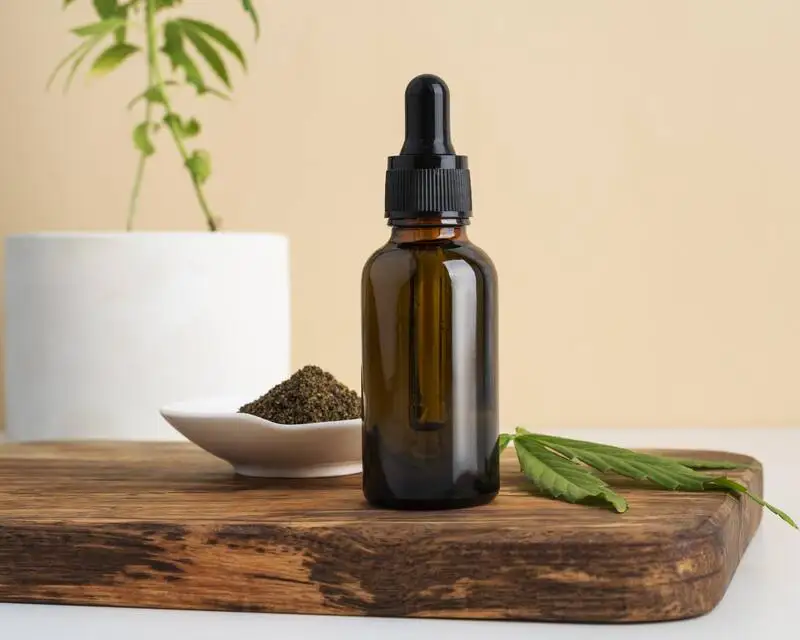
- Oil / tinctures: Most popular. Sublingual (under tongue) for fast onset. Easy dose adjustment.
- Gummies / capsules: Convenient, pre-dosed. Same delayed onset as edibles (30–90 min).
- Topicals (creams, balms): For localized inflammation and pain. No systemic effects. Does not produce psychoactivity.
- Isolate powder: Pure CBD, no other cannabinoids. Best for drug testing concerns. No entourage benefit.
- Full-spectrum vs broad-spectrum: Full-spectrum includes trace THC and all plant compounds (max entourage effect). Broad-spectrum has THC removed. Isolate is pure CBD.
Frequently Asked Questions
What is the key difference between THC and CBD?
THC binds strongly to CB1 receptors in the brain, producing the psychoactive “high.” CBD does not bind CB1 strongly and produces no intoxication. Despite sharing the same molecular formula (C&sub2;&sub1;H&sub3;&sup0;O&sub2;), a single structural difference creates completely different pharmacology. THC is psychoactive and controlled; CBD is non-psychoactive and broadly legal when hemp-derived.
Will CBD show up on a drug test?
Standard drug tests detect THC metabolites, not CBD. Pure CBD isolate carries minimal risk. However, full-spectrum CBD products contain trace THC that can accumulate with regular use. Mislabeling of CBD products is also common. For drug-tested individuals, CBD isolate with third-party COA verification is safest, but no absolute guarantee exists. Consult a legal or medical professional for your specific situation.
Can you take THC and CBD together?
Yes — and the combination is often more effective than either alone (the entourage effect). CBD moderates THC’s psychoactive intensity by reducing CB1 binding, which can reduce anxiety and paranoia. Balanced 1:1 THC:CBD products are popular with medical patients precisely for this reason. Start with low doses when combining cannabinoids and consult a healthcare provider.
Is CBD legal everywhere?
Hemp-derived CBD (<0.3% THC) is federally legal in the US under the 2018 Farm Bill, though state laws vary. In the UK and EU, CBD is generally legal with low THC limits. Cannabis-derived CBD follows the same regulations as THC cannabis. Laws are evolving rapidly — always verify regulations in your specific jurisdiction.