
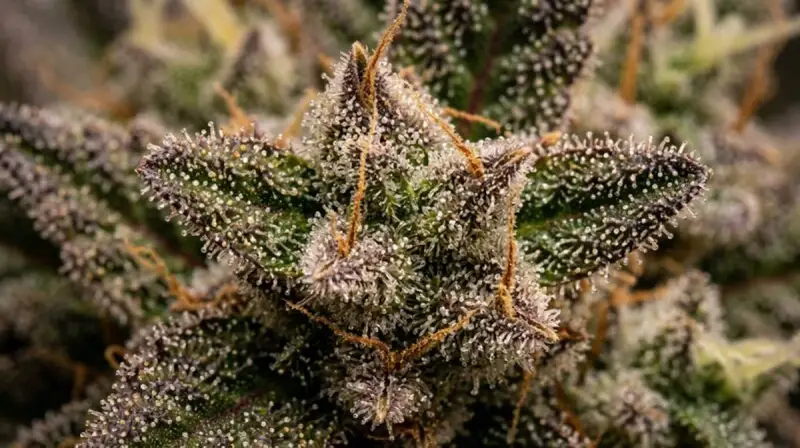

- Recreational: Decriminalized for personal use since 2006 — still illegal, no prison for possession
- Medical: CBD-based medications legal via ANVISA prescription framework
- Possession Penalty: No prison — warnings, community service, drug education programs
- Trafficking: 5–15 years imprisonment, aggravated up to 20+ years
- Traveler Risk: Medium — decriminalized but enforcement inconsistent and racially biased
Legal Status Overview
Brazil occupies a complex middle ground in global cannabis policy. The country took a significant step toward liberalization with Law 11.343 of 2006, which decriminalized personal drug use across all substances — including cannabis. Under this framework, personal possession no longer carries a prison sentence. Instead, those caught with small amounts face administrative sanctions: a formal warning, community service hours, or enrollment in a drug education program.
However, this decriminalization exists within a fundamentally prohibitionist framework. Cannabis remains illegal to purchase, sell, cultivate, or traffic. The 2006 law did not legalize anything — it simply shifted the response to personal use from criminal to administrative. And critically, the law contains no gram threshold defining what constitutes "personal use." This ambiguity has created a deeply inequitable system where enforcement outcomes depend heavily on the user's social class, race, and the neighborhood where they are stopped.
The Brazilian cannabis reform movement is one of the most active in Latin America. Organizations like LEAP Brasil, the Drugs Policy Network, and numerous harm reduction NGOs have pushed for full legalization and clearer legal thresholds. In 2024, the Brazilian Senate passed a constitutional amendment strengthening drug prohibition at the constitutional level — a political setback for reform advocates — but the STF (Supreme Federal Court) has maintained its decriminalization jurisprudence.
Brazil is a major cannabis consumer nation with an estimated 3–5 million regular users. The drug is widely available in most major cities, though the supply chain remains entirely unregulated and controlled by organized crime. Cannabis sold on Brazilian streets frequently comes from Paraguay, which is the region's largest cannabis producer.
Possession Laws & Penalties
Under Article 28 of Law 11.343/2006, possession of cannabis for personal use is treated as an administrative offense rather than a criminal one. The key phrase in the law is "for personal consumption" — and as noted, no specific quantity threshold defines this category, leaving determination entirely to law enforcement and judicial discretion.
| Offense | Classification | Penalty | Notes |
|---|---|---|---|
| Personal possession | Administrative offense | Warning / community service / drug education (max 5 months) | No prison. No criminal record. Amount at judge's discretion. |
| Ambiguous possession | At judge's discretion | Can be reclassified as trafficking | Circumstance-dependent. Disproportionate racial enforcement documented. |
| Small-scale dealing | Criminal trafficking | 5–15 years imprisonment | Article 33 of Law 11.343/2006 |
| Trafficking with aggravating factors | Aggravated trafficking | Up to 20+ years | Schools, minors, weapons, organized crime all increase sentence |
The absence of a quantity threshold is the most criticized aspect of Brazil's drug law. A 2015 study by the Brazilian Bar Association found that Black defendants were significantly more likely to be charged with trafficking rather than possession for the same amounts as white defendants. This structural inequality in enforcement means that the decriminalization of 2006 — while meaningful in theory — has not been applied equally across the population.
For foreign travelers, the practical reality is more favorable than for Brazilian citizens in poorer communities. Tourists in Ipanema, Copacabana, or major tourist centers who are found with small amounts by police are generally given warnings or asked to pay a (technically illegal) on-the-spot fine. However, this is not guaranteed, and travelers should never assume that decriminalization equals safety from arrest or detention.
Medical Cannabis Program
Brazil has one of the more developed medical cannabis frameworks in Latin America, driven by patient advocacy and ANVISA's (Agência Nacional de Vigilância Sanitária) increasingly permissive regulatory stance. The program has evolved substantially since ANVISA first authorized individual importation of CBD-based products in 2015.
Key milestones in Brazil's medical cannabis regulatory development:
Resolution RDC 17/2015: ANVISA authorized the importation of cannabidiol (CBD) products for medical use on an individual basis, with medical prescription. This opened the door for Brazilian patients with epilepsy and other conditions to access CBD-based medications not available domestically.
Resolution RDC 327/2019: A comprehensive framework for cannabis-based medicinal products was established, allowing both CBD and THC-containing products to be prescribed and imported legally. This resolution also set standards for product manufacturing, labeling, and distribution.
Domestic manufacturing authorization (2021 onwards): ANVISA began approving domestic manufacturers of CBD-based pharmaceutical products. Multiple Brazilian companies now hold manufacturing authorizations, and CBD products are available in mainstream pharmacies across major cities.
Patients seeking access to medical cannabis in Brazil need a medical prescription from a licensed physician. CBD products with THC content below 0.2% can be prescribed for a range of conditions. Higher-THC products require more complex authorization pathways but are accessible to patients with qualifying conditions including chronic pain, multiple sclerosis, epilepsy, and certain psychiatric conditions.
Brazil does not yet permit cannabis dispensaries or retail cannabis pharmacies in the way seen in North American or European markets. All medical cannabis products must go through the official pharmaceutical supply chain and require valid prescriptions. Self-medication with cannabis — even CBD — outside this framework remains legally ambiguous.
Cultivation Laws
Cannabis cultivation is illegal in Brazil under all circumstances — personal, medical, or commercial. Even individual patients who have authorization to use medical cannabis cannot legally cultivate plants at home. Article 33 of Law 11.343/2006 explicitly includes cultivation among the trafficking offenses, meaning home growers who are caught face the same 5–15 year sentencing range as street dealers.
This is one of the most significant inconsistencies in Brazil's drug law: personal use is decriminalized, but cultivation of even a single plant for personal use is technically a trafficking offense. Court decisions have occasionally applied Article 28 (personal use) logic to small-scale home cultivation, but there is no settled jurisprudence protecting home growers.
The Brazilian medical cannabis industry relies entirely on imported raw materials or domestically manufactured products from authorized pharmaceutical facilities. There is an ongoing legislative debate about whether to create a licensed cultivation framework for medical and industrial hemp purposes, but no such framework exists as of the latest review date.
Paraguay remains the dominant supplier of illicit cannabis consumed in Brazil. Seizure data from the Brazilian Federal Police consistently shows that the majority of cannabis entering Brazil crosses the Paraguayan border, much of it produced by organized crime networks operating in the Paraguayan interior. There is also a domestic cultivation scene in rural areas of Bahia, Minas Gerais, and the Northeast, but this remains small-scale and clandestine.
Trafficking Penalties
Drug trafficking in Brazil is treated as a serious criminal offense with significant prison sentences. Article 33 of Law 11.343/2006 establishes the basic trafficking framework, with a standard sentence range of 5 to 15 years plus fines. Multiple aggravating factors can significantly increase this baseline.
| Trafficking Factor | Base Penalty | Enhanced Penalty |
|---|---|---|
| Standard trafficking (any amount) | 5–15 years + fines | — |
| Within 1,000m of school / health facility | 5–15 years + fines | Sentence increased by 1/6 to 2/3 |
| Involving minors or the mentally ill | 5–15 years + fines | Sentence increased by 1/6 to 2/3 |
| Use of weapons during trafficking | 5–15 years + fines | Sentence increased by 1/6 to 2/3 |
| Organized crime / criminal association | Calculated separately under Art. 35 | Additional 3–10 years |
| International trafficking / import-export | Calculated under Art. 33 with enhancement | Maximum sentence applicable |
Notably, Brazilian law provides a sentence reduction pathway for first-time offenders in trafficking cases — the "traficante privilegiado" provision. Under Article 33, §4, a defendant who is a first-time offender, has no prior criminal record, and can demonstrate that the trafficking was not conducted as part of an organized criminal enterprise may receive a sentence reduction of 1/6 to 2/3. This has been applied in cases involving small-scale cannabis dealing.
Cannabis Culture & History
Cannabis arrived in Brazil through the Atlantic slave trade, brought by West African enslaved people primarily from regions of present-day Angola and Mozambique. The plant was called maconha in the Northeast of Brazil — a term still widely used today — and was deeply embedded in Afro-Brazilian cultural and spiritual practices. Early prohibitionist campaigns in the early 20th century were explicitly framed in racial and classist terms, targeting Afro-Brazilian communities in the Northeast.
By the mid-20th century, cannabis use had spread beyond Afro-Brazilian communities to urban youth, bohemian circles, and eventually mainstream Brazilian culture. The counterculture movements of the 1960s and 1970s, suppressed under the military dictatorship, used cannabis as a symbol of resistance. Artists, musicians, and intellectuals associated with the Tropicália movement and later the punk and rock scene were documented cannabis users.
Brazil's harm reduction movement grew substantially in the 1990s and 2000s, informed by the country's successful response to the HIV/AIDS epidemic. Many organizations that pioneered needle exchange programs expanded into broader drug policy advocacy, contributing to the 2006 decriminalization law. Today, Brazil has a sophisticated and well-organized cannabis advocacy community, with connections to the international drug policy reform movement.
The LGBTQ+ community, artistic communities in São Paulo and Rio de Janeiro, and the growing middle class have increasingly normalized cannabis use in urban Brazil. Cannabis cafés and social clubs, while technically illegal, operate in some cities with varying degrees of tolerance from local authorities.
Travel Safety Guide
Brazil represents a medium-risk destination for cannabis travelers — the legal situation is more tolerant than much of the world, but the enforcement environment is highly unpredictable and marked by significant socioeconomic and racial disparities.
Tourist areas: In popular tourist areas like Rio de Janeiro's Zona Sul, São Paulo's Pinheiros and Vila Madalena, and the beach towns of the Northeast, cannabis is widely consumed openly. Police in these areas are generally less aggressive toward tourists found with small amounts, though this varies enormously by individual officer and specific location.
Airports and borders: Do not travel to or from Brazil with cannabis. Brazilian customs and the Federal Police enforce narcotics laws strictly at airports. Even small amounts can result in detention and investigation, regardless of the decriminalization framework. International trafficking charges apply at borders.
Favelas and dangerous areas: Cannabis is sold openly in many favela communities, but these areas are controlled by criminal organizations and are not safe for tourists to visit for any purpose. Police operations in favelas can turn violent. Avoid entirely.
Festival season: Carnival and major music festivals see widespread cannabis use. Police tolerance at these events is generally higher, but this is not guaranteed and can shift suddenly depending on political climate.
CBD products: Bringing ANVISA-approved CBD products into Brazil is technically legal with proper medical documentation. Without documentation, CBD products in your luggage may be treated as controlled substances. Consult your physician and carry prescription paperwork if you travel with CBD.
Recent Legal Developments
Brazil's cannabis legal landscape has been marked by tension between conservative political forces pushing for tougher enforcement and a reform movement seeking full legalization. Several significant developments have shaped the current environment:
STF Supreme Court ruling (ongoing): The Supreme Federal Court has been deliberating on whether to decriminalize cannabis possession at the constitutional level, which would remove the ambiguity inherent in the current "personal use" determination. The case has proceeded in multiple sessions, with a final ruling expected to clarify the legal threshold for personal use.
Constitutional amendment (2024): The Brazilian Senate passed a constitutional amendment explicitly prohibiting drug legalization at the federal level. Reform advocates have challenged this as unconstitutional, and the STF may ultimately strike down or limit the amendment's scope. The legal battle continues.
ANVISA medical expansion: ANVISA has continued to expand its authorization of medical cannabis products, with multiple new Brazilian manufacturers receiving authorization to produce and sell CBD-based pharmaceuticals. The domestic market for medical cannabis has grown significantly.
State-level variations: Individual states and municipalities in Brazil cannot formally legalize cannabis, but they can exercise discretion in enforcement priorities. Some major cities have adopted de facto tolerance policies in certain areas, while others have pursued aggressive anti-drug campaigns.
International context: Brazil's largest neighbor, Uruguay, has had full legalization since 2013. Argentina has decriminalized possession and is advancing toward a regulatory framework. This regional context puts increasing pressure on Brazil's status quo.
Frequently Asked Questions
Is cannabis legal in Brazil?
Cannabis is not fully legal in Brazil, but personal use was decriminalized under Law 11.343/2006. Possession of small amounts for personal use no longer results in imprisonment, though it remains an offense subject to warnings, community service, and drug education programs. Medical CBD is legal under ANVISA regulations. Recreational cannabis remains prohibited, and trafficking is a serious criminal offense.
What counts as personal use versus trafficking in Brazil?
Brazilian law does not specify a gram threshold — judges determine intent based on circumstances, location, quantity, and the user's background. This ambiguity creates significant uncertainty and has been widely criticized for enabling racial and socioeconomic discrimination in enforcement. Black and lower-income defendants are significantly more likely to be charged with trafficking for the same amounts that result in "personal use" determinations for wealthier, white defendants.
Is medical cannabis legal in Brazil?
Yes. ANVISA (Brazil's health regulatory agency) approved CBD-based medications for prescription use and allows patients to import cannabis-based medications with medical authorization. Several CBD products are registered for sale in Brazilian pharmacies. THC-containing medications require individual import authorization from ANVISA, but the process is accessible to patients with qualifying medical conditions including epilepsy, chronic pain, and multiple sclerosis.
What is the penalty for cannabis trafficking in Brazil?
Cannabis trafficking carries 5 to 15 years imprisonment under Law 11.343/2006. Aggravating factors including involvement of minors, use of weapons, or operation within 1,000 meters of schools or healthcare facilities can increase sentences significantly. There is no death penalty for drug offenses in Brazil. First-time small-scale traffickers may receive reduced sentences under the "traficante privilegiado" provision of Article 33, §4.