










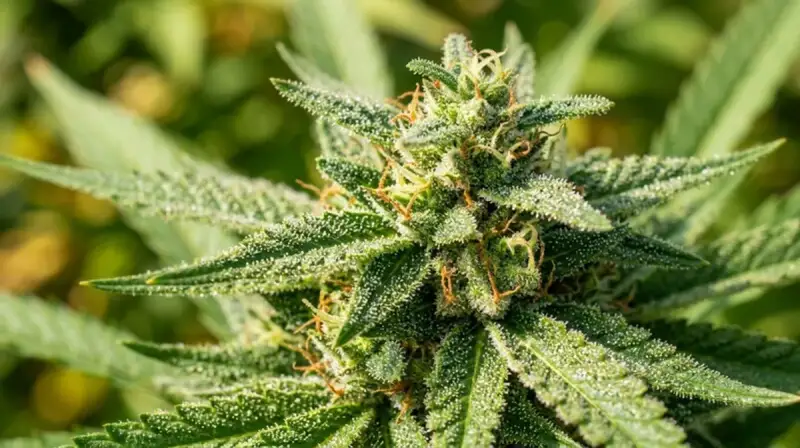
Laos Cannabis Laws: The Complete Guide
Laos is one of Southeast Asia’s most stunning travel destinations — and one of its most legally perilous for cannabis users. Despite its history as part of the Golden Triangle opium production zone, the Lao PDR enforces strict drug laws that carry severe criminal penalties. Tourists who assume that the laid-back atmosphere of Vang Vieng or the Buddhist tranquility of Luang Prabang translates into drug tolerance are gravely mistaken. This guide covers everything you need to know about cannabis laws in Laos, enforcement realities, historical context, and the risks tourists genuinely face.
- Legal Status: Fully illegal — no decriminalization, no medical program, no tolerance policy
- Possession: Criminal offense; even small amounts can result in arrest, fines, and imprisonment
- Trafficking: Historically subject to the death penalty for large quantities; one of the most serious drug offenses in Lao law
- Medical Cannabis: Not available; no program exists
- CBD/Hemp: No legal framework distinguishing CBD from cannabis; all treated as illegal
- Tourist Risk: Very high — foreign nationals are arrested regularly; Vang Vieng has seen targeted police crackdowns
- Reform Outlook: No active reform movement; limited discussion at regional ASEAN level only
- Border Note: Thai cannabis products must not be brought across the Mekong border — this constitutes international trafficking
Legal Framework: The Law on Drugs in Laos
Cannabis in Laos falls under the Law on Drugs (periodically revised, most recently updated in the 2010s), which classifies narcotics into categories based on their potential for abuse and harm. Cannabis — referred to in Lao law under both traditional names and its scientific classification — is prohibited in all forms. There is no legal distinction in practice between a small amount for personal use and a larger quantity intended for sale; both are criminal matters.
The Lao government operates under the guiding framework of the Lao People’s Democratic Republic’s National Drug Control Program, which aligns with UN treaty obligations and ASEAN drug-free zone commitments. The ASEAN declaration of a drug-free region by 2015 — later revised to ongoing goals — has shaped Laos’ hardline stance. Rather than adopting harm reduction approaches seen in some Western nations, Laos favors enforcement, prosecution, and compulsory treatment (sometimes indistinguishable from detention) for drug users.
The primary enforcement agencies are the Lao National Police and the Ministry of Public Security. Drug cases, including cannabis, can be tried in ordinary criminal courts or referred to specialized drug tribunals depending on the quantity and circumstances involved.
Critically, Laos is a signatory to the UN Single Convention on Narcotic Drugs (1961), the Convention on Psychotropic Substances (1971), and the UN Convention Against Illicit Traffic in Narcotic Drugs (1988). These international commitments reinforce domestic prohibition and make any significant drug policy reform politically complex without international diplomatic fallout.
Possession Penalties
Penalties for cannabis offenses in Laos vary depending on quantity, intent, and circumstances, but they are uniformly serious. The following table reflects the general sentencing framework under Lao drug law.
| Offense | Quantity / Circumstance | Potential Penalty |
|---|---|---|
| Personal possession | Small amount (personal use) | Fine + 3 months to 1 year imprisonment; possible compulsory rehabilitation |
| Possession with suspected intent to supply | Medium quantity | 1–5 years imprisonment + heavy fines |
| Sale or distribution | Any amount | 5–15 years imprisonment |
| Large-scale trafficking | Commercial quantity | 15 years to life imprisonment; historically death penalty |
| Cultivation | Any cultivation | Prosecution as production/supply; severe imprisonment |
| International trafficking | Cross-border movement | Maximum penalties; death penalty possible for large quantities |
Note: Actual sentences depend on judicial discretion. Foreigners have sometimes paid large fines to secure release but this should not be assumed as a reliable outcome and constitutes a legal risk in itself.
The Golden Triangle: Cannabis in Historical Context
To understand Laos’ drug laws, context matters. Laos sits at the heart of the Golden Triangle — the mountainous region spanning the borders of Laos, Thailand, and Myanmar that was for decades the world’s primary source of heroin produced from opium poppies. The Lao highlands, particularly the areas around Phongsali and Houaphan provinces, saw significant opium cultivation by hill tribe communities for generations.
Cannabis has always been a secondary crop in this region compared to opium, but it has been cultivated and consumed by hill tribe communities traditionally for medicinal and ritual purposes. The widespread international attention on the Golden Triangle as a drug-producing zone — and the resulting pressure from international drug control bodies, particularly the US DEA and UNODC — drove Laos to adopt increasingly punitive drug policies from the 1990s onward as part of its effort to demonstrate compliance with international norms.
Ironically, as traditional opium cultivation declined significantly (due to eradication programs), other drug issues emerged — methamphetamine production and trafficking became a dominant concern in the 2010s and into the present. Cannabis, by comparison, receives less enforcement attention than yaba (methamphetamine tablets), but it remains fully illegal and is prosecuted.
The Lao government has invested significantly in anti-drug messaging and campaigns, particularly in villages and schools. The official position treats all drug use as socially harmful and incompatible with Lao socialist values.
Vang Vieng: The Party Town That Punishes
Few places in Southeast Asia carry as contradictory a reputation as Vang Vieng. This small town on the Nam Song River became famous in the 2000s as a backpacker party hub centered on tubing — floating down the river between bars serving buckets of alcohol and, for years, cannabis-infused shakes, pizzas, and other products openly sold without apparent police interference.
That era is effectively over. Following the deaths of several tourists from drug-related causes — including alcohol, opium-laced products, and combinations — and significant international media attention, the Lao government conducted a series of high-profile crackdowns from the early 2010s onward. Many of the riverside bars were closed or heavily restricted. The overt sale of cannabis products declined dramatically.
However, Vang Vieng remains a destination where some underground availability of cannabis persists, and this creates a dangerous illusion of tolerance. Police raids still occur. Tourists have been arrested in their guesthouses after purchases from seemingly safe vendors who were actually informants or under police surveillance. There is no safe cannabis purchase in Vang Vieng — the availability of supply does not indicate the absence of legal risk.
Arrests in Vang Vieng follow a predictable pattern: detention at the local police station, demand for payment of an unofficial "fine" (typically several hundred to several thousand US dollars depending on quantity), and either release after payment or — in more serious cases — formal prosecution. Some tourists have been held for weeks or months.
Medical Cannabis Program
Laos has no medical cannabis program. There is no regulated pathway for patients to access cannabis for therapeutic purposes, no licensed cultivation for pharmaceutical production, and no discussion at the ministerial level of establishing such a program. This stands in contrast to neighboring Thailand, which launched medical cannabis in 2019 and significantly liberalized in 2022, and even Vietnam, which maintains strict prohibition but has seen some academic discussion of medical research.
Patients with conditions that cannabis has been shown to benefit — chronic pain, epilepsy, chemotherapy-related nausea — have no legal access to cannabis-based treatments in Laos. Pharmaceutical THC medications available in some countries are not licensed in Laos.
Hemp and CBD in Laos
Laos makes no legal distinction between hemp (low-THC cannabis) and marijuana (high-THC cannabis). All cannabis plants and products derived from them are treated as controlled substances under drug law. There is no industrial hemp sector, no CBD oil market, and no regulatory framework that would permit the sale of hemp-derived products.
Travelers arriving with CBD products purchased legally in their home countries — including CBD oils, capsules, or edibles — face potential arrest if those products are detected by Lao customs or police. The Lao authorities do not necessarily test THC content before making an arrest; the presence of a cannabis-derived product is sufficient to initiate legal proceedings.
Enforcement Reality
Understanding how drug law enforcement actually works in Laos is crucial for travelers. Several key realities shape the practical risk:
Selective enforcement: Enforcement is not uniform. Some areas see more active policing than others. Luang Prabang, a UNESCO World Heritage site with significant French colonial architecture, tends toward stricter enforcement than rural areas. Vang Vieng has periodic crackdowns followed by quieter periods. Vientiane, the capital, has tourist-area patrols.
Informant networks: Police in tourist areas have been documented using informants — including tuk-tuk drivers, guesthouse staff, and even fellow travelers — to identify drug users and buyers. The person who offers to sell you cannabis may have a relationship with local police.
Corruption and "fines": Unofficial payment to police to resolve a drug arrest is widely reported, but it is not a guaranteed outcome, it is illegal, and it creates its own legal jeopardy. The amounts demanded have increased as police appear aware of how much tourists fear formal arrest. There are documented cases where payment was made and the tourist was still formally charged.
Prison conditions: Lao prisons fall far below international standards. Overcrowding, inadequate sanitation, limited medical care, and poor nutrition are documented. Foreign nationals in Lao detention are entitled to consular access but this is sometimes delayed.
Tourist Advice: What You Must Know
The combination of a seemingly relaxed atmosphere, widespread availability of cannabis in tourist areas, and extremely severe legal consequences makes Laos one of the highest-risk cannabis destinations in the world for tourists. Here is what you need to know:
- Do not purchase, possess, or consume cannabis anywhere in Laos, including in tourist-heavy areas like Vang Vieng.
- Do not accept cannabis offered by strangers — this is a common informant setup.
- Be cautious of cannabis-infused food products — some establishments still offer these covertly. Consuming unknowingly does not provide legal protection.
- Do not bring cannabis or CBD products from Thailand into Laos — this is international trafficking regardless of quantity.
- If arrested, contact your embassy immediately and do not sign any documents without legal representation.
- Do not attempt to bribe police — this can escalate the severity of charges.
- Be aware that detention can last weeks or months before your case is resolved.
The UK Foreign Office, US State Department, and Australian DFAT all maintain travel advisories for Laos that specifically warn about drug laws. These advisories consistently note that foreign nationals have been imprisoned for drug offenses and that diplomatic assistance is limited once charges are filed.
Recent Developments
There is no meaningful cannabis policy reform underway in Laos. The most significant regional development is Thailand’s partial liberalization, which has created cross-border awareness but has not influenced Lao policy makers. ASEAN-level drug policy discussions occasionally include harm reduction language, but formal decriminalization or legalization proposals have not emerged from Lao government.
The Lao government has, if anything, doubled down on anti-drug messaging in recent years, particularly around methamphetamine which has become a significant public health crisis. Cannabis is treated as part of a broader "war on drugs" narrative rather than as a distinct substance meriting differentiated policy.
Civil society organizations in Laos have very limited capacity to advocate for drug policy reform. Political space for such advocacy is constrained by the single-party system of the Lao PDR, where the Lao People’s Revolutionary Party maintains strict control over policy discourse.
Regional Comparison: Laos vs. Neighbors
| Country | Legal Status | Possession Penalty | Medical Program | Tourist Risk |
|---|---|---|---|---|
| Laos | Illegal | Imprisonment + fines; death penalty for trafficking | None | Very High |
| Thailand | Partially legal (medical + regulated) | Personal use largely decriminalized | Yes (since 2019) | Low (licensed shops) |
| Vietnam | Illegal | Mandatory rehabilitation; prison for supply | None | Very High |
| Myanmar | Illegal | Up to 10 years imprisonment | None | Very High |
| Cambodia | Illegal (inconsistent enforcement) | Fines; short imprisonment | None | High |
Frequently Asked Questions
Is cannabis legal in Laos?
No. Cannabis is illegal in Laos for all purposes — possession, sale, cultivation, and trafficking are criminal offenses under the Law on Drugs. Penalties range from fines and imprisonment for small possession to historically documented death sentences for large-scale trafficking. Laos operates under strict ASEAN drug laws and tourists have been arrested and jailed for cannabis offenses.
Is Vang Vieng really that risky for cannabis?
Yes. Despite its reputation as a backpacker party destination, Vang Vieng has seen periodic police crackdowns where tourists were arrested for drug possession including cannabis. Establishments that once openly sold cannabis-infused shakes and food have faced raids. Police can and do target foreigners. Arrest means detention in Lao jails — conditions that are far below Western standards — followed by possible prosecution.
Does neighboring Thailand’s cannabis liberalization affect Laos?
Thailand’s cannabis policy shift increased cross-border awareness, but Laos has not followed suit. The two countries share a long Mekong River border, and Thai cannabis products do occasionally appear in Laos, but this does not reduce legal risk. Bringing cannabis across the Laos-Thailand border is an international drug trafficking offense carrying the most severe penalties under Lao law.
What should tourists know about drug laws in Laos?
Tourists face the same laws as Lao nationals, and foreign nationals have been arrested, prosecuted, and imprisoned for drug offenses in Laos. There is no diplomatic immunity for drug possession. Your home embassy can provide consular assistance but cannot get you released. Bribes are sometimes reported but are illegal and can worsen your situation. The safest approach is to avoid all cannabis and other drug use entirely while in Laos.