






Atlanta, Georgia operates under one of the most restrictive medical cannabis frameworks in the United States. Unlike neighboring states with comprehensive medical or recreational programs, Georgia’s Low-THC Oil Registry permits only cannabis oil containing no more than 5% THC for a limited list of qualifying medical conditions. The state issued its first production licenses in 2021, and as of 2025, only a handful of licensed dispensing organizations operate statewide, with just one or two locations serving the Atlanta metropolitan area. Recreational cannabis remains completely illegal, and possession outside the medical program carries criminal penalties under state law, despite Atlanta’s 2017 city ordinance reducing penalties for minor possession. This guide provides a comprehensive overview of Georgia’s medical cannabis program, how Atlanta residents can access low-THC oil, and critical information for visitors from states with broader legalization.
- Georgia permits only low-THC cannabis oil (maximum 5% THC) for registered medical patients
- No smokeable flower, edibles, concentrates, or high-THC products are legal in any form
- Approximately 1-2 licensed dispensing organizations operate in the Atlanta area as of 2025
- Patients must register with the Georgia Low-THC Oil Patient Registry through the Department of Public Health
- Recreational cannabis is completely illegal; possession outside the medical program is a criminal offense
- Atlanta’s city ordinance reduced penalties to $75 for possession under 1 oz, but state law still applies in many enforcement situations
- Out-of-state medical cards are not recognized; visitors cannot legally purchase or possess cannabis
Understanding Georgia’s Low-THC Cannabis Program
Georgia’s journey toward medical cannabis has been notably cautious. The state passed Haleigh’s Hope Act in 2015, which created an affirmative defense for possession of low-THC oil but provided no legal means to obtain it within the state. The 2019 Georgia’s Hope Act expanded the program by establishing a regulatory framework for in-state production and dispensing, adding qualifying conditions including PTSD, and creating the Low-THC Oil Patient Registry administered by the Georgia Department of Public Health.
The program permits cannabis oil products containing no more than 5% THC by weight. This restriction is among the strictest in the nation. Patients cannot legally access smokeable flower, traditional edibles, vaporizable concentrates, or any product exceeding the 5% THC threshold. The available products are typically tinctures, oral oils, and occasionally capsules, all specifically formulated to remain within the legal THC limit.
Georgia’s Medical Cannabis Commission awarded production licenses in 2021 to a limited number of companies, but the actual launch of retail operations faced significant delays due to regulatory challenges, zoning disputes, and litigation. By 2025, approximately four to six licensed dispensing organizations operate across the entire state, with the Atlanta metropolitan area served by only one or two facilities.
Qualifying Conditions and Patient Eligibility
To participate in Georgia’s Low-THC Oil Registry, patients must have a diagnosis of one or more qualifying medical conditions and obtain certification from a physician registered with the state program. The current list of qualifying conditions includes:
- Cancer (end-stage or undergoing chemotherapy)
- Amyotrophic Lateral Sclerosis (ALS)
- Seizure disorders (including epilepsy)
- Multiple Sclerosis (MS)
- Crohn’s disease
- Mitochondrial disease
- Autism spectrum disorder
- Epidermolysis bullosa
- Alzheimer’s disease
- AIDS or HIV positive status
- Sickle cell disease
- Tourette’s syndrome
- Intractable pain (pain related to a qualifying condition that has not responded to other treatments)
- Post-Traumatic Stress Disorder (PTSD)
- Peripheral neuropathy
- Severe or end-stage chronic disease conditions
Patients under 18 may qualify with parental or legal guardian consent and must have a second physician certification. The intractable pain category requires documentation that the pain is related to a qualifying diagnosis and that traditional treatments have been ineffective.
How to Register as a Patient in Georgia
The registration process requires several steps and documentation. Patients must first establish care with a Georgia-licensed physician who is registered with the Low-THC Oil Registry program. Not all physicians participate, so patients may need to research or ask their current providers about their program status.
Once a physician certifies that the patient has a qualifying condition and would benefit from low-THC cannabis oil, the patient (or guardian) can apply to the Georgia Department of Public Health’s Low-THC Oil Patient Registry. The application requires the physician’s certification, proof of Georgia residency, government-issued identification, and applicable fees.
After approval, patients receive a registry identification card that permits them to possess up to 20 fluid ounces of low-THC oil. This card must be presented when purchasing from a licensed dispensing organization and should be carried whenever in possession of the product. The registration must be renewed periodically, and any changes in qualifying conditions or personal information must be reported.
Accessing Dispensaries in Atlanta
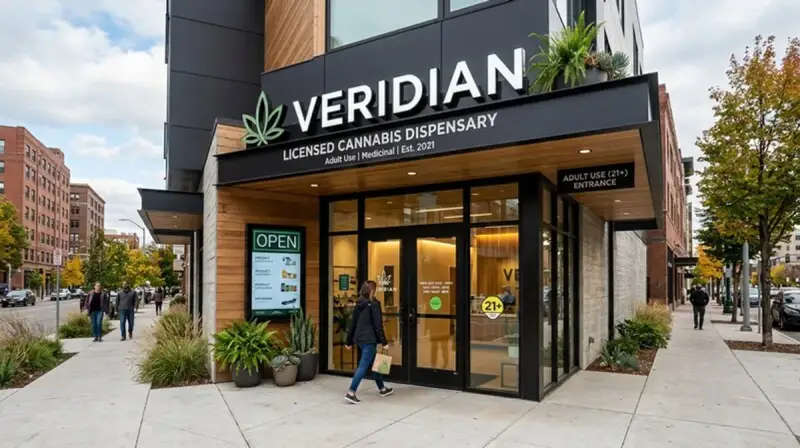
Atlanta’s limited number of licensed dispensing organizations reflects the state’s cautious rollout and restrictive framework. As of 2025, only one or two facilities serve the entire Atlanta metropolitan area, a region of over six million people. This creates significant access challenges for patients, particularly those with mobility limitations or those living in outlying counties.
The licensed dispensaries operate under strict state oversight. Patients must present their valid Low-THC Oil Registry card and government-issued ID for every purchase. Product selection is limited to oils, tinctures, and capsules containing no more than 5% THC. Staff can provide guidance on dosing and product selection, but the range of available formulations is far narrower than in states with comprehensive medical programs.
Prices tend to be higher than in mature medical markets due to limited competition, regulatory costs, and the challenges of operating in a highly restricted environment. Patients should expect to pay premium prices for products that would cost significantly less in states like Colorado, California, or Michigan.
| Product Type | Legal in Georgia | Notes |
|---|---|---|
| Low-THC Oil (≤5% THC) | Yes | Only for registered patients |
| Smokeable Flower | No | Prohibited under all circumstances |
| Edibles | No | Not permitted by Georgia law |
| High-THC Concentrates | No | Exceeds 5% THC limit |
| Vaporizable Products | No | Not authorized under current regulations |
| CBD Products (Hemp-derived) | Yes | Legal under federal Farm Bill, widely available |
Atlanta’s Decriminalization Ordinance vs. State Law
In 2017, the Atlanta City Council passed an ordinance reducing the penalty for possession of one ounce or less of marijuana to a maximum $75 fine, with no jail time. This ordinance applies only within Atlanta city limits and only when enforced by Atlanta Police Department officers. However, this local decriminalization does not change state law, which classifies possession of any amount of marijuana (outside the Low-THC Oil Registry) as a criminal offense.
State law enforcement agencies, including the Georgia State Patrol, county sheriffs, and other agencies operating in Atlanta, enforce state law rather than the city ordinance. Possession of less than one ounce is a misdemeanor under state law, punishable by up to one year in jail and a $1,000 fine. Possession of one ounce or more is a felony, carrying one to ten years in prison.
This creates a complicated enforcement landscape. Someone stopped by Atlanta police for possession of a small amount might receive only a citation and $75 fine, while the same amount discovered by state patrol on an Atlanta highway could result in arrest and criminal charges. The ordinance provides some protection but does not eliminate legal risk, and it offers no protection whatsoever for larger amounts, sales, cultivation, or possession of any cannabis product outside city limits.
Critical Information for Visitors
Visitors to Atlanta from states with legal recreational or medical cannabis programs must understand that Georgia does not recognize out-of-state medical cannabis cards, and recreational use is completely illegal. Bringing cannabis into Georgia from another state constitutes drug trafficking under federal and state law, regardless of the legality in the state of origin.
"Travelers arriving at Hartsfield-Jackson Atlanta International Airport with cannabis products face serious legal consequences. Airport security cooperates with law enforcement, and possession can result in arrest, criminal charges, and prosecution under state law. The fact that cannabis was legal where you purchased it provides no defense under Georgia law."
Harm reduction guidance for visitors includes: never travel with cannabis across state lines, do not attempt to purchase from unlicensed sources (which is both illegal and potentially dangerous), and understand that CBD products derived from hemp (containing less than 0.3% THC) are legal under federal law and widely available in Georgia at health stores, specialty retailers, and online vendors. These hemp-derived CBD products offer a legal alternative for those seeking cannabinoid therapy while visiting Atlanta.
The Reality of Enforcement in Atlanta
While Atlanta’s decriminalization ordinance suggests a more lenient approach, enforcement remains inconsistent and dependent on multiple factors including which agency makes the stop, the specific circumstances, and the amount involved. Possession in public spaces, in vehicles, or in circumstances involving other violations significantly increases the likelihood of arrest and prosecution under state law.
The city ordinance has not eliminated arrests for marijuana possession in Atlanta. Data shows that enforcement varies by neighborhood and demographic factors, with some communities experiencing continued aggressive enforcement while others see more lenient application. The safest assumption is that cannabis possession outside the Low-THC Oil Registry program carries real legal risk throughout Georgia, including in Atlanta.
Hemp-Derived CBD as a Legal Alternative
The 2018 Farm Bill legalized hemp and hemp-derived products containing no more than 0.3% THC on a dry weight basis. These products are legally sold throughout Georgia, including in Atlanta, at specialty retailers, health stores, online vendors, and even some convenience stores and pharmacies.
Hemp-derived CBD products include oils, tinctures, capsules, topicals, and other formulations. While they lack the higher THC content that some medical patients require, they offer a legal option for those seeking cannabinoid therapy. Quality varies significantly among vendors, so consumers should look for products with third-party laboratory testing, clear labeling, and reputable brands.
It’s important to distinguish between hemp-derived CBD (legal) and cannabis-derived products (illegal except through the Low-THC Oil Registry). The source plant and THC content determine legality, not the presence of CBD itself.
Frequently Asked Questions
How many dispensaries are there in Atlanta?
As of 2025, Atlanta has approximately one to two licensed dispensing organizations for low-THC cannabis oil. These serve the entire metropolitan area and only provide products to registered patients in Georgia’s Low-THC Oil Registry program. This is not a recreational market, and product selection is limited to oils and tinctures containing no more than 5% THC.
Can I use my out-of-state medical card in Atlanta?
No. Georgia does not recognize medical cannabis cards from other states. Only patients registered in Georgia’s Low-THC Oil Patient Registry can legally possess cannabis products, and only the specific low-THC oil products available through licensed Georgia dispensaries. Out-of-state cardholders have no legal protection for possession in Georgia.
Is recreational cannabis legal in Atlanta?
No. Recreational cannabis is completely illegal in Atlanta and throughout Georgia. Atlanta passed a city ordinance in 2017 reducing the penalty for possession of less than one ounce to a $75 fine when enforced by Atlanta police, but this does not legalize possession. State law still applies, and other law enforcement agencies enforce criminal penalties including potential jail time and felony charges for larger amounts.
What medical conditions qualify for Georgia’s cannabis program?
Qualifying conditions include cancer (end-stage or undergoing chemotherapy), ALS, seizure disorders, multiple sclerosis, Crohn’s disease, mitochondrial disease, autism, epidermolysis bullosa, Alzheimer’s disease, AIDS, sickle cell disease, Tourette’s syndrome, intractable pain, PTSD, peripheral neuropathy, and severe or end-stage chronic disease conditions. A Georgia-licensed physician registered with the program must certify the diagnosis.