
Key Findings at a Glance
- ✓Recreational since: November 2018
- ✓Possession limit: 1oz public, 10oz home
- ✓Tax rate: ~20% combined
- ✓First in: New England recreational
- ✓Hotspots: Back Bay, Cambridge, Somerville
- ✓Culture: College towns, Harvard, MIT, BU
Massachusetts Cannabis Laws in Boston
Massachusetts legalized recreational cannabis through Question 4 on the November 2016 ballot, and Boston entered history in November 2018 when the state launched adult-use dispensary sales — the first recreational market in New England and one of the first on the East Coast. The Cannabis Control Commission (CCC) governs Massachusetts’ cannabis industry at the state level, with the City of Boston and surrounding municipalities setting local permitting conditions.
Under Massachusetts law, adults 21 and older may purchase up to 1 ounce of cannabis flower per transaction and possess up to 1 ounce in public. Home possession is more generous at up to 10 ounces. Residents may also cultivate up to 6 cannabis plants per person (maximum 12 per household) for personal use. No medical recommendation is required for adult recreational purchases. Out-of-state visitors have the same purchasing rights as Massachusetts residents at licensed dispensaries.
Massachusetts’ Cannabis Control Commission has been praised nationally for its careful, methodical approach to market development, including a social equity program designed to ensure meaningful participation for people and communities harmed by cannabis enforcement. Boston’s cannabis market reflects this regulatory philosophy — it is one of the more thoughtfully structured legal markets in the country, with genuine attention to equity, quality control, and consumer safety built into the licensing framework.
The City of Boston has its own local cannabis licensing process, and the city has been slower to issue retail licenses than some surrounding municipalities, notably Cambridge and Somerville. This means that while Boston proper is gaining dispensaries steadily, the inner suburbs — particularly Cambridge and Somerville along the MBTA Green and Red Lines — have provided the most dispensary-accessible areas for Boston-based consumers who rely on public transit.
The Boston Dispensary Scene
Boston’s cannabis market bears the indelible marks of being a first-in-region recreational market. When Massachusetts opened adult-use sales, it served not just Boston’s population but pent-up demand from across New England. Dispensaries in early-legal Massachusetts locations (notably Northampton and Leicester) saw queues hundreds of people long on opening weekend, drawing buyers from throughout the Northeast. Boston’s own dispensaries, as they opened, inherited this regional significance — the city functions as the cannabis retail capital of New England.
The college town context is inescapable in Boston cannabis retail. The greater Boston metropolitan area hosts one of the highest concentrations of university students anywhere in the US — Harvard, MIT, Boston University, Northeastern, Tufts, Boston College, Emerson, Berklee, and dozens of other institutions collectively enroll hundreds of thousands of students in the metro area. This creates a dispensary consumer base that skews young, educated, culturally aware, and knowledgeable about cannabis. Boston dispensaries have responded with elevated product selection, staff training that goes beyond basic category knowledge, and retail environments that appeal to quality-focused consumers.
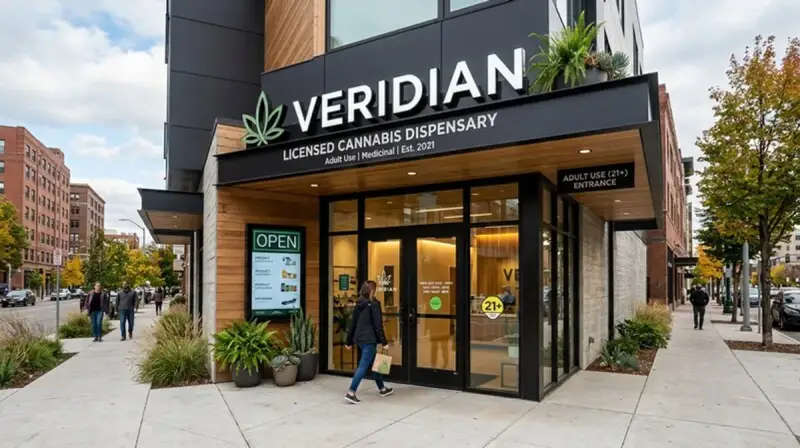
The Back Bay neighborhood of Boston proper has emerged as the most accessible and prominent in-city dispensary district. Back Bay’s concentration of hotels, retail, and MBTA Green Line access makes it the natural starting point for visitor cannabis retail. Dispensaries in Back Bay and adjacent neighborhoods like the South End offer the full Boston dispensary experience with convenient transit connections. Cambridge’s dispensary scene, centered around Central Square and Harvard Square, serves the dense student and professional populations of Cambridge with a particularly informed, quality-oriented retail culture.
Somerville, immediately northwest of Cambridge, has been among Massachusetts’ most progressive cannabis-friendly municipalities and hosts several well-regarded dispensaries serving the city’s young professional and college demographic. Somerville’s Union Square and Davis Square areas, both on or near MBTA transit lines, offer dispensaries that fit naturally into the neighborhoods’ independent restaurant and craft beverage culture.
What to Bring to a Boston Dispensary
A valid government-issued photo ID proving you are 21 or older is mandatory at every Massachusetts dispensary. Accepted forms include a US driver’s license or state ID, US passport, military ID, and most foreign passports. Massachusetts dispensaries are rigorous about ID verification — the Cannabis Control Commission sets strict compliance standards, and dispensaries face real consequences for violations. The ID must be current and valid.
Cash is accepted everywhere. Massachusetts dispensaries have made significant investments in alternative payment adoption, and CanPay and compliant debit systems have substantial penetration in the Boston market. Several Boston dispensaries accept credit cards through compliant payment processors. The city’s tech-literate consumer base has driven faster alternative payment adoption than in many other markets. ATMs are available at all dispensary locations as standard.
Massachusetts medical cannabis patients have their own cardholder benefits. Massachusetts’ medical program was launched in 2013, giving it a five-year head start on recreational. Medical patients in Massachusetts are exempt from the 10.75% cannabis excise tax, paying only the standard 6.25% sales tax rather than the ~20% recreational rate. This tax advantage — roughly 14% per transaction — is meaningful for regular consumers and justifies the medical program registration process for Massachusetts residents who use cannabis therapeutically.
Boston’s educated, quality-focused consumer base means dispensary staff conversations tend to run substantive and informed. Coming with questions about terpene profiles, cannabinoid ratios, or cultivation methods is entirely normal and welcomed at most Boston-area shops. Staff at well-regarded Cambridge and Somerville dispensaries often have genuine expertise in cannabis science and consumer-facing education, reflecting the city’s broader culture of intellectual engagement. Don’t be surprised if your budtender at a Cambridge dispensary has a background in biochemistry or has taken cannabis certification courses.
Products at Boston Dispensaries
Boston dispensary menus reflect the city’s educated, quality-oriented consumer base. Flower is the dominant category, with well-stocked Boston shops carrying 40–70+ strains across quality tiers. Massachusetts-grown cannabis has developed significantly since the early market days when product was scarce and expensive. The state’s licensed cultivation sector now produces quality indoor flower from both large multi-state operators and smaller craft cultivators. New England’s four-season climate, combined with the indoor cultivation approach that characterizes most Massachusetts production, creates consistent quality year-round.
Concentrates in Boston have followed national trends toward diversification: vape cartridges are the volume leader, but live resin, rosin, wax, and sauce are well-represented at Boston’s better dispensaries. The concentrate market has matured considerably since early recreational days when product selection was limited. Several Massachusetts craft extractors have developed strong reputations and distribution through Boston’s better-curated independent shops. Solventless rosin from Massachusetts craft producers is available at dispensaries catering to the concentrates-enthusiast segment of Boston’s large cannabis consumer market.
Edibles are a significant Boston category, particularly for the college and professional demographic seeking discreet, portion-controlled consumption. Massachusetts law requires 5mg per serving and 100mg per package maximums, slightly more conservative than some other states. Gummies, chocolates, mints, and capsules are standard; beverages have grown substantially as Massachusetts-licensed beverage producers have expanded distribution. The city’s strong craft brewing culture has created natural consumer receptivity to cannabis beverages as a product category.
Microdosing products — very low-dose (2.5mg or 5mg) gummies, tinctures, and capsules — are particularly strong sellers in Boston’s professional and student markets. The desire for functional, non-impairing cannabis use (sometimes called "greening out prevention" by cautious newcomers) has created a robust low-dose product category that many Boston shops curate deliberately. CBD-dominant and balanced-ratio products also command meaningful shelf space at health-oriented Boston dispensaries.
Price Guide for Boston Cannabis
| Product | Budget Tier | Mid Tier | Premium Tier |
|---|---|---|---|
| Flower (1/8 oz) | $28–$42 | $44–$58 | $62–$85 |
| Vape Cartridge (0.5g) | $28–$42 | $45–$60 | $62–$88 |
| Concentrate (1g) | $30–$50 | $52–$72 | $75–$115 |
| Edibles (100mg pack) | $18–$26 | $28–$38 | $40–$60 |
| Pre-rolls (1g) | $8–$14 | $15–$22 | $24–$45 |
Boston prices reflect one of the higher state tax burdens in the US at ~20% combined. Medical patients pay only ~6.25% sales tax. Massachusetts has more generous bulk pricing than some East Coast states. Post-tax estimates shown.
Best Neighborhoods for Dispensary Shopping
Back Bay / South End: Boston proper’s most accessible dispensary cluster for visitors staying in the city’s hotel districts. Back Bay’s MBTA Green Line coverage (multiple stops along Boylston Street and Commonwealth Avenue) makes dispensary access without a car genuinely easy. Dispensaries in this area serve the mix of hotel guests, professionals, and neighborhood residents that defines Back Bay’s commercial character. The South End’s emerging dispensary presence reflects the neighborhood’s arts and food scene orientation.
Cambridge (Central Square / Harvard Square): Cambridge has issued cannabis retail licenses more readily than Boston proper, resulting in a dispensary density that surpasses most of the city. Central Square dispensaries serve the MIT and Kendall Square tech community alongside Cambridge’s diverse resident population. Harvard Square shops cater to the Harvard University and tourist demographic with a mix of quality-oriented and accessible retail experiences. Cambridge dispensaries, particularly those staffed by the city’s unusually educated workforce, are among the most knowledgeable in New England for in-depth product consultation.
Somerville (Davis Square / Union Square): Somerville’s cannabis retail scene fits naturally into the city’s craft food and beverage culture. Davis Square dispensaries are accessible from the MBTA Red Line and serve the Tufts University population and the young professional demographic that defines Davis Square’s social character. Union Square, with its rapidly developing restaurant and arts scene, has attracted dispensaries that match the neighborhood’s forward-thinking commercial energy. Somerville shops tend toward strong curation, with staff knowledge that reflects the city’s generally high level of consumer sophistication.
Allston / Brighton: Boston University and Boston College’s proximity to the Allston-Brighton corridor has shaped a cannabis retail environment that emphasizes competitive pricing, student-friendly formats, and efficient service. Dispensaries here serve one of the densest young-adult populations in Boston and compete aggressively on price and daily deals. This area offers some of the most competitive per-gram pricing in the Boston market, though with more transactional and less curated retail experiences than Cambridge or Somerville boutiques.
Medical vs. Recreational in Boston
Massachusetts’ medical cannabis program pre-dates recreational legalization by five years, and most of Boston’s established dispensaries hold dual medical-recreational licenses. The patient experience at Massachusetts dual-license shops is distinctly separate: medical patients register at a dedicated counter with their Massachusetts medical cannabis card (formally, a provisional or permanent registration card from the Cannabis Control Commission) and access a separate menu and potentially dedicated consultation time.
The tax advantage for medical patients in Massachusetts is significant: medical purchases are subject only to the 6.25% Massachusetts state sales tax, exempting them from the 10.75% cannabis excise tax and any local cannabis tax. On a $100 recreational purchase at a Boston dispensary with a 20% total tax burden, a medical patient would pay only about $6.25 in tax versus $20 for a recreational buyer. This is among the larger absolute medical-recreational tax differentials in any legal state.
Massachusetts medical program eligibility requires state residency and a qualifying condition certified by a Massachusetts-registered physician or nurse practitioner. The registration process has been streamlined substantially since the early program days, and telehealth certification has made it more accessible to homebound and working patients. For Massachusetts residents who use cannabis regularly, the cost of annual physician certification and registration is recovered in tax savings within a few months of regular purchasing.
Boston’s large out-of-state student population presents an interesting dynamic: students who are Massachusetts residents may obtain medical cards and benefit from tax savings; out-of-state students who are legal adults can purchase recreationally but do not qualify for Massachusetts medical card benefits. This creates a meaningful financial distinction between same-age students at Boston’s universities based solely on state of residence.
Consumption Rules in Boston
Massachusetts’ public consumption prohibition applies throughout Boston and its surrounding cities: no smoking or vaping cannabis in any public space, including streets, parks, transit areas, and vehicles on public roads. Boston is a city where the smoking ban is actively enforced — cannabis consumption visible in public, particularly in tourist-heavy areas like the Freedom Trail, Faneuil Hall, or the Fenway neighborhood, will draw attention. The MBTA subway system has zero tolerance for cannabis consumption, as do all MBTA surface vehicles and facilities.
Boston’s hotel stock is similar to other major East Coast cities: major chain properties strictly prohibit all smoking and vaping, often with steep cleaning fees that make violations financially punishing beyond just the consumption prohibition. Boutique and independently operated hotels are more variable but generally maintain anti-smoking policies. The most practical private consumption option for Boston visitors is vacation rental accommodation with outdoor spaces, or accommodation in residential buildings operated by cannabis-tolerant owners.
Massachusetts does not currently have a developed cannabis consumption lounge sector, unlike California’s Sacramento or West Hollywood. The CCC has begun licensing consumption establishments under state law, and Boston-area consumption lounge development is expected to increase, but as of this writing the options are limited compared to California’s pioneering markets. Check with individual dispensaries for current on-site consumption permissions — the landscape is evolving.
Edibles are by far the most practical consumption format for Boston visitors navigating hotel restrictions, public transit use, and the logistical challenges of urban consumption. A Massachusetts-regulated edible product (5mg or 10mg serving, 100mg package maximum) consumed privately in hotel accommodation produces no smoke, no odor, and no enforcement risk. Timing and dosing awareness are essential — edibles produce delayed onset (typically 45–90 minutes) and Boston’s active tourism itineraries require planning around consumption timing.
Getting to Boston Dispensaries
Boston is one of the best US cities for dispensary access without a car. The MBTA subway system (the "T") connects virtually every significant dispensary cluster in the metro area. The Green Line serves Back Bay and extends to several Brookline and Newton locations. The Red Line connects South Station and downtown Boston to Cambridge (Central Square, Harvard Square, Porter Square) and Somerville (Davis Square). The Orange Line serves Jamaica Plain and parts of the South End. For a dispensary-focused visitor staying downtown, the T provides genuine walkable access to multiple dispensary options in Cambridge and Somerville in 20–30 minutes.
Logan International Airport (BOS) is served by the Silver Line bus (free from the terminal), MBTA Blue Line at Airport station, and rideshare. The airport connects directly to downtown Boston in under 15 minutes by T or rideshare. Boston’s compact urban layout and exceptional transit system mean that flying into BOS and navigating entirely by T and walking is entirely viable for a multi-day cannabis-oriented visit.
Rideshare is available throughout Boston and the inner suburbs, with excellent coverage and reasonable wait times across the metro. For cannabis shoppers, rideshare eliminates any parking stress in Boston’s notoriously difficult urban parking environment and ensures safe transportation after dispensary visits. As a sealed-purchase passenger, you may legally carry your purchased cannabis in a rideshare vehicle without issue.
Cycling is viable for Boston dispensary access given the city’s Bluebike bikeshare system, which has stations throughout Back Bay, Cambridge, and Somerville. The protected bike lanes on Commonwealth Avenue and the Cambridge street network make cycling between dispensaries in these neighborhoods genuinely practical, though Boston’s traffic and winter weather limit cycling to fair-weather seasons for most visitors. Walking is the best option within specific neighborhoods — Cambridge’s Central Square to Harvard Square dispensary route is fully walkable in good weather.
Marcus Webb
Cannabis Travel & Dispensary Writer — ZenWeedGuide
Marcus was present for the first days of recreational cannabis sales in Massachusetts, documenting the historic launch of New England’s first adult-use market. He has followed Boston’s dispensary development closely, with particular attention to how the city’s extraordinary concentration of university students and research institutions shapes a uniquely sophisticated cannabis consumer culture compared to other US recreational markets.
Frequently Asked Questions
Disclaimer: This guide is for informational purposes only. Massachusetts cannabis laws and CCC regulations change frequently. Always verify current requirements with the Massachusetts Cannabis Control Commission before purchasing or consuming cannabis. ZenWeedGuide does not endorse any specific dispensary or cannabis product. Consume responsibly and never operate a vehicle while impaired.