Cannabis Dosing: Finding Your Perfect Dose Every Time
From 1 mg microdoses to high-tolerance macro sessions — a complete, evidence-informed guide to dialing in exactly how much cannabis you need, by method, by goal, and by individual biology.
Key Facts at a Glance
Standard beginner edible dose: 2.5 mg THC
Edible onset: 45 minutes – 2 hours — never re-dose early
Body weight is a weak predictor — metabolic rate and endocannabinoid tone matter more
Why Dosing Cannabis Is Uniquely Difficult
Cannabis is one of the most dose-sensitive substances in common use. The same cultivar, the same milligram count, and even the same consumption session can produce wildly different effects depending on your current tolerance, your stress level, whether you’ve eaten, and the specific terpene profile of what you’re consuming. Unlike a pharmaceutical where each pill contains a precise bioavailable dose, cannabis delivery introduces variability at every step: how evenly the flower was grown, how efficiently you vaporize it, how full your stomach is when the edible hits.
Understanding the key variables — and having a structured framework for adjusting your dose — removes most of the guesswork. This guide walks through each consumption method with its own dosing logic, provides evidence-based mg ranges for different experience levels, and explains how individual biology and tolerance change the equation over time.
THC (tetrahydrocannabinol) binds primarily to CB1 receptors in the brain and central nervous system. These receptors are densest in the prefrontal cortex (decision-making, judgment), hippocampus (memory), basal ganglia (motor control and reward), and amygdala (emotional processing). The intensity and character of effects depend on how many receptors are activated, how sensitive they currently are, and which brain regions are most affected.
CBD (cannabidiol) works partly by modulating how THC binds to CB1 receptors — acting as a negative allosteric modulator. This is why a 1:1 THC:CBD product tends to feel less anxious and paranoia-inducing than pure THC at the same milligram count. Understanding this interaction is fundamental to intelligent dosing strategy.
When THC is inhaled, it reaches the bloodstream within seconds and the brain within minutes. When ingested as an edible, the liver converts delta-9-THC into 11-hydroxy-THC, a more lipophilic metabolite that crosses the blood-brain barrier more easily and produces a more intense, longer-lasting effect. This metabolic difference is why edible dosing requires its own framework.
Dose Ranges by Experience Level
Level
THC Range
Effects Expected
Best For
Microdose
1 – 2.5 mg
Sub-perceptual mood lift, mild focus enhancement, no impairment
Clear psychoactive effects, altered time perception, strong relaxation or euphoria
Recreational users with some experience
High Dose
15 – 30 mg
Intense euphoria, possible anxiety, heavy sedation, strong perceptual effects
Experienced users, medical patients with doctor guidance
Macro / High Tolerance
50 mg+
Heavy sedation, cognitive impairment, potential for acute intoxication in lower-tolerance users
Very high tolerance medical or recreational users only
Dosing by Consumption Method
Each delivery method has a fundamentally different pharmacokinetic profile. Using the same mg count across methods will produce dramatically different experiences.
Inhalation (Smoking & Vaporizing)
Onset is rapid: 2 – 10 minutes. Peak effects arrive at 20 – 30 minutes. Duration: 1 – 3 hours. Because onset is fast, titration (dosing to effect) is easy. Take one puff, wait 10 minutes, assess, and decide whether to continue.
Bioavailability for smoking ranges from 10 – 35% depending on inhalation technique, depth, and hold time. Vaporizing is typically more efficient: 50 – 80% bioavailability at optimal temperatures (170 – 185°C for a balanced vapor profile). A typical 0.3g joint from 20% THC flower contains approximately 60 mg of THC, but delivers perhaps 6 – 20 mg to the bloodstream depending on technique — spread across multiple puffs.
Edibles
Onset: 45 minutes – 2 hours. Peak: 2 – 4 hours after ingestion. Duration: 4 – 8 hours. The rule is absolute: do not re-dose before the full 2-hour onset window has passed. The most common cause of overwhelming edible experiences is impatience and early re-dosing.
Fat-rich foods eaten before or with an edible increase absorption. A study in the journal Clinical Pharmacokinetics found a 4-fold increase in peak THC concentration when cannabis oil was taken with a high-fat meal compared to fasting. Conversely, an empty stomach with a water-soluble nano-emulsified product can produce onset as fast as 15 – 30 minutes.
Sublingual Tinctures
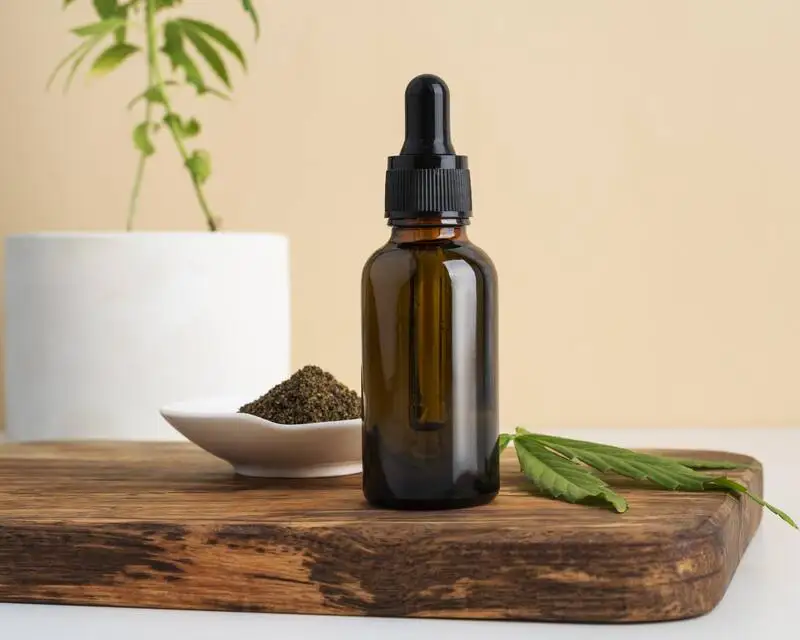
Holding a tincture under the tongue for 60 – 90 seconds allows direct absorption through the sublingual mucosa, bypassing first-pass liver metabolism. This produces an onset of 15 – 45 minutes and effects that fall between inhalation and edibles in intensity and duration. Swallowing the remaining tincture after holding activates the remaining THC via the edible pathway, extending the duration.
Dosing is precise with tinctures: a 30 ml bottle labeled 600 mg THC contains 20 mg/ml. A 0.25 ml dropper delivers 5 mg. This predictability makes tinctures excellent for medical dosing.
Topicals
Topical cannabis products (creams, balms, patches) deliver cannabinoids locally through the skin to peripheral CB1 and CB2 receptors. Standard topicals do not cross the dermis into systemic circulation and therefore produce no psychoactive effects regardless of THC content. Transdermal patches are the exception — designed to deliver cannabinoids systemically, they function more like a slow-release edible.
Method
Onset
Peak
Duration
Bioavailability
Smoking
2–10 min
20–30 min
1–3 h
10–35%
Vaporizing
2–5 min
15–25 min
1–2.5 h
50–80%
Edibles
45 min–2 h
2–4 h
4–8 h
4–20%
Sublingual
15–45 min
1–2 h
2–5 h
20–35%
Transdermal Patch
1–2 h
3–6 h
8–12 h
Controlled release
THC:CBD Ratios and Dosing Strategy
The ratio of THC to CBD in your product profoundly alters the dosing equation. CBD modulates THC’s binding at CB1 receptors, reducing anxiety and increasing the therapeutic window. This means a 10 mg THC dose in a 1:1 product often feels manageable where 10 mg pure THC would cause anxiety in a sensitive user.
Ratio (THC:CBD)
Effect Profile
Best Application
20:1 (High THC)
Strong psychoactive, euphoric, potential anxiety
Experienced recreational users, severe pain
4:1
Moderate psychoactive with some CBD buffer
General recreational, mild medical
1:1
Balanced: euphoria with anxiety reduction, good therapeutic window
Medical patients, anxiety-prone users, beginners
1:4
Mild psychoactive, strong CBD anti-inflammatory
Pain management, daytime medical use
0:1 (CBD only)
No psychoactive effect, anti-inflammatory, anxiolytic
Cannabis dosing is highly individualized. The following variables all influence how a given dose affects you:
Tolerance: Regular daily users may require 5–10x the dose of a cannabis-naive person for equivalent effects due to CB1 receptor downregulation.
Endocannabinoid tone: People with naturally lower endocannabinoid levels (associated with certain pain conditions and anxiety disorders) may be more sensitive to exogenous cannabinoids.
Metabolic rate: CYP2C9 and CYP3A4 enzymes metabolize THC. Genetic variants affect how quickly THC is processed. Certain medications (SSRIs, blood thinners) also inhibit or induce these enzymes.
Body composition: THC is fat-soluble and accumulates in adipose tissue. Higher body fat percentage can extend the duration of effects after high doses.
Set and setting: Anxiety, unfamiliar environments, and social stress amplify negative effects of THC. The same dose can feel pleasant in a familiar, comfortable setting and overwhelming in a stressful one.
Stomach contents: Fat-rich meals dramatically increase oral bioavailability. Fasting reduces it but can cause faster onset with nano-formulated products.
Sleep deprivation: Being tired significantly amplifies sedative effects of high-myrcene strains and indica-dominant products.
Medical Dosing vs Recreational Dosing
Medical cannabis dosing differs from recreational dosing in several key ways. Medical patients typically target specific therapeutic windows: low enough to maintain function during the day, high enough to address symptoms. Many medical protocols involve consistent dosing schedules rather than as-needed use.
Pain management protocols often start at 2.5 mg THC + 5 mg CBD twice daily and titrate upward every 3–7 days until adequate symptom control is achieved. Anxiety and PTSD protocols frequently use CBD-dominant products with only trace THC (under 1 mg) during the day and a slightly higher THC dose (2.5–5 mg) for sleep.
Nausea management (chemotherapy-induced) uses dronabinol (pharmaceutical THC) or cannabis products at 2.5–10 mg THC 1–3 hours before chemotherapy, with repeat dosing every 2–4 hours as needed. These are guidelines and individual protocols should always be set in collaboration with a prescribing physician.
Tolerance Management and Breaks
CB1 receptor downregulation — the reduction in both receptor number and receptor sensitivity with chronic exposure — is the biological basis of cannabis tolerance. Research using PET imaging has shown CB1 receptor density in chronic users can be 20% lower in key brain regions compared to non-users. The good news: receptor density largely recovers within 2–4 weeks of abstinence.
Strategies for managing tolerance without full abstinence include: rotating between high-CBD and high-THC products on alternate days; reserving high-THC use for evenings only; using the minimum effective dose consistently rather than escalating; and incorporating regular 48-hour mini-breaks into a weekly routine.
If you find your usual dose no longer produces satisfactory effects and you’ve been consuming daily, a 2-week tolerance break will reset your baseline more reliably than any other strategy. Plan it during a lower-stress period, as the first 3–5 days may involve mild withdrawal symptoms including sleep disruption and irritability in heavy users.
Dosing Safety Tips
Always start with the lowest effective dose and titrate up slowly over multiple sessions.
Never drive or operate machinery within 4 hours of cannabis use — or longer for edibles.
Do not mix cannabis with alcohol — even moderate alcohol dramatically amplifies THC effects.
If you are taking medications, consult a physician — THC interacts with CYP450 metabolism.
Keep cannabis products (especially edibles) out of reach of children and pets.
If you feel overwhelmed after over-dosing: find a quiet space, stay hydrated, try black pepper or CBD, and remember the effects are temporary.
Pregnant and breastfeeding individuals should avoid cannabis entirely — THC crosses the placental barrier and is present in breast milk.
AK
Ann Karim
Cannabis Science & Wellness Writer — ZenWeedGuide
Ann specializes in evidence-based cannabis content, translating clinical research into practical guidance for medical patients and recreational consumers. She covers pharmacology, dosing science, and therapeutic applications.
Frequently Asked Questions
How many mg of THC is a good starting dose?
For edibles, 2.5 mg THC is the standard beginner dose. For flower, a single small puff from a low-THC strain (under 15% THC) is appropriate. Always wait the full onset window before re-dosing — 2 hours for edibles, 15 minutes for inhalation.
Why do edibles feel so much stronger than smoking?
When THC is metabolized by the liver it converts to 11-hydroxy-THC, which crosses the blood-brain barrier more efficiently and produces a longer, more intense effect. The same 10 mg that feels mild when smoked can feel overwhelming as an edible.
How do I build tolerance and what can I do about it?
Tolerance develops because CB1 receptors downregulate with repeated exposure. A standard tolerance break of 2–4 weeks allows receptor sensitivity to return to baseline. Reducing frequency of use and alternating between low-THC and high-CBD products also slows tolerance buildup.
What is the difference between a microdose and a full dose?
A microdose (1–2.5 mg THC) produces sub-perceptual effects: mild mood lift, slight focus enhancement, no impairment. A moderate dose (5–15 mg) produces clear psychoactive effects. A full or macro dose (20 mg+) produces strong psychoactive effects and is appropriate only for experienced users with established tolerance.
Share:
ZW
ZenWeedGuide Editorial
Reviewed by our editorial team — cannabis researchers, policy analysts, and medical writers with expertise across clinical research, dispensary operations, and US cannabis law. Content is fact-checked and updated regularly.