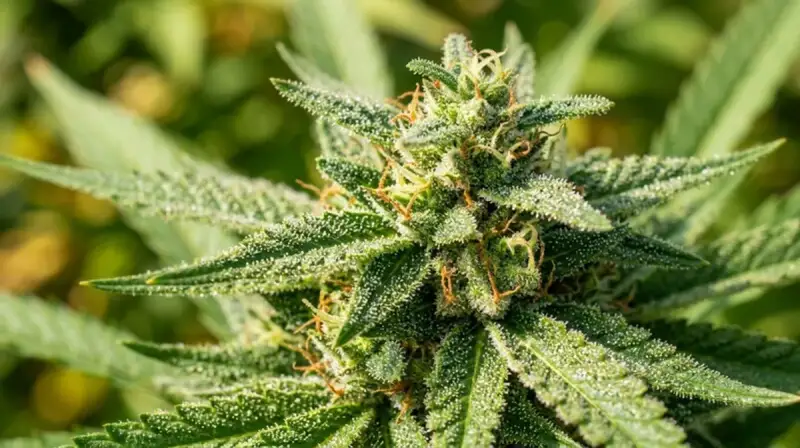
CBC (Cannabichromene): The Non-Psychoactive Cannabinoid for Inflammation, Neurogenesis, and Pain
CBC is the third most abundant cannabinoid in cannabis — non-psychoactive, anti-inflammatory, and potentially neurogenic. Here is the complete pharmacological profile, research summary, and where to find it.
Senior Cannabis Editor at ZenWeedGuide. Specialist in cannabis pharmacology, the endocannabinoid system, and evidence-based effect guides.
Last reviewed: May 2026
KEY FACTS
Third most abundant: CBC is typically the third most abundant cannabinoid after THC and CBD, though present at much lower concentrations in most commercial cultivars
Non-psychoactive: CBC does not bind significantly to CB1 receptors — no intoxication, no high, fully functional after consumption
Neurogenesis: CBC promotes neural progenitor cell survival and proliferation in the hippocampus (Shinjyo & Di Marzo, 2013)
Anti-inflammatory: Inhibits arachidonic acid release from membranes and modulates TRP-mediated inflammatory signaling
Antidepressant research: CBC showed antidepressant effects comparable to fluoxetine in animal models (Brierley et al., 2016)
Entourage: CBC enhances the analgesic effect of THC synergistically and contributes to the broader entourage effect of whole-plant cannabis
What Is CBC? Structure and Biosynthesis
Cannabichromene (CBC) was first isolated in 1966 by Gaoni and Mechoulam — the same researchers who identified THC. It is a phytocannabinoid with the molecular formula C21H30O2, sharing the classic cannabinoid tricyclic structure with THC and CBD but with key differences in its ring system that eliminate its psychoactivity.
Like all major phytocannabinoids, CBC is synthesised from cannabigerol (CBG) — the “mother cannabinoid.” The enzyme CBCA synthase converts CBG-A (cannabigerolic acid) to CBCA (cannabichromenic acid), which then decarboxylates to CBC through heat exposure. This is the same process that converts THCA to THC and CBDA to CBD. In raw cannabis plant material, CBC exists primarily as CBCA; the active CBC is formed through decarboxylation during drying, curing, and especially heating during vaporization or cooking.
CBC’s concentration in cannabis varies significantly by cultivar. In most commercially available high-THC strains, CBC represents less than 1% of total cannabinoid content. However, some cultivars — particularly those with landrace genetics from tropical regions — can contain 3–5% CBC. Industrial hemp strains bred for minor cannabinoid content may contain even higher concentrations.
Unlike THC, CBC is not listed as a controlled substance in most jurisdictions. As a non-intoxicating cannabinoid, it occupies a legal grey area similar to CBD in many countries, and CBC isolate products are beginning to appear in the functional wellness market.
Why CBC Is Non-Psychoactive: Receptor Pharmacology
The key to understanding CBC’s non-psychoactive profile is its receptor binding pattern. THC produces its euphoric and intoxicating effects primarily through CB1 receptor agonism in the brain. CBC has very low binding affinity for CB1 receptors — far below the threshold required to produce cognitive impairment or euphoria. This is structurally determined by the different ring geometry compared to THC, which prevents CBC from fitting the CB1 binding pocket in the same way THC does.
CBC’s primary receptor and transporter targets:
TRPA1 (Transient Receptor Potential Ankyrin 1): CBC is a potent TRPA1 agonist. TRPA1 channels are expressed in sensory neurons, immune cells, and the gastrointestinal tract. TRPA1 activation by CBC modulates pain signaling (particularly inflammatory and neuropathic pain) and has anti-inflammatory downstream effects.
TRPV4: CBC activates TRPV4 channels, which are involved in osmotic regulation, inflammation, and mechanical pain sensing. This is part of CBC’s mechanism in inflammatory conditions.
CB2 receptors: CBC has moderate affinity for CB2 receptors, which are expressed primarily in immune cells and peripheral tissues. CB2 activation has anti-inflammatory effects without producing psychoactivity.
Anandamide uptake inhibition: CBC inhibits anandamide reuptake transporters, raising extracellular anandamide concentrations. This indirectly activates both CB1 and CB2 receptors through the endogenous cannabinoid system, producing effects similar to CBD’s FAAH inhibition.
5-HT1A receptors: At high concentrations, CBC may interact with serotonin 5-HT1A receptors, contributing to its antidepressant-adjacent effects observed in preclinical research.
Anti-Inflammatory Research
CBC’s anti-inflammatory profile is its most extensively studied property. The mechanism operates through several distinct pathways:
Arachidonic Acid Pathway
One of the primary CBC anti-inflammatory mechanisms involves inhibition of arachidonic acid release from cell membranes. Arachidonic acid is the precursor to prostaglandins and leukotrienes — key inflammatory mediators. By preventing arachidonic acid mobilisation, CBC reduces the upstream substrate for inflammatory cascade amplification without directly blocking COX or LOX enzymes (as NSAIDs do).
This means CBC’s anti-inflammatory mechanism is fundamentally different from standard anti-inflammatory drugs, offering potential complementary activity. The stomach irritation profile of NSAIDs is largely driven by COX inhibition; CBC’s upstream mechanism does not share this adverse effect profile at cannabinoid doses.
TRP Channel Modulation
TRPA1 and TRPV4 activation by CBC produces anti-inflammatory effects in part through the CGRP (calcitonin gene-related peptide) and substance P pathway — neuroinflammatory mediators that are modulated downstream of TRP channel activation. In inflammatory bowel models, CBC has shown significant anti-inflammatory activity specifically in intestinal tissue, where TRPA1 and CB2 density is high.
Key Anti-Inflammatory Studies
De Petrocellis et al. (2012): CBC significantly inhibited the production of multiple inflammatory compounds in lipopolysaccharide-activated macrophages — a standard in vitro inflammation model — through TRP and CB2-mediated mechanisms
Izzo et al. (2012): CBC showed anti-inflammatory effects in intestinal inflammation models in mice, working through TRPA1 activation in enteric neurons — suggesting applications for inflammatory bowel conditions
Turner and El-Sohly (1981): Early study establishing CBC’s anti-inflammatory activity as superior to phenylbutazone (a potent anti-inflammatory drug) in certain assays, providing foundational evidence for subsequent research
Neurogenesis: CBC and Brain Cell Growth
One of the most compelling areas of CBC research involves its effects on neural progenitor cell (NPC) viability and proliferation. Neural progenitor cells are adult stem cells in the hippocampus that can differentiate into new neurons — a process called adult neurogenesis. Hippocampal neurogenesis is strongly associated with mood regulation, stress resilience, and learning/memory capacity. Major depression is associated with reduced hippocampal neurogenesis; antidepressant drugs (SSRIs) and exercise both promote it.
Shinjyo and Di Marzo (2013) demonstrated that CBC significantly increased the viability of mouse hippocampal neural progenitor cells and promoted their differentiation. CBC-treated NPCs showed increased survival rates and enhanced differentiation into astrocytes and neurons compared to controls. Crucially, this effect occurred at concentrations achievable within the brain from standard cannabis consumption, making the finding pharmacologically plausible rather than merely academic.
This neurogenic effect may be mediated through CBC’s anandamide reuptake inhibition — elevated anandamide levels are independently associated with increased hippocampal neurogenesis through CB1 receptor signaling. CBC may therefore support neurogenesis through both direct NPC effects and indirect endocannabinoid tone elevation.
The implications for mood and cognitive function are significant but require caution: this research is primarily preclinical (cell culture and animal models). Human neurogenesis evidence remains limited, and extrapolating directly to clinical antidepressant or cognitive-enhancement applications requires further clinical investigation.
Antidepressant Research
Two lines of evidence support CBC’s antidepressant potential: its neurogenic effects (described above) and direct behavioral evidence from animal studies.
Brierley et al. (2016) assessed the antidepressant-like effects of multiple cannabinoids using the forced swim test — a validated animal model for antidepressant activity. CBC produced significant antidepressant-like effects, comparable to fluoxetine (Prozac) at equivalent doses in the model. Notably, the researchers also found that CBC worked synergistically with CBD — the combination produced effects greater than either compound alone, a finding with direct implications for whole-plant cannabis formulations vs. isolates.
The mechanism proposed involves CBC’s combined anandamide elevation (via reuptake inhibition), 5-HT1A modulation (the serotonergic target of buspirone and partially SSRIs), and neurogenic effects creating a multi-modal antidepressant profile that may offer advantages over single-target drug approaches.
Important caveat: forced swim test results do not translate predictably to human antidepressant efficacy, and no CBC-specific human clinical trials for depression exist as of this writing. These findings should be understood as mechanistic evidence supporting further research rather than clinical proof of antidepressant effect.
Pain Relief and the Entourage Effect
CBC’s analgesic properties work through TRPA1 channel modulation — a distinct mechanism from THC (CB1-mediated) and CBD (various). This mechanistic independence makes CBC potentially synergistic with both THC and CBD for pain relief.
The most compelling pain evidence is the CBC-THC interaction. Research by DeLong et al. (2010) demonstrated that a CBC-THC combination produced significantly greater pain relief in animal models than either compound alone, with the combination requiring lower total cannabinoid doses to achieve equivalent analgesia. This is a clean entourage effect demonstration: CBC amplifies THC’s analgesic efficacy, which has practical implications for whole-plant medicine dosing vs. THC isolate.
For neuropathic pain specifically, TRPA1 channel activity is particularly relevant — TRPA1 is a primary mediator of neuropathic pain signaling, and CBC’s potent TRPA1 agonism may make it especially useful in neuropathic pain contexts where standard analgesics perform poorly.
CBC Research Summary Table
Effect
Evidence Level
Key Study
Mechanism
Anti-inflammatory
Preclinical strong
De Petrocellis 2012; Izzo 2012
TRP channels, CB2, arachidonic acid
Analgesic
Preclinical strong
DeLong et al. 2010
TRPA1; synergy with THC
Neurogenesis
Preclinical (in vitro)
Shinjyo & Di Marzo 2013
NPC viability, anandamide elevation
Antidepressant
Animal models
Brierley et al. 2016
Anandamide, 5-HT1A, neurogenesis
Antimicrobial
In vitro
Appendino et al. 2008
Membrane disruption (MRSA active)
Anti-tumour
Very early/in vitro only
Various preliminary
Cell apoptosis pathways (early research)
CBC in the Entourage Effect
CBC contributes to the entourage effect — the enhanced therapeutic profile of whole-plant cannabis compared to isolated cannabinoids — through several synergistic interactions:
THC + CBC analgesia: DeLong et al. (2010) demonstrated significantly enhanced pain relief from CBC-THC combinations vs. either alone, establishing a pharmacodynamic synergy
CBD + CBC mood: Brierley et al. (2016) showed CBC and CBD produced synergistic antidepressant-like effects — the combination was more effective than either compound at equivalent doses
Anandamide elevation: CBC’s anandamide reuptake inhibition combined with CBD’s FAAH inhibition creates a two-pronged endocannabinoid system elevation, raising anandamide through both production pathway (FAAH blockade) and recycling pathway (reuptake inhibition)
Complementary receptor coverage: THC (CB1), CBD (5-HT1A, FAAH, CB1 modulation), and CBC (TRP, CB2, anandamide) together provide far broader receptor system coverage than any individual cannabinoid
This is why full-spectrum cannabis products consistently demonstrate superior efficacy vs. isolates in many therapeutic applications: CBC is one of the key minor cannabinoids contributing to that superiority.
Finding CBC-Rich Strains
CBC is not yet widely analysed and labelled on dispensary menus. Finding high-CBC cultivars requires either lab-tested products with full minor cannabinoid panels or selecting based on known high-CBC genetics.
Strain / Type
Typical CBC Range
Notes
Purple Cadillac
~0.5–1.2%
One of the higher-CBC commercial strains; lab data variable
Maui Wowie (Hawaiian phenotypes)
~0.3–0.8%
Tropical landrace background shows elevated minor cannabinoids
Bubba Kush
~0.2–0.6%
Some phenotypes show notable CBC alongside high myrcene
CBC-specific hemp cultivars
1–5%+
Specialty hemp bred for minor cannabinoid production; increasingly available
Full-spectrum extracts with CoA
Varies
Certificate of Analysis showing minor cannabinoid panel is the gold standard for finding CBC
Frequently Asked Questions
CBC (cannabichromene) is the third most abundant cannabinoid in cannabis. It is non-psychoactive, acting through TRP channels (TRPA1, TRPV4) and CB2 receptors rather than CB1. It produces anti-inflammatory, analgesic, and antidepressant-adjacent effects and promotes hippocampal neurogenesis. It also inhibits anandamide reuptake, raising endocannabinoid tone.
No. CBC has very low CB1 receptor binding affinity — far below the threshold required for intoxication or euphoria. It is a non-psychoactive cannabinoid alongside CBD and CBG, producing therapeutic effects through TRP channels, CB2, and anandamide elevation without cognitive impairment.
Research supports CBC for anti-inflammatory effects (TRP channel and arachidonic acid pathway), analgesic effects (TRPA1, synergy with THC), antidepressant-like effects in animal models (Brierley 2016), hippocampal neurogenesis promotion (Shinjyo 2013), and antimicrobial activity (including MRSA) in vitro. All research is currently preclinical or in vitro.
Strains with tropical landrace genetics (Hawaiian, Nigerian, Indian origin) tend to have higher CBC. Purple Cadillac and some Maui Wowie phenotypes are among higher-CBC commercial options. CBC-specific hemp cultivars offer 1–5%+ CBC. A Certificate of Analysis showing the full minor cannabinoid panel is the only reliable way to verify CBC content.