pH effect: Controls solubility of all mineral nutrients; wrong pH creates lockout even with perfect nutrient solution
Most misdiagnosed issue: pH-induced nutrient lockout is responsible for an estimated 70% of “deficiency” cases in home grows
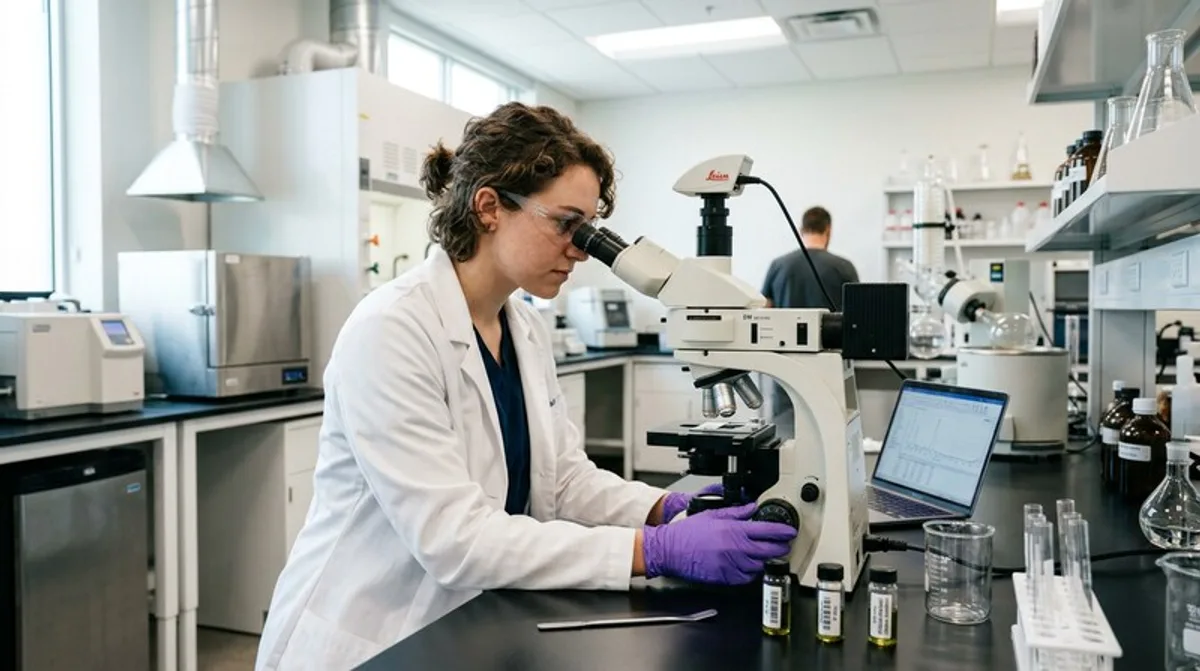
Calibration frequency: Calibrate pH meter every 1–2 weeks; most budget meters drift significantly without calibration
Why pH Is the Master Variable in Cannabis Nutrition
pH (potential of hydrogen) measures the acidity or alkalinity of a solution on a logarithmic scale from 0 (most acidic) to 14 (most alkaline), with 7.0 being neutral. For cannabis growers, pH is not merely one of many parameters to track — it is the single variable that determines whether the nutrients you have added to your water or soil are actually available for plant uptake.
Every essential mineral nutrient exists in different ionic forms at different pH levels. These ionic forms have very different solubility and membrane permeability characteristics — meaning some forms can cross root cell membranes while others cannot. When pH is outside the optimal range, nutrients that are physically present in adequate concentrations become chemically unavailable for uptake. This phenomenon is called nutrient lockout, and it produces symptoms visually identical to true nutrient deficiencies — yellow leaves, brown spots, purple stems, interveinal chlorosis — despite the nutrients being present in the growing medium or solution.
This is why pH testing is the first diagnostic step when any cannabis plant shows abnormal symptoms: before assuming a deficiency exists and adding more nutrients (which may worsen a lockout situation by raising EC), verify that pH is in the correct range and that your meter is accurately calibrated.
Nutrient Availability Lockout Chart by pH
The following chart shows the pH availability windows for each essential nutrient in soil and hydroponic systems. Narrow bars indicate limited availability windows — these nutrients require more precise pH management.
Cannabis Nutrient Availability by pH — Soil vs Hydroponic
Nutrient
Optimal Soil pH
Optimal Hydro pH
Lockout Below (Hydro)
Lockout Above (Hydro)
Deficiency Symptoms
Nitrogen (N)
6.0–8.0
5.5–8.0
5.0
8.5
Yellowing starting at lower leaves; stunted growth
Phosphorus (P)
6.0–7.5
5.5–7.0
5.0
7.5
Dark purple/blue leaf undersides; brown stem; slow growth
Potassium (K)
6.0–7.5
5.5–8.0
5.0
8.0
Brown, crispy leaf edges; yellowing between veins on older leaves
Calcium (Ca)
6.5–8.0
6.0–8.0
5.5
N/A
Brown spots on leaves; distorted curled new growth
Magnesium (Mg)
6.0–8.5
6.0–8.5
5.5
N/A
Interveinal chlorosis (yellowing between veins) on older leaves; red/purple stems
Sulfur (S)
6.0–7.5
5.5–7.5
5.0
N/A
Uniform pale green/yellow on new growth; similar to N deficiency but on young leaves
Iron (Fe)
6.0–7.5
5.5–6.5
N/A
6.5
Interveinal yellowing on newest growth; veins remain green (distinct from Mg deficiency)
Manganese (Mn)
5.5–7.0
5.5–6.5
N/A
6.5
Similar to iron deficiency; yellow spots on young leaves with green veins
Zinc (Zn)
5.5–7.0
5.5–6.5
N/A
7.0
Small, narrow leaves; interveinal chlorosis; stunted new growth
Copper (Cu)
5.5–7.0
5.5–6.5
N/A
7.0
Blue-green leaf tint; wilting; young leaves twisted or irregular
Boron (B)
5.5–7.0
5.5–6.5
N/A
6.5
Thick, brittle leaves; brown growing tips; hollow stems
Molybdenum (Mo)
6.5–7.5
6.0–7.0
5.5
N/A
Pale green older leaves curling upward; nitrogen deficiency appearance
Soil pH Management: 6.0–7.0 Range
Soil has significant natural pH buffering capacity — the organic matter, mineral particles, and microbial activity in soil all resist rapid pH changes and moderate extreme swings. This buffering makes soil more forgiving of occasional pH errors than hydroponic systems, but it also makes correction of established pH problems slower and more difficult.
Testing Soil pH
Measure soil pH using runoff testing: water your plant with pH-adjusted water (6.5), allow it to thoroughly saturate the medium, and collect the liquid draining from the bottom of the pot. Test this runoff with a calibrated pH meter. The runoff pH indicates the current pH environment in the root zone — values significantly below your input pH indicate the soil has become acidic; values above indicate alkalinity. Runoff pH more than 0.5 units from your target range requires corrective action.
Correcting Soil pH
Soil pH Correction Methods
Problem
Correction Method
Product
Application Rate
Speed of Action
pH too low (acidic, below 6.0)
Raise pH
Garden lime (calcium carbonate)
1–2 tbsp per gallon of soil; mix in when repotting
Slow — 1–4 weeks
pH too low (acidic)
Raise pH
Dolomite lime (calcium-magnesium carbonate)
1–2 tbsp per gallon of soil; also adds Ca/Mg
Slow — 2–6 weeks
pH too low (acidic)
Raise pH — immediate
pH Up solution (potassium hydroxide) in water
Adjust watering water to 7.0–7.5 until runoff normalizes
Fast — 1–3 waterings
pH too high (alkaline, above 7.0)
Lower pH
Elemental sulfur
1/4 tsp per gallon of soil; mix in
Very slow — 2–8 weeks (requires microbial oxidation)
pH too high (alkaline)
Lower pH
pH Down solution (phosphoric acid) in water
Adjust watering water to 5.8–6.0 until runoff normalizes
Fast — 1–3 waterings
pH too high (alkaline)
Lower pH
Apple cider vinegar
1 tsp per gallon of water — emergency temporary correction
Fast but unstable — for emergency use only
Hydroponic pH Management: 5.5–6.1 Range
Hydroponic systems offer no natural pH buffering — the nutrient solution pH can change dramatically within hours from plant metabolic activity, temperature fluctuations, and evaporation. This requires daily monitoring and adjustment rather than the weekly or biweekly checks acceptable in soil. The lack of buffering is both hydroponics’ greatest challenge and one of its advantages: pH corrections take effect immediately rather than over days or weeks.
pH Drift Patterns in Hydro
Understanding which direction your reservoir pH naturally drifts helps anticipate corrections:
pH rising (common during veg): Plants preferentially uptake nitrogen in nitrate form (NO3-), releasing hydroxide ions (OH-) that raise solution pH. Common when running nitrogen-heavy vegetative nutrients.
pH falling (common during flower): Plants take up cations more aggressively during flowering, releasing H+ ions that acidify the solution. Combined with organic acid root exudates, this creates a downward pH trend.
Rapid pH swings: Small reservoir volume amplifies all pH changes. This is one reason larger reservoir volume (10+ gallons per plant) significantly reduces management burden in DWC.
pH Meter Calibration Guide
A pH meter that has not been calibrated recently is worse than no meter — it gives false confidence in incorrect readings. The most common source of “correct” nutrient solution being incorrectly pH-adjusted is a drifted, uncalibrated meter. This is responsible for an enormous proportion of unexplained deficiencies in home grows.
Calibration frequency: Every 1–2 weeks for active grows; before any critical measurement if you have not calibrated recently.
Buffer solutions: Use fresh, commercially prepared pH 4.0 and pH 7.0 buffer solutions. These are inexpensive ($5–10 per bottle). Do not reuse old buffer solution or DIY buffer — contaminants cause inaccurate reference points.
Two-point calibration procedure: Rinse probe with distilled or RO water. Dry gently with lint-free cloth. Insert into pH 7.0 buffer. Wait for stable reading. Adjust meter to read exactly 7.00 (see your meter’s specific calibration procedure). Rinse again. Insert into pH 4.0 buffer. Wait for stable reading. Adjust the second calibration point to read exactly 4.00. Rinse and store in probe storage solution.
Probe storage: Store pH probes in pH 4.0 buffer or commercial probe storage solution — never in plain water or distilled water, and never dry. Dry storage ruins the probe’s reference cell within days.
Replacement schedule: Most pH probes have a useful life of 1–3 years with proper care. Signs of a failing probe: slow response time, readings that don’t stabilize, inability to calibrate to within 0.1 of target values.
pH Correction Methods: pH Up vs pH Down
pH Adjustment Solutions: Properties and Usage
Product
Chemistry
Direction
Application Rate (Approximate)
Notes
pH Down (commercial)
Phosphoric acid (most common) or citric acid
Lowers pH
Start with 1–2 drops per liter; stir; retest
Phosphoric acid adds trace P to solution; citric acid is less stable but more organic
pH Up (commercial)
Potassium hydroxide (KOH) or potassium silicate
Raises pH
Start with 0.5–1 drop per liter; stir; retest
pH Up is more potent per volume than pH Down — add very slowly; KOH adds K to solution
Vinegar (apple cider)
Acetic acid ~5%
Lowers pH
1 tsp per gallon — emergency use only
Unstable — breaks down quickly; use only when commercial pH Down unavailable
Baking soda
Sodium bicarbonate
Raises pH
Not recommended for cannabis
Adds sodium — accumulates in medium; causes toxicity; never use in cannabis grows
Lemon juice
Citric acid ~5–8%
Lowers pH
Emergency only
Organic material can promote microbial growth in reservoirs; unstable
Calcium/Magnesium pH Interaction
Calcium and magnesium have the highest pH lockout threshold of all cannabis nutrients — both require pH above 5.5 (hydro) or 6.0 (soil) for adequate availability. Cannabis is particularly demanding of these secondary macronutrients: calcium is essential for cell wall structure, membrane integrity, and cell division; magnesium is the central atom of every chlorophyll molecule and essential for photosynthesis itself.
The most common pH-related deficiency seen in cannabis is calcium-magnesium deficiency triggered by low pH — particularly in soft water regions where water naturally contains little Ca/Mg to buffer the solution. In these situations, growers who add large amounts of Cal-Mag supplement without addressing the underlying low pH are treating symptoms rather than causes. The correct approach: first adjust pH to appropriate range, then supplement Ca/Mg if deficiency symptoms persist after pH correction.
Flush Protocol and pH Considerations
Flushing — running large volumes of pH-adjusted plain water through the growing medium — is practiced by many growers before harvest to clear mineral salt buildup and potentially improve final product flavor. Whether pre-harvest flushing provides measurable quality improvement remains debated in cannabis research, but the procedure itself requires attention to pH:
Flush water pH for soil: 6.2–6.5
Flush water pH for coco: 5.8–6.2
Flush water pH for hydro: 5.8–6.0
Volume of flush water: 3× the container volume minimum (e.g., 15 gallons for a 5-gallon pot)
Duration: 5–14 days before harvest; longer for soil, shorter for hydro/coco
Critical mistake: Using uncorrected tap water (often pH 7.5–8.5) for flushing — triggers severe deficiencies in the final days of flowering when the plant is most vulnerable
What is the correct pH for cannabis in soil vs hydroponics?
For cannabis in soil, maintain pH between 6.0–7.0, with 6.3–6.8 being the ideal sweet spot. For hydroponics (DWC, NFT, coco coir), maintain pH between 5.5–6.1, with 5.7–5.9 being optimal. Soil has natural buffering capacity that mediates nutrient availability differently than a liquid nutrient solution, which is why the ranges differ.
How do I calibrate a pH meter for cannabis?
Calibrate your pH meter every 1–2 weeks using two-point calibration with pH 4.0 and pH 7.0 buffer solutions. Rinse the probe with distilled water, insert into pH 7.0 buffer, and adjust the meter to read 7.00. Repeat with pH 4.0 buffer. Store the probe in probe storage solution between uses. Budget pH meters ($15–30) drift significantly — invest in a quality meter ($50–100) for reliable readings.
What causes pH to drift in a cannabis grow?
pH drift occurs from plant roots releasing organic acids and CO2 as metabolic byproducts, selective nutrient uptake (when plants preferentially uptake cations, they release H+ ions that acidify the solution), evaporation that concentrates mineral salts, and microbial activity. In hydroponics, pH commonly rises during vegetative growth and may drop during heavy flowering.
When should I flush cannabis and what pH should flush water be?
Pre-harvest flushing involves running plain water through the medium for the final 5–14 days before harvest. Flush water should be pH-adjusted: 6.2–6.5 for soil, 5.8–6.0 for coco or hydro. Using uncorrected tap water (often pH 7.5–8.0) for flushing can cause pH spikes that trigger deficiencies in the final days of flowering.