




- Created by DJ Short in the 1970s–80s from Afghani × Thai × Purple Thai landrace genetics
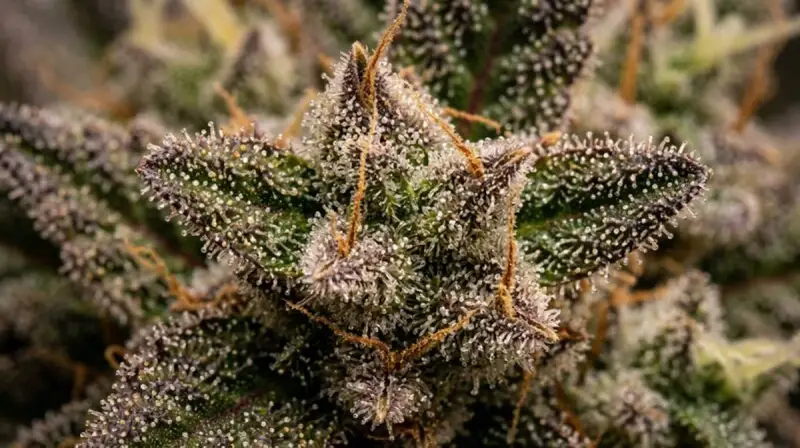
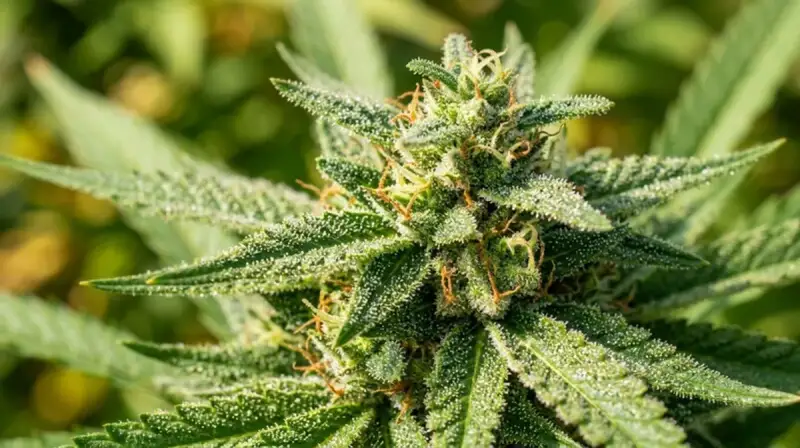
- Indica-dominant (80/20) with 18–20% THC and characteristic blueberry aroma
- Won multiple Cannabis Cup awards — one of the most decorated classic strains in history
- Primary terpenes: myrcene, caryophyllene, and pinene — berry-meets-earth profile
- Medical applications: insomnia, chronic pain, stress, and anxiety relief
- Parent strain of Blue Dream, Blue Cheese, Blue Mystic, and Blue Widow
- Moderate difficulty grow, 8–9 week flower, 350–400 g/m² indoor yield
Strain Quick-Reference
| Property | Detail |
|---|---|
| Genetics | Afghani × Thai × Purple Thai (DJ Short selection) |
| Type | Indica-Dominant (80% indica / 20% sativa) |
| THC | 18–20% |
| CBD | <1% |
| Primary Terpenes | Myrcene, Caryophyllene, Pinene |
| Flowering Time | 8–9 weeks (56–63 days) |
| Indoor Yield | 350–400 g/m² |
| Difficulty | Moderate |
Origins & DJ Short’s Breeding Methodology
Blueberry is the masterwork of breeder DJ Short, a cultivator who spent over a decade in the 1970s and 1980s crossing Southeast Asian sativa landraces with Afghani indica genetics. Short sourced his foundation lines from Thailand and the Hindu Kush region, selecting specifically for unusual fruit-forward aromatic phenotypes that were rare in the cannabis gene pool at the time.
The three-way cross of Afghani (body and resin), Thai (fruity brightness and cerebral clarity), and Purple Thai (coloration and sweetness) produced a strain with a combination of characteristics that had never been seen together: dense indica structure, true berry aroma, vibrant purple coloration, and manageable 18–20% THC. DJ Short’s methodology focused on pheno-hunting through hundreds of seedlings, preserving only those individuals that expressed the sweetest aromatic profile alongside stable yield and structure.
Blueberry went on to win multiple Cannabis Cup awards in Amsterdam, cementing its status as one of the most important preservation strains in the modern era. Seed companies worldwide have used it as a parent line for decades, making it arguably the most reproduced heirloom in the industry. The strain’s value as a genetic preservation specimen is significant: it represents a direct window into 1970s-era cannabis breeding before hybridization dominated the market.
Terpene Profile & the Science of Berry Aroma
The distinctive blueberry scent that defines this strain is the product of a specific terpene combination working synergistically with trace esters and lactones. Understanding the chemistry explains why Blueberry smells like actual fruit while most cannabis does not.
| Terpene | Aroma Note | Pharmacological Role |
|---|---|---|
| Myrcene | Earthy, musky berry, ripe fruit | Potentiates THC by increasing blood-brain barrier permeability; deepens sedation |
| Caryophyllene | Spicy, woody, faint pepper | Direct CB2 receptor agonist; anti-inflammatory and stress-modulating activity |
| Pinene (α) | Fresh pine, herbal brightness | Acetylcholinesterase inhibitor; may counteract short-term memory impairment from THC |
Myrcene is consistently the dominant terpene in authentic Blueberry phenotypes, often comprising 30–40% of the total terpene mass. Its musky, ripe-fruit character forms the aromatic base. The interaction between myrcene and trace volatile esters — including isoamyl acetate and ethyl butyrate, which are also present in real blueberries — creates the convincing berry impression that gives the strain its name. Pinene provides a counterbalancing brightness that prevents the aroma from becoming cloying.
Effects: Onset, Peak & Tail
Onset (0–15 Minutes)
The initial phase of a Blueberry high is gentle and warm, beginning with a subtle mood lift and a calming clarity behind the eyes. Unlike sativa-dominant strains that open with cognitive acceleration, Blueberry’s onset is understated — a gradual softening of tension and a quiet sense of well-being that signals the indica genetics taking hold. Users with anxiety disorders often find this gentle ramp-up reassuring compared to high-THC sativas.
Peak (15–90 Minutes)
The peak phase is where Blueberry delivers its signature experience: a full-body relaxation that moves from the neck and shoulders downward, releasing physical tension while maintaining enough mental clarity for light conversation or passive entertainment. Many users describe a dreamy, contented state with enhanced tactile sensitivity and a heightened appreciation for music or food. This phase is where the myrcene-caryophyllene-pinene interplay is most evident: the body is relaxed, mood is elevated, and cognition remains functional.
Tail (90–180+ Minutes)
The tail phase of Blueberry is long and gradual, easing into drowsiness and appetite stimulation. The myrcene-heavy profile makes this the ideal evening strain for those with insomnia, as the extended tail reliably ushers in sleep without harsh sedation. Most users find it difficult to stay mentally active in the tail phase, which makes Blueberry a poor choice for early-day productivity but an excellent one for unwinding before bed.
Medical Applications
Blueberry has a long history of medical use predating the formal medical cannabis movement. Its combination of high myrcene, moderate THC, and caryophyllene-driven CB2 activity makes it suitable for a specific cluster of conditions.
| Condition | Relevant Mechanism | Dosing Note |
|---|---|---|
| Insomnia | Myrcene sedation; CB1 agonism reduces sleep latency | Evening use; low-to-moderate dose to avoid grogginess |
| Chronic Pain | Caryophyllene CB2 activity; THC-mediated analgesia | Consistent evening dosing; titrate to individual tolerance |
| Stress & Anxiety | Body relaxation reduces somatic anxiety markers | Moderate dose; high doses can increase introspection |
| Appetite Stimulation | THC and myrcene synergy increases appetite signals | Useful for chemotherapy-related appetite loss |
Growing Blueberry: Indoor & Outdoor Guide
Blueberry is a moderately challenging strain that rewards attention to detail with dense, aromatic buds and vivid purple coloration. Its compact indica structure makes it well-suited to confined grow spaces, and its stable genetics mean phenotypic consistency is generally high when grown from reputable seed stock.
| Factor | Indoor | Outdoor |
|---|---|---|
| Flowering Time | 8–9 weeks | Late September – early October |
| Yield | 350–400 g/m² | 400–500 g/plant |
| Plant Height | 60–100 cm | 80–130 cm |
| Optimal Temp | 20–26°C | Temperate; warm days, cool nights |
| Humidity (Flower) | 40–50% RH | Dry finish essential |
| Difficulty | Moderate | Moderate |
To trigger Blueberry’s famous purple coloration, introduce a 10–15°C day-to-night temperature differential during the last two weeks of flowering. This activates anthocyanin pigment expression in the calyx tissue, producing the blue-purple hues the strain is named after. The technique also concentrates terpene expression in a controlled stress response.
Blueberry’s dense bud structure makes it vulnerable to botrytis in humid conditions. Maintain airflow with oscillating fans, keep relative humidity below 50% during flowering, and consider proactive defoliation of inner-canopy leaves. Low-stress training (LST) during vegetative growth helps open the canopy and improve light penetration across this moderate-producing cultivar.
Blueberry’s Genetic Legacy: Offspring Strains
Few strains have contributed as many successful offspring as Blueberry. DJ Short’s original genetics have been crossed with virtually every major strain family, producing a library of hybrids that dominate dispensary menus worldwide.
| Offspring Strain | Cross | What Blueberry Contributes |
|---|---|---|
| Blue Dream | Blueberry × Haze | Berry aroma, body relaxation, indica structure |
| Blue Cheese | Blueberry × UK Cheese | Sweet fruit counterpoint to cheese funk |
| Blue Widow | Blueberry × White Widow | Berry aroma, indica body effect |
| Blue Mystic | Blueberry × Northern Lights | Flavor, purple coloration, sedation depth |
Blueberry vs. Similar Classic Indica Strains
| Strain | THC | Type | Key Difference |
|---|---|---|---|
| Granddaddy Purple | 17–23% | Indica | Heavier sedation; grape/berry terpenes vs. blueberry |
| Blue Dream | 17–24% | Sativa-Hybrid | More energetic; Blueberry’s direct sativa offspring |
| Blackberry Kush | 16–20% | Indica | Earthier, more Kush-forward; less fruit brightness |
| Blue Cheese | 15–20% | Indica-Dom | Blueberry parent; pungent cheese note added |
Drug Test Detection Windows
| Test Type | Occasional Use | Regular Use |
|---|---|---|
| Urine | 3–7 days | 10–30+ days |
| Blood | 12–24 hours | Up to 7 days |
| Saliva | 24–48 hours | Up to 72 hours |
| Hair | Up to 90 days | Up to 90 days |
Detection windows vary by individual metabolism, body composition, and use frequency. This table is provided for informational purposes only.
Related Strains
- Blue Dream — Blueberry × Haze, the most popular sativa hybrid in the US
- Blue Cheese — Blueberry × UK Cheese, savory twist on a sweet classic
- Blue Widow — Blueberry × White Widow, balanced hybrid with resinous structure
- Granddaddy Purple — Deep indica with comparable berry aroma and sedation
Jordan Price has spent over a decade studying cannabis genetics, cultivation techniques, and terpene science. All strain guides are reviewed for accuracy against published research and grower community data.