










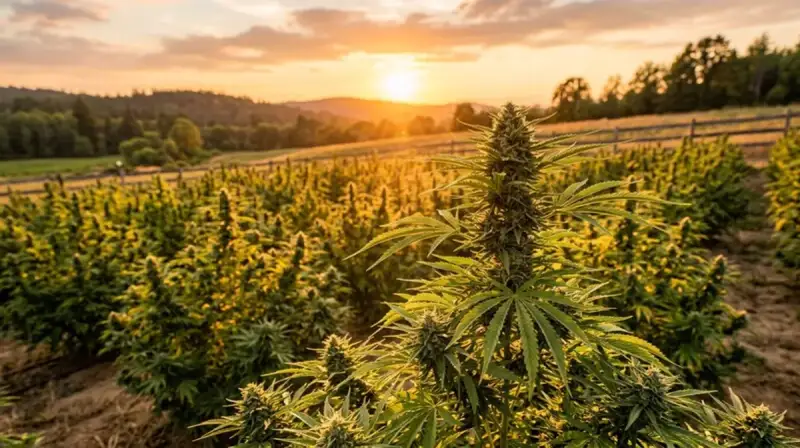
Ringo’s Gift: A Memorial to the Father of CBD Cannabis
Ringo’s Gift is more than a cannabis strain. It is a memorial to Lawrence Ringo — the Oregon farmer, cannabis activist, and breeder who spent his final years on earth doing the work that the entire medical cannabis movement needed: developing high-CBD cannabis varieties that could help patients without getting them high. In an era when cannabis was still synonymous with intoxication in both the public mind and in every dispensary on the market, Lawrence Ringo believed that the plant contained healing without the high and spent years proving it through patient, deliberate selective breeding. He succeeded. Ringo died in 2014. Harborside Health Center created Ringo’s Gift (ACDC × Harle-Tsu) in his honour, combining two of the most important high-CBD strains then available into a variety that would carry his legacy forward. The result is one of the most important medical cannabis strains in the world.
- Genetics: ACDC × Harle-Tsu — created by Harborside Health Center in honour of Lawrence Ringo
- CBD Range: 13–20%; THC 1–6% (ratio varies 1:1 to 24:1 CBD:THC by phenotype)
- Top Terpenes: Myrcene, Pinene, Caryophyllene
- Aroma/Flavour: Earthy, woody, herbal; pine undertones; mild and clean
- Effects: Clear-headed, relaxed, minimal psychoactive; functional and calm
- Medical Uses: Pain, epilepsy/seizures, anxiety, inflammation, neurological conditions
- Growing: Moderate; CBD-dominant phenotype selection critical from seed
- Distinction: One of highest CBD-ceiling strains available; Lawrence Ringo memorial
| Attribute | Detail |
|---|---|
| Type | High-CBD Hybrid (varied ratio phenotypes) |
| Breeder/Origin | Harborside Health Center; Lawrence Ringo memorial |
| Genetics | ACDC × Harle-Tsu |
| CBD | 13–20% |
| THC | 1–6% (phenotype-dependent) |
| CBD:THC Ratio | 1:1 to 24:1 (varies significantly by phenotype and source) |
| Primary Terpenes | Myrcene, Pinene, Caryophyllene |
| Flavour | Earthy, woody, herbal, mild pine |
| Bud Appearance | Moderate density; light to medium green; moderate trichomes for CBD variety |
| Effects | Clear-headed calm; relaxation; minimal to no psychoactivity at high CBD:THC ratios |
| Medical | Pain, seizures, anxiety, inflammation, neurological conditions |
| Difficulty | Moderate — phenotype selection from seed is critical for CBD dominance |
Lawrence Ringo: The Man Behind the Gift
Lawrence Ringo grew up in the Ozarks and eventually settled on a farm in Southern Oregon, where he began growing cannabis as a patient seeking relief from his own health conditions. What differentiated Ringo from other patient-growers was his systematic, scientific approach to selective breeding — and his specific focus on CBD rather than THC at a time when the entire cannabis industry was oriented toward maximising psychoactivity.
Working through the early 2000s, Ringo developed Sour Tsunami — now recognised as one of the first high-CBD strains to be documented and distributed in the modern US cannabis market. He then continued developing CBD-dominant varieties through patient crossing and selection, making his genetics available to other growers and breeders who wanted to develop the medical CBD category. His work at his farm, Sweet Earth Agricultural, became a reference point for the emerging understanding that cannabis could deliver medical benefits without the intoxicating effects that made it inaccessible to many patients.
The significance of this work cannot be overstated in its historical context. Before Ringo and the handful of other early CBD breeders began their work, the prevailing understanding of cannabis as a medical substance was inseparable from psychoactivity. The development of high-CBD, low-THC strains created an entirely new category of medical cannabis accessibility — one that now serves millions of patients globally who use CBD products derived from cannabis genetics that trace, directly or indirectly, to the work Lawrence Ringo and his contemporaries did on farms in Oregon and Northern California in the early 2000s. He died of lung complications in June 2014. Ringo’s Gift honours his legacy every time a patient experiences relief.
Genetics and Lineage: ACDC and Harle-Tsu
Both parent strains of Ringo’s Gift are themselves important high-CBD varieties. ACDC is a phenotype or derivative of Cannatonic — one of the earliest commercial high-CBD strains — that was selected specifically for very high CBD expression (typically 15–20%) and minimal THC (typically 0.5–1.2%). ACDC was named for its “no high” quality — like the band AC/DC, it has current (effect) without the electric shock (high). It became one of the most important medical CBD strains of the early 2010s and remains a reference standard for high-CBD, low-THC cannabis.
Harle-Tsu is another significant high-CBD strain, developed by Lawrence Ringo himself from Harlequin and Sour Tsunami genetics. Harlequin is a 1:1 CBD:THC ratio sativa with origins in Colombian Gold, Nepali Indica, and Thai genetics. Sour Tsunami was Ringo’s first major CBD creation. Harle-Tsu combines these two to produce a variety with very high CBD (typically 22:1 CBD:THC) and a pleasant, mild effect profile. By crossing ACDC with Harle-Tsu, Harborside essentially combined two of the strongest CBD-producing genetic lineages available at the time, creating a variety with the potential for exceptional CBD content across multiple phenotypes.
The variability inherent in Ringo’s Gift — the wide range of CBD:THC ratios from 1:1 to 24:1 — reflects the genetic diversity present when crossing two distinct high-CBD varieties. The 24:1 phenotypes represent the most CBD-dominant expression of the genetics; the 1:1 phenotypes reflect a more balanced inheritance from both parents. Dispensaries and cultivators that work with Ringo’s Gift typically phenotype-hunt extensively to identify and propagate the most CBD-dominant expressions.
Understanding CBD:THC Ratios in Ringo’s Gift
The ratio of CBD to THC in Ringo’s Gift has profound practical implications for how patients experience the strain. Understanding these ratios is essential for appropriate medical application.
| Ratio | Typical CBD | Typical THC | Experience | Best For |
|---|---|---|---|---|
| 24:1 CBD:THC | ~20% | ~1% | Completely clear-headed; no psychoactivity | Seizures, severe anxiety, children, no-high required |
| 10:1 CBD:THC | ~15% | ~1.5% | Clear-headed with very mild relaxation | Pain, inflammation, daytime use |
| 4:1 CBD:THC | ~12% | ~3% | Very mild euphoria alongside CBD effects | Pain, anxiety, users wanting slight psychoactive component |
| 1:1 CBD:THC | ~6% | ~6% | Gentle euphoria; clearly perceptible but mild | Balanced medical and recreational; mood + relief |
Terpene Profile
Ringo’s Gift’s earthy, woody, herbal aroma arises from a myrcene-forward profile supported by pinene and caryophyllene. Myrcene provides the earthy, herbal base that characterises high-CBD strains developed from landrace-adjacent genetics. Pinene contributes the clean, fresh, woody-pine quality that adds a green, slightly resinous note to the aroma. Caryophyllene adds subtle spice and provides the anti-inflammatory activity through CB2 receptor engagement that complements CBD’s own anti-inflammatory mechanisms.
| Terpene | Aroma Note | Effect Role | Also Found In |
|---|---|---|---|
| Myrcene | Earthy, herbal, musky | Relaxation; anti-inflammatory; enhances CBD absorption | OG Kush, Blue Dream, ACDC |
| Pinene | Fresh pine, woody, slightly resinous | Focus; anti-inflammatory; bronchodilator; counteracts memory effects | Jack Herer, Dutch Treat, Chemdawg |
| Caryophyllene | Spicy, peppery, woody | CB2 receptor; anti-inflammatory; complements CBD anti-inflammatory action | GSC, Bubba Kush, Sour Diesel |
The terpene combination in Ringo’s Gift produces an aroma that is deliberately unremarkable compared to the dramatic fruit or fuel profiles of recreational strains — earthy, clean, herbal, and understated. This reflects the strain’s therapeutic rather than sensory purpose. The pinene content is medically relevant: alpha-pinene has demonstrated bronchodilating and anti-inflammatory properties that complement the CBD profile, and its memory-counteracting effects can moderate any mild cognitive effects from residual THC.
CBD: The Mechanism of Ringo’s Gift
Unlike THC, which produces its primary effects through direct binding to CB1 receptors in the brain, CBD operates through multiple mechanisms that do not produce psychoactivity. These include indirect modulation of the endocannabinoid system, interaction with TRP vanilloid receptors (involved in pain signalling), serotonin receptor modulation, and anti-inflammatory activity through multiple pathways. At high concentrations (as found in Ringo’s Gift), CBD also moderates the effects of THC by competing at CB1 receptor binding sites — this is why the 1% THC in high-ratio Ringo’s Gift produces no perceptible high.
| Condition | How Ringo’s Gift Helps | Evidence Level |
|---|---|---|
| Epileptic Seizures | CBD demonstrated anticonvulsant properties; FDA-approved CBD medicine for certain epilepsy types | Strong clinical evidence (Epidiolex approval) |
| Chronic Pain | CBD anti-inflammatory + TRP vanilloid modulation + myrcene and caryophyllene | Substantial observational evidence; clinical research ongoing |
| Anxiety | CBD serotonin 5-HT1A receptor modulation; myrcene relaxation; linalool if present | Good clinical trial evidence for social anxiety disorder |
| Inflammation | CBD anti-inflammatory + caryophyllene CB2 activity + pinene anti-inflammatory | Strong preclinical; good clinical observational |
| Neuroprotection | CBD demonstrated neuroprotective properties in multiple neurological conditions | Active research area; promising preclinical data |
| Muscle Spasms | CBD muscle-relaxant properties; approved for MS-related spasticity in some countries | Good clinical evidence (Sativex data) |
Consult a licensed healthcare provider before using cannabis medicinally. CBD and cannabis products are not approved treatments for most conditions. Individual responses vary significantly.
Effects Profile: Clear-Headed, Calm, Functional
Ringo’s Gift does not produce a “high” in the conventional sense at high CBD:THC ratio phenotypes. The experience is best described as a subtle but genuine shift in how the body and mind feel: a reduction in pain intensity, a gentle calming of anxiety, a mild physical relaxation, and a clear, alert mental state that contrasts strongly with the sedating or cognitively impairing effects of high-THC varieties.
At 24:1 Ratio (High-CBD Phenotype)
The experience is non-psychoactive. Patients report: gradual reduction in pain or anxiety within 15–30 minutes of consumption; a calm, relaxed body feeling without sedation; clear, functional mental state; and in some patients, noticeable reduction in seizure frequency or intensity with regular use. There is no euphoria, no impairment of coordination or cognition, no change in sensory experience. The experience is subtle enough that new patients sometimes question whether they consumed the correct product — and then notice, over subsequent hours, that their pain is less, their anxiety is quieter, and they have been more productive than usual.
At 1:1 Ratio (Balanced Phenotype)
The 1:1 phenotype adds a gentle, mild euphoria to the CBD relief profile. The THC component at 5–6% produces a perceptible but very gentle mood lift that most users describe as pleasant without being impairing. This ratio is popular with patients who want the medical benefits of CBD alongside a mild, manageable psychoactive component that enhances mood without interfering with daily function.
Growing Ringo’s Gift
Growing Ringo’s Gift for medical use requires careful attention to phenotype selection and testing. The wide variation in CBD:THC ratio across phenotypes means that not all plants grown from the same seed batch will produce the same cannabinoid profile. Serious medical cultivators should grow multiple plants, test each, and propagate only the phenotypes that express the desired ratio. This is more labour-intensive than growing standard recreational strains but essential for consistent medical-grade production.
| Factor | Indoor | Outdoor |
|---|---|---|
| Flowering Time | 9–10 weeks | Mid-October harvest |
| Yield | Moderate: 350–450g/m² | Moderate: 400–550g/plant |
| Height | 90–140cm — moderate hybrid structure | 140–200cm outdoors |
| Difficulty | Moderate — phenotype testing adds complexity | Moderate — outdoor works well in temperate climates |
| Climate | 70–80°F; moderate humidity | Temperate to Mediterranean; relatively tolerant |
| Nutrient Needs | Light to Moderate; CBD strains are generally less demanding | Standard; organic soil improves terpene expression |
Grow Tips
- Test before propagating: Grow from seed, test multiple plants at week 4–5 of flower for CBD:THC ratio, then take cuttings from the highest-CBD phenotypes for perpetual cultivation. Do not rely on all plants expressing the same ratio.
- Low-stress cultivation: CBD plants grown under lower stress conditions with adequate nutrition and stable environments express terpene profiles more fully. Avoid temperature extremes and humidity stress that compromise secondary metabolite production.
- Harvest timing matters for CBD: CBD degrades to CBN as plants over-mature, just as THC does. Harvest when trichomes are fully milky for maximum CBD expression. Do not wait for amber trichomes as with high-THC sedation-seeking harvests.
- Organic growing enhances terp quality: Ringo’s Gift grown in organic living soil consistently expresses richer earthy-herbal terpene profiles compared to synthetic nutrient programs. For medical patients seeking full-spectrum effects, organic production is strongly recommended.
Similar Strains
| Strain | CBD | THC | Similarity | Key Difference |
|---|---|---|---|---|
| ACDC | 15–20% | 0.5–1.2% | Parent strain; very similar profile | Slightly less CBD ceiling; different terpene balance |
| Harle-Tsu | 18–22% | 0.5–1% | Parent strain; very similar high-CBD profile | Lawrence Ringo’s own creation; slightly sweeter aroma |
| Charlotte’s Web | 13–20% | <0.3% | Famous medical CBD strain; similar applications | Hemp-derived; even lower THC; different lineage; primarily oil-based |
| Harlequin | 8–12% | 4–7% | CBD-dominant hybrid; similar medical applications | Lower CBD ceiling; more consistent 1:1 to 5:1 ratio; more psychoactive |
Drug Test Detection Windows
Note: CBD itself does not cause a positive result on standard THC drug tests. However, any THC content — even at the low levels in Ringo’s Gift — can potentially cause a positive test result, particularly with regular use of high-CBD phenotypes that still contain 1–6% THC.
| Test Type | Occasional User | Regular User | Notes (CBD Strain) |
|---|---|---|---|
| Urine | 1–3 days | 3–7 days | Lower THC = shorter clearance than standard cannabis |
| Blood | 12–24 hours | 1–3 days | Low THC metabolite accumulation |
| Saliva | 12–24 hours | 1–2 days | Low THC; rapid clearance at 1% THC levels |
| Hair Follicle | Up to 90 days | Up to 90 days | Even trace THC may accumulate with chronic use |
See our full drug testing guide for detail on CBD, THC, and drug test interactions.
Frequently Asked Questions
Jordan Price
Cannabis Cultivation Specialist — ZenWeedGuide
Jordan specialises in cannabis genetics, terpene science, and cultivation techniques. His research covers high-CBD strain development, the history of medical CBD cannabis, cannabinoid pharmacology, and the legacy of pioneering breeders including Lawrence Ringo.