










Naming note: This page covers Sherbert (Girl Scout Cookies × Pink Panties). This is distinct from Sherbet (different genetics, no extra “r”). The two strains are frequently confused. See the disambiguation table below for a full comparison.
Sherbert: The Cookies Family Indica with a Sweet Citrus Soul
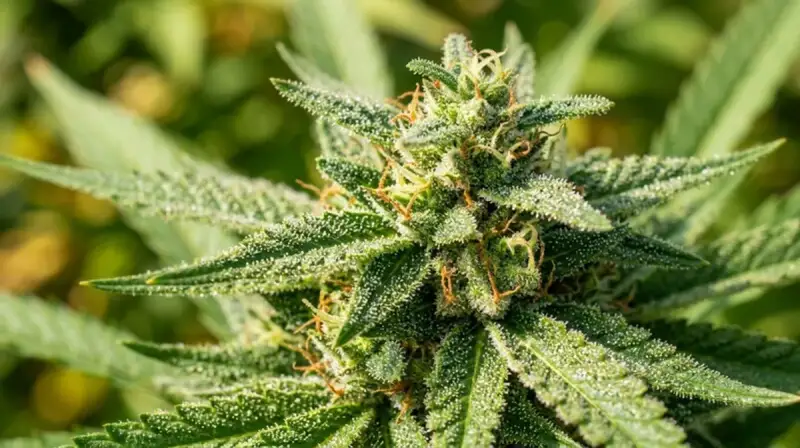
Sherbert is one of the most coveted indica-dominant hybrids to emerge from the Cookies Family — the San Francisco Bay Area breeding collective responsible for Girl Scout Cookies, Gelato, and several of the most influential cannabis varieties of the modern era. A cross of Girl Scout Cookies and Pink Panties, Sherbert inherits the GSC lineage’s signature sweet-earthy dessert quality and potent indica body effect while adding citrus and floral notes from the Pink Panties parent. THC levels of 18–24% and a high incidence of colourful purple phenotypes make it one of the most visually and experientially distinctive Cookies derivatives available.
- Genetics: Girl Scout Cookies × Pink Panties (Cookies Family)
- THC Range: 18–24%
- Top Terpenes: Caryophyllene, Limonene, Linalool
- Main Effects: Full body relaxation, uplifted euphoria, stress relief
- Medical Uses: Stress, pain, depression, anxiety, insomnia
- Phenotype: Purple phenos common with cool temperatures
- Flavour Profile: Sweet citrus, candy, earthy, slight floral
- Closely Related To: Gelato, Thin Mints GSC, Do-Si-Dos (not the same as Sherbet)
Sherbert vs. Sherbet: Disambiguation Guide
The naming confusion between Sherbert and Sherbet is one of the most persistent in the cannabis strain world. Both names derive from the dessert word, both belong to the Cookies-adjacent genetic universe, and both appear under multiple spellings across dispensary menus, seed banks, and strain databases. The table below provides the clearest available comparison based on their generally accepted genetic histories.
| Attribute | Sherbert (this strain) | Sherbet (different strain) |
|---|---|---|
| Spelling | Sherbert (extra r) | Sherbet (standard spelling) |
| Genetics | Girl Scout Cookies × Pink Panties | Often listed as Pink Panties × GSC variants, or OG Kush Breath × GSC depending on source |
| Breeder | Cookies Family (Bay Area) | Various; attribution disputed |
| Dominant Type | Indica-dominant | Indica-dominant |
| THC Range | 18–24% | 15–19% (typically lower) |
| Primary Flavour | Sweet citrus, candy, earthy | Berry, creamy, sweet |
| Effect Character | Heavy body + uplifted euphoria | Relaxed, slightly sedating |
| Purple Phenotypes | Common (Pink Panties genetics) | Less frequent |
Origin & Genetics: Cookies Family and the GSC Universe
To understand Sherbert requires understanding the Cookies Family — the collective centred around breeder Berner (real name Gilbert Anthony Milam Jr.) and associates in San Francisco’s Bay Area cannabis scene. Beginning with Girl Scout Cookies — a cross of OG Kush Breath and Durban Poison, stabilised and popularised by the Cookies crew from approximately 2011 onward — the collective developed a series of derivatives that came to define the premium American dispensary market through the 2010s and remain influential globally.
Girl Scout Cookies is the maternal parent of Sherbert. Its own genetics (OG Kush Breath × Durban Poison) contribute to Sherbert’s deep earthy sweetness, the potent body effect, and the characteristic Cookies dessert-flavour profile driven by caryophyllene and limonene. GSC’s THC expression is among the highest of any widely-bred strain, which is why most Cookies derivatives test well above 20%.
Pink Panties is the paternal parent. A cross of Florida Kush and a Burmese Kush phenotype, Pink Panties contributes citrus-floral sweetness, an indica-leaning structure, and crucially the anthocyanin genetics responsible for Sherbert’s purple phenotype expression. Pink Panties is itself a connoisseur strain rarely encountered outside dedicated collector circles, making Sherbert something of a hidden-gem cross even within the well-documented Cookies universe.
Girl Scout Cookies Family Tree
The GSC genetic universe has expanded to include dozens of derivatives. The table below maps the most significant direct descendants and their defining characteristics, situating Sherbert within the broader Cookies family.
| Strain | Parent Cross | THC % | Effect Type | Flavour Signature |
|---|---|---|---|---|
| Girl Scout Cookies (GSC) | OG Kush Breath × Durban Poison | 19–28% | Balanced hybrid, potent | Sweet, earthy, mint |
| Sherbert | GSC × Pink Panties | 18–24% | Indica-dominant, euphoric body | Sweet citrus, candy, earthy |
| Thin Mints GSC | GSC phenotype (Durban Poison dominant) | 20–26% | Energetic, cerebral | Mint, sweet, earthy |
| Gelato | Sunset Sherbet × Thin Mints GSC | 20–26% | Balanced, creative-body | Sweet fruit, dessert, cream |
| Do-Si-Dos | GSC × Face Off OG | 19–28% | Heavy indica, sedating | Floral, earthy, lime |
| Wedding Cake | GSC × Cherry Pie | 20–27% | Indica-dominant, heavy relax | Vanilla, sweet, tangy |
Cannabinoid & Terpene Profile
Sherbert’s terpene profile is defined by the classic Cookies combination of Caryophyllene (earthy-spice, CB2 anti-inflammatory), Limonene (citrus, mood elevation, anxiety reduction), and Linalool (floral-lavender, sedation, sleep support). This is one of the most therapeutically rich terpene combinations in commercial cannabis, which partially explains the Cookies family’s enduring popularity for stress and anxiety applications. The interplay between limonene’s mood-lifting and linalool’s calming effects is particularly well-matched to the “euphoric but relaxed” experience Sherbert produces.
| Compound | Type | Typical % | Primary Effect | Aroma Note |
|---|---|---|---|---|
| THC | Cannabinoid | 18–24% | Euphoria, body relaxation | — |
| CBD | Cannabinoid | <1% | Minimal | — |
| Caryophyllene | Terpene | 0.25–0.50% | Anti-inflammatory, CB2 activity | Spicy, earthy, peppery |
| Limonene | Terpene | 0.20–0.40% | Mood elevation, anti-anxiety | Citrus, lemon, sweet |
| Linalool | Terpene | 0.15–0.30% | Sedation, anxiety reduction, sleep | Floral, lavender, sweet |
| Myrcene | Terpene | 0.10–0.25% | Body relaxation, sedation | Earthy, musky, herbal |
Effects of Sherbert
Sherbert epitomises the Cookies experience: a heady, sweet-scented indica-dominant hybrid that simultaneously uplifts and relaxes without immediately sedating the user. Its effect profile makes it one of the best evening hybrid options in the Cookies family for users who want to be relaxed but not immediately asleep.
Phase 1: Euphoric Head Rush (0–20 min)
The onset of Sherbert is distinctly head-forward: a lightening sensation behind the eyes, a gentle mental uplift, and an improvement in mood that is immediate and pleasant. The limonene-dominant opening moments create an almost citrus-bright quality to the initial experience. There is no ceiling-hit anxiety common to very high-THC pure indicas; the sativa component from the Durban Poison grandparent (via GSC) keeps the onset from becoming immediately sedating.
Phase 2: Body Warmth & Relaxation (20–90 min)
As the initial euphoria settles, the indica genetics take control. A deep, spreading warmth moves from the chest outward, progressively relaxing major muscle groups. Stress and anxiety dissolve. Minor pain softens. The caryophyllene and linalool combination creates a particularly effective stress-relief profile at this stage — this is the phase most commonly cited by medical users treating chronic stress, pain, and anxiety. Cognitive function remains intact at moderate doses, but motivation for demanding tasks diminishes.
Phase 3: Deep Relaxation (90 min+)
Extended sessions or higher doses move into classic indica territory: heavy limbs, comfortable immobility, and eventually a sedation that serves as a natural sleep aid. This phase makes Sherbert excellent for evening and nighttime use. The Cookies family characteristic that distinguishes this from lesser indica-heavy strains is the sustained pleasant flavour and the absence of a harsh or heavy come-down. For detailed guidance on cannabis for sleep and pain, see our medical cannabis guides.
Cookies Family Flavor Spectrum
One of the defining characteristics of the Cookies genetic universe is an unusually rich flavour diversity within a consistent dessert-sweet framework. The table below maps flavour profiles across seven major Cookies-lineage strains to illustrate where Sherbert sits in the broader taste spectrum.
| Strain | Primary Flavour | Secondary Notes | Aroma Intensity | Best Descriptor |
|---|---|---|---|---|
| Girl Scout Cookies | Sweet, minty | Earthy, spicy | High | Thin mint cookie |
| Sherbert | Sweet citrus, candy | Earthy, floral, slight vanilla | High | Citrus candy & earth |
| Gelato | Fruity dessert, creamy | Citrus, lavender | Very high | Italian gelato dessert |
| Thin Mints | Mint, cool | Sweet, herbal, earthy | High | Fresh mint chocolate |
| Do-Si-Dos | Floral, lime | Earthy, pungent | Very high | Floral-earthy funk |
| Wedding Cake | Vanilla, sweet | Tangy, earthy | High | Vanilla frosting cake |
| Biscotti | Sweet cookie, nutty | Diesel, earthy | High | Diesel-laced biscotti |
Growing Sherbert: Purple Phenotypes and Moderate Cultivation
Sherbert is a moderate-difficulty cultivar well-suited to indoor growing. Its indica-dominant structure is compact and manageable, making it significantly easier than the long-flowering sativas common in the connoisseur market. The most distinctive feature for cultivators is the purple phenotype expression — a characteristic that makes Sherbert one of the visually striking strains in any garden.
| Parameter | Indoor | Outdoor | Notes |
|---|---|---|---|
| Flowering Time | 8–9 weeks | Early October harvest | — |
| Yield | 400–500g/m² | 500–700g per plant | — |
| Height | 70–110cm | 100–150cm | Compact, bushy structure |
| Difficulty | Moderate | Moderate | — |
| Purple Expression | Common with cool nights 15–18°C (weeks 7–9) | Depends on autumn temps | Anthocyanins, not nutrient deficiency |
| Mould Resistance | Good | Moderate (monitor in humidity) | Dense buds, good airflow needed |
| Odour in Flower | Strong — carbon filter required | Strong | Citrus-sweet dominant |
To trigger purple colouration without stressing the plant, lower night-time temperatures to 15–18°C during the final 2–3 weeks of flower. The temperature differential between day and night causes anthocyanin pigments to accumulate in the leaves and bud tissue, producing deep purple and lavender hues. This process has no negative effect on potency or yield when done correctly. Forcing purple coloration via nitrogen deprivation is a different method and does reduce quality — avoid it. For growing techniques including temperature management, see our growing guides.
Drug Testing
Sherbert’s high THC content (18–24%) means users should plan cautiously around drug testing. At higher potency levels, fat-soluble THC-COOH metabolites accumulate more rapidly in heavy users. The table below gives standard SAMHSA 50ng/mL guidance. See our full drug testing guide for detail on dilution, detox timelines, and state-level employment protections.
| Test Type | Occasional User | Regular User | Daily User |
|---|---|---|---|
| Urine | 3–7 days | 10–21 days | Up to 30+ days |
| Blood | 1–3 days | 3–7 days | 7–14 days |
| Saliva | 24–72 hours | 3–5 days | Up to 7 days |
| Hair Follicle | Up to 90 days | Up to 90 days | Up to 90 days |