










White Runtz Strain Guide
White Runtz is one of the most visually striking strains in modern cannabis — a white phenotype selection from the original Runtz (Zkittlez × Gelato) cross, chosen specifically for its extraordinary trichome density, which coats the buds in a layer of white crystalline resin so thick it gives the plant its name. Developed within the Cookies family breeding ecosystem in California, it combines Zkittlez’s tropical candy sweetness with Gelato’s creamy dessert character at 20–25% THC. The effects are euphoric, relaxed, and giggly — a balanced hybrid experience that leans indica in the body without sacrificing the uplifting mental quality that makes the Runtz family so commercially dominant.
- Genetics: Zkittlez × Gelato (Cookies Family — white phenotype selection)
- Type: Balanced hybrid, slightly indica-leaning
- THC Range: 20–25% (high — experienced users)
- Top Terpenes: Caryophyllene, Limonene, Myrcene
- Defining Feature: Extraordinarily dense white trichome coverage — buds appear frosted or snow-white
- Main Effects: Euphoric, relaxed, giggly, uplifted, calm body
- Medical Uses: Stress, anxiety, mild pain, mood elevation
- Aroma: Candy, tropical fruit, creamy sweet, citrus
Origin & Genetics: The Runtz Family and the White Phenotype
White Runtz emerges from one of the most commercially successful breeding projects in contemporary cannabis: the original Runtz strain, itself a cross of Zkittlez and Gelato developed within the Cookies family of brands and breeders centred around the Bay Area cannabis scene. Understanding White Runtz requires understanding what made the original Runtz exceptional — and why the white phenotype selection was considered a step further.
Zkittlez (also spelled Skittlez) is a cross of Grape Ape and Grapefruit — an indica-dominant strain selected specifically for its extraordinary fruit candy aroma and milder, accessible effect profile. It won multiple Cannabis Cups and became one of the most widely cloned genetics of the 2010s because of its combination of bag appeal, pleasant aroma, and moderate THC that made it accessible to a broad consumer base. Its contribution to the Runtz family is the tropical candy sweetness that gives the family its confectionery identity.
Gelato (Cookies Fam, Bay Area) is a cross of Sunset Sherbet and Thin Mint Girl Scout Cookies — an indica-dominant hybrid with a rich dessert aroma (citrus, berry, lavender, cream), high potency (20–25% THC), and balanced euphoric-relaxing effects. Gelato established itself as one of the prestige strains of the 2010s legal market and has been used as a breeding parent in dozens of subsequent hybrids. Its contribution to Runtz is the creaminess, the potency ceiling, and the balanced hybrid effect character.
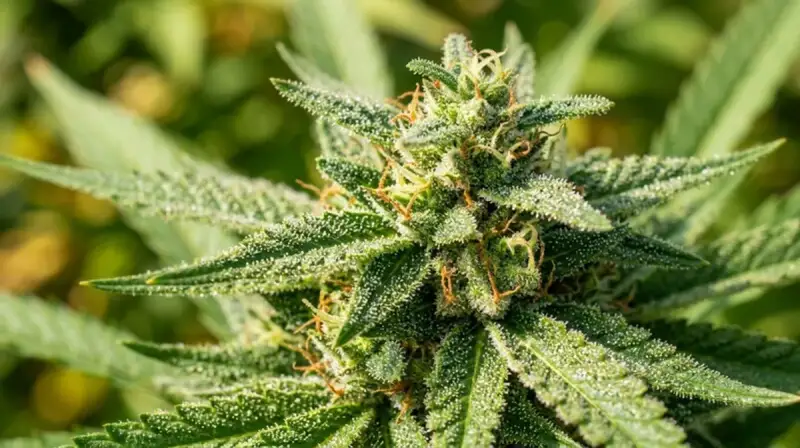
The original Runtz cross produced multiple phenotypes with varying aroma, colour, and trichome profiles. The white phenotype was selected from among these for its exceptional trichome density — a genetic expression in which the resin glands are both more numerous and larger than in standard phenotypes, creating the visual effect that gives White Runtz its name. This trichome density is not merely cosmetic: it corresponds to higher total terpene and cannabinoid content per gram of flower.
"White Runtz is what happens when the genetics line up perfectly and the phenotype hunt lands on something special. The frost is a visual signal for what’s inside — dense terpenes, high potency, and that balanced Cookies-family high that hits just right."
Cannabinoid & Terpene Profile
White Runtz’s candy-tropical aroma is produced by a caryophyllene-limonene-myrcene terpene combination that reflects both the Zkittlez sweetness and the Gelato creaminess. The high trichome density of the white phenotype concentrates these compounds further than the standard Runtz expression. Explore our complete terpene guide for pharmacological context.
| Compound | Type | Typical Level | Aroma Contribution | Effect Contribution |
|---|---|---|---|---|
| THC | Cannabinoid | 20–25% | — | Euphoria, relaxation, psychoactivity |
| CBD | Cannabinoid | <1% | — | Minor anxiety edge modulation |
| Caryophyllene | Terpene | 0.4–0.9% | Spicy, warm, slightly peppery | CB2 agonist; anti-inflammatory; stress relief |
| Limonene | Terpene | 0.3–0.7% | Citrus, lemon, sweet tropical brightness | Mood elevation; anxiety reduction; uplifted quality |
| Myrcene | Terpene | 0.3–0.6% | Fruity, herbal, tropical, musky | Potentiates THC; body relaxation; indica foundation |
| Linalool | Terpene | 0.1–0.2% | Floral, lavender (from Gelato lineage) | Calming; rounds the euphoric edge |
The balance between limonene’s mood-elevating brightness and myrcene’s grounding relaxation is the key to White Runtz’s hybrid character. Too much myrcene and it becomes purely sedating — too much limonene and it loses the body component. In the white phenotype, this balance is expressed at higher concentration than the standard phenotype, which is why it is considered a step up in both aroma and experience quality. Caryophyllene’s CB2-receptor interaction provides anti-inflammatory support and the stress-relief layer that makes it medically effective beyond purely recreational use.
The Runtz Family: White, Pink, Original, and Watermelon
The Runtz family has expanded significantly since the original cross, with multiple phenotype selections and branded variants. Understanding the differences helps consumers identify what they are looking for. See our strain index for the full catalogue.
| Strain | THC Range | Visual / Colour | Aroma Character | Effect Lean |
|---|---|---|---|---|
| White Runtz | 20–25% | Frosted white trichomes, minimal colour | Candy, tropical, creamy, citrus | Balanced, slightly indica |
| Original Runtz | 19–29% | Green-purple, dense buds | Candy, tropical, sweet fruit | Balanced hybrid |
| Pink Runtz | 20–25% | Pink-purple pistils, lighter green | Berry, candy, floral sweetness | Slightly sativa-leaning |
| Watermelon Runtz | 21–24% | Green with red-orange pistils | Watermelon, candy, tropical | Indica-leaning, relaxing |
Effects of White Runtz
White Runtz delivers the balanced hybrid high that the Cookies family is known for: euphoric enough to elevate mood and produce giggles, relaxed enough in the body to relieve tension without sedation. Onset when smoked or vaped: 3–7 minutes. Peak: 20–40 minutes. Duration: 2–3 hours. Visit our cannabis effects guide for detailed onset and duration context.
Phase 1: Euphoric Lift & Giggly Mood (0–20 min)
The opening phase of White Runtz is characterised by a rapid mood elevation that tips into genuine euphoria at moderate doses. The limonene-driven cerebral brightness arrives quickly — thoughts lift, conversation flows easily, and the tendency to find things funny increases noticeably. This giggly quality is one of the most consistently reported features of the Runtz family and is one reason it became a social strain: it is fun, warm, and sociable in a way that many high-THC strains are not. There is no anxiety edge in the opening phase for most users — the caryophyllene and balanced terpene profile smooth out the THC onset effectively.
Phase 2: Relaxed Body & Creative Comfort (20–60 min)
The myrcene-driven body component arrives in the second phase. A wave of physical relaxation spreads through the body — not couch-lock, not immobility, but a comfortable heaviness that makes sitting still, listening to music, watching film, or engaging in creative work feel naturally pleasant. The mental euphoria from the first phase remains active but softens into a warm, contented background state. This is the phase where White Runtz performs best: the combination of mood elevation and physical comfort without sedation represents the balanced hybrid ideal. Many users describe this phase as the most enjoyable and the most appropriate for social and creative contexts.
Phase 3: Calm Landing (60 min+)
White Runtz resolves gently. The euphoria gradually fades, the body relaxation persists in a milder form, and the user arrives in a calm, relaxed state without the jarring drop that can accompany some high-THC strains. Higher doses push further toward sedation in this final phase, making it suitable for winding down before sleep if desired. For medical cannabis users dealing with anxiety or stress, the gradual, comfortable landing is a significant advantage over strains with more abrupt offset profiles.
The signature white frost of White Runtz — trichome density that is immediately visible and reflects the exceptional terpene and cannabinoid concentration of the white phenotype selection.
Candy Strain Terpene Profiles
White Runtz belongs to the confectionery-aroma category of cannabis — a group defined by sweet, fruity, candy-like terpene profiles rather than the diesel, pine, or skunk characters of older generation strains. Understanding how the terpene profiles of this category differ clarifies what distinguishes each strain within it.
| Strain | Primary Terpenes | Aroma Description | Effect Character |
|---|---|---|---|
| White Runtz | Caryophyllene, Limonene, Myrcene | Candy, tropical, creamy, citrus | Euphoric, balanced, giggly |
| Gelato | Caryophyllene, Limonene, Humulene | Dessert-sweet, berry, cream, mint | Balanced, creative, relaxed |
| Zkittlez | Caryophyllene, Linalool, Humulene | Grape candy, berry, tropical | Relaxed, happy, focused |
| Ice Cream Cake | Caryophyllene, Limonene, Myrcene | Vanilla, creamy, sweet dough | Deeply relaxing, sedating |
| Gushers | Caryophyllene, Limonene, Myrcene | Tropical candy, cookies, fruity | Euphoric, body-heavy, calm |
Growing White Runtz
White Runtz is moderately challenging to grow, primarily because maintaining the conditions that produce the full white trichome expression requires careful environmental control. The strain flowers in 8–9 weeks indoors, which is an advantage. It performs well in soil and coco coir, responds well to training techniques, and produces generous yields for a premium phenotype. The critical factors for achieving the signature white frost are temperature management, controlled humidity in late flower, and careful nutrient feeding that does not suppress terpene expression.
| Parameter | Indoor | Outdoor |
|---|---|---|
| Flowering Time | 8–9 weeks | Late September to mid-October |
| Yield | 400–500g/m² | Up to 550g per plant |
| Height | 80–120cm (manageable) | 100–160cm |
| Difficulty | Intermediate | Intermediate (warm, dry climate optimal) |
| Trichome Expression | Maximised by 15–18°C nights in final 2–3 weeks, low humidity (40–50% RH) | Dry autumn conditions ideal |
| Odour | Very strong candy-sweet — carbon filtration essential from week 3 of flower | Strong — noticeable at distance |
| Mould Resistance | Moderate — dense buds require good airflow | Moderate — avoid high humidity environments |
The most important growing advice for White Runtz: the white trichome expression is a genetic trait but it is temperature-sensitive. Warmer finish temperatures (above 24°C at night) suppress the full trichome development and can produce a standard-looking phenotype rather than the characteristic snow-white appearance. Maintaining cool nights in the final two to three weeks, combined with moderate nutrient reduction (beginning the transition away from heavy nitrogen feeding at week 6), will produce the best expression. Cure carefully — White Runtz terpenes are delicate, and an inadequate cure at excessive temperatures will degrade the candy-sweet aroma significantly. See our cannabis growing guides for complete cultivation methodology.
Drug Testing with White Runtz
White Runtz at 20–25% THC generates significant metabolite loads. Its balanced hybrid profile means many users consume it across multiple time-of-day occasions, which can accelerate metabolite accumulation compared to strictly evening-use strains. See our drug testing guide for full detection window analysis.
| Test Type | Occasional User | Regular User | Daily User |
|---|---|---|---|
| Urine | 3–10 days | 10–21 days | Up to 30+ days |
| Blood | 1–3 days | 3–7 days | 7–14 days |
| Saliva | 24–72 hours | 3–5 days | Up to 7 days |
| Hair Follicle | Up to 90 days | Up to 90 days | Up to 90 days |
Jordan Price — Cannabis Cultivation Specialist
Jordan Price has spent over a decade studying cannabis genetics, terpene science, and cultivation methodology. His strain guides combine laboratory data with practical growing insight for growers and consumers at every experience level.