










- Caryophyllene isomer: Humulene (alpha-humulene, C15H24) shares the same molecular formula as beta-caryophyllene but has a monocyclic structure — no CB2 receptor binding, distinct pharmacology.
- Appetite suppression: Unlike most cannabis compounds, humulene is associated with reduced appetite rather than stimulation — anecdotally confirmed and supported by preliminary animal data.
- Anti-inflammatory: Inhibits NF-κB pathway and reduces COX-2/PGE2 production; Gonçalves et al. (2015) conducted comprehensive anti-inflammatory and antitumor characterization.
- Antibacterial: Demonstrated in vitro activity against Staphylococcus aureus (including MRSA in combination), Streptococcus, and various gram-negative bacteria.
- Antitumor (preliminary): In vitro cytotoxic activity against multiple cancer cell lines; anti-proliferative effects observed in colon, breast, and lung cancer models.
- Cannabis concentration: 0.10–0.50% — one of the more abundant secondary terpenes; often co-dominant with caryophyllene in OG and Cookies genetics.
- Hops connection: Humulene is the primary aroma terpene of hops (Humulus lupulus), the plant also closely related to cannabis (Cannabis sativa) — both in the Cannabaceae family.
Chemical Profile & Properties
Humulene, also known as alpha-humulene or alpha-caryophyllene, is a monocyclic sesquiterpene with an 11-membered ring structure. The naming reflects its primary natural source — Humulus lupulus (hops). Cannabis and hops are sister plants in the Cannabaceae family, which explains the significant terpene profile overlap including humulene, myrcene, and caryophyllene. The absence of a cyclobutane ring (present in caryophyllene) means humulene does not activate CB2 receptors — a key pharmacological distinction. See our full terpene guide and terpene explainer.
| Property | Value |
|---|---|
| Chemical class | Monocyclic sesquiterpene |
| Also known as | Alpha-humulene, alpha-caryophyllene |
| Molecular formula | C15H24 (isomer of beta-caryophyllene) |
| Molecular weight | 204.35 g/mol |
| Boiling point | ~106°C (223°F) at 10 mmHg; ~198°C atmospheric estimate |
| Aroma profile | Earthy, woody, hoppy, herbal, subtly spicy |
| Cannabis concentration range | 0.10–0.50% (mg/g: 1.0–5.0) |
| Natural abundance | Hops, sage, ginseng, basil, coriander, cannabis |
| CB receptor activity | None confirmed (does not bind CB2 unlike caryophyllene) |
Mechanism of Action
Humulene’s anti-inflammatory mechanism differs from caryophyllene despite being an isomer. Without CB2 receptor affinity, humulene acts through non-cannabinoid anti-inflammatory pathways. The primary mechanism involves inhibition of NF-κB nuclear translocation — the same transcription factor suppressed by caryophyllene — but through a CB2-independent mechanism. Humulene also directly inhibits COX-2 enzyme activity and reduces prostaglandin E2 (PGE2) production, contributing complementary anti-inflammatory coverage. In addition, it suppresses the 5-LOX pathway (leukotriene synthesis), providing a third inflammatory pathway target.
The appetite-suppressing mechanism is the least well-characterized. Unlike CB1 receptor activation (which drives the THC munchies through hypothalamic orexigenic signaling), humulene may interact with satiety hormones or central feeding circuits. The animal data suggesting appetite suppression are consistent and reproducible, though the molecular target remains unclear.
The antitumor findings in cell culture involve multiple mechanisms: inhibition of cell proliferation, induction of apoptosis (programmed cell death), and in some models, anti-angiogenic effects. These mechanisms are studied in isolation; clinical relevance cannot be inferred from cell culture data without animal model and human trial validation.
Clinical & Preclinical Research
| Condition / Application | Study | Dose / Model | Result | Evidence Quality |
|---|---|---|---|---|
| Anti-inflammatory & Antitumor | Gonçalves et al., 2015 (Phytother Res) | In vitro + mouse models | Inhibited NF-κB, COX-2, PGE2; antiproliferative activity against several tumor cell lines; no significant toxicity at tested doses | Moderate (preclinical) |
| Anti-inflammatory (early ref.) | Fernandes et al., 1992 (Planta Med) | Rat carrageenan model | Reduced paw edema; identified NF-κB and COX inhibition as mechanisms | Moderate (animal) |
| Appetite suppression | Passaro et al., 2010 (human BMI observational + in vitro) | Observational & cell culture | Humulene-containing preparations associated with reduced caloric intake vs. controls; preliminary | Low (observational) |
| Antibacterial | Miyazawa & Yamafuji, 2005 (J Agric Food Chem) | In vitro disk diffusion | Activity against S. aureus, B. subtilis; MIC range 0.5–2 mg/mL | Moderate (in vitro) |
| Antitumor (lung cancer) | Rocha et al., 2014 (Cancer Letters) | In vitro A549 cell line | Growth inhibition and apoptosis at µM concentrations; AMPK pathway involvement suggested | Early (in vitro) |
| Anti-allergy | Satou et al., 2010 (Phytomedicine) | Mouse model, IgE-mediated | Reduced mast cell degranulation; potential anti-allergic relevance | Early (animal) |
Top Cannabis Strains Highest in Humulene
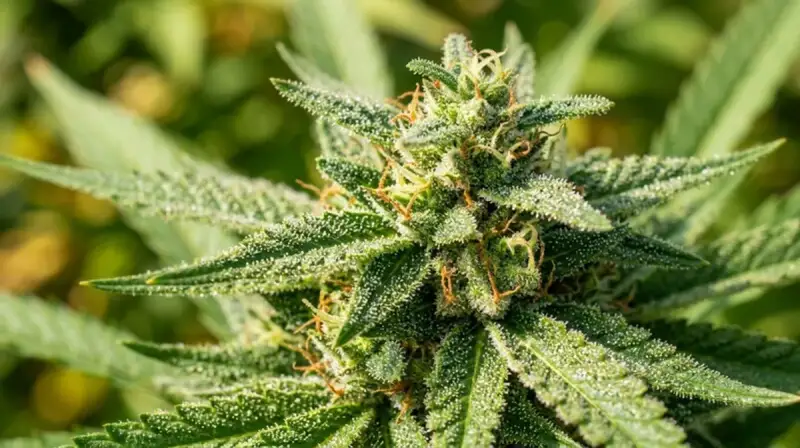
Humulene is most concentrated in OG Kush lineage, Cookies genetics, and Death Star family cultivars. It co-dominates with caryophyllene in many commercially tested samples, and is the compound giving these strains their earthy, herbal, “classic” cannabis aroma. Browse the full strain database.
| Strain | Type | Humulene Range (%) | Other Dominant Terpenes | Primary Effect Profile |
|---|---|---|---|---|
| Girl Scout Cookies (GSC) | Hybrid | 0.15–0.45 | Caryophyllene, limonene | Euphoria, stress relief, body calm, reduced hunger |
| Jack Herer | Sativa-dominant | 0.12–0.40 | Terpinolene, Myrcene, Ocimene | Uplifting, creative, pine-forward |
| Death Star | Indica-dominant | 0.18–0.50 | Myrcene, Caryophyllene | Heavy sedation, pain, insomnia |
| Headband | Hybrid | 0.10–0.38 | Myrcene, Caryophyllene, Limonene | Cerebral, relaxed body, pressure sensation |
| White Widow | Hybrid | 0.10–0.35 | Myrcene, Alpha-pinene, Caryophyllene | Balanced, energetic, focused |
| OG Kush | Hybrid (Indica-leaning) | 0.08–0.32 | Myrcene, Limonene, Caryophyllene | Relaxation, pain relief, mood lift |
| Skywalker OG | Indica-dominant | 0.12–0.40 | Myrcene, Limonene, Caryophyllene | Heavy sedation, pain, sleep |
| Bubba Kush | Indica | 0.10–0.35 | Myrcene, Limonene, Caryophyllene | Deep relaxation, sleep, muscle tension |
| Pineapple Haze | Sativa-dominant | 0.08–0.30 | Myrcene, Terpinolene, Caryophyllene | Uplifting, creative, fruity |
| Sage & Sour | Sativa-dominant | 0.12–0.42 | Terpinolene, Caryophyllene, Myrcene | Energetic, sage-like aroma, focused |
Entourage Effect: Synergy with Other Terpenes & Cannabinoids
Humulene and beta-caryophyllene are the most frequently co-occurring sesquiterpene pair in cannabis. Their synergy is well-supported by their complementary but non-identical anti-inflammatory mechanisms. Full context in our terpene guide and effects library.
| Partner Compound | Combined Effect | Mechanism | Clinical Relevance |
|---|---|---|---|
| Beta-Caryophyllene | Comprehensive multi-pathway anti-inflammatory | Caryophyllene (NF-κB via CB2) + humulene (NF-κB, COX-2, 5-LOX via non-CB2) = triple anti-inflammatory coverage | High — co-dominant in OG/Cookies genetics; most studied sesquiterpene pair |
| CBD | Enhanced anti-inflammatory; potential antitumor synergy | CBD adds TRPV1 and 5-HT1A pathways; humulene provides COX-2/5-LOX coverage; combined tumor research interest | Moderate — complementary targets; non-psychoactive |
| Myrcene | Sedation + reduced appetite (practical combination) | Myrcene provides GABA-A sedation; humulene may offset THC-induced appetite; combined calming without hunger surge | Moderate — practical for evening use without munchies |
| Limonene | Anti-inflammatory breadth; mood support | Limonene’s serotonergic anxiolytic + humulene’s anti-inflammatory; Cookies genetics often feature both | Moderate — co-present in GSC and similar hybrids |
| THC | Anti-inflammatory combination with possible appetite modulation | THC CB1 (appetite stimulation) may be partially offset by humulene appetite suppression; net effect strain-dependent | Emerging — anecdotal; no controlled data |
Non-Cannabis Natural Sources of Humulene
- Hops (Humulus lupulus): 15–40% of hop oil; primary commercial aroma source; gives beer its characteristic herbal, earthy notes
- Sage (Salvia officinalis): 5–20% of essential oil; contributes herbal depth
- Ginseng (Panax ginseng): 1–8% of essential oil; traditional medicinal context
- Basil (Ocimum basilicum): 2–12% of essential oil depending on chemotype
- Coriander (Coriandrum sativum): 1–5% of essential oil (seed)
- Cloves (Syzygium aromaticum): trace to 3% of essential oil (alongside eugenol and caryophyllene)
- Cannabis: 0.10–0.50% of dry flower weight; one of the most consistently present secondary terpenes
Frequently Asked Questions
Does humulene suppress appetite?
Humulene is one of the few cannabis terpenes associated with appetite suppression rather than stimulation. The appetite-suppressing mechanism is not fully characterized but may involve interaction with satiety signaling pathways. In practice, humulene-dominant strains are anecdotally associated with less pronounced hunger stimulation compared to myrcene-heavy indica cultivars. Formal human trials on humulene’s appetite effects are lacking.
What does humulene smell like?
Humulene has an earthy, woody, hoppy aroma — it is the primary terpene responsible for the characteristic smell of hops and is a major contributor to beer’s aromatic profile. In cannabis it manifests as an earthy, subtly spicy, woody note that grounds sweeter or more pungent terpene profiles. Strains high in humulene often have a classic, herbal cannabis aroma.
Is humulene the same as caryophyllene?
Humulene (alpha-humulene) and beta-caryophyllene are isomers — same molecular formula (C15H24) but different structural arrangements. Caryophyllene is bicyclic with a CB2-binding cyclobutane ring; humulene is monocyclic and does not bind CB2. Both are sesquiterpenes commonly found together in cannabis. On lab reports, humulene is sometimes listed as alpha-humulene or alpha-caryophyllene.
Does humulene have antitumor properties?
Preliminary in vitro research has identified humulene as cytotoxic against certain cancer cell lines. Gonçalves et al. (2015) examined anti-inflammatory and antitumor properties in depth. These findings are preclinical — cell culture data not validated in animal models or human trials. Humulene should not be regarded as a cancer treatment; these findings establish it as a compound of pharmacological interest warranting further investigation.