




- White Widow: Dutch Cannabis Cup winner (1995), legendary resin production, fast-hitting euphoric high, sharper pepper-earth flavor.
- Blue Dream: California sativa-dominant hybrid, smooth balanced high, best-selling strain across US legal markets, sweet berry flavor.
- THC: White Widow 18–25% vs Blue Dream 17–24% — similar ranges, very different effect intensity.
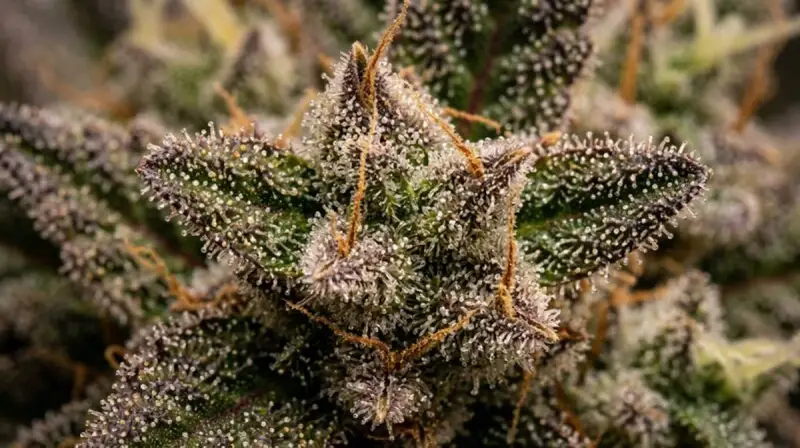
- Resin production: White Widow significantly outperforms Blue Dream — benchmark strain for trichome density.
- Effect speed: White Widow hits faster and harder. Blue Dream is more gradual and forgiving.
- Best for daytime productivity: Blue Dream. Best for intense euphoric experience: White Widow.
- Growing: Both are beginner-accessible. White Widow is slightly more compact and faster-flowering.
Two Legends, Two Eras
White Widow and Blue Dream represent two distinct chapters in the modern history of cannabis breeding — one the product of the Dutch coffee shop golden era of the 1990s, the other a product of California’s medical cannabis culture of the 2000s. Understanding their origins explains not just their genetics, but the cannabis culture that shaped their development and the consumer needs they were designed to serve.
White Widow: The Dutch Legend
White Widow was developed in the early 1990s by Shantibaba at the Green House Seed Company in Amsterdam, crossing a Brazilian sativa landrace with a South Indian indica. The result was extraordinary: a strain that combined the cerebral, euphoric high of the South American sativa with the dense, resin-heavy bud structure of the Indian indica. Green House Seeds debuted White Widow at the 1995 Cannabis Cup and won — and the strain’s reputation was cemented forever.
For over two decades, White Widow was the most widely available strain in Amsterdam coffeeshops, and it remains a staple today. Its influence on cannabis genetics is enormous: White Widow parentage appears in White Russian, Blue Widow, Moby Dick, and dozens of other celebrated strains. Its exceptional resin production — the “white” in its name refers to the crystal-white trichome coverage of mature buds — made it the benchmark reference for hash production and resin quality across multiple generations of breeders.
Blue Dream: California’s Commercial Champion
Blue Dream emerged from California’s medical cannabis scene in the mid-2000s, crossing DJ Short’s legendary Blueberry with Haze. Where White Widow was developed for the Dutch coffee shop environment — delivering a powerful, memorable experience to customers seeking something exceptional — Blue Dream was developed for the medical patient market, where accessibility, balanced effects, and consistent quality across consumers mattered more than peak intensity.
Blue Dream succeeded remarkably on both fronts: it delivers genuinely good effects for both recreational and medical use, is extremely forgiving for both new consumers (who don’t find it overwhelming) and experienced users (who appreciate its versatility), and grows vigorously with impressive yields. For years it was the single best-selling strain in every legal US market that tracked sales data — a distinction driven not by marketing but by genuine, broad consumer satisfaction. See our strain index for both full profiles.
Side-by-Side Comparison Table
| Criteria | White Widow | Blue Dream |
|---|---|---|
| Genetic Lineage | Brazilian sativa × South Indian indica | Blueberry × Haze |
| Origin | Amsterdam, Netherlands (Green House Seeds, early 1990s) | California (mid-2000s) |
| Classification | Balanced Hybrid (slight sativa lean) | Sativa-dominant Hybrid (60% sativa) |
| Average THC | 18–25% | 17–24% |
| CBD Content | 0.1–0.5% | 0.1–0.2% |
| Dominant Terpenes | Caryophyllene, Myrcene, Pinene | Myrcene, Pinene, Caryophyllene |
| Secondary Terpenes | Limonene, Ocimene | Terpinolene, Linalool, Ocimene |
| Flavor Profile | Earthy, pepper, pine, subtle citrus | Sweet blueberry, vanilla, light citrus |
| Aroma | Sharp, peppery, earthy-woody, classic | Sweet berry, fresh, slightly floral |
| Effect Onset | Fast and intense (5–10 min) | Gradual and smooth (10–20 min) |
| Effect Character | Intense euphoria, energetic, cerebral | Uplifting, creative, balanced |
| Body Effect | Moderate (less body than indica) | Gentle body relaxation |
| Functional Daytime Use | Yes (moderate doses) | Excellent |
| Anxiety Risk | Moderate (fast onset can surprise) | Low–Moderate |
| Best Time of Day | Daytime to early evening | Morning to afternoon |
| Duration | 2–3 hours | 2–3 hours |
| Resin Production | Exceptional (benchmark strain) | Good |
| Growing Difficulty | Beginner-friendly | Beginner-friendly |
| Flowering Time | 56–60 days (8–9 weeks) | 63–70 days (9–10 weeks) |
| Indoor Yield | 400–500 g/m² | 500–600 g/m² |
| Plant Height | Medium (60–110 cm) | Tall (100–180 cm) |
| Mold Resistance | Excellent | Excellent |
Terpene Profiles
White Widow Terpenes
White Widow’s dominant terpenes — caryophyllene, myrcene, and pinene — create its distinctively sharp, classic cannabis aroma. Caryophyllene dominance contributes the signature pepper and earth notes and provides anti-inflammatory properties through CB2 receptor binding. Pinene adds a piney freshness and may counteract some of THC’s short-term memory effects. This straightforward, potent terpene profile pairs with the strain’s exceptional THC content to produce the fast-acting, intense euphoria White Widow is famous for.
Blue Dream Terpenes
Blue Dream’s terpene complexity comes from the combination of Blueberry and Haze genetics. Myrcene provides the earthy-berry foundation and contributes to the gentle body relaxation. Pinene — shared with White Widow but at higher relative concentration — is a key contributor to Blue Dream’s characteristic “clear-headed” quality (pinene is associated with alertness and memory retention). Terpinolene adds a fresh, fruity brightness that helps create the light, accessible sweetness of Blue Dream’s flavor profile. The absence of strong caryophyllene dominance is why Blue Dream lacks White Widow’s sharp pepper notes and delivers a sweeter sensory experience. See our terpene library for comprehensive profiles.
Effects Deep Dive
White Widow Effect Profile
White Widow’s defining characteristic is its onset speed and intensity. The high arrives noticeably faster than most strains — a surge of cerebral euphoria that hits within 5–10 minutes and immediately establishes itself. This rush of mental energy is what made White Widow so popular in Amsterdam coffee shops: the effect is unmistakable and gratifying in its immediacy. Mood elevates sharply, conversation becomes easier and more enjoyable, sensory perception sharpens.
The body component of White Widow is less dominant than its cerebral character — it’s primarily a mental strain with some physical relaxation rather than a balanced hybrid. This makes it functional for many daytime activities at moderate doses, though the intensity of the initial euphoric rush requires some acclimatization for new consumers. The high is sustained but gradually transitions from intense cerebral to more comfortable, reflective contentment over 2–3 hours.
Blue Dream Effect Profile
Blue Dream occupies the opposite end of the onset spectrum. It builds gradually and evenly over 15–20 minutes, allowing consumers to track the effect as it develops and make informed decisions about additional consumption. This gradual onset is a significant safety advantage, particularly for newer consumers — the risk of overconsumption (consuming more because effects haven’t appeared yet) is substantially lower than with fast-hitting strains like White Widow.
At its plateau, Blue Dream delivers genuine cerebral uplift — creative thinking, improved focus for some tasks, mood enhancement, and social ease — combined with a gentle, pleasant body relaxation that doesn’t interfere with movement or alertness. The balanced nature of this plateau is why Blue Dream became so commercially successful: it works well for morning coffee, afternoon creative work, social gatherings, and low-key physical activities. It’s not the most intense cannabis experience, but it’s one of the most reliably pleasant and versatile. See our full effects guide for more.
Resin Production and Concentrate Use
One area where White Widow clearly outperforms Blue Dream is resin production. White Widow is among the benchmark strains for trichome density — the dense crystal coating that gives mature buds their characteristic white, almost frosty appearance — and this exceptional resin production is driven by the South Indian indica genetics that contributed to its development. White Widow is an excellent choice for bubble hash, dry sift, and rosin production. Its resin is potent, abundant, and high-quality.
Blue Dream’s resin production is good for a sativa-dominant hybrid but cannot match White Widow quantitatively. It produces pleasant-quality concentrates but requires more starting material to yield equivalent amounts. If concentrate production or hash-making is a primary goal, White Widow wins decisively. For flower consumption, both deliver excellent experiences.
Growing Comparison
Growing White Widow
White Widow is genuinely beginner-accessible — which is part of what made it so popular as a commercial strain for Dutch growers. It’s compact (60–110 cm), fast-flowering (8–9 weeks), and highly resistant to mold, pests, and environmental stress. It thrives under HPS or LED lighting with standard NPK nutrient schedules and doesn’t require advanced training techniques to produce excellent harvests. Yields are 400–500 g/m² indoors under good conditions. Outdoors, White Widow performs well in temperate climates, harvesting by mid-October. Its Brazilian sativa parentage gives it slightly more stretch during the first weeks of flowering compared to pure indicas.
Growing Blue Dream
Blue Dream is equally beginner-friendly but with different characteristics. Its main challenge is height: sativa-dominant genetics mean it can reach 100–180 cm indoors if left unmanaged, requiring either ample vertical space or training intervention (topping, LST, or SCROG). With proper height management, it rewards growers with exceptional yields (500–600 g/m² indoors) that exceed White Widow’s output. Outdoors, Blue Dream is truly impressive — it can become very large in warm climates and harvest in late October with abundant yields. Mold resistance is excellent, nutrition requirements are moderate and well-documented, and feminized seeds are universally available. See our growing guide for detailed indoor setup recommendations.
Medical Uses Comparison
| Condition | White Widow | Blue Dream | Recommended |
|---|---|---|---|
| Depression | Very Good | Excellent | Blue Dream |
| Fatigue / Chronic Fatigue | Very Good | Excellent | Blue Dream |
| Daytime Pain | Good | Very Good | Blue Dream |
| ADHD | Good (moderate doses) | Very Good | Blue Dream |
| Anxiety (situational) | Good (low doses) | Very Good | Blue Dream |
| Evening Stress Relief | Excellent | Good | White Widow |
| Headaches | Good | Good | Equal |
| Nausea | Good | Good | Equal |
| Insomnia (mild) | Good (higher doses) | Not recommended | White Widow |
Educational only. Always consult a healthcare provider before using cannabis for medical purposes.
Frequently Asked Questions
Is White Widow stronger than Blue Dream?
Both test at similar THC ranges, but White Widow’s fast-hitting onset makes it feel more intense for most consumers. White Widow’s effect arrives like a wave; Blue Dream builds gradually. For raw experiential intensity: White Widow. For controlled, functional potency: Blue Dream.
Why is White Widow so famous?
White Widow won the Cannabis Cup in 1995 and became the most widely available strain in Amsterdam coffeeshops for over two decades. Its legendary status rests on exceptional resin production, a distinctive peppery-earthy flavor, and a powerfully euphoric effect profile. It has also proven an outstanding parent strain, contributing to many successful crosses.
Which is more beginner-friendly to consume?
Blue Dream is more accessible for new cannabis consumers. Its gradual onset and balanced effect profile is forgiving of slightly higher-than-intended doses. White Widow’s fast, intense onset can overwhelm new users who aren’t prepared for the speed of effect arrival.
Which produces more resin?
White Widow significantly outperforms Blue Dream in resin production — it is a benchmark strain for trichome density, driven by its South Indian indica genetics. For hash-making, concentrate production, or maximizing resin quality, White Widow is the clear choice.