


Belgium Cannabis Laws: Complete Guide
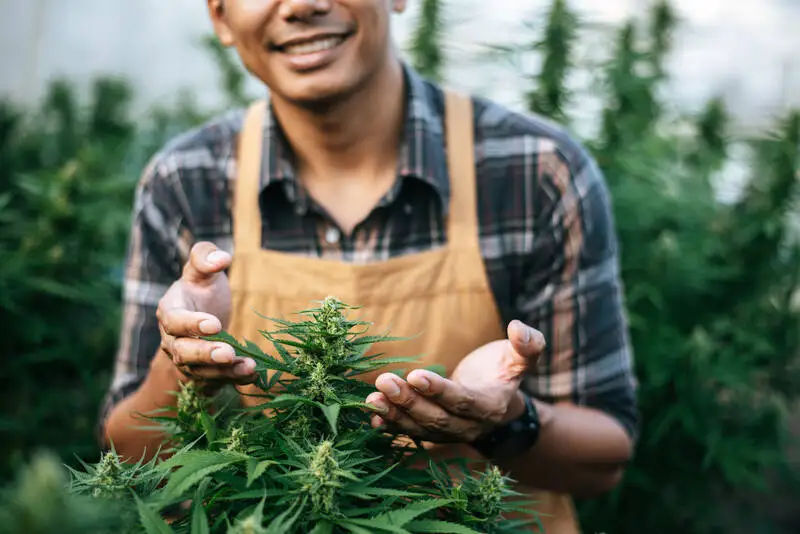
Belgium quietly became one of Western Europe’s more liberal cannabis jurisdictions in 2022 when a ministerial directive effectively decriminalized personal possession of up to 3 grams for adults. Belgium is sandwiched between the Netherlands (famous coffeeshops) and France (strict enforcement) and has long navigated its own middle path — pragmatic about personal use, cautious about commercial markets, and complicated by its federal structure with highly autonomous regions. This guide explains exactly where Belgium stands.
- Legal Status: Decriminalized for small possession — not legalized
- Personal Possession: Up to 3 grams — administrative record, no fine, no criminal charge (adults 18+)
- Home Cultivation: 1 plant tolerated — no fine for single plant
- Commercial Sales: None — no dispensaries, no licensed retail
- CBD: Legal — industrial hemp products below 0.2% THC permitted
- Medical Program: Limited — Sativex licensed; expanding access discussed
- Regional Variation: Brussels more tolerant; Flanders stricter enforcement culture
- EU Position: Moderate reformer — supports evidence-based approach
- Reform Trend: Moving toward more liberal policy — coalition discussions ongoing
The 2022 Reform: What Changed
In late 2021 and formally in 2022, Belgium’s Minister of Justice issued a ministerial circular establishing a national priority guideline for cannabis enforcement. Under this guideline:
- Personal possession of up to 3 grams of cannabis by adults 18 and over is treated as the lowest possible enforcement priority — police are instructed to record the incident but not issue a fine or initiate criminal proceedings
- Cultivation of 1 cannabis plant at home is treated similarly — tolerated with only an administrative record
- The guideline creates a de facto decriminalization — not legalization, not a law change, but a formal enforcement priority instruction to Belgian police and prosecutors
Why a ministerial circular rather than a law? Belgium’s federal structure and coalition politics make legislative changes on controversial topics extremely difficult. A ministerial circular can be issued by the government without parliamentary approval and achieves practical decriminalization without requiring the political process of amending the drug law. The downside is that it can be reversed by a subsequent minister, and its implementation depends on local police culture — which varies significantly between Belgium’s regions.
The Narcotics Act (Wet op de Verdovende Middelen) technically still lists cannabis as a controlled substance — the 2022 change was a practical enforcement shift, not a statutory change. Cannabis remains technically illegal in Belgium. The distinction matters: a tourist stopped with 2 grams is unlikely to be prosecuted, but the police interaction is not legally protected the way it would be under a formal decriminalization law.
Brussels vs Flanders: Regional Enforcement Culture
Belgium’s famously complex federal structure — with significant autonomy for Wallonia (French-speaking south), Flanders (Dutch-speaking north), and Brussels (bilingual federal capital) — creates real differences in cannabis enforcement on the ground.
Brussels has historically been the most tolerant of Belgium’s regions for cannabis. The capital is cosmopolitan, diverse, and home to EU institutions that attract international staff from more liberal cannabis jurisdictions. Brussels police have operated with a de facto tolerance for personal cannabis use for many years, predating the 2022 ministerial circular. Certain areas of Brussels (particularly around Flagey, Ixelles/Elsene, and Saint-Gilles/Sint-Gillis) have an open cannabis culture. The 2022 reform essentially formalized what was already happening in practice in the capital.
Flanders has historically had a more conservative enforcement culture. Police forces in many Flemish municipalities have applied stricter standards. The 2022 circular applies nationally, but local police discretion is real — Flemish forces have, in some cases, continued to issue fines or process individuals for possession amounts the circular suggests should be tolerated. Flemish political parties right of center have been vocal critics of decriminalization and have argued for tighter enforcement rather than tolerance.
Wallonia sits between the two — broadly following the ministerial guidance, with variation by municipality. Industrial cities and smaller towns in Wallonia often have more conservative enforcement than Brussels but less politically charged than some Flemish localities.
| Region | Enforcement Culture | 3g Possession Risk | CBD Availability |
|---|---|---|---|
| Brussels | Tolerant — long pre-2022 informal tolerance | Very low | Widely available |
| Flanders | Variable — stricter right-of-center municipalities | Low to moderate | Widely available |
| Wallonia | Moderate — generally following circular | Low | Widely available |
CBD in Belgium: A Legal and Growing Market
CBD products are legal and commercially available throughout Belgium. The Belgian CBD market operates under EU hemp cultivation rules — industrial hemp with less than 0.2% THC is lawful to cultivate and process, and CBD-derived products (oils, food supplements, cosmetics) are sold openly.
Key aspects of Belgium’s CBD sector:
- CBD shops (chanvre shops or hempshops) operate legally in Brussels, Ghent, Antwerp, Liège, and throughout the country
- CBD flower (hemp flower below 0.2% THC) is sold legally, though it occupies a slightly more complex position — some municipalities have periodically questioned whether high-CBD hemp flower constitutes a controlled substance, though federal guidance supports its legality
- CBD food products — oils, gummies, capsules — are treated as food supplements and sold in health shops and pharmacies
- Belgian hemp farming has a historic tradition — Belgian hemp fiber was historically among Europe’s most prized, and modern licensed hemp cultivation continues
- Belgium exports CBD products to other EU markets, particularly Germany and France
The practical reality for tourists: CBD products are readily available, legal, and do not require any special documentation for purchase. Bringing EU-standard CBD products into Belgium is not an issue. Taking Belgian CBD home depends on your destination country’s rules — check before you travel.
Hemp Cultivation in Belgium
Belgium has a long tradition of industrial hemp cultivation, particularly in Flanders. Hemp was a major crop in medieval and early modern Belgium — the country’s famous linen and textile industries had deep roots in hemp fiber processing. While industrial linen production is now largely historical, Belgium has been at the forefront of modern European hemp agriculture:
- Licensed hemp cultivation for fiber and seed is legal under EU agricultural rules (below 0.2% THC varieties)
- Belgium has approved EU-certified hemp varieties for cultivation
- Belgian research institutions, including Ghent University, have conducted hemp breeding and cannabinoid research
- The Belgian Hemp Association and related bodies represent the licensed hemp sector and engage with policy on CBD regulation
- Belgium is a net exporter of hemp biomass and CBD extracts to other EU markets
Medical Cannabis in Belgium
Belgium’s medical cannabis framework is more limited than Germany or the Netherlands but more developed than Romania or Bulgaria.
Sativex (nabiximols) — a cannabis-based spray containing THC and CBD developed for multiple sclerosis spasticity — is licensed in Belgium and covered by health insurance for eligible MS patients who have not responded adequately to other treatments. This makes Belgium one of the few EU countries where a THC-containing cannabis medicine is available on the national health insurance.
Beyond Sativex, access to other cannabis-derived medicines in Belgium has been limited and complex. Magistral preparations (pharmacy-compounded cannabis preparations) are available in some cases for individual patients under specific authorization, but the process is bureaucratic and access varies by region.
Belgian patient advocacy groups — particularly those representing cancer patients, chronic pain patients, and people with epilepsy — have pushed for a broader medical cannabis framework. Coalition discussions have periodically included medical access expansion as a policy area. As Belgium’s neighbors expand their medical programs, pressure for broader Belgian access increases.
Penalties for Cannabis Above the Tolerance Threshold
| Offense | Amount / Context | Outcome |
|---|---|---|
| Personal possession — adult | Up to 3g | Administrative record — no fine, no charge |
| Home cultivation | 1 plant | Administrative record — tolerated |
| Possession above tolerance | 3g–28g | Potential prosecution — fine, possible criminal proceedings |
| Supply / dealing | Any amount | Criminal offense — prosecution |
| Larger quantities | 28g+ | Presumed supply — serious criminal charges |
| Cultivation above 1 plant | 2+ plants | Criminal offense |
| Cross-border import/export | Any amount | Drug trafficking |
| Involving minors | Any amount | Aggravated offense |
Belgium’s EU Policy Position
Belgium occupies an interesting position in EU cannabis policy discussions. Sitting physically between the Netherlands (tolerance policy), Luxembourg (home grow decriminalization), and Germany (social clubs), Belgium is part of a Western European reform wave — but has its own complex federal politics that make rapid change difficult.
Belgian politicians and officials participate in EU drug policy coordination through:
- The Horizontal Drug Group (HDG) — the EU Council body that coordinates drug policy across member states
- EMCDDA/EUDA data reporting — Belgium provides detailed national drug use and enforcement statistics
- Joint statements with progressive EU members on evidence-based drug policy
Belgium has generally supported the EU Drug Strategy’s harm reduction emphasis while being cautious about leading on radical reform. The country’s position is best described as a “moderate reformer” — willing to decriminalize personal use, supportive of medical access, but not racing to commercial legalization ahead of EU political consensus.
Where Is Belgium Heading?
Belgium’s trajectory is clearly toward liberalization. Coalition discussions at federal and regional levels have periodically included proposals for:
- A formal statutory decriminalization law replacing the ministerial circular
- A pilot program for regulated cannabis sales, potentially similar to the Netherlands’ CCC pilot
- Expanded medical cannabis access beyond Sativex
- CBD regulatory clarity for the hemp industry
The 2024 Belgian federal elections and subsequent coalition formation discussions have involved parties across the spectrum. Center-left and liberal parties have supported broader reform; right-conservative parties have resisted. The direction of travel is toward more liberal policy, but the pace is dictated by Belgian coalition arithmetic — which is famously slow and complex.
Frequently Asked Questions
If I buy cannabis from a Belgian dealer and have 2g, am I safe?
Possession of 2 grams is within the tolerance threshold, so you are unlikely to face criminal prosecution or a fine. However, the purchase transaction itself was illegal, and police who observe the transaction could still investigate you. The decriminalization applies to possession, not to acquisition from illegal sources. There is also no guarantee that a specific police officer will apply the ministerial circular rather than the Narcotics Act.
Can I cross from the Netherlands to Belgium with coffeeshop cannabis?
No. Taking cannabis across any international border — including between the Netherlands and Belgium — is drug trafficking under both Dutch and Belgian law. Even if your amount is below Belgium’s decriminalized threshold, the act of transporting cannabis across a border is a separate, serious criminal offense. Border police at the Netherlands-Belgium crossing do conduct drug checks, particularly at train stations and highway junctions.
Are there cannabis clubs or social clubs in Belgium?
Not formally. Belgium has no legal framework for cannabis social clubs equivalent to Spain’s private clubs or Germany’s Anbauvereinigungen. Some advocacy organizations have pushed for a pilot program, and informal cannabis clubs have existed in Brussels’ underground scene, but they operate without legal basis and would be subject to prosecution for supply activities.
For a neighbor comparison, see our Netherlands cannabis laws guide or Luxembourg cannabis laws. For EU context, visit our Germany cannabis laws page.