




- CBD products causing positives is the most common real-world “false positive” scenario, though technically it is a true positive from accumulated trace THC in full-spectrum products — GC-MS confirmation will confirm THC-COOH is present.
- Passive secondhand smoke exposure in typical ventilated indoor settings produces urine THC-COOH concentrations of 1–5 ng/mL — well below the 50 ng/mL threshold; extreme enclosed-space scenarios have reached borderline levels in research.
- Hemp seed consumption at typical food serving amounts rarely produces positives at 50 ng/mL but may produce positives at the stricter 20 ng/mL cutoff used in probation and some employment programs.
- Ibuprofen cross-reactivity on older immunoassay formats at high doses (1,600–2,400 mg/day) is the most documented true false positive from a non-cannabis source — fully resolved by GC-MS confirmation.
- The distinction between a true false positive (cross-reactant on immunoassay) and a true positive from secondary source (CBD, hemp seeds) matters for GC-MS outcomes: cross-reactants clear on confirmation; secondary source true positives do not.
- Documentation and MRO engagement within 72 hours is the most effective response to any disputed positive.
The Landscape of Cannabis “False Positives”: Three Distinct Categories
When people discuss cannabis “false positives” in drug testing, they are often conflating three distinct phenomena that have very different scientific explanations, different implications for GC-MS confirmation, and different legal remedies. Understanding which category applies to your situation is the critical first step in any dispute.
Category 1: True False Positives (Immunoassay Cross-Reactivity)
A genuine false positive occurs when a substance that is not cannabis and not a cannabis metabolite binds to the THC antibody in the immunoassay test and triggers a positive reading. The defining characteristic of a true false positive is that GC-MS confirmation will be negative, because the specific THC-COOH molecule is not actually present in the sample. The most documented examples are high-dose ibuprofen and the HIV medication efavirenz.
Category 2: True Positives from Secondary Cannabis Sources
These occur when a person who has not intentionally used cannabis tests positive because they have been genuinely exposed to THC through a secondary source — CBD products, hemp foods, or passive smoke. These are technically not false positives: THC-COOH is genuinely present in the urine because real THC was absorbed and metabolized. GC-MS confirmation will confirm the presence of THC-COOH. The dispute in these cases shifts to whether the source constitutes a violation under the applicable testing policy.
Category 3: Laboratory or Administrative Errors
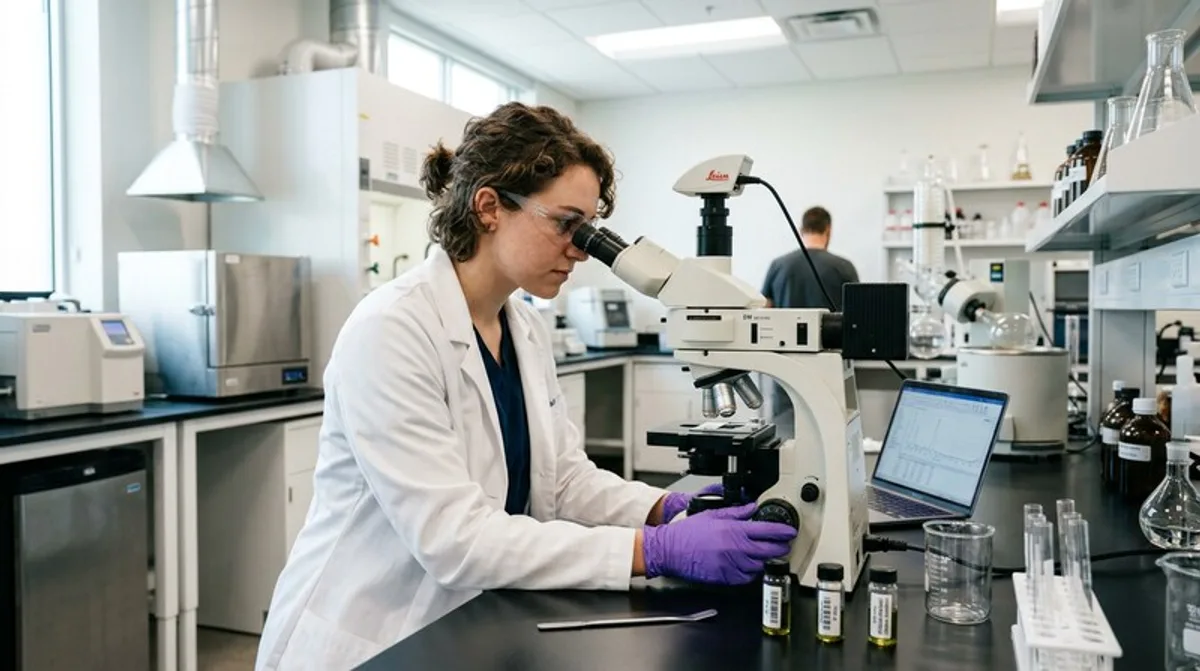
Sample mix-ups, contamination, equipment calibration failures, or chain-of-custody breaches can produce a positive on the wrong person’s sample. These are relatively rare in SAMHSA-certified laboratories but have occurred. They are identified through independent retest of the split sample, which will be negative if the primary sample result was the result of error rather than the donor’s own urine.
CBD Products and Drug Tests: A Detailed Analysis
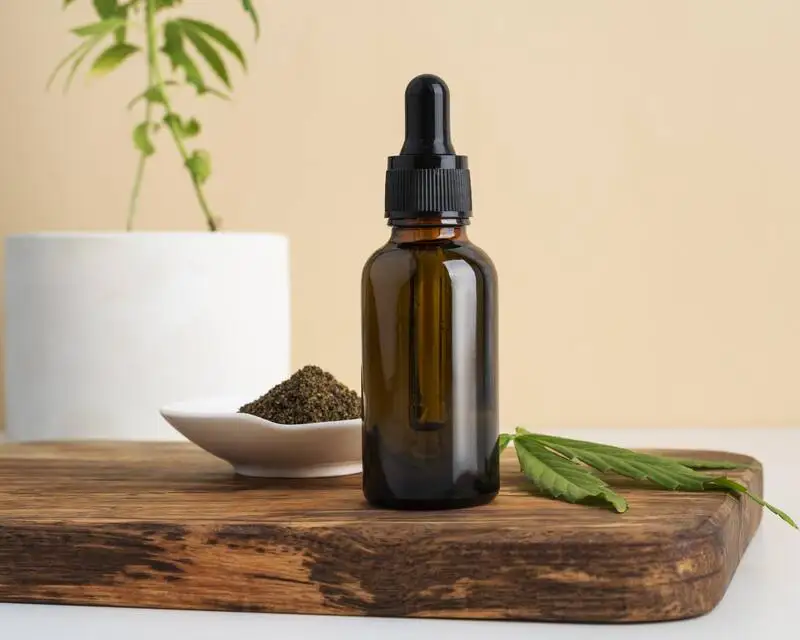
The explosion of hemp-derived CBD products following the 2018 Farm Bill has created a significant and often underappreciated drug testing risk. Federal law requires hemp products to contain less than 0.3% delta-9-THC by dry weight, but this seemingly small amount can produce detectable urinary THC-COOH in regular users for several reasons.
THC Accumulation in Fat Tissue
THC is highly fat-soluble and accumulates in adipose tissue with repeated exposure. Even 0.3% THC in a product consumed daily represents a cumulative dose of THC that the body metabolizes to THC-COOH and stores in fat. As fat turns over, this stored metabolite leaches back into the bloodstream and is excreted in urine. The higher the CBD product dose and the higher the body fat percentage, the greater the accumulation and the higher the urinary THC-COOH concentration.
A landmark 2018 study published in JAMA Psychiatry (Bonn-Miller et al.) found that only 31% of commercially available CBD products contained the CBD amount listed on the label, and many contained more THC than claimed. The problem of mislabeled CBD products — products sold as containing no THC that actually contain measurable THC — adds an additional layer of uncertainty to CBD use and drug testing.
Full-Spectrum vs. Broad-Spectrum vs. Isolate
The product type significantly affects the risk profile:
- Full-spectrum CBD: Contains all cannabinoids including up to 0.3% THC. Highest risk for drug test positives with regular use. Multiple studies have documented positive urine tests in regular full-spectrum CBD users.
- Broad-spectrum CBD: THC has been removed through additional processing. Substantially lower risk, but trace THC may remain from incomplete removal, and mislabeling is a documented issue.
- CBD isolate: Pure CBD with all other cannabinoids removed. Lowest risk, but absolute certainty requires third-party certificate of analysis confirming non-detectable THC. No form of CBD use is risk-free for drug testing purposes.
Published Studies on CBD and Drug Test Positives
Research specifically examining CBD use and drug test outcomes has found meaningful positive rates:
- A 2019 study in the Journal of Analytical Toxicology found that 4 of 8 subjects who consumed full-spectrum hemp extract containing trace THC tested positive on urine drug screens over a 20-day monitoring period.
- A clinical study testing daily CBD doses of 1,500 mg of full-spectrum hemp oil found urine THC-COOH levels exceeding the 50 ng/mL threshold in some participants.
- Multiple case reports describe employees losing their jobs after positive drug tests attributed to CBD product use, subsequently confirmed by GC-MS to contain genuine THC-COOH.
Passive Secondhand Cannabis Exposure: The Research
The question of whether secondhand cannabis smoke can produce a drug test positive is the subject of genuine scientific inquiry. The answer depends critically on the exposure scenario — specifically, the concentration of smoke, ventilation, duration of exposure, and the cutoff level used by the testing program.
Typical Indoor Social Settings
The most influential research on passive exposure was conducted by Johns Hopkins researchers (Cone et al., 2015), who exposed non-cannabis users to secondhand smoke in both ventilated and unventilated conditions. In the ventilated condition, passive participants showed urine THC-COOH levels of 1–5 ng/mL — far below the 50 ng/mL standard threshold and even below the stricter 20 ng/mL threshold. GC-MS confirmed THC-COOH was present but at sub-threshold concentrations.
In the unventilated condition — a 13 sq meter room with no air movement over one hour with cannabis smokers — passive participants showed urine concentrations of up to 50 ng/mL, with some samples exceeding the initial screening threshold. These extreme conditions produced borderline positives in a minority of participants.
| Exposure Scenario | Typical Urine THC-COOH | Risk at 50 ng/mL Cutoff | Risk at 20 ng/mL Cutoff |
|---|---|---|---|
| Outdoor exposure (concert, park) | <1 ng/mL | Negligible | Negligible |
| Ventilated indoor room (normal social setting) | 1–5 ng/mL | Very low | Very low |
| Poorly ventilated indoor, 1 hour | 5–15 ng/mL | Low | Low–Moderate |
| Enclosed vehicle, windows up, 30+ minutes | 10–25 ng/mL | Low–Moderate | Moderate |
| Unventilated room, 1+ hours, heavy smokers | Up to 50+ ng/mL | Possible (borderline) | Possible |
The practical conclusion: in most realistic social settings, passive exposure is not a meaningful risk at the 50 ng/mL standard threshold. However, the extreme scenarios that produced borderline positives in research are not entirely unrealistic for people who regularly spend time in enclosed spaces with heavy cannabis users. And at the 20 ng/mL cutoff used by many probation programs, the risk from even moderately high exposure scenarios becomes more meaningful.
Hemp Seeds: The Studies
Hemp seeds and hemp seed oil are widely available as food products and are genuinely nutritious. They also contain trace THC that has been shown in multiple studies to produce detectable urinary THC-COOH.
A seminal study published in the Journal of Analytical Toxicology examined hemp seed oil consumption and drug test outcomes. Participants consumed hemp seed oil at doses of 15–45 mL daily. At the lower dose, THC-COOH remained below 50 ng/mL in most participants. At higher doses, several participants exceeded the threshold. Another study specifically examining hemp seed snacks found that regular consumption produced urine THC-COOH concentrations ranging from 1–30 ng/mL depending on dose and individual metabolism.
The bottom line: hemp seed consumption at typical food amounts (a handful of seeds on a salad, a serving of hemp seed oil) is unlikely to produce a positive at 50 ng/mL. At higher or more frequent consumption levels, and especially at the 20 ng/mL cutoff, the risk is real. For people on probation or facing regular testing, hemp seed and hemp seed oil consumption is not worth the risk unless the exact THC content of the product is verified and the test cutoff is known.
Ibuprofen Cross-Reactivity: The Evidence
Ibuprofen is the most extensively studied pharmaceutical cause of cannabis immunoassay cross-reactivity. The mechanism involves structural similarity between ibuprofen’s metabolites and THC-COOH that is sufficient to bind the immunoassay antibody and trigger a positive response at high concentrations.
Published research has focused primarily on older EMIT (enzyme multiplied immunoassay technique) assay formats, where cross-reactivity at doses of 1,600–2,400 mg/day of ibuprofen was documented in controlled studies. Modern CLIA (chemiluminescent immunoassay) formats used in most laboratory analyzers today have substantially lower cross-reactivity rates, and routine OTC doses (400–800 mg) are unlikely to produce a positive on modern assays.
The clinical importance: anyone taking prescription-strength ibuprofen (800–1,200 mg doses, 2–3x daily) who tests positive on an immunoassay should request GC-MS confirmation. Ibuprofen cross-reactivity produces a negative GC-MS because ibuprofen is not THC-COOH and has a distinct molecular weight and fragmentation pattern.
What to Do If You Get a False Positive at Work: Step by Step
Immediate Steps (First 24 Hours)
- Do not resign or accept the result without dispute. You have procedural rights before any adverse action can be taken in regulated programs.
- Document your substance history immediately — write down every medication, supplement, CBD product, hemp food, and relevant exposure in the past 60 days while your memory is fresh.
- Request GC-MS confirmation if it was not already performed. In many private-sector settings, the employer’s testing vendor can clarify whether GC-MS confirmation was performed or only a screen result was reported.
- Request the split sample retest if you are in a federal testing program. The 72-hour window from MRO notification is critical — do not wait.
Engaging the Medical Review Officer
In federally regulated programs, the MRO will contact you before notifying your employer. This confidential call is your formal opportunity to present your case. Come prepared with:
- Pharmacy printouts or prescription labels for relevant medications
- Product labels and third-party certificates of analysis for any CBD products used
- Physician documentation if efavirenz or other cross-reactive prescription medications are involved
- Documentation of any unusual exposure scenarios (enclosed vehicle, unventilated spaces)
If the Positive Is Upheld
If GC-MS confirmation shows genuine THC-COOH (as will be the case for CBD or hemp seed true positives) and the MRO upholds the positive, your options shift to the legal domain. Consult an employment attorney who practices cannabis law in your state. Many states have enacted employee protections that restrict adverse employment action based on off-duty cannabis use or positive drug tests. The specific legal landscape varies significantly by state, employer type, and whether the use was off-duty or job-related.
The CBD Risk Matrix: How to Assess Your Personal Risk
| CBD Product Type | THC Content | Risk at 50 ng/mL (Daily Use) | Risk at 20 ng/mL (Daily Use) | GC-MS Result if Positive |
|---|---|---|---|---|
| Full-spectrum hemp oil (1000mg CBD/day) | Up to 3mg THC/day | Moderate (documented positives in studies) | Higher | Confirmed positive (true THC-COOH present) |
| Broad-spectrum CBD (claimed THC-free) | Typically <0.01% | Low–Moderate (depends on mislabeling) | Moderate | Confirmed positive if THC-COOH present |
| CBD isolate (verified COA) | Non-detectable | Very low (near zero if COA verified) | Very low | Negative if no THC-COOH |
| Hemp seed oil (1–2 tbsp daily) | Trace (<1mg THC total) | Low (below threshold in most studies) | Low–Moderate | Confirmed positive if THC-COOH present |
Can CBD products cause a positive drug test?
Full-spectrum CBD can cause a genuine positive from accumulated trace THC. GC-MS will confirm the THC-COOH is present (true positive, not a cross-reactant false positive). Broad-spectrum and isolate carry lower risk but no absolute guarantee due to mislabeling in the industry.
Can passive secondhand cannabis smoke cause a positive?
In typical ventilated indoor settings: very unlikely (1–5 ng/mL, well below 50 ng/mL threshold). In extreme enclosed scenarios: borderline possible. Normal social exposure does not produce positive drug tests at standard employment cutoffs.
What should I do if I get a false positive at work?
Request GC-MS confirmation immediately. Document all medications, CBD products, and supplements from the past 60 days. In federal programs, contact the MRO before employer notification and request a split-sample retest within 72 hours. Consult an employment attorney if the positive is upheld.