





- Standard urine drug screens use immunoassay technology with 5–10% false positive rates on initial screening; GC-MS confirmation reduces this to essentially zero for final reported results.
- The most documented cross-reactive substances are ibuprofen at high doses, pantoprazole (Protonix), efavirenz (Sustiva), and certain quinolone antibiotics.
- CBD and hemp seed products can cause true positives (not technically false positives) because they contain trace THC that genuinely accumulates in body tissue.
- A confirmatory GC-MS test is highly specific to THC-COOH and eliminates virtually all cross-reactant false positives from the initial screen.
- In federally mandated testing, a Medical Review Officer (MRO) must review all confirmed positives before employer notification, providing a formal dispute process.
- You have the right to request a split-sample retest at an independent laboratory within 72 hours of MRO notification in regulated programs.
- Several states now provide employment law protections against adverse action based solely on cannabis use; consult an attorney if you believe your rights have been violated.
How Immunoassay Drug Tests Work and Why Cross-Reactivity Occurs
The overwhelming majority of workplace, probation, and pre-employment urine drug tests use enzyme-linked immunoassay (EIA or ELISA) technology. These tests do not directly detect THC — the psychoactive compound in cannabis. Instead, they use antibodies calibrated to detect THC-COOH (11-nor-9-carboxy-THC), the primary metabolite that the body produces as it processes THC, which is excreted in urine.
The antibodies used in immunoassays are designed to recognize a particular three-dimensional molecular shape. The problem is that antibodies are not perfectly selective. Other molecules with sufficiently similar shapes can bind to the same antibody in a phenomenon called cross-reactivity. When a cross-reactive compound is present in urine at sufficient concentration, it triggers a positive signal even though no THC-COOH is actually present.
This is the fundamental mechanism behind immunoassay false positives for cannabis. The test cannot distinguish between the THC-COOH molecule it is designed to detect and a structurally similar compound that happens to bind the same antibody. This limitation is inherent to immunoassay technology and was identified in the early validation studies for EMIT (enzyme multiplied immunoassay technique) assays, the first widely used drug test format.
It is why all regulated drug testing programs require GC-MS confirmation of every positive screen — the GC-MS separates and identifies individual molecules with near-perfect specificity, eliminating cross-reactant false positives entirely.
Frequency of False Positives: What the Research Shows
Published research on immunoassay false positive rates for cannabis provides a nuanced picture. In controlled laboratory studies evaluating immunoassay specificity, false positive rates of 5–10% for the initial screen have been documented depending on the assay manufacturer, lot number, and the population being tested. A 1990s study published in Clinical Chemistry found that 5–14% of urine specimens that tested positive on initial immunoassay screens for THC were negative on GC-MS confirmation. More recent assay generations have lower cross-reactivity rates.
In workplace testing populations, the practical impact of cross-reactant false positives is limited by mandatory GC-MS confirmation in regulated programs. The problem is most significant in contexts where confirmation testing is not required: some private employers using rapid point-of-care cup tests who do not send positive screens for GC-MS, roadside law enforcement colorimetric field tests with very high cross-reactivity rates, and informal drug screening settings without quality standards.
Substances That Cause False Positives for Cannabis
The following substances have documented cross-reactivity with cannabis immunoassay tests in peer-reviewed literature or controlled case reports. The level of evidence varies by substance and specific assay type — not every substance causes a positive on every test kit, as different manufacturers’ antibodies have different selectivities.
| Substance | Brand Names | Evidence Level | Mechanism | Resolved by GC-MS? |
|---|---|---|---|---|
| Ibuprofen (high doses) | Advil, Motrin | Strong — multiple studies | Structural similarity at high concentrations (1,600–2,400 mg/day); primarily older EMIT assays | Yes |
| Naproxen | Aleve, Naprosyn | Moderate — documented cases | Similar NSAID structure; less common at OTC doses | Yes |
| Pantoprazole (PPI) | Protonix | Strong — peer-reviewed case series | Widely prescribed for GERD; well-documented cross-reactor | Yes |
| Efavirenz | Sustiva, Atripla | Very Strong — multiple studies | HIV antiretroviral; most-cited pharmaceutical false positive trigger for cannabis | Yes |
| Quinolone antibiotics | Levaquin, Floxin | Limited — isolated clinical reports | Levofloxacin, ofloxacin; seen in isolated case reports | Yes |
| Baby soap (polyquaternium-11) | Johnson’s Baby Wash | Limited — controlled study | Compound in some baby soaps; triggered positive in neonatal screening study | Yes |
| Hemp seeds / seed oil | Various food products | Moderate — some studies positive | Trace THC present; may produce genuine THC-COOH accumulation with regular use — technically true positive | No (may confirm) |
| Full-spectrum CBD | Various products | Strong — multiple studies | Contains trace THC that accumulates; technically a true positive not a false positive | No (confirms positive) |
Hemp Seeds and Passive Exposure: True Positive vs. False Positive
A common misconception conflates false positives with true positives from secondary sources. Hemp seeds and hemp-derived food products legally contain trace amounts of THC. Multiple studies have documented that regular consumption of hemp seed products can produce genuine THC-COOH accumulation in body fat and urine that is detectable on drug tests.
Importantly, this is not a false positive. The THC metabolite is genuinely present because trace THC from the food product was metabolized and stored. GC-MS confirmation will confirm the presence of THC-COOH in these cases. This distinction matters legally: a confirmed positive from hemp seed consumption cannot be successfully challenged as a cross-reactant false positive, because it is not one.
Published research on hemp seed consumption and drug testing has shown that consuming hemp seed products meeting the federally compliant THC threshold (<0.3% by dry weight) at typical food serving amounts is unlikely to produce a positive at the 50 ng/mL cutoff. However, concentrated hemp seed oil products consumed in large quantities have produced positives in controlled studies. The margin of safety narrows at the 20 ng/mL cutoff used by some stricter employers.
The Efavirenz Case: The Most Documented Pharmaceutical False Positive
Efavirenz (brand name Sustiva, also in the combination product Atripla) is an antiretroviral drug prescribed for HIV treatment. It holds the distinction of being the most extensively documented pharmaceutical cause of false positive cannabis immunoassay screens in the peer-reviewed literature. Multiple independent studies across different laboratory settings and assay formats have confirmed that efavirenz at therapeutic doses reliably produces positive screens for cannabinoids on EMIT and related immunoassays.
The mechanism involves structural similarity between efavirenz metabolites and the THC-COOH target of the antibody. GC-MS confirmation reliably resolves these cases as negative, because efavirenz and its metabolites have distinct fragmentation patterns from THC-COOH. However, in testing contexts where GC-MS confirmation is not performed, an efavirenz user faces a serious risk of an unjustified positive result. HIV patients facing drug testing should proactively disclose efavirenz use to the MRO before testing if possible.
GC-MS Confirmation: Why It Resolves False Positives
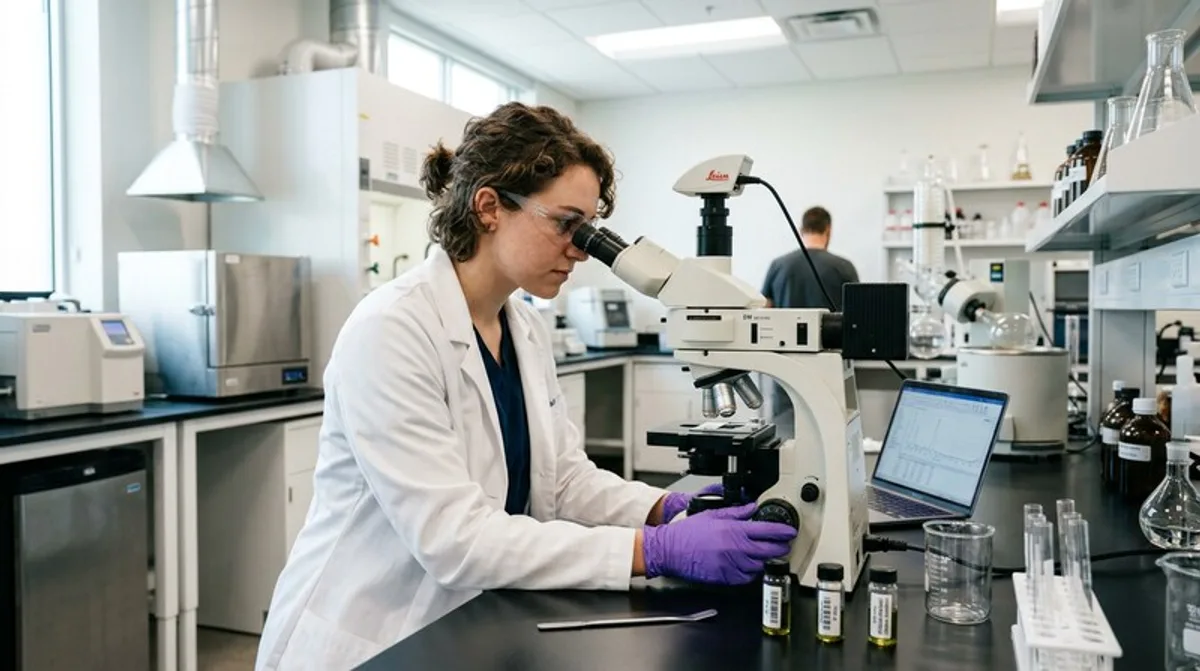
Gas chromatography-mass spectrometry (GC-MS) is the definitive solution to immunoassay cross-reactivity because it operates on a completely different principle. Rather than relying on antibody binding affinity, GC-MS physically separates compounds in the sample by their molecular properties and then identifies each compound by its unique mass fragmentation pattern — essentially a molecular fingerprint.
When a cross-reactive compound is present, the GC step separates it from THC-COOH at a different retention time, and the MS step produces a different fragmentation pattern. The laboratory software compares the observed fragmentation to the THC-COOH library standard and finds no match. The result: a GC-MS negative, regardless of what the immunoassay reported. This is why GC-MS confirmation is so important in regulated drug testing: it provides a nearly error-free second opinion on every positive screen.
The confirmation cutoff for urine cannabis testing under SAMHSA guidelines is 15 ng/mL for GC-MS, compared to 50 ng/mL for the initial immunoassay screen. This two-tier system (higher sensitivity screen + highly specific confirmation) is designed to maximize sensitivity without sacrificing specificity in the final reported result.
Your Legal Recourse for a False Positive in Employment
If you receive a positive drug test result that you believe is incorrect, your legal options depend on which testing framework applies to your employment.
Federal Workplace Testing (DOT, SAMHSA-Regulated Employers)
In federally regulated programs, you have the most robust protections:
- The MRO must contact you directly before notifying the employer, giving you a confidential opportunity to present documentation of relevant medications.
- You have the right to request a split-sample independent GC-MS retest within 72 hours of the MRO’s notification.
- No adverse employment action may be taken based on an unconfirmed positive.
- If the MRO upholds a positive after you’ve presented your documentation, you may appeal through your employer’s Employee Assistance Program (EAP) or seek legal counsel.
Private Sector Testing
Private employers not governed by federal testing rules have more variable practices. The key questions to establish are: Does the employer use GC-MS confirmation? Is an MRO involved in the review process? What is the employer’s stated policy on positive results and appeals? Answers to these questions determine your practical dispute options.
Many states have enacted laws restricting employer cannabis testing or adverse action based on cannabis use. Some specifically prohibit adverse action for off-duty use in legal-use states. If you are in a state with such protections, the specific circumstances of your positive and the employer’s response may be legally actionable. An employment attorney with cannabis law experience is the appropriate resource for evaluating state-specific options.
Documentation Strategy: What to Prepare Before Testing
If you take any of the medications documented to cause false positives, proactive preparation can significantly streamline the dispute process if needed:
- Obtain a pharmacy printout showing all medications dispensed to you in the past 60 days.
- Obtain a letter from your prescribing physician explaining the medication, the prescribed dosage, and the documented potential for cross-reactivity with cannabis drug tests if your physician can provide this.
- Keep copies of all documentation in a location you can access quickly during the 72-hour window after MRO notification.
- Review the published cross-reactivity literature for your specific medication if possible — being able to cite specific studies to the MRO strengthens your position.
- Request to know which immunoassay format is being used (EMIT, CLIA, lateral flow). Older EMIT assays have higher documented cross-reactivity for ibuprofen; knowing the format is relevant to your argument.
What medications cause a false positive for cannabis on a drug test?
The most documented cross-reactive substances are ibuprofen at high doses, pantoprazole, efavirenz, and certain quinolone antibiotics. All of these are resolved by GC-MS confirmation testing, which identifies the specific THC-COOH molecule.
How common are false positive cannabis drug tests?
5–10% on initial immunoassay screens; under 0.1% on GC-MS confirmed results in regulated programs. Most initial false positives are resolved at the confirmation stage.
What is my legal recourse for a false positive at work?
In federally regulated programs: speak with the MRO before employer notification, provide medication documentation, and request a split-sample retest within 72 hours. In private employment, options depend on your state’s cannabis employment laws. Consult an employment attorney for state-specific guidance.