

Key Findings at a Glance
- Single-session tourists: Delta-9-THC in whole blood typically clears below 5 ng/mL within 3–6 hours; most are undetectable within 24 hours.
- Repeat-use tourists (multi-day trip): Morning-after blood THC can remain 2–8 ng/mL after consecutive daily use, exceeding many per se limits.
- Per se DUI thresholds vary widely: Colorado uses 5 ng/mL (rebuttable inference), the Netherlands and Germany use 3 ng/mL delta-9-THC, Canada uses 2–5 ng/mL tiered limits.
- THC-COOH serum is not evidence of impairment in most jurisdictions but can be used as corroborating evidence in some US states.
- Roadside oral-fluid devices (Dräger DrugTest 5000, SoToxa) are deployed in multiple US states, Canadian provinces, and throughout the EU — they detect THC within minutes of use.
- Crossing a land border while recently using cannabis can trigger secondary inspection, device testing, and potential denial of entry even if you are not driving impaired.
- Flying home: Airport blood or oral-fluid tests are not routine, but customs at your destination country may test if behaviour raises suspicion — and home-country penalties apply.
Blood testing is the gold standard for measuring acute cannabis intoxication. Unlike urine tests — which detect the inactive metabolite THC-COOH for weeks — blood tests measure the psychoactive compound delta-9-THC itself, making them the preferred method for law enforcement assessing driving impairment. For cannabis tourists, understanding blood detection windows is not just academic: it has direct consequences for driving rental cars, crossing borders, and returning home.
This guide covers the science of THC blood pharmacokinetics, the practical tourist scenarios most likely to result in a roadside stop or border check, per se limits jurisdiction by jurisdiction, and the laboratory methods used to confirm results.
blood test Detection Windows by Use Frequency
Delta-9-THC is highly lipophilic. After inhalation it enters the bloodstream within seconds, peaks within minutes, and then redistributes rapidly into fatty tissue. This redistribution is why blood levels fall quickly in occasional users — but in chronic users with saturated fat stores, THC leaches back into the blood from tissue reserves, keeping levels elevated far longer.
The table below combines data from pharmacokinetic studies including Huestis et al. (NIDA), the ROSITA-2 roadside testing project, and published impairment research to give realistic detection windows for the most common tourist use patterns.
| Use Pattern | Delta-9-THC Active (Whole Blood) | THC-COOH Serum | Tourist Risk Level | Notes |
|---|---|---|---|---|
| Single session (first-time / tourist) | Detectable up to 4–6 hrs; <1 ng/mL by 12–24 hrs | Detectable 12–48 hrs | Low (next day) | Most tourists below 5 ng/mL within 6 hrs; essentially clear by next morning if sleep intervenes |
| Occasional tourist (1–3 day trip, 1 session/day) | Morning-after levels: 1–5 ng/mL common; may reach 8 ng/mL after heavy evening session | Detectable 2–4 days | Moderate | Back-to-back days of use prevent full clearance; morning driving after second-night session is higher risk |
| Regular user (several times per week) | Baseline 1–3 ng/mL at waking; 3–10 ng/mL post-session; up to 48–72 hrs post-use | Detectable 3–7 days | Moderate–High | Tissue redistribution maintains measurable blood levels throughout the day even without fresh dosing |
| Daily / heavy user | Baseline 2–10+ ng/mL even after 12 hrs abstinence; detectable 3–7 days post-cessation | Detectable up to 30 days | High | Chronic users can exceed per se limits while not acutely impaired — legally vulnerable even after a full night's abstinence |
Sources: Huestis MA et al., J Anal Toxicol 2000; Lee D et al., Clin Chem 2012; ROSITA-2 project data; SAMHSA advisory guidance. Individual results vary by body fat percentage, metabolism, potency consumed, and route of administration.
For Cannabis Tourists: Driving After Your Last Session
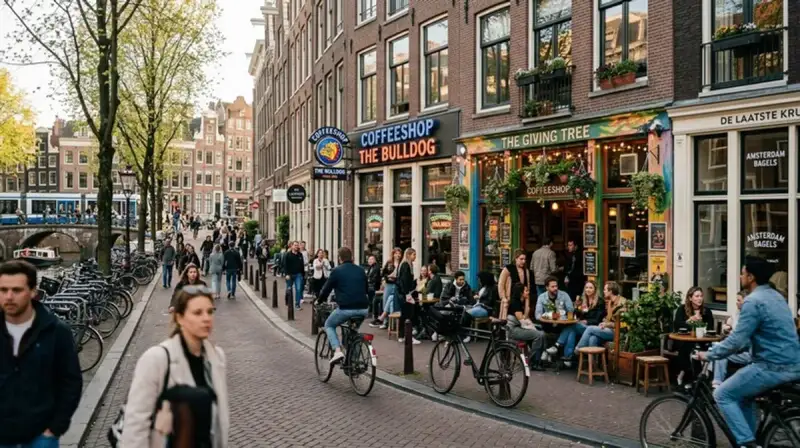
This is the section most tourists actually need. You have spent an evening in a coffeeshop in Amsterdam, at a dispensary-friendly Airbnb in Denver, or at a social club in Barcelona. Tomorrow you want to drive to the airport, pick up a rental car, or take a road trip. Here is how to think about your risk honestly.
You Smoked Last Night in Denver — Can You Drive Today?
If you smoked one moderate joint between 8 pm and 10 pm and slept a full night, your delta-9-THC blood level at 7 am is most likely between 0 and 2 ng/mL if you are an infrequent user. Colorado's permissible inference limit is 5 ng/mL, so you are almost certainly below it. However, Colorado law also allows officers to charge DUID on the basis of observed impairment alone, regardless of blood level. If you are still visibly impaired — bloodshot eyes, slowed response, cognitive fog — you can be charged even at 0.5 ng/mL.
If you smoked heavily (multiple joints or a high-potency concentrate session) between 10 pm and midnight, your morning blood THC is less predictable. Studies show occasional users can present at 3–7 ng/mL after a heavy session 8 hours prior. Add the effect of edibles — which have a later and longer peak — and the next-morning risk rises further.
You Smoked Last Night in Amsterdam — Can You Drive Today?
The Netherlands' road traffic Act (Wegenverkeerswet 1994) sets a per se limit of 3.0 µg/L (ng/mL) delta-9-THC in whole blood. This is lower than Colorado's 5 ng/mL threshold. A moderate coffeeshop session at 9 pm in the Leidseplein area, followed by a hotel night, leaves most infrequent tourist users in a borderline zone by 8 am the next morning. If you had more than two joints or consumed a space cake on top of smoked cannabis, the risk of being above 3 ng/mL the following morning is real.
Amsterdam Schiphol serves as the rental car hub for much of the Netherlands and is surrounded by motorway links. Traffic police conduct roadside checks on the A4, A9, and A10 ring road approaches. Tourists picking up a Hertz or Europcar rental and driving immediately after arriving from a cannabis-friendly neighbourhood are not routinely targeted, but a minor traffic infraction (failing to yield, unclear lane change) can trigger a stop that escalates quickly if the officer detects cannabis odour.
Foreign Driver with a Home-Country Licence Pulled Over in a Cannabis-Legal US State
A UK, Australian, German, or Japanese tourist driving in Colorado, California, or Washington with their home-country licence has full driving privileges under the 1968 Vienna Convention and bilateral agreements. However, that licence provides zero immunity from state drug-driving laws. If a Colorado State Patrol officer stops you and develops probable cause to believe you are impaired — through field sobriety tests, officer observation, or a drug recognition evaluation — they can request a blood draw. Refusing a blood draw in Colorado triggers automatic licence revocation for 12 months and can be used as evidence of consciousness of guilt at trial. For a tourist, this effectively means your home-country driving record may be affected via international reciprocal reporting, and re-entry to the US on future trips could face complications if a DUID charge results in a criminal conviction.
Morning-After Blood THC Scenarios (Quick Reference)
| Scenario | Hours Since Last Use | Estimated Blood THC | Colorado (5 ng/mL) | Netherlands (3 ng/mL) | Canada (2 ng/mL) |
|---|---|---|---|---|---|
| 1 joint, infrequent user, 8 hrs sleep | ~10 hrs | 0–1 ng/mL | Below | Below | Below |
| 3 joints, infrequent user, 7 hrs sleep | ~9 hrs | 1–5 ng/mL (variable) | ️ Borderline | ️ Borderline/Over | ️ Likely Over |
| 1 strong edible (10 mg THC), 6 hrs sleep | ~8–10 hrs post-dose | 2–8 ng/mL (peak delayed) | ️ Borderline/Over | Likely Over | Likely Over |
| Heavy concentrate session, daily user, 6 hrs sleep | ~6 hrs | 5–15 ng/mL | Over | Over | Over |
| 1 joint, infrequent user, 14 hrs sleep | ~16 hrs | <0.5 ng/mL | Below | Below | Below |
Bottom line for tourists: One moderate session the previous evening with a full night's sleep is generally low risk in most jurisdictions. Multiple sessions, edibles, concentrates, or a short sleep window dramatically increase the probability of exceeding per se limits.
Per Se DUI Limits by State and Country
Cannabis DUI laws around the world take three broad approaches: (1) zero tolerance — any detectable THC is illegal; (2) per se limits — a specific ng/mL threshold triggers a presumption or absolute offence; (3) impairment-based — no numeric limit, but officers must prove observable impairment. The table below covers the jurisdictions most relevant to cannabis tourists.
| Jurisdiction | Approach | Delta-9-THC Limit (Blood) | Notes for Tourists |
|---|---|---|---|
| Colorado, USA | Permissible inference | 5 ng/mL (whole blood) | Rebuttable presumption only; impairment alone also sufficient for DUID charge |
| Washington State, USA | Per se | 5 ng/mL (whole blood) | Absolute per se; no need to prove impairment if above threshold |
| California, USA | Impairment-based | No numeric limit | Officers rely on Drug Recognition Evaluators; AB 2616 (oral fluid) pending expansion |
| Montana, USA | Per se | 5 ng/mL (whole blood) | Recreational cannabis legal since 2021; active roadside testing programme |
| Pennsylvania, USA | Zero tolerance (any metabolite) | Any detectable Schedule I substance | Includes THC-COOH — chronic users can be charged days after last use even without impairment |
| Nevada, USA | Per se | 2 ng/mL (whole blood) | Lower threshold than most; heavy tourist traffic from Las Vegas; active enforcement |
| Oregon, USA | Impairment-based | No numeric limit | DUID based on officer observation and DRE evaluation |
| Michigan, USA | Zero tolerance (any amount) | Any detectable THC or metabolite | Despite recreational legalisation, any detectable THC in blood is a per se offence |
| Canada (federal) | Tiered per se | 2–5 ng/mL tiered offence levels | 2–5 ng/mL: summary offence; 5+ ng/mL: more serious; combined with alcohol compounds offence |
| Netherlands | Per se | 3.0 µg/L (ng/mL) whole blood | Roadside oral fluid screening active; coffeeshop tourists are a known enforcement focus in Amsterdam |
| Germany | Per se (revised 2024) | 3.5 ng/mL whole blood (from Aug 2024) | Changed from zero-tolerance (1 ng/mL) to 3.5 ng/mL under new cannabis legalisation framework; Polizei use DrugWipe devices |
| Spain (Barcelona) | Per se | 2 µg/L blood (or positive oral fluid) | Social clubs legal but driving after remains subject to national traffic law; Mossos d'Esquadra use oral-fluid screening |
| United Kingdom | Per se | 2 µg/L (ng/mL) blood | Very low threshold; prescribed medicinal THC users have separate defence; tourists have no special exemption |
| Australia (varies by state) | Zero tolerance (presence) | Any detectable THC (oral fluid / blood) | No legal threshold — presence alone is an offence in all Australian states and territories |
Roadside Blood Tests vs. Oral Fluid Screening
Most tourists will never experience a formal blood draw at the roadside. In practice, the first line of cannabis detection in the field is an oral fluid swab device. Blood draws require trained phlebotomists or paramedics and must occur within a legally defined timeframe after driving — typically 2–3 hours — so they usually follow a trip to a police station or emergency department.
Dräger DrugTest 5000
The Dräger DrugTest 5000 is the most widely deployed roadside oral-fluid analyser in Europe and is also used in Australian, Canadian, and some US state programmes. The device analyses a saliva sample for seven substance classes including THC. Its THC detection window in oral fluid is approximately 0.5–1 hour after smoking for the lower cut-off (up to 4 hours after heavy use at higher cut-offs), making it most sensitive to recent use. The Dräger detects THC at 5 µg/L in oral fluid. A positive reading is followed by a confirmatory blood draw at a police station. Studies have shown the Dräger has a sensitivity of approximately 85% and a false-positive rate of around 5% for THC specifically.
Where deployed: Germany (nationwide), Netherlands (major motorway checks and urban checks in Amsterdam), Belgium, Norway, Sweden, Australian states (Victoria, New South Wales, Queensland), Canadian provinces (Ontario, British Columbia), and US states including Michigan and Iowa in pilot programmes.
SoToxa (Abbott)
The Abbott SoToxa (formerly Alere DDS2) is the primary device used in many US state programmes including Colorado, Nevada, and Michigan oral fluid screening pilots. It detects THC in oral fluid at a cut-off of 15 ng/mL (substantially higher than the Dräger's European equivalent). This higher cut-off means SoToxa is more likely to detect use within the past 1–4 hours rather than the 4–8 hour window of the Dräger. Colorado uses SoToxa as a preliminary test; a positive result leads to a blood draw.
State-by-State Oral Fluid Deployment (USA)
| State | Oral Fluid Device | Legal Basis | Blood Draw Follow-Up |
|---|---|---|---|
| Colorado | SoToxa (pilot, not statewide) | Voluntary pilot; blood draw primary evidence | Yes — blood draw required for charge |
| Michigan | SoToxa | Michigan Motor Vehicle Code §257.625a | Yes — oral fluid used as probable cause for blood draw |
| Nevada | Dräger DrugTest 5000 (evaluating) | Pilot under NRS 484C | Yes |
| California | No statewide oral fluid device approved | DRE evaluation primary | Yes — via DRE protocol |
| Washington State | No roadside oral fluid programme active | Blood draw primary | Yes |
Tourist takeaway: In Europe — especially the Netherlands and Germany — the likelihood of encountering an oral fluid device at a routine traffic stop is higher than in most US states. A positive roadside oral fluid test in Amsterdam or Berlin leads directly to a police station blood draw and, if confirmed, prosecution. The oral fluid test can detect a joint smoked in the last 1–4 hours with high accuracy. Driving to the airport after your final coffeeshop visit is genuinely risky if the visit was within the past 4 hours.
DUID at Borders: What Happens If You're Stopped at a Land Border
Cannabis tourists crossing land borders face a distinct risk profile from drivers on domestic roads. Border agents are not primarily looking for impaired driving — they are looking for smuggling, inadmissibility grounds, and national security concerns. But cannabis recent use, detected by odour, behaviour, or screening, can trigger consequences that go beyond a DUID charge.
Canada–US Border (CBSA Northbound / CBP Southbound)
Entering Canada from the US: Cannabis is federally legal in Canada. The Canada Border Services Agency (CBSA) does not prohibit entry for cannabis use that occurred in the US (now also broadly legal at state level). However, CBSA officers can refer anyone to secondary inspection, and if a driver appears impaired at the wheel or smells strongly of cannabis, the CBSA may call Royal Canadian Mounted Police (RCMP) or provincial police to conduct a roadside impairment assessment. Canada's Criminal Code provisions under Bill C-46 allow roadside oral-fluid testing (Dräger DrugTest 5000 is the approved device) and Standard Field Sobriety Tests for anyone operating a vehicle at the border crossing.
Entering the US from Canada: This is the higher-risk scenario. CBP officers at US land border crossings can ask about cannabis use. Admitting to cannabis use — even legal in Canada — can trigger a finding of inadmissibility under INA §212(a)(1) for someone believed to be a drug abuser or addict, or under §212(a)(2) for drug-related criminal convictions. A DUID conviction in Canada can result in permanent bars to US entry unless a waiver is obtained. At the crossing itself, a CBP officer who suspects drug use can detain the vehicle and refer to secondary inspection where a blood test may be requested (though you cannot legally be compelled to submit to a blood draw without arrest in most scenarios — but refusal at a border increases scrutiny). The safest rule: do not drive to a US land border crossing within 24 hours of any cannabis use, and do not admit to recent use under questioning.
Mexico–US Border (CBP Southbound and Northbound)
Mexico's domestic cannabis laws have been in flux (partial decriminalisation, Supreme Court ru