
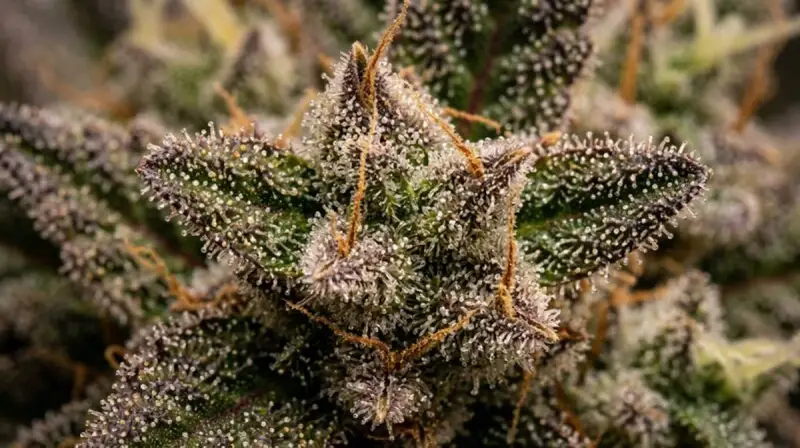








- Delta-9-THC is converted to 11-OH-THC (active) then to THC-COOH (inactive) via CYP2C9 and CYP3A4 liver enzymes
- THC-COOH has a half-life of 25-55 hours (monohydroxy) and up to 100 hours (dihydroxy metabolite)
- THC’s log Kow of ~6.97 makes it strongly lipophilic — it accumulates in fat tissue and re-releases slowly
- SAMHSA urine cutoff: 50 ng/mL initial immunoassay / 15 ng/mL GC-MS confirmatory
- Urine tests detect THC-COOH glucuronide; blood tests detect THC + 11-OH-THC; saliva detects parent THC
- CYP2C9 poor metabolizers may have 3-4× longer detection windows than extensive metabolizers
- Oral THC produces more 11-OH-THC relative to inhaled THC due to first-pass liver metabolism
The Metabolic Pathway: From Delta-9-THC to Detectable Metabolites
When you consume cannabis, delta-9-THC enters the bloodstream and travels to the liver. There, two cytochrome P450 enzymes — primarily CYP2C9 and secondarily CYP3A4 — catalyze a two-step hydroxylation reaction. In the first step, CYP2C9 adds a hydroxyl group to the 11-carbon position of the THC molecule, producing 11-hydroxy-THC (11-OH-THC). This metabolite is also psychoactive and crosses the blood-brain barrier even more efficiently than delta-9-THC itself, which partly explains the intense, slow-onset effects of oral cannabis consumption.
In the second step, 11-OH-THC is further oxidized to 11-nor-9-carboxy-THC, commonly written as THC-COOH or 11-COOH-THC. This carboxylated metabolite is pharmacologically inactive — it does not bind to cannabinoid receptors and produces no psychoactive effects. However, it is the primary target of urine drug screening because it is excreted in urine as a glucuronide conjugate (THC-COOH glucuronide) and persists far longer than the parent compound.
A third class of metabolites, dihydroxy-THC compounds, are produced in smaller quantities. These have even longer half-lives (up to 100 hours) and contribute to extended detection in heavy, chronic users.
Half-Life Data for Each Metabolite
Half-life is the time required for plasma concentration to fall by 50%. Because THC and its metabolites partition into fat, the apparent half-life measured in blood does not reflect simple first-order kinetics — it changes with the size of the adipose reservoir.
| Compound | Type | Half-Life (typical) | Detection Matrix | Psychoactive |
|---|---|---|---|---|
| Delta-9-THC | Parent | 1–3 hours (blood) | Blood, oral fluid | Yes |
| 11-OH-THC | Active metabolite | 3–4 hours | Blood, urine | Yes (stronger) |
| THC-COOH (monohydroxy) | Inactive metabolite | 25–55 hours | Urine (as glucuronide) | No |
| THC-COOH (dihydroxy) | Inactive metabolite | 50–100 hours | Urine, blood serum | No |
| THC-COOH glucuronide | Conjugated metabolite | Variable (days) | Urine | No |
The widely quoted "30-day detection window" for cannabis in urine applies specifically to chronic, heavy daily users. The THC-COOH glucuronide accumulates in adipose tissue over weeks of regular use, and the slow release of fat-stored THC continuously replenishes the urine metabolite pool even after cessation. For a first-time user who consumed a moderate dose, the realistic detection window is 3-5 days.
Lipophilicity: Why Fat Tissue Matters
THC’s lipophilicity is the single most important pharmacokinetic property explaining the extreme variability in detection windows. The octanol-water partition coefficient (log Kow) measures how preferentially a substance dissolves in fat versus water. THC has a log Kow of approximately 6.97, meaning it is nearly 10 million times more soluble in fat than in water.
After entering the bloodstream, THC rapidly distributes into highly vascularized fatty tissues — brain, liver, and adipose depots. The brain receives high concentrations early (explaining rapid psychoactive onset after inhalation), but most of the THC burden ultimately settles into peripheral adipose tissue. There it remains largely sequestered, slowly releasing back into blood plasma during normal metabolic processes, particularly lipolysis (fat breakdown for energy).
This fat-storage mechanism creates a physiological reservoir that extends the window during which metabolites appear in urine. The larger a person’s total fat mass, and the greater their cumulative THC exposure, the longer this re-release process continues after they stop using cannabis.
First-Pass Effect: Oral vs. Inhaled THC
The route of administration significantly changes the metabolite profile. When cannabis is inhaled, THC enters the pulmonary circulation and reaches the brain within seconds, largely bypassing the first pass through the liver. The resulting blood THC spike is high and brief, with 11-OH-THC representing a relatively small fraction of total circulating cannabinoids.
When cannabis is ingested orally (edibles, capsules), THC is absorbed through the gut wall and enters the portal circulation, which carries it directly to the liver before it reaches systemic circulation. This first-pass hepatic metabolism converts a significant proportion of delta-9-THC to 11-OH-THC before it ever reaches the brain. Peak 11-OH-THC concentrations after oral administration can be 3-5 times higher relative to delta-9-THC than after inhalation, contributing to the stronger and more prolonged psychoactive effect of edibles and explaining why edibles produce qualitatively different subjective experiences.
For drug testing purposes, the route of administration affects the ratio of metabolites but not the overall total metabolite burden significantly — the liver ultimately processes the same total THC dose regardless of route.
Individual Variation: Why Detection Windows Differ So Much
| Factor | Direction of Effect | Mechanism | Magnitude of Impact |
|---|---|---|---|
| Body fat percentage | Higher fat = longer detection | Larger adipose reservoir stores more THC | High |
| CYP2C9 poor metabolizer | Slower clearance | Reduced enzyme activity → metabolites accumulate | High (2-4× longer) |
| CYP2C9 extensive metabolizer | Faster clearance | Higher enzyme activity → rapid conversion | Moderate |
| Use frequency | More frequent = longer window | Fat reservoir continuously replenished | Very High |
| Exercise (aerobic) | Acute increase, long-term decrease | Lipolysis releases stored THC; fat loss reduces reservoir | Moderate (see caveats) |
| Hydration status | Dilution affects urine concentration | More fluid = lower ng/mL in urine (not true clearance) | Low-moderate |
| Potency / THC dose | Higher dose = longer window | More THC absorbed = larger total metabolite burden | Moderate |
| Age | Older = slightly slower | Reduced CYP enzyme activity + increased fat:muscle ratio | Low |
CYP2C9 Genetic Variants and Their Impact
The CYP2C9 gene exhibits clinically significant polymorphisms. The most common variants in European populations are CYP2C9*2 (rs1799853, ~12% allele frequency) and CYP2C9*3 (rs1057910, ~7% allele frequency). Individuals carrying two reduced-function alleles (poor metabolizers) have dramatically slower THC-COOH production and clearance. In practical terms, a poor metabolizer may test positive for THC metabolites 3-4 times longer than an extensive metabolizer who consumed the same dose of cannabis under identical conditions.
Most cannabis users do not know their CYP2C9 genotype, which is one reason why rule-of-thumb detection window estimates are unreliable for individuals. Pharmacogenomic testing (available commercially from companies like 23andMe or through physicians) can identify these variants, but the information is rarely actionable in a testing context.
Detection Windows by Test Type
Different drug test matrices detect different compounds with different time windows, reflecting distinct pharmacokinetic profiles.
| Test Type | Target Analyte | Single Use Window | Daily Use Window | Purpose |
|---|---|---|---|---|
| Urine | THC-COOH glucuronide | 3–5 days | Up to 30+ days | Historical use (workplace, probation) |
| Blood | Delta-9-THC + 11-OH-THC | 3–12 hours | Up to 25 days (serum COOH) | Impairment, recent use (DUID) |
| Oral fluid (saliva) | Delta-9-THC (parent) | 4–24 hours | Up to 72 hours | Roadside, recent use detection |
| Hair | THC-COOH in hair shaft | Not detected (window begins ~7 days post-use) | Up to 90 days | Long-term use history |
| Sweat patch | THC + metabolites | Days to weeks (cumulative) | Weeks | Continuous monitoring (parole) |
Hair testing is unique because THC-COOH is deposited into growing hair follicles via the bloodstream and sebaceous secretions during the brief window of peak blood concentration. A standard 1.5-inch hair sample represents approximately 90 days of growth. However, hair testing has significant scientific controversy: external contamination from cannabis smoke can produce false positives, and melanin content affects drug uptake, raising equity concerns about racial disparities in test outcomes.
Urine Test Cutoff Levels and Their Rationale
The SAMHSA Mandatory Guidelines for Federal Workplace Drug Testing set the standard that most U.S. employers and drug testing programs follow. For cannabis, the two-tier protocol works as follows:
Initial test (immunoassay): 50 ng/mL THC-COOH in urine. Immunoassay tests use antibodies that bind THC-COOH and related compounds. The 50 ng/mL cutoff was selected to exclude passive exposure scenarios (which cannot produce concentrations above ~1-5 ng/mL) while capturing genuine consumption.
Confirmatory test (GC-MS or LC-MS/MS): 15 ng/mL THC-COOH. The lower confirmatory cutoff ensures that samples flagged at the screening level are genuine positives and not antibody cross-reactions from ibuprofen, dronabinol (synthetic THC medication), or hemp CBD products that contain trace THC.
Some specialized testing programs, particularly those for safety-sensitive positions or legal proceedings, use a 20 ng/mL confirmatory cutoff or test for additional metabolites (e.g., 11-OH-THC) to distinguish recent from historical use. The DOT (Department of Transportation) follows SAMHSA guidelines for their federal mandated testing program.
Frequently Asked Questions
What enzyme breaks down THC in the body?
THC is primarily metabolized by CYP2C9 and CYP3A4 enzymes in the liver. CYP2C9 converts delta-9-THC into 11-OH-THC (active), which is then converted to THC-COOH (inactive). Genetic variants in CYP2C9 cause significant individual differences in how quickly this process occurs.
Why does THC stay in fat cells?
THC is highly lipophilic with a log Kow of ~6.97 — nearly 10 million times more soluble in fat than in water. After absorption, it preferentially distributes into adipose tissue where it is slowly re-released back into blood during lipolysis, extending the detection window for heavy users by days or weeks.
What is the SAMHSA cutoff for THC in urine?
SAMHSA mandates a 50 ng/mL immunoassay screening cutoff and a 15 ng/mL GC-MS confirmatory cutoff for THC-COOH glucuronide in urine. The two-tier system reduces false positives from cross-reactive substances like ibuprofen.
How long does THC-COOH stay in urine?
For a single use: 3-5 days. Moderate users (a few times per week): 5-10 days. Daily users: up to 30 days or more. The primary variable is total accumulated THC burden in adipose tissue, not just the most recent dose.
Does drinking water flush THC from your system?
Water does not accelerate metabolic clearance of THC. However, drinking large amounts of water in the hours before a urine test dilutes urine, lowering the ng/mL concentration of THC-COOH. Laboratories check for dilution by measuring creatinine and specific gravity — a creatinine below 2 mg/dL flags the specimen as dilute or substituted.
Can passive cannabis smoke exposure cause a positive urine test?
Passive exposure to secondhand cannabis smoke in normal environments cannot produce urine THC-COOH concentrations above the 50 ng/mL cutoff. Studies by Perez-Reyes and Cone demonstrated that extreme scenarios (sealed room, heavy smoke) can produce borderline results, but real-world passive exposure remains well below cutoff levels.