










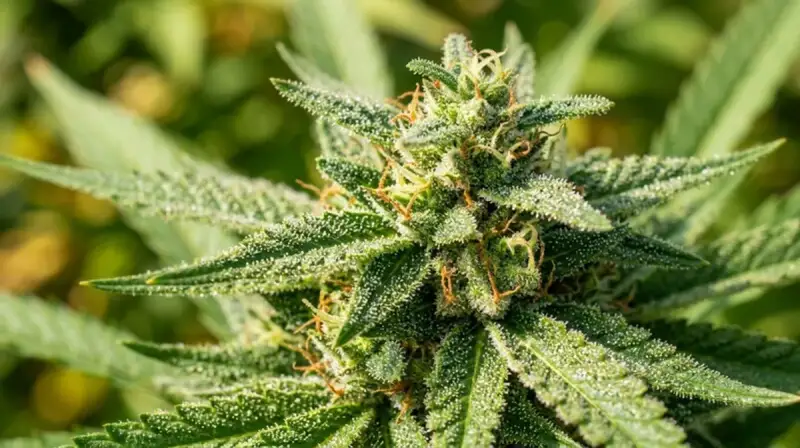
- Very high THC strains (25–35%+) produce faster onset and stronger euphoria but carry significantly higher anxiety risk above individual CB1 saturation threshold
- CB1 receptor saturation means 30% THC does not produce 2× the high of 15% — returns diminish sharply past a user’s optimal range
- For most experienced recreational users, 18–22% with rich terpenes produces better effects than maximum-potency products
- Lab testing variance of ±3–5% means a “30% strain” could test anywhere from 26–34% at different certified labs
- Very high THC accelerates CB1 receptor downregulation, building tolerance faster than moderate-potency products
- Medical use cases for maximum THC: breakthrough pain, severe nausea, spasticity in conditions like MS where lower doses have proven insufficient
- Beginners should stay at 15% maximum, preferably with CBD present — high-THC strains are inappropriate starting points
Effects of Very High THC Cannabis
Cannabis strains with 25%+ THC produce a distinctive effect profile that differs qualitatively from moderate-potency products, not just in intensity. Onset after inhalation is rapid — typically 2–4 minutes — and the initial effect can feel overwhelming rather than gradual. Users commonly report: pronounced and rapid euphoria that can tip into dysphoria, strong time distortion, significant elevation of heart rate (tachycardia), intense sensory amplification, marked impairment of short-term memory and working memory, and a pronounced body effect that can range from pleasant heaviness to uncomfortable paralysis.
The anxiety risk is meaningfully higher with very high THC strains. Above the individual CB1 overstimulation threshold — which varies widely but is lower than most consumers assume — THC triggers rather than suppresses anxiety. The mechanism involves CB1-mediated elevation of norepinephrine, which increases heart rate and produces the hyperawareness and threat-perception that characterizes cannabis-induced anxiety. This is not a sign of a “bad batch” or contamination; it is the expected pharmacological outcome of excessive CB1 receptor stimulation.
The Ceiling Effect: Why 30% Is Not 2× Stronger Than 15%
CB1 receptors, like all G-protein-coupled receptors, exhibit saturation kinetics. Once a sufficient concentration of THC is present in the synapse to activate the available CB1 receptors, adding more THC produces no additional effect on those receptors — they are already occupied. This pharmacological ceiling means that the relationship between THC dose and subjective effect is sigmoidal: steep at low doses, plateauing at higher doses, and potentially reversing (into adverse effects) at very high doses.
In practical terms: a user whose CB1 receptors are maximally activated at blood-THC concentrations equivalent to 15% flower at a typical dose cannot achieve additional “high” from a 30% strain at the same dose — they can only achieve the same maximum effect faster and with a higher probability of overshoot anxiety. This explains why many experienced cannabis consumers report that their most enjoyable sessions use moderate-potency products, not the highest available.
High-THC Strains: Effects and Risk Profile
| Strain | THC Range | Dominant Terpene | Primary Effects | Anxiety Risk | Notes |
|---|---|---|---|---|---|
| Godfather OG | 28–34% | myrcene | Heavy sedation, euphoria | Very High | Extreme couch-lock potential |
| Bruce Banner | 24–30% | caryophyllene | Intense euphoria, energetic then calm | High | Fast onset; not for low-tolerance users |
| Ghost Train Haze | 25–30% | Terpinolene | Cerebral, psychedelic intensity | Very High | Not for anxiety-prone users |
| Gorilla Glue #4 | 25–32% | Caryophyllene | Heavy body, couch-lock | High | Deeply relaxing for experienced users |
| Chemdawg | 19–29% | Caryophyllene | Cerebral, pungent, euphoric | High | Parent of many high-THC hybrids |
| Trainwreck | 18–27% | Terpinolene | Energetic, fast-hitting | High | Classic sativa-dominant powerhouse |
| Green Crack | 16–25% | Myrcene | Energetic focus, sharp clarity | Moderate–High | Daytime use; anxiety risk in high doses |
| Super Lemon Haze | 18–25% | Terpinolene | Euphoric, citrusy, uplifting | Moderate–High | Award-winning sativa |
| Wedding Cake | 24–27% | limonene | Relaxing euphoria, creamy | Moderate–High | Balanced high despite potency |
| Gelato | 20–25% | Caryophyllene | Euphoric, body + mind balance | Moderate | More forgiving than other high-THC strains |
| Strawberry Cough | 18–26% | Myrcene | Uplifting, social, fruity | Moderate | Social use; good daytime option |
| Sour Diesel | 20–26% | Caryophyllene | Energetic, cerebral, diesel | Moderate–High | Classic sativa; functional for some |
High THC and Anxiety: The Threshold Mechanism
The anxiety-inducing potential of high-THC cannabis is not random — it follows a predictable threshold mechanism. Below a user’s individual CB1 overstimulation threshold, THC produces the expected anxiolytic effects via amygdala dampening and cortisol suppression. Above the threshold, the same CB1 activation drives a different downstream pathway: increased norepinephrine release, elevation of heart rate, and a shift in amygdala activation from dampening to amplification of threat-salience signals.
This threshold varies dramatically between individuals and is influenced by: baseline anxiety levels, prior cannabis experience, CBD co-administration, terpene profile (particularly limonene and terpinolene vs. myrcene and linalool), environmental context, and genetic CB1 receptor variation. Users who report that cannabis always makes them anxious are likely exceeding their threshold at typical doses — lower-dose or CBD-rich products may allow them to access the below-threshold benefit without the above-threshold adverse response.
Is Highest THC Always Best? The Case for Moderate Potency
For experienced recreational users seeking the best overall cannabis experience, maximum potency is typically not optimal. The 18–22% THC range with a rich, complex terpene profile is widely reported by experienced consumers as producing more satisfying, nuanced, and controllable effects than 28–35% products. The reasons align with the pharmacology: moderate potency is more likely to land within the therapeutic window rather than above the overstimulation threshold, the entourage effect from terpenes adds qualitative richness that flat high-THC products lack, and the experience is more dose-controllable.
Very high-THC strains (25%+) are best reserved for specific use cases: experienced users with high established tolerance, medical patients treating severe symptoms where lower-potency options have proven insufficient, or advanced consumers who have specifically characterized their personal threshold and consumption habits to stay within it.
Medical Use Cases for Very High THC
There are legitimate medical applications where very high-THC strains offer advantages over moderate-potency products. These are conditions where the dose required for therapeutic effect exceeds what lower-potency products can efficiently deliver:
- Breakthrough cancer pain: Patients with severe chronic pain who have developed tolerance to opioid and cannabinoid therapies may require maximum-potency products to achieve adequate analgesia
- Chemotherapy-induced nausea: Severe nausea that has not responded to moderate-dose antiemetic cannabis applications may benefit from high-THC, high-CBD combinations at maximum potency
- Spasticity (MS, spinal cord injury): CB1 receptor activation in the spinal cord at higher doses may be required for adequate muscle relaxation in severe spasticity where lower doses are insufficient
- Intractable insomnia: Very high-THC indica strains may be required for patients who have developed tolerance to standard cannabis for sleep
Tolerance and CB1 Downregulation with High-THC Strains
Regular use of very high-THC products accelerates CB1 receptor downregulation more rapidly than moderate-potency products. CB1 downregulation is the brain’s homeostatic response to persistent THC stimulation — it reduces the number of functional CB1 receptors on the cell surface, requiring more THC to achieve the same activation level. Research indicates that CB1 receptor density begins recovering within 48 hours of abstinence in regular users, with substantial recovery within 2–4 weeks.
The practical implication for high-THC strain users: tolerance builds faster, requiring either escalating doses or periodic tolerance breaks. This creates a cycle where very high-potency products become necessary just to feel baseline effects rather than delivering enhanced benefit. Users who regularly consume 28–35% THC products often find that their tolerance has elevated to the point where lower-potency products produce no noticeable effect, eliminating the flexibility that moderate users maintain.
Lab Testing Accuracy Caveat
All THC percentages in this article and on cannabis product labels should be understood within the context of laboratory testing limitations. Cannabis testing labs certified in US legal markets typically demonstrate inter-laboratory variance of ±3–5 percentage points for the same sample. This means a product marketed as “30% THC” based on lab testing could produce results ranging from 25–34% if retested at other certified facilities under the same standards.
Numbers above 30% should be treated with particular skepticism, as research indicates these figures are more susceptible to favorable testing conditions and “lab shopping” by producers than mid-range potency claims. Always request the Certificate of Analysis (COA) for the specific batch you are purchasing, not a historical or display COA, and compare batch-to-batch numbers for consistency.
For Beginners: An Explicit Recommendation
If you are new to cannabis, high-THC strains are not appropriate starting points. Beginners should begin with flower in the 10–15% THC range, ideally with CBD present (a 1:1 or 2:1 CBD:THC ratio product significantly reduces first-time anxiety risk). Start with one or two inhalations and wait 10–15 minutes before deciding whether to consume more. High-THC strains, concentrates, and high-dose edibles are associated with substantially higher rates of acute adverse experiences in new users, including panic attacks, acute paranoia, and nausea.
Frequently Asked Questions
What is the highest THC strain?
Godfather OG, Bruce Banner, and Ghost Train Haze consistently rank among the highest-THC strains, with tested results of 28–34% THC. However, lab testing variance of ±3–5% means results vary by batch and lab. Always check the specific product’s COA rather than relying on strain reputation alone.
Are high THC strains better?
Not for most users. Experienced recreational consumers typically report that moderate 18–22% strains with rich terpene profiles produce more satisfying effects than maximum-potency products. Very high THC increases anxiety risk, accelerates tolerance, and shows diminishing returns via CB1 saturation. Maximum THC is mainly indicated for patients with severe symptoms who have not responded to lower-potency options.
Is 30% THC too strong?
For most users, yes. At typical doses, 30% THC flower can deliver 30–60mg absorbed THC — well above the 5–15mg range where most users find optimal effects. If using very high-THC products, use substantially smaller amounts than you would with standard-potency flower.
What strains have more than 30% THC?
Strains occasionally testing above 30% include Godfather OG, Strawberry Banana, and certain proprietary genetics. However, lab testing variance means the same strain can test 25–34% depending on batch and lab. No strain reliably and consistently exceeds 30% across all batches and certified testing facilities.