





CANNABIS EXPLAINER
Certificates of Analysis (COA) for Cannabis: How to Read Them
The COA is the official lab document that tells you exactly what is in the cannabis product you’re buying. Here is how to find it, understand every section, and know when to be suspicious.
- A COA is required for every batch of legal cannabis sold in regulated markets; it is issued by a licensed third-party lab, not the brand or dispensary selling the product.
- The total THC formula — (THCA × 0.877) + delta-9-THC — calculates maximum available potency after decarboxylation and should appear on every cannabis COA.
- QR codes on cannabis packaging should link directly to the COA on the testing lab’s own website; a link to a brand-hosted PDF is easier to falsify and warrants additional scrutiny.
- The batch number on the COA must match the batch number on the product label exactly; a COA from a different batch provides no information about the product you are holding.
- Cannabinoid totals above 100% on a COA indicate a reporting or calculation error; legitimate results for cannabis flower should fall well below that figure.
- State traceability systems such as Metrc and BioTrack record every tested batch; consumers can verify COA authenticity through official state portals in many jurisdictions.
What a COA Is and Why It Exists
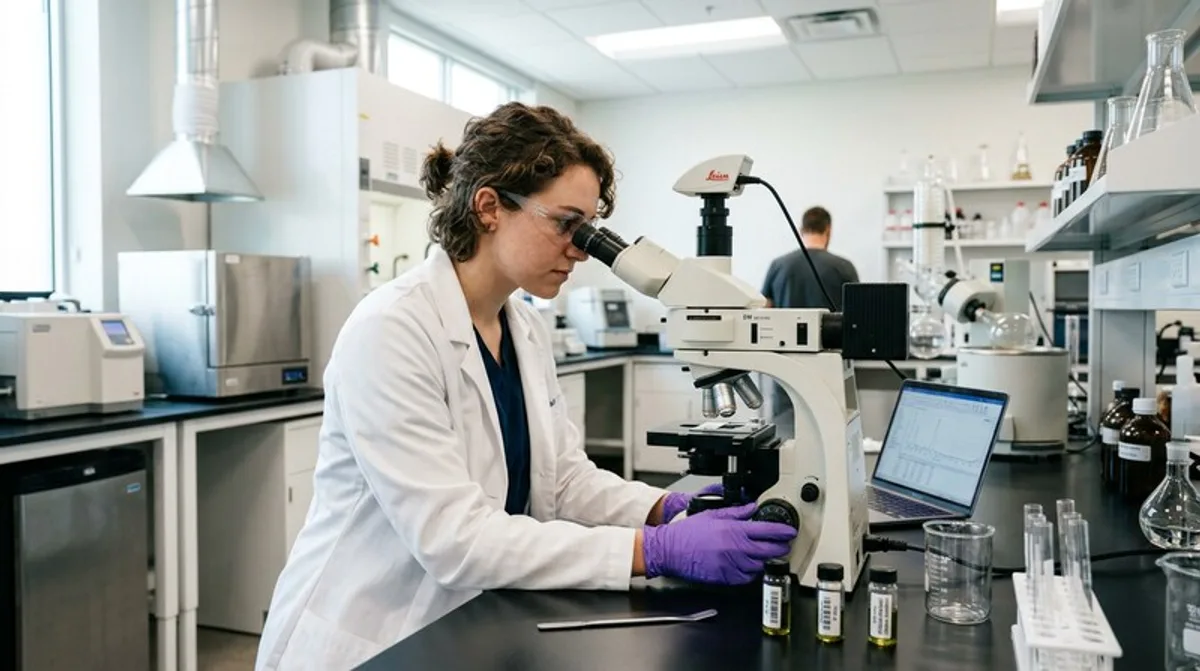
A Certificate of Analysis (COA) is an official document issued by a licensed, independent testing laboratory after analyzing a specific sample of cannabis. In every regulated US cannabis market, producers and manufacturers are legally required to have all products tested at a third-party lab before they can be sold at retail. The COA is the documentary proof that this testing was completed and that the product met regulatory requirements for that batch.
The COA is issued for a specific batch or lot — a defined production run with a unique identifier. Dispensaries are required to have a current COA on file for every product they sell. In most states, this COA must be available to consumers on request or via a QR code scan. It is not a marketing document created by the brand; it is a technical report generated by laboratory instruments and certified by a licensed lab director.
How to Find Your Product’s COA
The most direct method is the QR code. Every legal cannabis product should have a QR code printed on the packaging that links to the COA on the testing laboratory’s website. Scanning this code takes you to the live document hosted by the lab, not a PDF uploaded by the brand. This matters because a lab-hosted document is considerably harder to manipulate than a brand-hosted file.
If there is no QR code or the code does not work, try these steps: first, check the brand’s website for a Lab Results, COA, or Transparency section where you can search by batch number. Second, ask your budtender to pull up the COA on the dispensary’s point-of-sale terminal. Third, in states using Metrc or BioTrack for cannabis tracking, you may be able to look up a batch directly through the state regulatory agency’s public portal using the product’s tracking number.
COA Structure: A Visual Walkthrough
COA formats vary between labs but share a consistent structure. Working through each section in order gives you a complete picture of what you are buying:
The header shows the laboratory’s name, address, state license number, and accreditation credentials. Look specifically for ISO/IEC 17025 accreditation and confirm it is current. The report date — when results were certified and issued — appears here as well. A reputable lab’s name can be cross-referenced against the A2LA or PJLA accreditation database online.
This section identifies the specific product tested: sample ID, batch or lot number, product name, sample type (flower, concentrate, edible, tincture), and the date the sample was received. The batch number here is what you must match against the batch number on your product label. If these do not match, this COA does not apply to your product.
A table listing each detected cannabinoid with its concentration in mg/g and as a percentage by weight. The most important figures: delta-9-THC, THCA, total THC (calculated), CBD, and CBDA. Total THC is what you compare against the label claim. Minor cannabinoids such as CBN, CBG, and CBC are listed when detected at measurable concentrations.
If included, the terpene panel lists individual terpene concentrations. The top 5 terpenes by percentage most strongly influence aroma, flavor, and reported effect. High myrcene is common in relaxing, sedating products. High limonene is associated with uplifting effects and citrus aroma. High caryophyllene contributes spicy notes and has documented anti-inflammatory properties. Total terpene percentage above 2% indicates well-cured, aromatic cannabis.
These panels show pass/fail results for: pesticides (each compound listed with detected level vs. action limit), heavy metals (lead, arsenic, cadmium, mercury), microbials (Aspergillus species, total yeast and mold, E. coli, Salmonella), and residual solvents for extracts (butane, propane, ethanol, and others). Every entry should show PASS or ND (not detected). Any FAIL is a serious consumer protection issue.
The final section shows the laboratory director’s signature (electronic or physical), their credentials, and a certification statement. Some COAs include a verification QR code or hash linking to the lab’s internal database for authenticity checking. This signature makes the lab legally accountable for the reported results under state cannabis regulations.
The Total THC Formula: Why It Matters
Raw cannabis contains very little delta-9-THC. Most of the psychoactive compound exists as THCA, the acid precursor form, which is not psychoactive on its own. When cannabis is heated — smoked, vaped, or cooked — THCA undergoes decarboxylation: a chemical reaction that removes a carboxyl group and converts THCA into the active delta-9-THC.
The standard formula for total available THC is: (THCA × 0.877) + delta-9-THC . The 0.877 factor accounts for the molecular mass difference between THCA (358 g/mol) and THC (314 g/mol) — mass is lost as CO² during decarboxylation. A product showing 25% THCA and 1% delta-9-THC has a total available THC of approximately (25 × 0.877) + 1 = 22.9%. This figure most accurately reflects the potency you will experience when consuming the product, and is the number to compare against the label claim.
Reading the Terpene Panel for Effect Prediction
The terpene panel is optional in most states but increasingly common as consumers and producers recognize its value for product selection. Looking at the top 5 terpenes by percentage gives the most actionable information. Dominant myrcene (above 1%) is common in indica-leaning products associated with relaxation and sedation. Dominant limonene is associated with uplifted, energetic effects. Dominant caryophyllene contributes a spicy, peppery character and is the only terpene known to activate CB2 cannabinoid receptors.
Total terpene percentage is also informative. Well-cured premium flower often shows total terpenes above 2–3%. Very low terpene content (below 0.5%) can indicate old, poorly cured, or improperly stored cannabis that has lost aromatic compounds through oxidation. Some experienced consumers use terpene profile as their primary selection criterion rather than THC percentage, arguing it is a more reliable predictor of subjective experience.
Comparing Two Products Using Their COAs
Practical example: Product A shows 24% total THC, 2.1% myrcene, 0.8% limonene, passes all safety panels, test date 3 months ago. Product B shows 29% total THC, 0.3% myrcene, 0.4% caryophyllene, passes all safety panels, test date 8 months ago.
Product B’s THC number is higher, but the test is approaching a year old and the terpene profile is sparse. Product A has a richer terpene profile suggesting better-preserved aromatic compounds, a more recent test date, and comparable potency within normal inter-lab measurement variability of Product B’s claims. A consumer prioritizing fresh, terpene-rich cannabis would have good reason to prefer Product A despite its lower headline THC number.
Verifying the Lab’s Credentials
To verify a cannabis testing lab’s accreditation, take the lab name from the COA header and search the A2LA online directory at a2la.org or the PJLA directory at pjlabs.com. If the lab appears with a current ISO/IEC 17025 scope covering cannabis testing, it is genuinely accredited. If the lab is not found, or its accreditation has lapsed, treat the COA with caution.
State license verification is a separate but complementary step. Most state cannabis regulatory agencies publish databases of licensed cannabis testing labs. Confirming the lab holds a current state testing license verifies it is legally authorized to test cannabis in that market — a different but important credential from ISO accreditation. A trustworthy lab holds both.
When to Be Suspicious of a COA
Several warning signs indicate a COA may be fraudulent, outdated, or from an unreliable source. No COA at all is the most serious red flag — any legal product should have one accessible. A COA from a private, unaccredited lab without a state license means results may be unreliable or manufactured. Cannabinoid percentages that total over 100% indicate a mathematical error or data manipulation. All numbers appearing as perfectly round figures with no decimal variability suggest manually entered data. Extremely high potency claims — particularly flower above 35% total THC — are biologically implausible. Very old test dates (over 12 months) provide limited assurance about current product quality since conditions change during storage.
Frequently Asked Questions
What is a Certificate of Analysis for cannabis?
A Certificate of Analysis (COA) is an official document from a licensed, independent testing laboratory confirming that a specific cannabis product batch has been tested and meets regulatory standards. It shows cannabinoid potency, terpene data, and pass/fail results for safety panels including pesticides, heavy metals, microbials, and residual solvents. It is required in all legal US cannabis markets before products can be sold at retail.
How do I find the COA for a cannabis product?
Scan the QR code printed on the product packaging. This links directly to the COA on the testing laboratory’s website. If there is no QR code, visit the brand’s website and look for a Lab Results or COA section where you can search by batch number. Your budtender can also access the COA through the dispensary’s point-of-sale system upon request.
What does total THC mean on a COA?
Total THC on a COA represents the maximum available THC after decarboxylation (heating). The formula is: Total THC = (THCA × 0.877) + delta-9-THC. THCA is the raw acid form in unheated cannabis that becomes active THC when smoked, vaped, or cooked. The 0.877 factor accounts for molecular mass lost as CO² during the conversion process.
What does pass or fail mean on a cannabis COA?
Pass means the tested compound was either not detected or was found below the state-regulated action limit. Fail means a compound was detected above the permitted threshold. A failing result on any safety panel — pesticides, heavy metals, microbials, or residual solvents — means the product should not legally be sold. If you find a failed COA on a dispensary product, report it to your state cannabis regulatory agency.