





- Every legal dispensary product in the US must have a current COA from an ISO 17025-accredited third-party lab before sale — it is a legal requirement, not optional documentation.
- A complete COA includes: product identification header, cannabinoid panel, terpene panel, pesticide panel, heavy metals panel, microbial panel, and (for concentrates) residual solvents panel. Cannabinoid-only COAs are incomplete.
- Verify authenticity by scanning the QR code on packaging — it should link to a live lab portal page, not a static PDF that could be altered.
- Total THC is calculated as (THCa × 0.877) + delta-9 THC — the raw THCA percentage is not the same as the actual delivered psychoactive THC.
- California tests cannabis for 66+ pesticide compounds; myclobutanil is especially important to verify as absent — it produces hydrogen cyanide when combusted.
- Heavy metals (lead, arsenic, mercury, cadmium) must be below state-specific action limits; cannabis plants bioaccumulate metals from contaminated soil with unusual efficiency.
- A COA more than 12 months old, or with a batch number that does not match the product packaging, should be treated as invalid.
- Total terpene content above 2% indicates high-quality, aromatic flower; below 0.5% suggests degraded or poorly cured product regardless of THC%.
What a Cannabis COA Is and Why It Exists
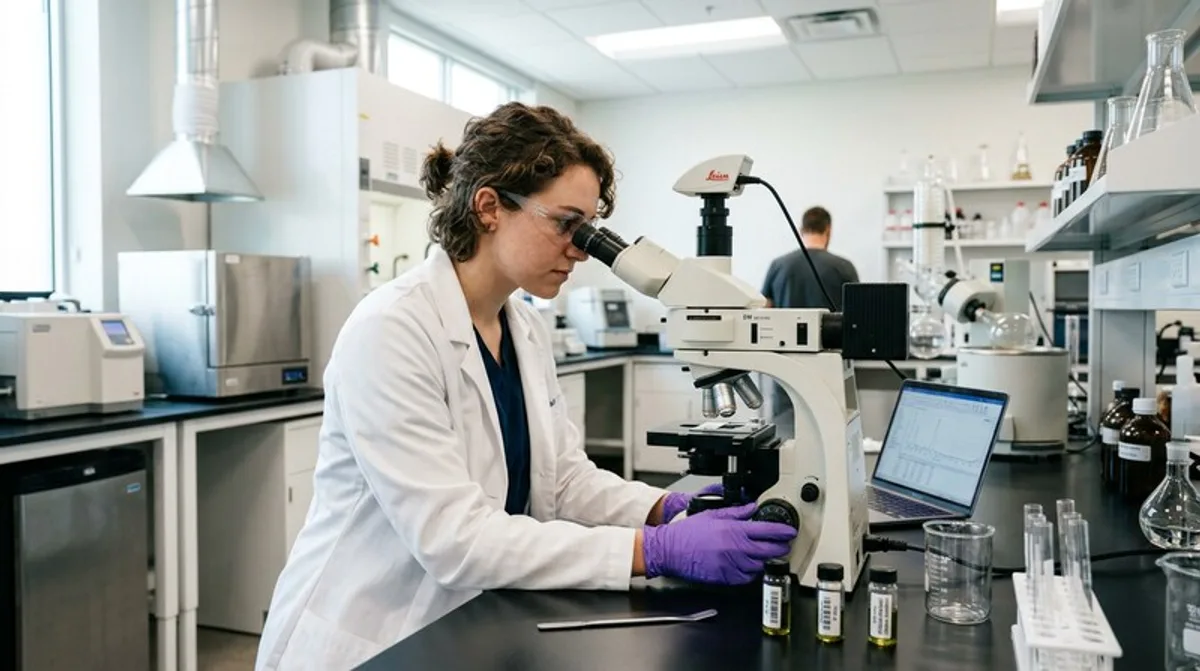
A Certificate of Analysis (COA) is an official laboratory report issued by an independent, state-licensed testing facility documenting the chemical composition and safety profile of a specific batch of cannabis product. The COA is the foundational transparency document of the legal cannabis market — the mechanism through which the regulatory promise that licensed products are tested, safe, and accurately labeled is made verifiable by consumers and regulators alike.
Every regulated cannabis product sold in a licensed dispensary in the United States must have an associated COA demonstrating it passed required state testing standards before it was placed on sale. This is not voluntary. State cannabis regulatory agencies license testing laboratories, set standards for testing methodologies and action limits, and require that COAs accompany all cannabis inventory from the point of testing through the point of sale. The seed-to-sale traceability systems (most commonly Metrc) that most states use create a digital chain connecting every product on a dispensary shelf to its COA in a government-accessible database.
The practical purpose of the COA for consumers is threefold: it verifies that the potency claims on the label are based on actual analysis (not estimated or invented); it confirms that the product passed safety testing for contaminants that can cause harm if present above threshold levels; and it provides the detailed chemical profile — terpenes, minor cannabinoids — that allows informed product selection beyond the headline THC number. A dispensary that cannot produce a COA for a product it is selling is operating outside compliance standards and should be reported to the state cannabis regulatory authority.
What ISO 17025 Accreditation Means
ISO 17025 is the international standard for the competence of testing and calibration laboratories. It requires that laboratories demonstrate: technical competence of staff; use of validated test methods; proper equipment calibration and maintenance; sample traceability; documented quality management systems; and participation in proficiency testing programs. A cannabis testing lab holding ISO 17025 accreditation has been independently assessed against these standards by an accreditation body.
Most legal states require cannabis testing labs to hold ISO 17025 accreditation or equivalent state-level accreditation as a condition of their testing license. ORELAP (Oregon Environmental Laboratory Accreditation Program) and A2LA (American Association for Laboratory Accreditation) are the primary accrediting bodies for cannabis labs in the US. When evaluating a COA, confirming that the issuing lab holds ISO 17025 accreditation provides assurance that the analytical methods used meet internationally validated standards.
Section 1: Product Identification Header
The product identification header at the top of a COA establishes the traceability chain that makes the document legally meaningful. Every field in the header must match the physical product you hold for the COA to be valid for that product.
- Batch / Lot Number: The unique identifier assigned to this specific production batch. Must match the batch/lot number printed on the product packaging exactly, including any prefix letters, hyphens, and leading zeros. Any discrepancy means the COA is not for that product.
- Sample Name / Product Name: Identifies the product type and (for flower) usually the cultivar name. Verify this matches the product you are reviewing.
- Harvest / Production Date: Establishes when the product was created. Important context for interpreting terpene data — terpenes degrade over time, so a harvest date more than 6 months ago should prompt questions about how the product has been stored.
- Test Date / Report Date: When the laboratory conducted its analysis. Products tested more than 12 months ago have had significant time for cannabinoid and terpene degradation. Some states specify maximum intervals between testing and sale.
- Producer / Cultivator License Number: The state cannabis authority license number of the entity that produced the product. Verifiable against the state license database.
- Testing Laboratory License Number: The state cannabis testing laboratory license number. Should be verifiable against the state’s licensed lab list. An unlicensed lab produces a legally invalid COA.
- Sample Weight / Matrix: Specifies the amount tested and the product type (flower, concentrate, edible, tincture, topical). Different matrices require different testing protocols — the matrix designation confirms the correct protocol was applied.
- Accreditation Number: The ISO 17025 or equivalent accreditation identifier for the laboratory. Cross-referenceable with the accrediting body’s public database.
Section 2: Cannabinoid Panel
The cannabinoid panel is the first substantive section of the COA and documents the concentration of each detected cannabinoid as a percentage of total sample weight. A standard panel covers THCA, delta-9 THC, THCV, CBDA, CBD, CBGA, CBG, CBN, and CBC. Premium panels may measure 20 or more cannabinoids. Understanding how to read the panel correctly requires understanding the decarboxylation chemistry covered in depth in our THC percentages guide.
The Critical Distinction: Acidic vs. Neutral Forms
Raw, unheated cannabis contains primarily the acidic forms of cannabinoids: THCA, CBDA, CBGA. These are non-psychoactive precursors. When heated — through smoking, vaporization, or baking — the acid group (CO2) is removed by decarboxylation, converting THCA to THC, CBDA to CBD, and CBGA to CBG. A product might show 26% THCA and 0.4% THC on the COA panel. The 26% figure represents the dominant psychoactive potential; the 0.4% represents the tiny fraction already decarboxylated before use.
The Total THC Formula
Total CBD = (CBDa × 0.877) + CBD
Total CBG = (CBGa × 0.877) + CBG
The 0.877 factor is derived from the molecular weight ratio of the neutral to acidic form (molecular weight of THC ÷ molecular weight of THCA = 314.46 ÷ 358.47 = 0.877). This factor is consistent across all cannabinoid acid/neutral pairs because the decarboxylation reaction removes CO2 (molecular weight 44), and the neutral/acid ratio is approximately constant across the cannabinoid family.
Cannabinoid Panel Quick Reference
| Cannabinoid | Abbreviation | Psychoactive? | What It Indicates |
|---|---|---|---|
| Tetrahydrocannabinolic acid | THCA | No (until heated) | Primary potency indicator in raw flower |
| Delta-9 Tetrahydrocannabinol | THC / d9-THC | Yes | Active THC present before heating; major psychoactive |
| Cannabidiolic acid | CBDA | No | CBD precursor; common in CBD-dominant strains |
| Cannabidiol | CBD | No (modulates THC) | THC modulator; anti-anxiety; anti-seizure at high doses |
| Cannabigerolic acid | CBGA | No | Biosynthetic precursor to all cannabinoids; “mother cannabinoid” |
| Cannabigerol | CBG | No | Anti-inflammatory; neuroprotective in early research |
| Cannabinol | CBN | Mildly | THC degradation product; sedative properties reported |
| Cannabichromene | CBC | No | Non-psychoactive; anti-inflammatory; rare in typical flower |
| Tetrahydrocannabivarin | THCV | Complex: antagonist at low dose, partial agonist at high dose | Clear-headed effect reported; present in some African sativa cultivars |
| Delta-8 THC | d8-THC | Yes (less potent than d9) | Rare in natural flower; if high, may indicate synthetic conversion product |
Section 3: Terpene Panel
The terpene panel documents the aromatic compounds present in the product and their concentrations, typically expressed as a percentage. A comprehensive panel covers 20–30 individual terpenes. Understanding terpene data helps predict the experiential character of a product in ways that cannabinoid data alone cannot. Read our full terpene guide for detailed profiles of each.
| Terpene | Aroma Profile | Effect Association | Also Found In |
|---|---|---|---|
| myrcene | Earthy, musky, mango-adjacent | Sedating, relaxing, body-focused; most common cannabis terpene | Mango, hops, thyme |
| limonene | Citrus, lemon, orange peel | Uplifting, mood-elevating; potential anti-anxiety | Citrus fruit peel, juniper |
| caryophyllene | Spicy, peppery, clove, woody | Anti-inflammatory; binds CB2 receptors directly; unique among terpenes | Black pepper, clove, rosemary |
| linalool | Floral, lavender, slightly spicy | Calming, anxiolytic, sedating; same compound as in lavender aromatherapy | Lavender, mint, birch |
| α-pinene | Pine, fresh forest, rosemary | Alerting, memory-retaining; may counteract THC’s short-term memory effects | Pine trees, rosemary, basil |
| Terpinolene | Floral, fresh, slightly herbal, fruity | Uplifting, creative; often found in Jack Herer cultivars | Nutmeg, apples, lilac |
| Humulene | Earthy, woody, hoppy | Appetite-suppressing; anti-inflammatory; common with caryophyllene | Hops, ginger, coriander |
| Ocimene | Sweet, herbal, tropical | Uplifting; antifungal noted in research; less studied than major terpenes | Mint, parsley, orchids |
| Bisabolol | Floral, sweet, slightly citrus | Anti-inflammatory, soothing; found in premium cultivars at low concentrations | German chamomile, candeia tree |
| Geraniol | Floral, rose, fruity | Neuroprotective in early research; anti-inflammatory | Rose oil, geranium, lemon |
Total terpene percentage is a useful quality proxy: products with total terpenes above 2% are generally fresh, well-cured, and aromatically rich. Products below 0.5% total terpenes have lost most of their terpene content through degradation, improper curing, or excessive heat during drying — regardless of their labeled THC%. A 26% THC flower with 0.3% total terpenes will frequently produce a less satisfying experience than an 18% THC flower with 2.8% total terpenes.
Section 4: Pesticide Panel — Critical Safety Testing
The pesticide panel is the most important safety section of the COA. Cannabis is a highly efficient bioaccumulator — its root system draws compounds including pesticides from soil and water into plant tissues with unusual effectiveness, concentrating them. Pesticides that might be present at trace levels in food crops can reach significant concentrations in cannabis, particularly in concentrates where plant material is processed into a fraction of its original volume (further concentrating any contaminants).
California tests cannabis for 66+ pesticide compounds; other states have comparable or larger panels. Pesticide categories include:
| Pesticide Category | Examples | Primary Health Risk | Cannabis Relevance |
|---|---|---|---|
| Organophosphates | Chlorpyrifos, malathion, dichlorvos | Neurotoxic; acetylcholinesterase inhibitors | Persistent in soil; concentrate in plant tissue |
| Pyrethrins / Pyrethroids | Bifenthrin, permethrin, cypermethrin | Neurotoxic at high doses; endocrine disruption | Common agricultural pesticides; found in untested products |
| Carbamates | Carbaryl, aldicarb, propoxur | Cholinesterase inhibition; toxic to humans and wildlife | Detectable in concentrate products from contaminated flower |
| Fungicides — DMIs | Myclobutanil, trifloxystrobin, propiconazole | Myclobutanil produces hydrogen cyanide when burned — severe respiratory toxicity | Most critical pesticide to verify absent on all inhalable products |
| Chlorinated compounds | Chlordane, DDT metabolites (legacy) | Persistent organic pollutants; carcinogenic; bioaccumulate | Found in contaminated legacy agricultural soil |
| Plant growth regulators | Paclobutrazol, daminozide (Alar) | Daminozide metabolizes to UDMH (carcinogen) when heated | Used to manipulate plant size; all banned on cannabis |
Every tested compound should show either “ND” (not detected, below the laboratory’s method detection limit) or a value below the state-set action limit. Action limits are set by toxicological risk assessment — they represent the maximum concentration at which regular exposure presents acceptable risk for the intended consumer population.
Why myclobutanil demands special attention: Myclobutanil is a demethylation-inhibiting fungicide widely used in conventional agriculture and one of the most commonly detected pesticides in unregulated cannabis. When cannabis containing myclobutanil residues is combusted or vaporized, the heat converts myclobutanil into hydrogen cyanide gas — a potent respiratory toxin. This specific pyrolysis product is the reason myclobutanil is explicitly banned for use on cannabis in all legal markets and is a first-priority pesticide to verify as absent when reviewing any COA for inhalable products.
Section 5: Heavy Metals Panel
Cannabis plants absorb heavy metals from contaminated soil or water with efficiency comparable to known phytoremediation species. This property makes them extremely effective at cleaning contaminated land — and equally effective at accumulating heavy metals that become harmful when consumed. The heavy metals panel tests for the four metals of primary toxicological concern.
| Metal | CA Action Limit (Inhalable) | Primary Toxicity | Common Source | Significance for Cannabis |
|---|---|---|---|---|
| Lead (Pb) | ≤0.5 µg/g | Neurological damage; kidney damage; developmental toxicity; no safe exposure level for children | Old industrial soil, lead paint contamination, legacy agricultural use, exhaust near roadways | Among the most commonly detected heavy metals in unregulated cannabis |
| Arsenic (As) | ≤0.2 µg/g | Carcinogenic; cardiovascular; peripheral neuropathy; skin lesions with chronic exposure | Pesticide-treated soil (historical), groundwater contamination, natural geological deposits in some regions | Detectable in products from historically treated agricultural land |
| Mercury (Hg) | ≤0.1 µg/g | Neurological toxicity; severe kidney damage; fetal developmental effects | Industrial contamination, coal combustion deposition, cinnabar mineral deposits | Less common but tested due to severity of toxicity at low doses |
| Cadmium (Cd) | ≤0.2 µg/g | Kidney damage; bone demineralization (Itai-itai disease); carcinogenic | Phosphate fertilizers, industrial sites, zinc smelting operations | Phosphate fertilizer use can elevate soil cadmium; concentrate in cannabis plant |
For consumers with immunocompromised status, cancer treatment, or pre-existing kidney disease, the heavy metals panel should be reviewed carefully for any detectable levels above ND, since regulatory action limits are set for average healthy adult populations and may not be appropriate for all medical cannabis patients.
Section 6: Microbial Panel
The microbial panel tests for harmful microorganisms that can cause serious illness, particularly in immunocompromised patients who are often the very consumers using cannabis medicinally. Cannabis flower, which is a plant material with surface areas hospitable to microbial growth, can harbor mold, bacteria, and pathogenic organisms if improperly cultivated, harvested, dried, or stored.
Standard microbial tests include: total aerobic microbial count (TAMC), total yeast and mold count (TYMC), pathogenic E. coli (primarily O157:H7 and other Shiga toxin-producing strains), Salmonella species, and Aspergillus species (A. fumigatus, A. flavus, A. niger, and A. terreus — the four species most commonly associated with opportunistic pulmonary infection in immunocompromised patients). California and several other states also test for mycotoxins (aflatoxins and ochratoxin A) produced by certain Aspergillus and Penicillium molds.
For healthy adult consumers, the microbial risk from licensed dispensary products that have passed testing is generally minimal. For patients undergoing chemotherapy, organ transplant recipients, HIV/AIDS patients, and others with significantly compromised immune systems, any mold presence in a cannabis product represents a genuine risk of pulmonary aspergillosis or other opportunistic infection. These patients should consult their medical provider before using any inhaled cannabis product and should prioritize edibles, tinctures, or other non-inhalation formats that eliminate respiratory exposure to potential microbial contaminants entirely.
Section 7: Residual Solvents (Concentrates Only)
Solvent-extracted concentrates — butane hash oil (BHO), CO2 oil, ethanol extract — must be tested for residual solvent levels. The solvents used in extraction must be purged from the finished product to below regulatory action limits. State action limits for key solvents (California, in parts per million):
| Solvent | CA Limit (ppm) | Health Risk of Excess | Notes |
|---|---|---|---|
| Butane | ≤800 ppm | Cardiac arrhythmia at high concentrations; central nervous system depression | Primary solvent in BHO; lower levels = better purge quality |
| Propane | ≤300 ppm | Asphyxiation at very high levels; less toxic than butane but lower limit | Used in PHO; often blended with butane in commercial extraction |
| Isobutane | ≤800 ppm | Similar to butane | Co-solvent in BHO blends |
| Ethanol | ≤5,000 ppm | Relatively low toxicity; alcohol intoxication at extreme levels | Used in ethanol extraction; high limit reflects lower toxicity |
| Isopropanol | ≤5,000 ppm | CNS depression; metabolized to acetone | Occasionally used as extraction co-solvent |
| Heptane | ≤5,000 ppm | Neurotoxic with chronic exposure | Used as co-solvent in some extraction systems |
| Benzene | ≤1 ppm | Known human carcinogen; leukemia risk with chronic exposure; no safe level | Not intentionally used; may be trace contaminant in industrial solvent grades; strict limit |
| Toluene | ≤1 ppm | Neurotoxic; fetal developmental effects; potential carcinogen | Not intentionally used; strict limit due to toxicity |
Solventless concentrates (rosin, bubble hash) undergo no solvent extraction and therefore cannot have residual solvent contamination. This is a genuine quality and safety advantage of solventless products, not merely a marketing claim. Consumers who prioritize the absence of any potential solvent residual exposure should choose solventless formats.
How to Verify a COA Is Real
COA verification is more important than most consumers realize. The cannabis industry has seen cases of falsified COAs — documents that appear to show passing test results but were fabricated, altered, or represent a different batch than the product being sold. A five-step verification process protects against this:
- Scan the QR code on the product packaging. This should link directly to a live page on the testing laboratory’s own portal, not a downloadable PDF. Live portal pages cannot be altered after publication; PDFs can be. If the QR code links to a PDF hosted on the brand’s website, that is a lower-trust format.
- Match the batch number exactly. The batch/lot number displayed on the lab portal must match the number printed on the product packaging precisely. Any discrepancy — even a single character or trailing zero difference — means the COA may not be for that product.
- Verify the lab’s license. Look up the testing laboratory’s license number in your state cannabis regulatory agency’s public license database. An unlicensed lab produces a legally invalid COA regardless of its content.
- Confirm ISO 17025 accreditation. Check the lab’s ISO 17025 accreditation status with A2LA, ANAB, or ORELAP (depending on the accrediting body identified on the COA). Accreditation databases are publicly searchable.
- Check the test date. A COA more than 12 months old is questionable for current product quality and terpene data accuracy. In states with Metrc traceability, you can look up the product’s history in the state system to verify the COA date aligns with the product’s batch history.
COA Red Flags: What Should Concern You
- No COA available at all: Every licensed dispensary product must have associated lab testing. If unavailable, walk away.
- Static PDF only, no QR code: PDFs can be altered; a live lab portal page cannot. PDF-only COAs cannot be independently verified.
- Unlicensed or unaccredited lab: Testing by an unlicensed lab does not satisfy state testing requirements and provides no regulatory assurance.
- Cannabinoid-only panel — no safety testing: A COA that shows only THC and CBD percentages without pesticide, heavy metal, and microbial results is insufficient for safety verification.
- Test date more than 12 months ago: Products aged beyond this should have terpene panel data reviewed critically for degradation, and batch provenance should be questioned.
- Batch number mismatch: Any discrepancy between COA batch number and product packaging batch number is a red flag that the COA may not correspond to the actual product.
- THC% dramatically higher than comparable products: Consistent with industry potency inflation documentation. Products labeled 35%+ on flower are almost certainly the result of testing inaccuracies or lab shopping.
- Missing terpene panel on flower: Premium flower should always have terpene data. Absence may indicate the dispensary does not have it because the cultivator did not invest in full-panel testing.
Frequently Asked Questions
What is a cannabis COA and what does it contain?
A COA is an official lab report from a licensed, ISO 17025-accredited third-party testing lab. A complete COA contains: product identification header (batch number, test date, licenses), cannabinoid panel, terpene panel, pesticide panel (66+ compounds in CA), heavy metals panel (Pb, As, Hg, Cd), microbial panel (TAMC, TYMC, Salmonella, E. coli, Aspergillus), and for concentrates, a residual solvents panel. Cannabinoid-only COAs are incomplete.
How do I verify a cannabis COA is real?
Scan the QR code on packaging — it should link to a live lab portal, not a static PDF. Verify the batch number exactly matches the product. Check the lab’s license with your state regulatory agency. Confirm ISO 17025 accreditation with the accrediting body. Verify the test date is within 12 months.
What are the contaminant limits in cannabis COA testing?
California action limits (inhalable products): Lead ≤0.5 µg/g, Arsenic ≤0.2 µg/g, Mercury ≤0.1 µg/g, Cadmium ≤0.2 µg/g. Pesticides: each compound has individual limits, most ≤0.1 ppm. Residual solvents (concentrates): butane ≤800 ppm, propane ≤300 ppm, benzene and toluene ≤1 ppm each. All results should show ND (not detected) or below limit.
What are red flags on a cannabis COA?
Red flags: no COA available; static PDF only (no live lab portal link); unlicensed or unaccredited testing lab; cannabinoid-only panel without safety testing; test date over 12 months old; batch number mismatch with product packaging; THC% dramatically higher than comparable products; missing terpene panel on flower.