










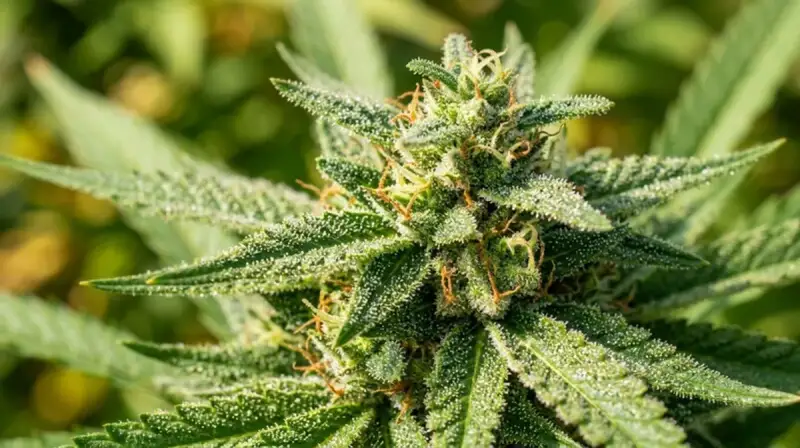
- Smoked or vaporized cannabis reaches peak blood THC concentration within 3 to 10 minutes; edibles take 45 to 90 minutes on average and may take up to 3 hours.
- The liver converts delta-9-THC into 11-hydroxy-THC (11-OH-THC), a more potent metabolite that crosses the blood-brain barrier more efficiently — explaining why edibles feel qualitatively stronger.
- First-pass hepatic metabolism degrades 80 to 90 percent of orally consumed THC before it reaches systemic circulation; bioavailability ranges from 4 to 20 percent for edibles versus 10 to 35 percent for inhalation.
- Duration of effects: smoking lasts 1 to 3 hours; edibles last 4 to 8 hours, sometimes longer in individuals with slow CYP2C9 enzyme activity.
- Approximately 10 percent of the population are “slow metabolizers” due to CYP2C9 genetic variants — they process edibles significantly more slowly and are at higher risk of overwhelming effects from standard doses.
- The most dangerous edible mistake is redosing at 60 minutes before the first dose has fully absorbed — leading to a compounded high 2 to 4 hours later that can cause acute anxiety or panic.
- Sublingual tinctures offer a pharmacokinetic middle ground: 15 to 45 minute onset, 20 to 35 percent bioavailability, and 2 to 5 hour duration.
Same Plant, Completely Different Pharmacokinetics
Whether you eat a cannabis edible or smoke a joint, you’re consuming the same molecules: primarily delta-9-tetrahydrocannabinol (THC) and cannabidiol (CBD), along with hundreds of minor cannabinoids and terpenes. Yet the subjective experience, time course, intensity, and duration of effects can be so dramatically different between the two methods that experienced users often describe them as categorically distinct. This is not perception or placebo — it is pharmacokinetics.
Pharmacokinetics describes how the body absorbs, distributes, metabolizes, and eliminates a substance. For cannabis, the route of administration is the single most important determinant of pharmacokinetic profile. Inhalation and oral consumption follow entirely different biological pathways through the body, producing different metabolite profiles, different peak concentrations, and critically, different psychoactive compounds. Understanding these mechanisms is not just academic — it directly prevents the most common and unpleasant cannabis experiences reported by consumers, including accidental overconsumption of edibles.
Inhalation: The Lung-to-Brain Express Route
When cannabis is smoked or vaporized, cannabinoids are aerosolized and enter the respiratory tract. The alveoli — the tiny air sacs deep in the lungs — have an enormous surface area (approximately 70 square meters in an adult human) and extremely thin walls that allow rapid gas exchange. THC and other lipophilic cannabinoids diffuse across the alveolar membrane directly into pulmonary capillaries and enter the bloodstream almost immediately.
From the pulmonary circulation, cannabinoid-laden blood travels rapidly to the left heart and is pumped into systemic circulation, reaching the brain within seconds. Peak blood THC concentrations typically occur within 3 to 10 minutes of inhalation. This accounts for the fast onset that makes smoking and vaporizing highly useful for rapid symptom relief and precise dose titration — you can feel the effects and stop consuming accordingly.
Bioavailability and Duration of Inhalation
The bioavailability of inhaled cannabis ranges from approximately 10 to 35 percent of the THC present in the cannabis material consumed. This wide range reflects significant individual variation in inhalation technique, breath-hold duration, and lung anatomy. The metabolite produced in the lungs is still delta-9-THC itself; there is no meaningful conversion to 11-OH-THC via the pulmonary route. Effects typically peak within 15 to 30 minutes and resolve within 1 to 3 hours for most consumers, with residual mild effects possible for up to 4 hours at high doses.
Smoking versus dry herb vaporizing both use the inhalation route but differ in combustion temperature. Combustion (smoking) produces carbon monoxide, benzene, toluene, naphthalene, and other combustion byproducts that are associated with respiratory irritation and long-term lung risks. Dry herb vaporizers heat cannabis to temperatures below combustion (typically 170–220°C), significantly reducing or eliminating combustion byproducts while still volatilizing THC, CBD, and terpenes. For consumers who prefer inhalation, dry herb vaporization offers a meaningful harm reduction alternative. Explore the smoking vs vaping comparison for detailed analysis.
Oral Edibles: The Gut-Liver-Blood Pathway
When cannabis is consumed orally — whether as a gummy, chocolate, capsule, beverage, or infused food — it enters the digestive system. THC is a highly lipophilic (fat-soluble) molecule. It is absorbed through the intestinal wall, where it enters the portal venous system and is carried directly to the liver before reaching systemic circulation. This is the critical difference between oral and inhaled consumption.
The liver’s metabolic processing is known as the first-pass effect, and for cannabis it is dramatic: hepatic enzymes, primarily cytochrome P450 isoform CYP2C9 (and to a lesser extent CYP3A4), metabolize 80 to 90 percent of ingested THC before it ever reaches the bloodstream. The fraction that survives first-pass metabolism contributes to a bioavailability of only 4 to 20 percent for oral THC. Despite lower absolute bioavailability, edibles typically produce longer-lasting effects due to continuous intestinal absorption and enterohepatic recirculation.
Onset of effects for edibles is typically 45 to 90 minutes in fasted individuals, and may extend to 2 to 3 hours when consumed with a high-fat meal (which paradoxically increases total absorption but slows gastric emptying). Individual variability is substantial, and this unpredictability is responsible for the majority of edible-related emergency department visits.
11-Hydroxy-THC: Why Edibles Feel Different, Not Just Stronger
The qualitative difference between edible and inhaled cannabis is not simply a matter of dose — it is primarily a matter of metabolite chemistry. When delta-9-THC is processed by the liver during first-pass metabolism, a significant fraction is converted to 11-hydroxy-THC (11-OH-THC). This metabolite is pharmacologically distinct from its parent compound in several important ways.
11-OH-THC crosses the blood-brain barrier more efficiently than delta-9-THC. It has a higher binding affinity at CB1 receptors in the brain. It is more potent on a per-milligram basis and is associated with a more intense, body-heavy, sedating psychoactive experience compared to the more cerebral, shorter-lived high of smoked delta-9-THC. Additionally, 11-OH-THC has a longer half-life — it lingers in circulation and brain tissue for substantially longer than the parent compound.
When cannabis is inhaled, some 11-OH-THC is still produced via systemic metabolism, but the proportion is far lower because the delta-9-THC bypasses the liver on its first pass through the circulation. With edibles, 11-OH-THC becomes the dominant active psychoactive compound during the peak of the experience. This is why experienced smokers who try edibles for the first time often find the experience unexpectedly intense — they are not simply consuming more THC, they are consuming a different, more potent form of it.
CYP2C9 Genetics and the Slow Metabolizer Phenotype
The enzyme primarily responsible for converting delta-9-THC to 11-OH-THC — CYP2C9 — is encoded by a gene with clinically significant polymorphisms. Approximately 10 percent of people of European ancestry carry CYP2C9*3 alleles that dramatically reduce enzyme activity. These “poor metabolizers” or “slow metabolizers” process edible THC significantly more slowly: onset may be delayed to 3 or even 4 hours, peak effects may arrive long after a consumer assumes the dose was ineffective, and the overall psychoactive experience may be substantially more intense than the same dose produces in rapid metabolizers. Genetic testing for CYP2C9 variants is available via commercial pharmacogenomic panels, and this information can be clinically relevant for medical cannabis patients.
THC’s lipophilicity also means it distributes extensively into adipose (fat) tissue. In individuals with higher body fat percentages, THC and its metabolites may accumulate in fat depots and be released slowly back into circulation over time, extending the duration of effects and altering the pharmacokinetic profile considerably. This is why body composition is another significant variable in edible response.
Dose Equivalency: What the Numbers Actually Mean
Understanding dose equivalency between smoking and edibles requires accounting for both bioavailability and the qualitative metabolite shift described above. Direct numerical equivalency is an approximation at best, but the following framework provides practical guidance.
A typical cannabis joint contains approximately 0.5 to 1 gram of flower. If the flower is 15 percent THC, one gram contains 150mg of THC. Of this, approximately 25 to 75 percent is actually delivered as smoke during typical use (accounting for sidestream loss, pyrolysis, and incomplete combustion) — so the inhaled THC dose is roughly 37 to 112mg. Of the inhaled dose, 10 to 35 percent is absorbed into the bloodstream, yielding an effective systemic THC dose of approximately 4 to 39mg of delta-9-THC. The wide range reflects real-world variability in technique, frequency of inhalation, and depth of inhalation.
A standard edible dose in regulated markets is 10mg THC. Of this, 4 to 20 percent reaches systemic circulation as active cannabinoids — so roughly 0.4 to 2mg of delta-9-THC equivalent enters the bloodstream. Yet most consumers find 10mg edibles to be equivalent in intensity or stronger than smoking a modest amount of flower. This apparent paradox is resolved by the 11-OH-THC mechanism: the lower absolute dose of systemic THC is compensated for by its conversion into a more potent, longer-lasting psychoactive metabolite.
The Edible Redosing Trap
The most common serious dosing error with edibles is redosing prematurely. A consumer takes a 10mg gummy, feels nothing at 60 minutes, concludes it was ineffective, and takes another 10mg. In reality, the first dose is still absorbing — it simply has not peaked yet. When both doses peak together 60 to 90 minutes later, the combined effect is overwhelming. Emergency department data consistently identifies this pattern as the leading cause of cannabis overconsumption presentations. The rule is absolute: wait a minimum of 2 hours, ideally 3, before considering any additional dose. If purchasing from a licensed dispensary, budtenders can provide strain-specific onset guidance based on product formulation.
Complete Comparison: Inhalation, Edibles, and Sublingual
| Factor | Smoking / Vaping | Oral Edibles | Sublingual |
|---|---|---|---|
| Onset | 3–15 minutes | 45–90 min (up to 3 hrs) | 15–45 minutes |
| Peak | 15–30 minutes | 2–3 hours | 45–90 minutes |
| Duration | 1–3 hours | 4–8 hours | 2–5 hours |
| Bioavailability | 10–35% | 4–20% | 20–35% |
| Primary metabolite | Delta-9-THC | 11-OH-THC (more potent) | Mixed delta-9 + 11-OH |
| Dose control | Real-time titration | Precise mg labeling | Precise mg labeling |
| First-pass effect | None | 80–90% degraded | Minimal |
| Discretion | Low (odor, smoke) | High | High |
| Best for | Fast relief, social use, dose titration | Sleep, pain relief, extended duration | Consistent dosing, medical use |
| Disadvantages | Combustion byproducts, odor | Delayed onset, overdose risk | Taste, less available |
When to Choose Each Method
The choice between smoking, vaporizing, edibles, or sublingual administration is not simply a matter of preference — it should reflect the consumer’s therapeutic goals, lifestyle, tolerance level, and pharmacogenomic profile.
Inhalation (Smoking or Vaporizing)
Inhalation is best suited to situations requiring fast onset, real-time dose control, or social consumption. For cannabis patients managing breakthrough pain, acute nausea, or anxiety episodes that require rapid relief, inhalation is the most clinically appropriate method because effects can be felt within minutes and dose can be adjusted in real time. Recreational consumers who want to participate in social use without risk of overconsumption also benefit from the rapid feedback loop of inhaled cannabis. Dry herb vaporizing at temperatures of 180–200°C offers similar pharmacokinetics to smoking with substantially reduced combustion-related exposure — making it the preferred inhalation method from a harm-reduction standpoint. See all cannabis consumption methods for a broader overview.
Oral Edibles
Edibles excel in scenarios requiring extended duration, discretion, or where inhalation is not possible or desirable. Sleep disorders, chronic pain management, and extended event use are the primary appropriate applications. Because of the 11-OH-THC metabolite, edibles also tend to produce more body-heavy, sedating effects — which is beneficial for pain and sleep but potentially undesirable for consumers seeking functional, daytime relief. New consumers and individuals unfamiliar with edibles should always begin with a maximum of 5mg THC and wait a full 2 hours before assessing effects. Those using regulated dispensary products can reference the COA (Certificate of Analysis) to verify actual mg content before dosing.
Recalibrating Dose When Switching Methods
Consumers who regularly use one method and switch to another should treat themselves as beginners with the new method. An experienced smoker moving to edibles should start with no more than 5mg THC regardless of their inhalation tolerance — because the pharmacokinetic profile, metabolite composition, and dose-response curve are fundamentally different. Similarly, regular edible users switching to inhalation may find they can consume more flower than expected before feeling strong effects, because they have not built tolerance to the rapid delta-9-THC delivery of inhalation. Tolerance recalibration typically takes 1 to 2 weeks of consistent use with the new method.
Smoke and Vapor Health Considerations
No discussion of smoking cannabis is complete without addressing respiratory health. Smoking any organic material produces combustion byproducts including carbon monoxide, polycyclic aromatic hydrocarbons (PAHs), and benzene. Regular cannabis smoking is associated with chronic bronchitis symptoms, increased respiratory infections, and airway inflammation. However, the evidence linking cannabis smoking to lung cancer is significantly weaker than for tobacco smoking, likely because of differences in smoking pattern and the possible anti-tumor properties of cannabinoids.
Dry herb vaporizers, which heat cannabis below the combustion threshold, eliminate or greatly reduce these combustion byproducts. Consumers who inhale regularly and are concerned about respiratory effects are well advised to transition to a quality vaporizer. The pharmacokinetics remain essentially identical to smoking — same onset, same duration, same bioavailability range — making it a straightforward substitution. Edibles and sublingual preparations avoid respiratory exposure entirely and are the appropriate choice for consumers with pre-existing lung conditions.
Related Guides
- How Long Do Edibles Last? Duration, Factors & What to Expect
- Cannabis Dosing Guide: How Much Should You Take?
- Smoking vs Vaping Cannabis: Health & Effects Compared
- What Is a Cannabis Dispensary? How They Work, What to Expect
- How to Read a Cannabis Lab Report (COA)
- How THC Is Metabolized: Liver, Fat Storage & Drug Test Windows
- Cannabis Edibles Effects: What to Expect