










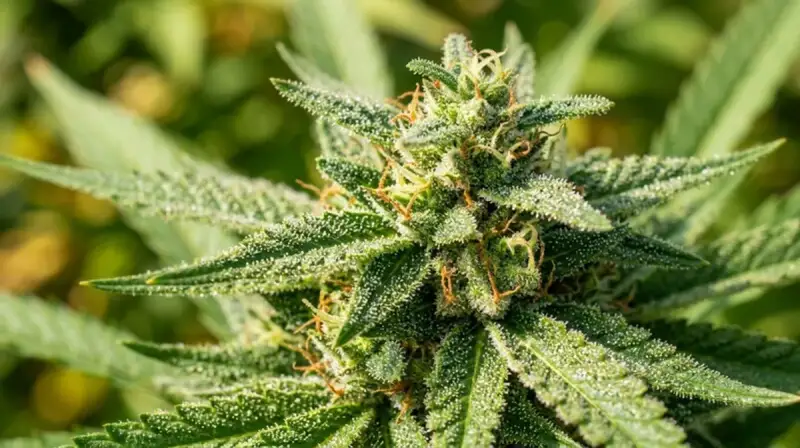
Walk into any dispensary and you will see products sorted into three buckets: indica, sativa, hybrid. Staff will recommend indicas for sleep and pain, sativas for creativity and focus. The system feels intuitive — until you try a “sativa” and fall asleep on the couch, or buy an “indica” and spend three hours reorganizing your bookshelf. The problem is not your reaction. The problem is the category system itself.
The Hard Truth About Dispensary Labels
A landmark study published in Nature Plants (2021) sequenced the genomes of 297 cannabis samples and compared them against their dispensary-assigned indica or sativa labels. The result: genetic profiles correlated poorly with label classifications. Plants sold as distinct categories showed overlapping chemical compositions at rates exceeding 70%.
Dispensary labels describe the grower’s perception of a strain’s heritage, not its pharmacological fingerprint. Decades of unregulated cross-breeding, combined with inconsistent naming conventions between seed banks and cultivators, have made the indica/sativa binary essentially meaningless as a consumer guide to effects.
Ethan Russo, a leading cannabis neurologist and former research director at GW Pharmaceuticals, stated plainly: “There are no reliable biochemical differences between strains labeled indica versus sativa. The meaningful differences lie in their chemical content.”
What Indica and Sativa Actually Describe: Plant Biology
Cannabis indica originated in the Hindu Kush mountain range (modern Afghanistan, Pakistan, northern India). Adapting to harsh, high-altitude climates, these plants evolved to be compact, cold-resistant, and fast-flowering — growing traits valuable to cultivators, not predictors of consumer experience.
Cannabis sativa originated in equatorial regions including Colombia, Mexico, Southeast Asia, and Africa. These plants grow tall and thin to maximize sun capture in humid, warm environments, with long flowering periods suited to extended growing seasons.
The problem: centuries of cross-breeding have scrambled these genetics. What you find at a dispensary is not a Hindu Kush mountain plant — it is a product of decades of commercial breeding that may share only a distant genetic ancestor with the original landrace strains those labels reference.
Indica vs. Sativa vs. Hybrid: Full Comparison
| Property | Indica | Sativa | Hybrid |
|---|---|---|---|
| Origin | Hindu Kush mountains | Equatorial tropics | Bred cross of both |
| Plant height | Short, compact (1–2 m) | Tall (2–4+ m) | Varies by genetics |
| Leaf width | Broad, wide fingers | Narrow, thin fingers | Intermediate |
| Flowering time | 6–9 weeks | 10–16 weeks | 7–12 weeks typical |
| THC:CBD typical | High THC, low CBD (modern) | High THC, low CBD (modern) | Variable by cultivar |
| Claimed dominant terpenes | Myrcene, linalool | Terpinolene, limonene | Varies widely |
| Traditional effect profile | Body relaxation, sedation | Cerebral, energizing | “Balanced” |
| Reliability as effect guide | Low — label often wrong | Low — label often wrong | Low — nearly everything is hybrid |
| Best for growers | Indoor, limited space, fast harvest | Outdoor, warm climate, high yield | Customizable traits |
What Actually Determines Effects: The Terpene Model
Terpenes are aromatic compounds found in cannabis that directly influence how cannabinoids interact with your brain and body. They work synergistically with THC and CBD in what researchers call the entourage effect — the full chemical profile of a strain matters more than any single compound.
The “indica = body high, sativa = head high” generalization persists because it was useful marketing shorthand at a time when terpene testing was unavailable. It survives today for the same reason: simplicity sells. But it fails because terpene content is not reliably correlated with indica or sativa genetics in modern commercial cannabis.
Key insight: myrcene (the most sedating common terpene) appears in high quantities in Blue Dream — one of the best-selling “sativas” in the United States — which is why many users report deeply relaxing effects from a strain their dispensary sold as daytime use.
Terpene Effect Mapping: Same Terpene, Both Categories
| Terpene | Found in Indica-labeled | Found in Sativa-labeled | Effect |
|---|---|---|---|
| Myrcene | OG Kush, Granddaddy Purple | Blue Dream, Tangie | Sedating, muscle relaxant, couch-lock |
| Limonene | Do-Si-Dos, Wedding Cake | Super Lemon Haze, Durban Poison | Uplifting, anti-anxiety, mood elevation |
| Linalool | LA Confidential, Zkittlez | Amnesia Haze, Lavender Kush | Calming, anxiolytic, anti-inflammatory |
| Beta-caryophyllene | Bubba Kush, Skywalker OG | Sour Diesel, GSC | Anti-inflammatory, pain relief, CB2 agonist |
| Terpinolene | Jack Herer (indica pheno) | Dutch Treat, Ghost Train Haze | Uplifting, creative, mildly sedating at high doses |
| Alpha-pinene | Romulan, Big Bud | Jack Herer, Trainwreck | Alert, focused, counteracts THC memory impairment |
Popular Strains: Labels vs. Reality
| Strain | Dispensary Label | Why the Label Misleads | Dominant Terpene | Actual Effect Tendency |
|---|---|---|---|---|
| Blue Dream | Sativa | High myrcene produces significant body relaxation | Myrcene | Relaxing with mild cerebral lift |
| Granddaddy Purple | Indica | Many users report clear-headed effects at low doses | Myrcene + Linalool | Sedating at higher doses |
| Sour Diesel | Sativa | Terpinolene + caryophyllene creates variable outcomes | Terpinolene | Energizing for most, anxious for some |
| Girl Scout Cookies | Hybrid | Caryophyllene-dominant; labeled indica-leaning but variable | Caryophyllene | Euphoric, body relaxation |
| Jack Herer | Sativa | Some phenotypes run high myrcene, negating sativa label | Terpinolene | Alert, creative, cerebral |
| OG Kush | Indica / Hybrid | High myrcene but also limonene — complex profile | Myrcene | Relaxing with euphoric mood lift |
| Durban Poison | Sativa | Rare true landrace; terpinolene-dominant = genuinely energizing | Terpinolene | Energizing, clear-headed — label accurate |
| Northern Lights | Indica | Classic myrcene-dominant — one of the more reliable labels | Myrcene | Deeply sedating — label mostly accurate |
| Pineapple Express | Hybrid (sativa-leaning) | Terpene profiles vary enormously between growers | Terpinolene / Myrcene | Variable — depends entirely on batch |
| Wedding Cake | Indica / Hybrid | High limonene makes many users feel uplifted, not sedated | Limonene | Euphoric, mood-elevating |
Hybrid Cannabis: What It Actually Means
In genetics, F1 hybrids are first-generation crosses between two genetically distinct parent plants. F2 hybrids are second-generation crosses. Modern cannabis breeding has stacked dozens of generations of crosses, meaning the concept of “50/50 hybrid” is largely fictional — most commercial cannabis is an unknown combination of historical crosses.
True landrace strains — cannabis that evolved in geographic isolation without human hybridization — exist in limited form in specialized seed banks and in their regions of origin (Afghan valleys, Colombian highlands, Thai mountains). They are not available in most dispensaries.
When a dispensary labels something “hybrid,” it usually means the grower chose not to claim one category over the other, or that the strain is widely known as a cross. It offers no more useful information about expected effects than any other label.
How to Actually Choose: A Practical Guide
Instead of asking for “the most sativa,” here is what to do instead:
- Ask for the Certificate of Analysis (COA). Reputable dispensaries can produce lab results that include a terpene panel. Look for the top 3 terpenes by percentage.
- For sedation, sleep, or pain: Look for dominant myrcene (>0.5%) and linalool (>0.1%). These are the most reliable sedating terpenes regardless of category label.
- For energy, focus, or creativity: Look for terpinolene or limonene dominance. Strains with >0.3% terpinolene are consistently reported as more energizing.
- For anxiety relief: Look for linalool + limonene + low THC:CBD ratio. Avoid very high THC (>25%) regardless of category.
- Keep a strain journal. Your personal CB1 receptor density and endocannabinoid baseline are unique. Track which cultivars work for which purposes.
- Start low, go slow. New strains should always be tested at low doses regardless of label or terpene profile — individual responses vary significantly.
Medical Use Guidance
For patients using cannabis medicinally, the indica/sativa framework is even less useful than for recreational consumers. Clinical guidance increasingly focuses on specific cannabinoid and terpene targets:
- Pain and sleep: Seek myrcene + linalool dominant strains. Higher CBD:THC ratios (1:1 to 3:1) for patients sensitive to psychoactivity. Evening use.
- Depression / low mood: Limonene-dominant strains combined with moderate THC. Request limonene content above 0.2%.
- Focus issues: Alpha-pinene dominant, low myrcene. Pinene counteracts short-term memory impairment from THC and promotes alertness.
- Nausea and appetite: THC-dominant regardless of category. Low-dose edibles or tinctures for longer-lasting relief.
- Anxiety disorders: High-CBD, low-THC products. Beta-caryophyllene is a direct CB2 agonist with anti-anxiety properties and no psychoactivity.
Consult a cannabis-knowledgeable physician or pharmacist before using cannabis for medical conditions. Effect outcomes vary significantly between individuals.
Frequently Asked Questions
Does indica really make you sleepy?
Not necessarily. The sedating effect associated with indica-labeled strains comes primarily from myrcene and linalool terpenes, not from indica genetics. Blue Dream — widely sold as a sativa — contains high myrcene and produces deeply relaxing effects in many users. Check the terpene panel, not the label.
What is a hybrid strain?
A hybrid is a cannabis plant bred from indica and sativa parent genetics. In practical terms, virtually all commercial cannabis is a hybrid — breeders have been crossing strains for decades. When a dispensary labels something “hybrid,” it typically means the grower acknowledges it does not fit cleanly into one category. The label gives no reliable information about effects.
Is indica or sativa better for anxiety?
Neither label reliably predicts anxiety outcomes. For anxiety, prioritize linalool-dominant strains with moderate-to-high CBD content and THC below 15%. Avoid very high THC products regardless of their indica or sativa label, as high THC reliably increases anxiety risk in susceptible individuals.
Why do dispensaries still use indica and sativa labels?
The labels persist because they are familiar to consumers and require no scientific literacy. They also give sales staff a simple framework for guiding new customers. Some dispensaries and brands are moving toward terpene-first labeling — a trend expected to accelerate as lab testing becomes more standard and consumers more educated.