Senior Cannabis Editor at ZenWeedGuide. Specialist in cannabis pharmacology, the endocannabinoid system, and evidence-based effect guides.
Last reviewed: May 2026
What Are Cannabis Terpenes?
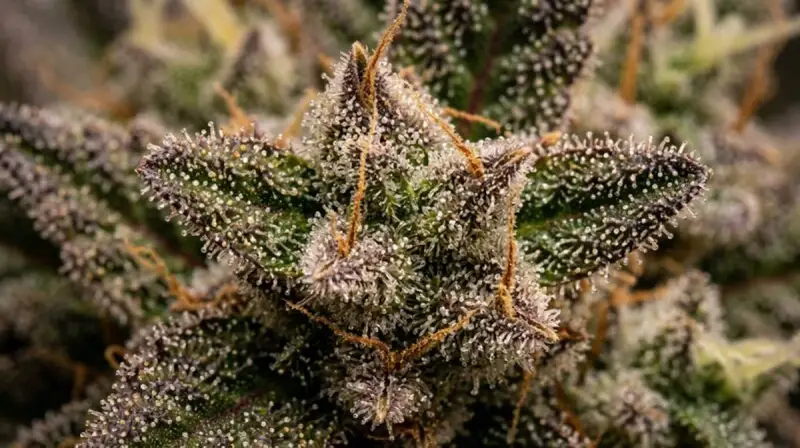
Terpenes are volatile aromatic hydrocarbons produced by the resin glands of the cannabis plant — the same glands that produce cannabinoids like THC and CBD. Over 200 distinct terpenes have been identified in cannabis, though most commercial flower is dominated by 5–12 primary terpenes at measurable concentrations (>0.1%).
Unlike cannabinoids, terpenes are not unique to cannabis. They are the dominant aromatic compounds in most plants — lavender, citrus, pine, black pepper — and have been studied in aromatherapy, food science, and pharmaceutical research for decades. What makes cannabis terpene research distinct is the question of interaction: do terpenes modify the pharmacological effects of cannabinoids, or do they act independently?
The answer, based on current evidence, is both. Terpenes have demonstrable biological activity on their own. They also appear to modulate cannabinoid receptor activity and broader neurotransmitter systems in ways that pure THC or CBD alone do not replicate.
Key Research Findings at a Glance
Limonene activates serotonin 1A receptors — the same target as buspirone (anti-anxiety drug)
Myrcene potentiates GABA-A receptor activity and increases membrane permeability in the BBB
Beta-caryophyllene is a full CB2 agonist — the only dietary terpene with direct cannabinoid receptor binding
Linalool reduces glutamate transmission and activates adenosine A1 receptors
Limonene is the second most abundant terpene in cannabis after myrcene. It is the primary aromatic compound in citrus peel and has an extensive research history outside of cannabis. Its potential anxiolytic (anti-anxiety) properties have been investigated through several mechanistic pathways.
Serotonin 1A Receptor Activation
A key 2013 study published in Pharmacology, Biochemistry and Behavior demonstrated that limonene inhalation in rodent models significantly reduced anxiety-like behavior in the elevated plus maze and open field tests. The mechanism traced to activation of the 5-HT1A (serotonin 1A) receptor — the same receptor targeted by buspirone and partially by SSRIs. Importantly, the effect was blocked by WAY-100635, a selective 5-HT1A antagonist, confirming receptor specificity.
Dopamine Modulation
Limonene also increases extracellular dopamine in the prefrontal cortex and striatum. A 2014 rodent study found that repeated limonene exposure enhanced dopaminergic neurotransmission and produced antidepressant-like effects in the forced swim test — a standard model for depressive behavior.
Human Pilot Data
A small crossover trial (n=25) published in Psychopharmacology in 2021 exposed participants to limonene-dominant cannabis vapor versus a limonene-stripped matched control. The limonene group reported significantly lower anxiety scores on the State-Trait Anxiety Inventory (STAI) 30 minutes post-inhalation, with no significant differences in THC plasma levels between groups — suggesting terpene-specific effects independent of cannabinoid load.
Study
Model
Key Finding
Mechanism
Pharm Biochem Behav 2013
Rodent
Reduced anxiety behavior
5-HT1A agonism
Eur J Pharmacol 2014
Rodent
Antidepressant-like effect
Dopamine ↑ PFC
Psychopharmacology 2021
Human (n=25)
Lower STAI anxiety scores
Terpene-specific (not THC)
The limitation of current limonene data is scale. All human trials are pilot studies under n=30. Dose-response relationships are poorly characterized, and inhalation dose standardization remains a methodological challenge. Still, the mechanistic coherence across models is strong.
Myrcene: Sedation Research
Myrcene is typically the dominant terpene in commercial cannabis, often comprising 20–65% of a strain’s terpene profile. It is also found in hops, mango, thyme, and lemongrass. The "mango before cannabis" folk recommendation is based on myrcene’s presence in ripe mango — though oral bioavailability questions remain.
Blood-Brain Barrier Permeability
A highly cited 1997 study by Russo and colleagues proposed that myrcene increases membrane fluidity, potentially enhancing CNS penetration of cannabinoids by making the blood-brain barrier more permeable to lipophilic molecules. This could explain why high-myrcene strains are frequently reported as more sedating despite similar THC content — if THC crosses more efficiently, effective CNS dose increases.
GABA Potentiation
Research published in Natural Product Communications demonstrated that myrcene at doses comparable to those achievable via cannabis inhalation potentiated GABA-A receptor activity — the same receptor system targeted by benzodiazepines and alcohol. GABA-A potentiation produces sedation, anxiolysis, and muscle relaxation. The effect is not as strong as benzodiazepines, but statistically significant in electrophysiological models.
The Indica Sedation Myth — Corrected
The popular belief that "indica = sedating, sativa = energizing" has been widely debunked by modern analytical chemistry. Strains labelled indica frequently have similar cannabinoid profiles to sativas. Terpene analysis, specifically myrcene concentration, is a far more reliable predictor of sedating effects. A study of 494 commercial samples from California dispensaries (Elzinga et al., 2020) found myrcene concentration above 0.5% was the single strongest predictor of consumer-reported sedation — outperforming strain name, THC%, and CBD%.
Research Insight: Myrcene above 0.5% of total terpene weight correlates with sedation reports in consumer surveys. Below 0.3%, its sedating contribution is pharmacologically negligible at standard consumption doses.
Beta-Caryophyllene: CB2 Agonist Studies
Beta-caryophyllene (BCP) is arguably the most pharmacologically important terpene in cannabis from a medicinal standpoint, for one simple reason: it is the only known dietary terpene that directly binds to a cannabinoid receptor. This was established in a landmark 2008 paper in PNAS by Gertsch et al., which demonstrated full CB2 agonism with a Ki of approximately 155 nM — well within the range of pharmacological relevance.
Anti-Inflammatory Mechanism
CB2 receptors are found primarily in immune tissue and peripheral neurons rather than the CNS (which explains why CB2 activation does not produce psychoactivity). Activation suppresses NF-κB signaling, reduces release of pro-inflammatory cytokines (TNF-α, IL-6, IL-1β), and inhibits microglial activation. BCP has demonstrated anti-inflammatory efficacy comparable to ibuprofen in rodent models of acute paw edema.
Neuroprotective Effects
CB2 agonism by BCP has been investigated in models of neuroinflammation, Alzheimer’s disease, and stroke. A 2014 study in Phytomedicine found that BCP reduced neuroinflammatory markers and improved cognitive performance in aged rodents. A 2021 review in Frontiers in Pharmacology identified BCP as a candidate neuroprotective agent based on 23 preclinical studies.
Clinical Relevance
BCP is not scheduled or restricted in any jurisdiction and is classified as GRAS (Generally Recognized as Safe) by the FDA as a food additive. Several European pharmaceutical companies have filed patents for BCP-based analgesic formulations. It is found at concentrations of 0.1–0.8% in many commercial cannabis strains — and at far higher concentrations in black pepper, cloves, and copaiba essential oil.
Property
Evidence Level
Notes
CB2 receptor binding
Strong (in vitro, in vivo)
Ki ~155 nM, Gertsch 2008
Anti-inflammatory
Strong (rodent models)
Comparable to ibuprofen in acute models
Neuroprotective
Moderate (preclinical)
23 studies reviewed, human data pending
Anxiolytic
Moderate (rodent)
CB2-mediated amygdala modulation
Linalool: Anxiolytic Data
Linalool is the primary terpene in lavender and is present in many cannabis strains at concentrations of 0.05–0.3%. Its well-documented use in lavender aromatherapy for sleep and anxiety is backed by clinical trials. The question for cannabis research is whether linalool’s anxiolytic effects survive the complex phytochemical environment of cannabis smoke or vapor.
Glutamate Reduction
A 2002 study in Phytomedicine established that linalool inhibits glutamate-induced excitotoxicity in neuronal cultures by blocking NMDA receptors. Excessive glutamate signaling is associated with anxiety, panic, and hyperarousal. By reducing glutamate transmission, linalool exerts a calming effect without the sedation associated with GABA-A potentiation.
Adenosine A1 Receptor Activation
Research from the University of Arizona (2021) found that linalool’s anxiolytic effects in mice depended on adenosine A1 receptor signaling — and were completely blocked by caffeine (an adenosine receptor antagonist). This suggests that cannabis consumers who consume high amounts of caffeine may experience diminished linalool benefits. The finding also explains why linalool-dominant strains are associated with calm, focused states rather than sedation — adenosine A1 activation modulates arousal without inducing sleep at sub-threshold doses.
Lavender Clinical Trials (Transclass Evidence)
Silexan (Lasea), a standardized lavender essential oil extract — essentially concentrated linalool — holds pharmaceutical approval in Germany for generalized anxiety disorder. Two double-blind, placebo-controlled trials (Woelk & Schlaefke 2010; Kasper et al. 2014) demonstrated efficacy comparable to lorazepam and paroxetine respectively. While this is not direct cannabis evidence, the pharmacological mechanism is terpene-specific and translatable.
The Entourage Effect: Synergy Evidence
The entourage effect — the hypothesis that whole-plant cannabis extracts are more pharmacologically active than isolated cannabinoids — was formally described by Ethan Russo in a landmark 2011 British Journal of Pharmacology paper. Since then, supporting evidence has accumulated across multiple domains.
In a 2020 study by McPartland et al., full-spectrum extracts consistently outperformed CBD isolate in seizure models — but only when BCP, myrcene, and limonene were present above threshold concentrations. Below those thresholds, no synergy was observed.
Critically, the entourage effect is not a blanket justification for full-spectrum products. The synergy is compound-specific, dose-dependent, and condition-specific. Anxiety models respond differently to terpene combinations than pain models. Research is moving toward targeted terpene formulation — selecting specific terpenes to augment specific therapeutic endpoints rather than assuming whole-plant is always superior.
Research Gaps
Despite significant advances, major gaps remain in terpene research:
Human dose-response data: Almost no studies have established dose-response curves for terpene effects in humans. Effective doses in rodent studies often do not translate linearly to humans.
Inhalation pharmacokinetics: Terpene bioavailability via combustion vs. vaporization is poorly characterized. Temperature affects terpene degradation rates significantly — some terpenes degrade above 180°C.
Long-term effects: Virtually no longitudinal data exists on chronic terpene exposure via cannabis.
Terpene interactions: Most studies examine single terpenes. The pharmacology of multi-terpene combinations is almost entirely unstudied.
Commercial product accuracy: Multiple studies (Peacock et al., 2021) found that terpene content on dispensary labels is often inaccurate by ±30%, limiting clinical translation.
Future Directions in Terpene Research
The next decade of terpene research is likely to be shaped by three forces: pharmaceutical development, analytical standardization, and targeted formulation science.
Pharmaceutical development is already underway. BCP-based CB2 agonists, linalool anxiolytics, and limonene antidepressants are in early-phase development at several European and Israeli biotech firms. The advantage of terpenes over cannabinoids is regulatory: most are already GRAS-listed food ingredients, bypassing the complex scheduling issues that surround THC and CBD.
Analytical standardization is critical. The AOAC International has begun work on validated analytical methods for terpene quantification in cannabis. Without standardization, inter-study comparisons remain unreliable.
Targeted formulation — building cannabis products with specific terpene profiles for specific therapeutic outcomes — represents the clinical future. Early work by Russo’s group and Israeli researchers suggests that anxiety, pain, sleep, and mood applications all have distinct optimal terpene profiles, though dose standardization remains the limiting factor.
Frequently Asked Questions
Clinical and preclinical data suggest limonene activates serotonin 1A receptors and increases dopamine in the prefrontal cortex. Small human trials show reduced self-reported anxiety scores after inhalation, though large-scale RCTs are still needed to confirm effect size.
Myrcene at high concentrations increases membrane permeability in the blood-brain barrier and potentiates GABAergic activity, which correlates with sedation. However, indica vs sativa is a taxonomic distinction, not a pharmacological one — myrcene concentration is the more reliable sedation predictor.
Beta-caryophyllene is the only known dietary terpene that directly binds to a cannabinoid receptor — specifically CB2. This makes it a non-psychoactive anti-inflammatory agent, and it is already used in approved pharmaceuticals in Europe for pain and inflammation.
The entourage effect hypothesis, described by Russo (2011), proposes that terpenes modulate cannabinoid receptor activity and neurotransmitter systems simultaneously. While full clinical validation is ongoing, in vitro and preclinical studies consistently show additive or synergistic activity when terpenes are combined with THC and CBD.