






CANNABIS EXPLAINER
What Is a Cannabis Dispensary? How They Work and What to Expect
A dispensary is a licensed regulated retail store for cannabis. Whether you’re a first-time visitor or relocating to a new state, here is everything you need to know before you walk in.
- A dispensary is a state-licensed retail business; every product it sells must have a current Certificate of Analysis from an accredited third-party lab before it can be stocked.
- Adult-use dispensaries require valid government-issued ID showing you are 21 or older; medical dispensaries require a valid medical cannabis card and doctor recommendation in addition to ID.
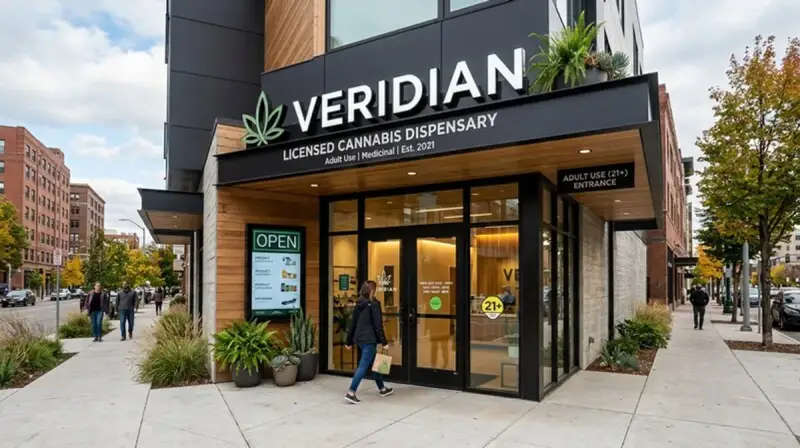
- Dispensary types include storefront retail, delivery-only operations, dual-format stores offering both retail and delivery, and consumption lounges where on-site use is permitted.
- Medical cannabis patients typically pay lower or zero sales tax compared to adult-use customers, depending on state law — a meaningful cost difference for regular users.
- Budtenders can provide product information and help with selection but are legally prohibited from giving medical advice in most states — they can describe effects but not diagnose or treat conditions.
- Most dispensaries are cash-preferred or cash-only due to federal banking restrictions on cannabis businesses, though debit-card ATM-style transactions are available at many locations.
What a Dispensary Is: Definition and Regulation
A cannabis dispensary is a state-licensed retail establishment authorized to sell cannabis products to qualified customers. Unlike unregulated or illicit-market sellers, a licensed dispensary operates under continuous oversight from the state cannabis regulatory agency. This means every product on its shelves has passed third-party lab testing, is tracked in the state’s seed-to-sale traceability system, and is sold in compliant packaging with required labeling disclosures.
Dispensary licenses are issued by state agencies and are not transferable. Operators must meet requirements covering security (cameras, safes, access controls), employee background checks, record-keeping, purchase limits enforcement, and regular inspections. The result is that a licensed dispensary is one of the most heavily regulated retail environments in any state that has legalized cannabis.
Types of Dispensaries
Not all dispensaries operate the same way. The four main formats are:
- Storefront dispensary: A physical retail location you visit in person. The most common format. Products are displayed in cases or on menus; staff assist you through the selection and purchase process.
- Delivery-only operation: No physical storefront open to the public. Customers order online or by phone and receive products at their door. Available in a limited number of states that have issued delivery licenses.
- Dispensary with delivery: A storefront that also offers same-day delivery. Customers can walk in or order for delivery from the same operator.
- Consumption lounge: A facility where customers can legally consume cannabis on premises, either attached to a dispensary or as a standalone licensed location. Available in a small number of jurisdictions.
What You Need to Enter a Dispensary
For an adult-use (recreational) dispensary, you need a valid government-issued photo ID proving you are 21 or older. Accepted forms include a state driver’s license, state ID card, US passport, military ID, or permanent resident card. The ID must be current — expired identification is not accepted. Out-of-state and international IDs are generally accepted as long as they include a date of birth and photo.
For a medical dispensary, you additionally need a valid state-issued medical cannabis card and, in most states, the physician recommendation letter used to obtain it. Medical card requirements vary by state; some states allow out-of-state medical cards (reciprocity), while others do not. Age requirements for medical patients are lower in most states — typically 18 with a card, though minors can be patients with a caregiver.
Photography policies inside dispensaries vary. Many dispensaries prohibit photos of the sales floor and product to protect other customers’ privacy and to maintain a professional environment. Check the dispensary’s posted rules at the entrance.
What to Expect on Your First Visit
First visits follow a predictable process at most dispensaries. At the entrance, a security guard or receptionist will check your ID and verify your age. Some dispensaries use electronic ID scanners; others check manually. You may be asked to register as a customer in their system during your first visit, which typically requires providing your name, date of birth, and contact information.
After check-in you enter the waiting area or proceed directly to the sales floor, depending on the dispensary’s layout. Busy dispensaries operate a queuing system; quieter ones allow open browsing. A budtender will either be assigned to you or approach you at the counter. They will ask about your goals and experience to help narrow down product options. First-time visitors should feel comfortable saying it is their first time — good budtenders adjust their approach accordingly and cover the basics without assuming knowledge.
Product Categories at a Dispensary
| Product Type | Form | Typical THC Range | Onset | Notes |
|---|---|---|---|---|
| Flower | Dried cannabis bud, sold by gram/eighth/ounce | 15–30% | 2–10 minutes | Most versatile; smoked or used in pipe/bong/vaporizer |
| Pre-rolls | Ready-to-smoke cannabis cigarettes | 15–25% | 2–10 minutes | Convenient; may contain shake or trim in budget options |
| Vape Cartridges | Oil-filled cartridges for battery pens | 60–90% | 2–5 minutes | Discreet; check for distillate vs. full-spectrum oil |
| Edibles | Gummies, chocolates, beverages, capsules | 2.5–100mg total | 30–120 minutes | Slow onset; start low, wait before redosing |
| Concentrates | Wax, shatter, rosin, live resin, hash | 60–90% | Immediate (dabbing) | High potency; requires specialized equipment |
| Tinctures | Alcohol or oil-based liquid with dropper | Varies by dose | 15–45 min sublingual | Precise dosing; popular for medical patients |
| Topicals | Creams, lotions, patches, balms | Non-intoxicating (most) | 15–60 minutes | Localized relief; generally no psychoactive effect |
Medical vs. Recreational Dispensaries: Key Differences
Medical dispensaries (MMJ dispensaries) serve registered medical patients who hold a valid state medical cannabis card obtained through a physician’s recommendation. The most significant practical difference for patients is financial: medical cannabis purchases are typically exempt from the sales tax applied to adult-use purchases, which can range from 6% to 37% depending on the state. Over months of regular use, this tax difference represents substantial savings.
Product selection may also differ. Some states permit higher-potency products or different product categories exclusively for medical patients. Possession limits are often higher for medical cardholders. Many states operate dual-license dispensaries that serve both medical and recreational customers through the same location but with separate product inventories and transaction records. In these dispensaries, the same budtender may serve both populations but will need to verify your medical card before applying the medical tax rate.
The Budtender Role: What They Can and Cannot Tell You
A budtender is a dispensary sales associate trained to help customers select cannabis products. Their role is part retail advisor, part product educator. A skilled budtender asks about your goals (relaxation, sleep, pain management, creativity, social ease), your experience level, preferred consumption method, and any known sensitivities. They can explain the differences between products, read COA test results aloud, recommend appropriate starting doses for new users, and describe the characteristic effects of specific products based on customer feedback and terpene data.
What they cannot do legally in most states: diagnose medical conditions, prescribe cannabis as a treatment, make specific claims that cannabis will cure or treat a particular disease, or override the recommendation of a physician. Budtenders are not licensed medical professionals, and state regulations prohibit them from crossing into medical advice territory. If you have specific medical questions, consult a physician who is authorized to recommend cannabis in your state.
Online Menus: Research Before You Visit
Most licensed dispensaries maintain online menus showing their current product selection, prices, strain information, and sometimes COA links. These menus update in near-real-time as inventory changes. Reviewing the menu before visiting saves time in the dispensary and lets you ask more specific questions once you arrive. Generic cannabis menu aggregator platforms publish menus from dispensaries in their networks and allow filtering by product type, price, and cannabinoid content.
Online ordering for in-store pickup (express checkout) is available at many dispensaries and significantly reduces your time on the sales floor. Some dispensaries offer app-based loyalty programs that track purchase history and apply rewards. Signing up for a dispensary’s text or email list is a common way to receive notifications about deals and new product arrivals.
Dispensary Etiquette: Payment, Tipping, and Questions
Cannabis dispensaries in the US are frequently cash-only or cash-preferred due to the lack of federal banking access for cannabis businesses. While some dispensaries offer debit-card ATM-style transactions (where you withdraw cash from an ATM on premises and use it to pay), credit card processing remains rare. Bringing cash avoids the ATM fee, which is typically $3–5. Some states have passed legislation expanding banking access for cannabis businesses, gradually making card payments more available.
Tipping budtenders is common practice and appreciated, though not mandatory. Tips are typically left in cash in tip jars at the register. If a budtender spent significant time helping you navigate products or answered detailed questions, a standard service tip is appropriate. Questions are encouraged — good dispensaries train staff specifically to handle first-time visitor questions without judgment. No question about cannabis basics is too simple to ask at a dispensary.
Why Dispensaries Look Different Across States
Cannabis dispensaries vary dramatically in appearance, layout, and operating procedures depending on which state they are in. Some states require dispensaries to operate in a pharmacy-like clinical environment with security barriers between customers and products. Others permit open floor plans where customers can examine products up close. License types (medical-only, adult-use, combined) affect product selection. State tax structures affect prices. Local zoning regulations affect locations and hours. Advertising restrictions affect signage and exterior appearance. Visiting a dispensary in Colorado looks and feels different from visiting one in New York or Oklahoma, even though all three operate under state legal frameworks.
Frequently Asked Questions
Do I need a medical card to go to a dispensary?
In recreational or adult-use states, you do not need a medical card. Any adult 21 or older with valid government-issued ID can purchase cannabis. In medical-only states, a valid state-issued medical cannabis card and a physician recommendation are required for entry and purchase. Some states allow people aged 18–20 to purchase with a valid medical card, even where recreational sales require age 21.
What ID do dispensaries accept?
Dispensaries accept any valid government-issued photo ID that shows your date of birth. This includes a state driver’s license, state ID card, US passport, military ID, or permanent resident card. Expired IDs are never accepted. Dispensaries are legally required to verify age before every transaction and can face serious penalties for selling to minors or accepting fraudulent identification.
Can dispensaries refuse service?
Yes. Dispensaries can refuse service for various reasons including inability to verify ID, visible signs of intoxication, attempting to purchase over the legal possession limit, or disruptive behavior. Staff are trained to identify situations where selling cannabis would be inappropriate or create legal exposure. Refusal of service is a standard part of compliant dispensary operations.
What is the difference between a dispensary and a caregiver?
A dispensary is a licensed retail business authorized to sell cannabis to qualified consumers. A caregiver is a registered individual authorized in some medical states to grow and provide cannabis to a limited number of registered patients. Caregivers are not retail businesses and operate under different regulations. Some states allow caregivers as the primary access mechanism for medical patients in areas without nearby dispensaries.