










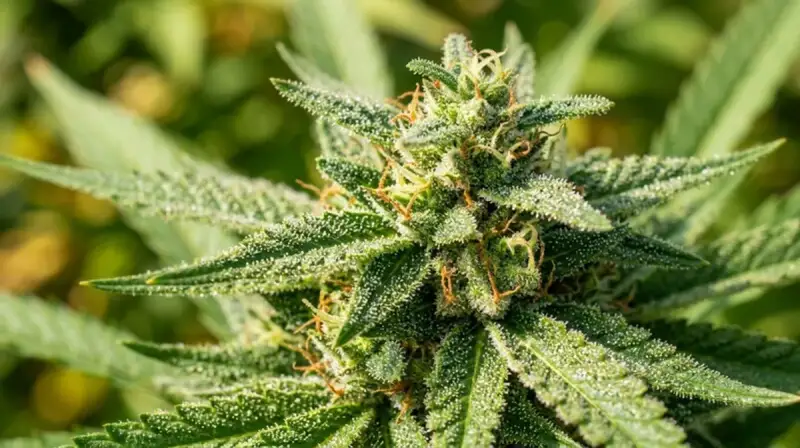
- The entourage effect (Russo, 2011) describes the synergistic interaction of 500+ cannabis compounds — terpenes, flavonoids, and minor cannabinoids modulate THC and CBD’s effects at receptor level.
- CBD reduces THC-induced anxiety and paranoia by acting as an allosteric modulator at CB1 receptors — balanced CBD:THC products are significantly better tolerated than high-THC-only products.
- Beta-caryophyllene is the only terpene that directly activates cannabinoid receptors (CB2) — it contributes anti-inflammatory effects and is also found in black pepper, cloves, and hops.
- linalool (lavender-scented terpene) enhances CBD’s anxiolytic effects by activating GABA receptors — strains high in linalool (Amnesia Haze, Lavender Kush) show amplified sedative properties.
- myrcene increases blood-brain barrier permeability, enhancing THC absorption and contributing to the “couch-lock” sedation in high-myrcene indicas.
- Multiple clinical studies comparing full-spectrum CBD to CBD isolate show 2–4× greater efficacy for pain and anxiety at equivalent doses — confirming the entourage effect is therapeutically meaningful.
- The entourage effect argument is the primary reason whole-plant cannabis advocates oppose pharmaceutical-only approaches to medical cannabis treatment.
What the Entourage Effect Is (and Isn’t)
The entourage effect describes a phenomenon in which the hundreds of naturally occurring compounds in the cannabis plant — cannabinoids, terpenes, flavonoids, and other phytochemicals — interact synergistically to produce effects that no single compound could achieve in isolation. The concept was first articulated by Israeli researchers Raphael Mechoulam and Shimon Ben-Shabat in 1998 in the context of endocannabinoids, then formalized for cannabis by neurologist Ethan Russo in his landmark 2011 paper “Taming THC: Potential Cannabis Synergy and Phytocannabinoid-Terpenoid Entourage Effects.”
The critical distinction is between additive and synergistic effects. Additive effects simply mean two compounds together equal the sum of their individual effects. Synergy means the combined effect exceeds what either compound could produce alone — or that one compound meaningfully modulates the character of another’s effect. The entourage effect is synergistic: CBD doesn’t merely add its own mild anxiolytic effect on top of THC; it actively changes how THC binds to CB1 receptors, altering the quality of the experience itself.
What the entourage effect is not: it is not a claim that “natural is always better” or that pharmaceutical isolates are worthless. Epidiolex (pharmaceutical CBD isolate) is an effective epilepsy treatment. The entourage effect argument is specific: for many indications and many users, whole-plant or full-spectrum preparations are more effective, better tolerated, and require lower doses than isolated compounds. The evidence for this is strongest for pain, anxiety, and epilepsy.
Cannabis contains over 500 identified chemical constituents: 100+ cannabinoids, 200+ terpenes, flavonoids including cannaflavins, and various phenolic compounds. Each of these interacts with different receptor systems — not only the endocannabinoid system (CB1/CB2) but also serotonin receptors (5-HT1A), GABA receptors, TRP channels, and adenosine receptors. The sheer complexity of these interactions is why isolating a single compound often fails to capture the full therapeutic profile of the plant.
How Terpenes Modulate Cannabis Effects
Terpenes are aromatic compounds produced in the cannabis plant’s trichomes alongside cannabinoids. They evolved primarily as plant defenses against insects and pathogens, but they interact powerfully with the human nervous system. More than 200 terpenes have been identified in cannabis, though most commercial flower contains 5–15 terpenes at meaningful concentrations. The terpene profile — not just THC percentage — is the primary determinant of why different strains feel different.
Terpenes modulate the entourage effect through several mechanisms: direct receptor activity (beta-caryophyllene at CB2), neurotransmitter modulation (linalool at GABA), blood-brain barrier permeability changes (myrcene), serotonin reuptake inhibition (limonene), and acetylcholinesterase inhibition (pinene). Understanding the dominant terpenes in a product gives a far more predictive framework for effects than THC percentage alone.
| Terpene | Aroma | Primary Receptor Target | Effect Profile | Found In Strains |
|---|---|---|---|---|
| Myrcene | Earthy, musky, clove | Blood-brain barrier permeability | Sedative, enhances THC absorption, couch-lock | OG Kush, Blue Dream, Granddaddy Purple |
| Limonene | Citrus, lemon | 5-HT1A (serotonin), adenosine A2A | Mood elevation, stress reduction, anti-anxiety | Super Lemon Haze, Durban Poison, Wedding Cake |
| Beta-Caryophyllene | Spicy, peppery, woody | CB2 (direct agonist) | Anti-inflammatory, analgesia, no psychoactivity | Girl Scout Cookies, Chemdawg, Bubba Kush |
| Linalool | Floral, lavender | GABA-A, glutamate receptors | Anxiolytic, sedative, amplifies CBD calming effects | Amnesia Haze, Lavender Kush, Do-Si-Dos |
| Pinene | Pine, fresh | Acetylcholinesterase inhibitor | Alertness, bronchodilation, counters THC memory effects | Jack Herer, Trainwreck, Blue Dream |
| Terpinolene | Floral, herbal, citrus | Serotonin pathway (indirect) | Uplifting, mildly sedative at high doses | Jack Herer, Dutch Treat, Ghost Train Haze |
| Humulene | Earthy, hoppy | CB1/CB2 (weak agonist) | Appetite suppression, anti-inflammatory | Sour Diesel, White Widow, Headband |
Minor Cannabinoids: CBG, CBN, CBC, THCV
THC and CBD dominate most cannabis products by volume, but the minor cannabinoids — present at lower concentrations — contribute meaningfully to the entourage effect through distinct receptor interactions. As extraction technology improves, minor cannabinoid isolates are becoming commercially available, and full-spectrum products naturally preserve these compounds at their native ratios.
| Cannabinoid | Primary Mechanism | Effect / Therapeutic Role | Evidence Level |
|---|---|---|---|
| CBG (Cannabigerol) | CB1/CB2 partial agonist; alpha-2 adrenergic agonist; 5-HT1A antagonist | Anti-inflammatory, neuroprotective, potential IBS applications; precursor to all other cannabinoids | Strong preclinical; limited human trials |
| CBN (Cannabinol) | CB1 weak partial agonist; TRPV2 agonist | Sedative (synergy with THC), analgesic, appetite stimulation; produced by THC oxidation | Moderate preclinical; 1 human sleep trial (Steep Hill 2017) |
| CBC (Cannabichromene) | TRPV1/TRPA1 agonist; non-CB1/CB2 activity | Anti-inflammatory, analgesic, potential antidepressant via TRP channels; neurogenesis in vitro | Preclinical only |
| THCV (Tetrahydrocannabivarin) | CB1 antagonist at low doses; CB1/CB2 agonist at high doses | Appetite suppressant, potential Type 2 diabetes applications, reduces THC psychoactivity at low doses | Moderate preclinical; 2 small human trials |
In full-spectrum products, these minor cannabinoids are present at levels that may not produce standalone effects but contribute meaningfully to the overall profile through receptor cross-talk. CBG’s 5-HT1A antagonism, for instance, counterbalances limonene’s serotonergic activity — creating a nuanced modulation of mood that neither compound produces alone.
Full-Spectrum vs. Broad-Spectrum vs. Isolate: Clinical Evidence
The practical application of the entourage effect comes down to product selection: full-spectrum, broad-spectrum, or isolate. The clinical evidence clearly differentiates these categories for most therapeutic uses.
Gallily et al. (2015) published what became one of the most cited papers in this area. Testing CBD isolate vs. full-spectrum extract in an inflammatory pain mouse model, they found that CBD isolate produced a classic bell-curve dose-response: efficacy increased up to a threshold dose, then declined at higher doses. The full-spectrum extract showed a linear dose-response — efficacy continued to increase with dose. This bell-curve effect in isolate is why some patients report CBD “stops working” when they increase the dose; it’s a pharmacological reality, not a tolerance issue.
Pamplona et al. (2018) studied pediatric epilepsy patients using either full-spectrum CBD-rich extract or CBD isolate. Full-spectrum patients required a median dose of 6.1 mg/kg/day for seizure control; isolate patients required 26.3 mg/kg/day — a 4.3× difference. Full-spectrum patients also reported fewer adverse effects. This remains the strongest direct human clinical evidence for the therapeutic superiority of full-spectrum cannabis preparations.
Iffland & Grotenhermen (2017) reviewed the safety profile of CBD across dose ranges and noted that adverse effects from CBD isolate (diarrhea, elevated liver enzymes at high doses) were markedly less common in full-spectrum preparations — presumably because the entourage effect allows therapeutic effects at doses 2–4× lower than isolate requires.
| Product Type | Cannabinoids Present | Terpenes | THC Content | Best For |
|---|---|---|---|---|
| Full-Spectrum | All native cannabinoids (THC, CBD, CBG, CBN, CBC, THCV) | Yes — full native profile | Up to 0.3% (hemp) or full potency (cannabis) | Pain, anxiety, epilepsy, inflammation — maximum entourage effect |
| Broad-Spectrum | All cannabinoids except THC (removed post-extraction) | Yes — partially preserved | <0.01% (trace) | THC-sensitive users (drug testing, pregnancy concern, psychoactive sensitivity) |
| CBD Isolate | CBD only (99%+ purity) | No | None | Precise dosing, pharmaceutical-grade applications, clinical trials |
The CBD:THC Ratio and Anxiety Modulation
One of the most clinically actionable aspects of the entourage effect is the CBD:THC ratio in products. CBD’s ability to modulate THC’s psychoactive effects is one of the most robust findings in cannabis pharmacology. The mechanism is specific: CBD acts as a negative allosteric modulator at CB1 receptors — it doesn’t block THC from binding but changes the receptor’s conformation, reducing the amplitude of the psychoactive signal.
Zuardi et al. demonstrated in controlled studies that CBD pre-administration significantly reduced THC-induced anxiety and psychosis-like symptoms. Importantly, this effect was not simply CBD’s own anxiolytic action added to THC’s anxiogenic action — the combination behaved differently from either compound alone, confirming true synergy at the receptor level.
Practical ratio guidance for product selection:
| CBD:THC Ratio | Psychoactive Effect | Anxiety Risk | Typical Use Case |
|---|---|---|---|
| 1:1 Balanced | Mild to moderate | Low | General wellness, pain, balanced recreational use |
| 4:1 CBD-leaning | Subtle | Very low | Daytime use, anxiety-prone users, beginners |
| 10:1 CBD-dominant | Negligible | Minimal | Medical patients, children (with physician oversight), high-sensitivity users |
| 20:1 Near-zero psychoactive | None perceptible | None | CBD-only wellness, anti-inflammatory, neuroprotection |
High-THC products (20:1 THC:CBD or higher) represent the scenario with greatest anxiety risk for susceptible users. The commercial push toward maximum THC percentages has largely stripped out the CBD and minor cannabinoid content that historically modulated the plant’s effects — a consequence of breeding for potency metrics rather than therapeutic profile.
Practical Application: Choosing Products for the Entourage Effect
Understanding the entourage effect is most valuable when it translates into better product selection. The key tool is the Certificate of Analysis (COA) — the third-party lab report that every reputable cannabis and CBD product should provide. Reading a COA for entourage-effect purposes requires looking beyond the headline cannabinoid percentages.
What to look for in a COA: First, check the cannabinoid panel — a full-spectrum product should show measurable CBD, CBG, CBN, and THCV alongside THC. Products that show only THC and CBD are likely not full-spectrum despite marketing claims. Second, check the terpene panel if included. Look for the dominant terpenes (the top 3–5 by percentage) and cross-reference them against the terpene table above to predict the effect profile. A product high in myrcene and linalool will behave very differently from one high in limonene and pinene, even at identical THC levels. Third, check the residual solvent panel — poor extraction can strip terpenes and denature minor cannabinoids, leaving a technically “full-spectrum” label on a product that lacks the actual compounds needed for the entourage effect. Learn more about how to read a cannabis COA.
Storage matters for terpene preservation: Terpenes are volatile and degrade rapidly at elevated temperatures and with UV light exposure. Store cannabis and full-spectrum extracts in airtight, opaque containers at room temperature or in a dedicated cannabis storage container. Even brief exposure to high heat (such as leaving a vape cart in a hot car) can dramatically reduce terpene content and attenuate the entourage effect. See the cannabis storage guide for best practices.
For consumers choosing between product formats: live resin and fresh-frozen extracts preserve the highest terpene content of any concentrate. Cured resin, distillate, and isolate have progressively less terpene content. For dried flower, look for COAs with terpene panels — an increasing number of legal dispensaries now provide these. For full effects information and drug test considerations, see those dedicated guides.
Frequently Asked Questions
Yes — supported by both preclinical research and clinical trials. The strongest human evidence comes from Pamplona 2018 (epilepsy, full-spectrum 4.3× more effective than isolate) and Gallily 2015 (bell-curve dose-response for isolate vs. linear for full-spectrum). Larger trials are ongoing but existing evidence is sufficient to guide product selection.
Beta-caryophyllene (the only terpene that directly activates CB2 receptors), myrcene (enhances THC absorption), linalool (amplifies CBD anxiolytic effects via GABA), and limonene (mood elevation via serotonin pathway) are the four most pharmacologically significant for the entourage effect.
For most therapeutic uses, yes. Full-spectrum requires 2–4× lower doses for equivalent effect, avoids the bell-curve dose-response limitation of isolate, and produces fewer adverse effects at therapeutic doses. Isolate has advantages for precise pharmaceutical dosing and users who cannot tolerate any THC.
Yes, with strong mechanistic evidence. CBD acts as a negative allosteric modulator at CB1 receptors, reducing THC binding intensity. Zuardi et al. showed CBD pre-treatment significantly reduced THC-induced anxiety and paranoia. Products with CBD:THC ratios of 1:1 or higher are substantially better tolerated by anxiety-prone users.