




By Jordan Price · Growing Guide · Updated May 2026
- Terpenes are highly volatile: All major cannabis terpenes are monoterpenes or sesquiterpenes with boiling points below 200°C. Temperatures above 25°C (77°F) during drying or handling accelerate loss through evaporation — humulene starts volatilizing at just 106°C.
- Harvest timing sets the ceiling: Trichomes at 70% cloudy / 30% amber represent peak terpene and THC levels. Waiting until all-amber means CBN conversion and terpene degradation have already begun.
- Slow dry wins every time: A 10–14 day dry at 60–65°F and 55–65% RH retains dramatically more terpenes than a 4–7 day fast dry at 75°F and 40% RH — whole-plant hanging adds additional buffering.
- Dry trimming preserves trichome integrity: Wet trimming engorged trichome heads on live-harvested material causes immediate mechanical terpene loss. Dry trim after the hang for quality-first results.
- Curing is enzymatic transformation: The cure period allows chlorophyll to break down, reducing harshness, while enzymatic processes convert certain terpene precursors, improving the final flavor profile.
- Light degrades terpenes and cannabinoids equally: UV and visible light photodegrades terpene structures. Store curing jars in a dark cabinet, drawer, or purpose-built curing vault — never on a shelf exposed to ambient light.
- Pre-harvest stress protocols can elevate terpene density: Reducing temperature by 5–10°F at night in the final two weeks, reducing humidity, and running 48–72 hours of darkness before harvest are widely reported to increase terpene intensity.
The Chemistry of Cannabis Terpenes
Cannabis terpenes are secondary metabolites produced primarily in trichome heads alongside cannabinoids. They are classified chemically as either monoterpenes (two isoprene units, 10 carbons: myrcene, limonene, alpha-pinene, terpinolene, ocimene) or sesquiterpenes (three isoprene units, 15 carbons: beta-caryophyllene, humulene, bisabolol). The distinction matters for preservation because monoterpenes are significantly more volatile than sesquiterpenes — they evaporate faster at lower temperatures, which is why pinene (boiling point 155°C) is lost first in any heat exposure event while caryophyllene (267°C for the sesqui form) is far more stable.
Terpene biosynthesis peaks in late flowering, accelerating in the final 1–2 weeks as the plant approaches maturity. Environmental stressors such as slight nutrient drawdown, UV-B light exposure, and controlled temperature fluctuations in late flower appear to upregulate terpene synthase gene expression, potentially increasing terpene density in trichome heads. This is why many experienced cultivators run low-intensity UV-B supplementation in the final two weeks, lower nutrient EC during the pre-harvest phase, and deliberately drop night temperatures by 5–10°F.
For detailed profiles of individual terpenes and their reported effects, see the complete terpene library. For strain-specific terpene profiles, browse individual strain guides.
Terpene Boiling Points and Volatility Reference
Understanding boiling points helps you understand which terpenes are most at risk during any heat exposure event — drying room temperature spikes, warm trimming rooms, and improper storage all selectively strip the most volatile compounds first.
| Terpene | Type | Boiling Point (°C) | Boiling Point (°F) | Volatility Risk | Primary Aroma | Notable In |
|---|---|---|---|---|---|---|
| Humulene | Sesquiterpene | 106°C | 223°F | Extreme (sesqui exception) | Earthy, woody, hoppy | OG Kush, Sour Diesel |
| Alpha-Pinene | Monoterpene | 155°C | 311°F | Extremely High | Pine, fresh forest | Jack Herer, Blue Dream |
| Myrcene | Monoterpene | 167°C | 333°F | Very High | Earthy, musky, mango | OG Kush, Blue Dream |
| Limonene | Monoterpene | 176°C | 349°F | Very High | Citrus, lemon | Super Lemon Haze, GSC |
| Terpinolene | Monoterpene | 186°C | 366°F | High | Fresh, floral, piney | Jack Herer, Durban Poison |
| linalool | Monoterpenoid | 198°C | 388°F | Moderate | Floral, lavender | Do-Si-Dos, Zkittlez |
| Beta-Caryophyllene (mono) | Sesquiterpene | 119°C | 246°F | High (lower form) | Spicy, pepper | GSC, Chemdawg, Gelato |
| Beta-Caryophyllene (sesqui) | Sesquiterpene | 267°C | 513°F | Low (higher form) | Spicy, wood, pepper | GSC, Chemdawg, Gelato |
Environmental Factors and Terpene Loss
Terpene loss is not a single event — it is a continuous process driven by temperature, humidity, light exposure, mechanical damage, and time. Understanding the relative contribution of each factor allows you to prioritize your interventions.
| Environmental Factor | Mechanism of Loss | Estimated Terpene Loss | Prevention |
|---|---|---|---|
| Heat above 25°C during dry | Direct evaporation — volatile compounds boil off at room temperature | 20–40% additional loss vs. cool dry | Keep drying room at 15–21°C (60–70°F) |
| Low humidity (under 45% RH) during dry | Rapid surface drying traps moisture inside; cracks trichome stalks | 15–25% additional loss | Maintain 55–65% RH; use humidifier if needed |
| UV and visible light exposure | Photodegradation of terpene molecular structures | 10–20% over 4 weeks of light exposure | Opaque containers; dark curing space |
| Mechanical damage (rough handling) | Physical rupture of trichome heads releases terpene vapor | 5–15% per rough handling event | Handle gently; avoid shaking or tumbling |
| Oxygen exposure during cure | Oxidation converts terpenes to less aromatic or inactive compounds | 5–10% per month without oxygen barrier | Seal tightly; vacuum seal for long-term storage |
| Time at ambient conditions | Slow enzymatic and chemical degradation even in ideal conditions | 5–8% per month in sealed glass | Vacuum seal; cold storage; consume within 6 months for peak quality |
Harvest Timing for Peak Terpenes
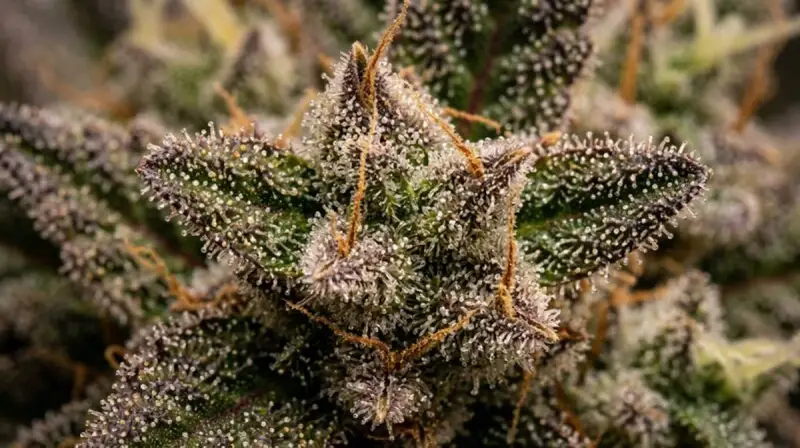
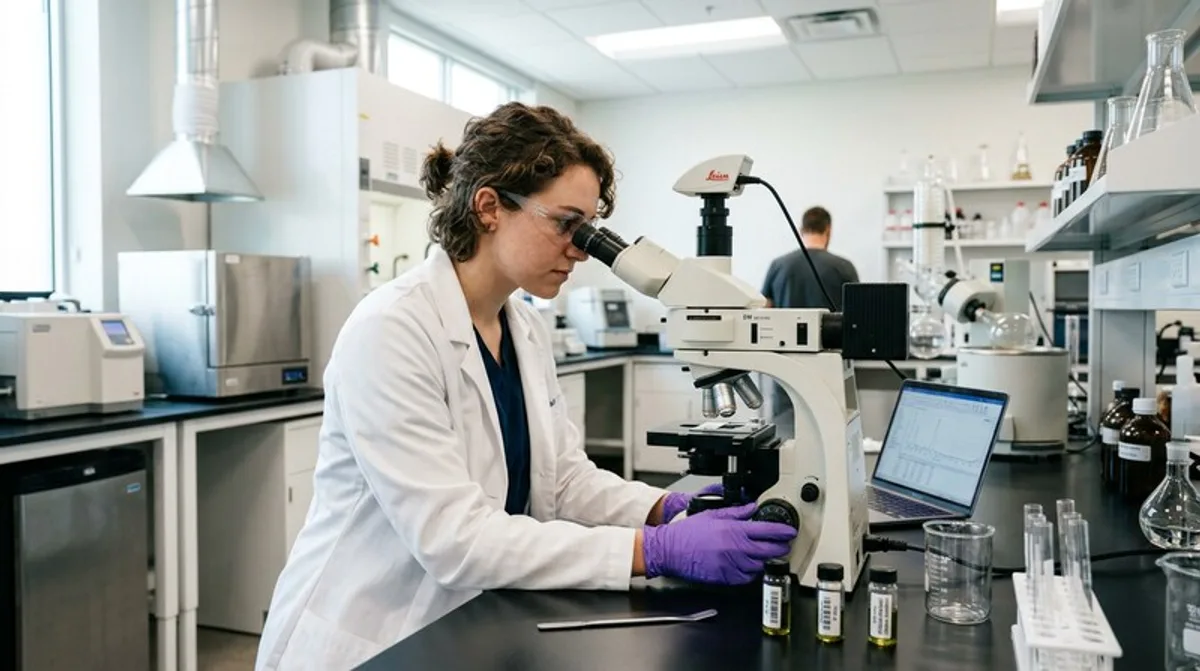
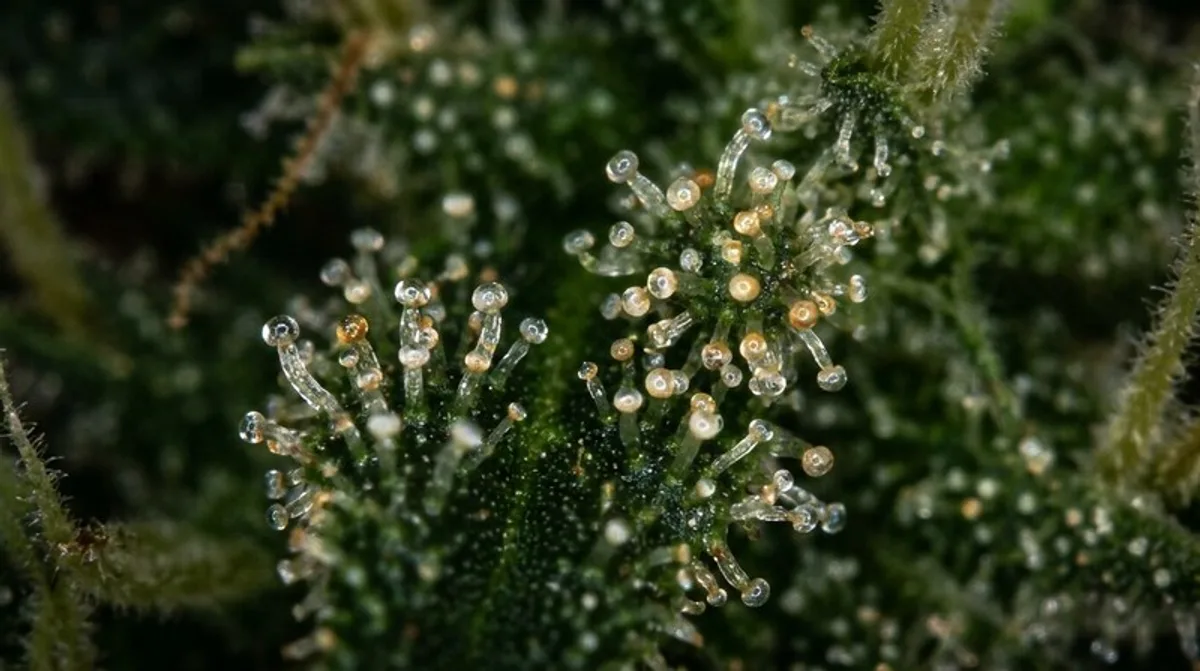
Trichome assessment under magnification (30–60× jeweler’s loupe or digital microscope) is the only reliable method for determining optimal harvest timing. Terpene and THC content peak at a trichome state of approximately 70% cloudy (milky white) and 30% amber. At this stage, THCA biosynthesis has reached maximum density and terpene expression is at its peak. Waiting longer for more amber means accepting terpene degradation and THC-to-CBN conversion in exchange for a heavier, more sedative effect profile.
Pistil color alone is not a reliable harvest indicator. A plant can have 90% brown pistils and still have immature trichomes if it was stressed or if the strain has a longer maturation window. Always use trichomes as the primary assessment tool and pistils as a secondary signal. Assess trichomes on the bud calyxes directly, not on sugar leaves — sugar leaf trichomes mature 7–10 days earlier than calyx trichomes and will give you an early false reading.
Pre-Harvest Protocols That Enhance Terpene Density
Several interventions in the final 2 weeks of flowering are consistently reported by experienced cultivators to increase terpene density and intensity. While large controlled studies are absent from the literature, the mechanisms are plausible and the practices are low-risk.
| Protocol | Timing | How to Apply | Reported Effect | Evidence Level |
|---|---|---|---|---|
| Night temperature reduction | Final 2 weeks of flower | Drop night temp by 5–10°F vs. daytime temperature | Enhanced terpene and anthocyanin production; purple coloration in susceptible strains | Strong anecdotal; limited controlled data |
| Humidity reduction in late flower | Final 2 weeks | Reduce RH from 50% to 40–45% at end of flower cycle | Increased trichome density as stress response; reduced botrytis risk | Moderate anecdotal |
| Pre-harvest darkness period | 48–72 hours before harvest | Cut all light to the flowering room; maintain temperature and humidity | Slightly elevated terpene intensity; reports of frostier appearance | Anecdotal; mechanism unclear |
| UV-B supplementation | Final 3–4 weeks of flower | 2–4 hours daily of low-intensity UV-B (lizard lamp or specialized LED bar) | Upregulated terpene and cannabinoid biosynthesis; mimics high-altitude sun conditions | Some scientific support; terpene synthase gene upregulation observed |
| Nutrient EC reduction (pre-harvest taper) | Final 7–14 days | Reduce feeding EC by 30–50% from peak flower level | Plant draws on internal reserves; natural senescence process initiated; may improve taste | Moderate anecdotal; links to flushing debate |
Drying Conditions Comparison
| Method | Temperature | Humidity | Duration | Terpene Retention | Risk |
|---|---|---|---|---|---|
| Fast Dry (not recommended) | 75–85°F | 40–50% RH | 4–7 days | Low (40–60% retained) | Harsh smoke; significant monoterpene loss |
| Standard Dry | 65–70°F | 50–60% RH | 7–10 days | Moderate (65–80% retained) | Occasional mold if humidity spikes above 70% |
| Slow Dry (recommended) | 60–65°F | 55–65% RH | 10–14 days | High (80–95% retained) | Requires humidity control; longer timeline |
| Whole-Plant Hang Dry | 60–65°F | 58–65% RH | 12–18 days | Maximum (sugar leaves buffer moisture loss) | Space requirements; must monitor for mold |
Curing Timeline with RH Targets
| Cure Phase | Duration | Target RH | Burp Frequency | What’s Happening |
|---|---|---|---|---|
| Initial Cure | Days 1–7 | 62–65% RH | Daily, 10–15 min | Moisture equalization between outer surface and inner bud; early chlorophyll breakdown begins |
| Active Cure | Days 7–21 | 60–63% RH | Every 2–3 days | Enzymatic reactions transforming flavor; chlorophyll continues degrading; harshness reducing |
| Finishing Cure | Days 21–42 | 58–62% RH | Weekly | Flavor refinement; terpene complex maturation; water activity stabilizing |
| Long-Term Storage | 42+ days | 58–62% RH | Monthly or vacuum seal | Slow oxidative aging; character shifts over time with some strains improving for months |
Storage Methods Comparison
| Method | Terpene Preservation | Shelf Life | Cost | Notes |
|---|---|---|---|---|
| Glass jar (sealed) | Good | 2–4 months | Very Low | Standard; add Boveda 62 for best results; store in dark location |
| Vacuum-sealed glass | Excellent | 6–12 months | Low | Best practical home option; eliminates oxygen degradation |
| Frozen (vacuum-sealed glass) | Maximum | 12–24 months | Low | Requires fully cured, dry product at 10–12% moisture; handle frozen to prevent trichome loss |
| Nitrogen-flushed sealed container | Excellent | 12+ months | Medium | Commercial standard; N2 displaces O2 without vacuum; preserves terpene oxidation-sensitive compounds |
| Plastic bag | Poor | 2–6 weeks | Lowest | Gas-permeable; terpenes absorb into plastic film; static charge damages trichomes; avoid entirely |
Step-by-Step Terpene Preservation Protocol
- Final 2 weeks of flower: Drop night temperature 5–10°F, reduce RH to 40–45%, reduce nutrient EC by 30–50%.
- 48–72 hours before harvest: Run darkness period. Maintain temperature and humidity. Do not open tent.
- Harvest timing: Assess trichomes under 60x magnification. Harvest at 70% cloudy / 30% amber for peak terpene expression.
- Wet trim or dry trim decision: For quality, leave whole plant or branch intact. Delay trimming until after the dry period.
- Hang in dark drying space: 60–65°F, 55–65% RH, gentle air circulation (fan not aimed at buds), total darkness.
- Dry for 10–14 days: Test readiness by bending a medium stem — it should snap cleanly, not bend. Surface of buds should feel dry but not crispy.
- Dry trim gently: Handle trimmed flowers with clean nitrile gloves. Avoid shaking bowls or rough handling.
- Jar into clean glass: Fill to 75–80% capacity. Add one Boveda 62 packet per 28g of flower. Seal tightly.
- Burp daily for 2 weeks: Open jars for 10–15 minutes in a clean, dark space. Check for mold (white fuzz = discard immediately). Monitor RH inside jar — if above 65%, leave open longer.
- Store in dark, cool location: 60–65°F. Never near a heat source or in direct light. For storage beyond 3 months, vacuum seal.
Common Terpene Preservation Mistakes
| Mistake | Impact | Correct Practice |
|---|---|---|
| Fast-drying in warm room (75°F+) | Evaporates 30–40% of total monoterpene content before jarring | 60–65°F drying space; 10–14 day minimum |
| Wet trimming immediately at harvest | Mechanical rupture of engorged trichome heads; immediate terpene loss | Hang whole plants; dry trim after drying period |
| Using plastic bags or containers | Terpenes absorb into plastic; gas exchange degrades aromatics | Airtight glass mason jars only |
| Skipping the burp schedule | CO2 and moisture buildup; anaerobic conditions; mold risk | Daily burping for 2 weeks; weekly for 2–4 weeks |
| Storing curing jars in light | Photodegradation of terpenes and cannabinoids within weeks | Dark cabinet, drawer, or opaque curing container |
| Harvesting all-amber trichomes | Peak terpene expression already passed; monoterpenes largely degraded | Harvest at 70% cloudy / 30% amber for terpene maximum |
FAQ: Terpene Preservation
Does slow drying actually make a measurable difference in terpene content?
Yes. While large-scale controlled cannabis-specific studies are limited, terpene volatilization rates at different temperatures are well-documented for volatile organic compounds as a class. Alpha-pinene, myrcene, and limonene — among the most abundant monoterpenes in cannabis — evaporate readily at room temperature. A drying environment of 75°F vs. 62°F produces meaningfully different evaporation rates over 10 days, with the higher temperature environment driving off substantially more volatile monoterpenes. Experienced cultivators with side-by-side test grows consistently report aromatic difference, and the underlying chemistry fully supports the observation.
What does Boveda 62 actually do that regular sealed jars don’t?
A standard sealed jar passively maintains whatever humidity exists inside at the moment of sealing. If you jar at 65% RH, it stays near 65%; if conditions change or if moisture redistributes from inner bud to outer bud during cure (which it does), RH fluctuates. Boveda packets are two-way humidity controllers — they release moisture when RH drops below 62% and absorb moisture when RH rises above 62%, actively maintaining a precise target. This eliminates the risk of both mold (from brief humidity spikes) and over-drying (from humidity dropping too low), and produces more consistent cure results than passive glass alone.
Can I cure in stainless steel or UV-resistant containers instead of glass?
UV-resistant or opaque glass (amber or dark green glass) is excellent for curing and outperforms standard clear mason jars for light protection. Food-grade stainless steel is acceptable for storage but does not allow visual inspection for mold during the active cure phase — a meaningful disadvantage for the first 2–3 weeks of cure. Silicone containers allow gas exchange and should be avoided for any use beyond very short-term (hours) holding. Clear plastic is the worst option for all the reasons noted above. Clear glass mason jars stored in a completely dark location are perfectly adequate; the darkness is the key variable, not the UV-resistance of the jar itself.