
Reviewed by the ZenWeedGuide Policy Team — law and regulations verified against OCM Minnesota sources.
- HF 100 signed 30 May 2023; possession legal from 1 August 2023; retail sales began March 2024
- Adults 21+ may possess 2 oz flower in public; 2 lb at home
- Home cultivation: up to 8 plants (4 mature) per household in an enclosed, locked space
- 10% state cannabis excise tax plus standard sales tax; medical rates are lower
- Edibles: 5 mg THC per serving, 50 mg per package — among the most restrictive edible limits nationally
- Minnesota’s 23 federally recognized tribal nations operate separate sovereign cannabis frameworks on tribal lands
- Medical cannabis program exists since 2014 but was historically very restrictive; adult-use law broadened access significantly
Minnesota Cannabis: Quick Reference
| Category | Detail |
|---|---|
| Legal status | Recreational and medical — both legal |
| Governing law | HF 100, signed May 2023 |
| Minimum age | 21+ |
| Public possession limit | 2 oz (56 g) flower |
| Home storage limit | Up to 2 lb flower; 800 mg edibles |
| Home cultivation | 8 plants total (4 mature max) — enclosed, locked |
| Possession legal since | 1 August 2023 |
| Retail sales began | March 2024 |
| State cannabis excise tax | 10% |
| Edibles limit per package | 50 mg THC (5 mg/serving) |
| Regulator | Office of Cannabis Management (OCM MN) |
| Medical program | Since 2014; significantly expanded by HF 100 |
HF 100: Minnesota’s Path to Legalization
Minnesota became the 23rd US state to legalize recreational cannabis when Governor Tim Walz signed House File 100 on 30 May 2023. The bill passed the Minnesota Legislature along party lines, with Democratic majorities in both chambers providing the margin. HF 100 created the Minnesota Office of Cannabis Management to oversee licensing, testing, labeling, and enforcement across the full cannabis supply chain. Adult possession and home cultivation became legal on 1 August 2023, approximately seven months before licensed retail sales commenced.
The gap between legal possession and retail sales availability was deliberate: the OCM needed time to build its licensing infrastructure, develop testing and laboratory standards, and process the first wave of applicant reviews. During this period, adult Minnesotans could legally possess and home-grow cannabis but had no licensed retail option. The first licensed adult-use retail stores opened in the Minneapolis-St. Paul metropolitan area in March 2024, with additional licenses issued progressively across the state’s 87 counties.
Possession and Home Storage
Adults 21 and older may possess up to 2 ounces of cannabis flower in public spaces. At home, the storage limit is 2 pounds. For cannabis concentrates, the public limit is 8 grams; the home storage limit is 64 grams. Edibles may be stored at home up to an aggregate 800 mg of THC. Minors found in possession of cannabis face civil penalties and mandatory referral to educational or counseling programs rather than criminal prosecution.
Possessing amounts above the public limit but below the home storage limit in a vehicle or public space may constitute a civil or criminal violation depending on quantities and circumstances. The OCM publishes current enforcement guidance for amounts in the grey zones between civil penalty and misdemeanor thresholds.
Home Cultivation Rules
Minnesota permits adults 21 and older to cultivate cannabis at home. The plant limit is 8 plants per household with a maximum of 4 mature (flowering) plants at any time. Unlike some states, Minnesota’s limits apply per household, not per adult, so a household with multiple adults still observes the 8-plant maximum. All plants must be grown in an enclosed, locked space that is not visible from any public right of way, neighboring property, or common area. Growing plants in open gardens, unfenced yards, or visible exterior spaces does not meet the “enclosed” requirement.
Renters should verify lease terms before cultivating. The OCM does not override landlord lease conditions, and federal public housing residents face federal prohibition regardless of state law. Cannabis produced at home may not be sold; gifting small amounts between adults is generally permitted within the possession limits.
| Product Type | Public Limit | Home Storage Limit |
|---|---|---|
| Flower | 2 oz (56 g) | 2 lb (approx. 907 g) |
| Concentrate | 8 g | 64 g |
| Edibles (THC content) | 800 mg equivalent | 800 mg |
| Liquid products | Liquid concentrate per OCM | OCM guidelines |
Edibles: Limits and Product Standards
Minnesota’s edibles regulations are among the most conservative in any recreational state. All edible cannabis products sold at licensed retailers must contain no more than 5 mg of THC per serving and no more than 50 mg of THC per package. This compares to Colorado’s 10 mg/100 mg standard, making Minnesota’s single-serving limit half that of many peer states. The OCM requires child-resistant, tamper-evident packaging and prohibits packaging or product designs that could appeal to children, including cartoon imagery or shapes resembling candy commonly marketed to minors.
Edibles must be tested by an OCM-accredited laboratory before sale and must display a uniform THC label indicating total package content, per-serving content, and a standardized cannabis symbol. Producers may not make health or medical claims on edibles packaging.
Cannabis Tax Structure in Minnesota
| Tax Component | Rate | Applies To |
|---|---|---|
| State cannabis excise tax | 10% | All adult-use retail sales |
| Minnesota state sales tax | 6.875% | All cannabis sales |
| Local/county sales tax | 0–2% | Varies by location |
| Medical cannabis | Reduced; consult OCM MN | Registered patients |
In Minneapolis and St. Paul, effective total tax on adult-use cannabis purchases typically runs approximately 18–19% when combining the excise and sales taxes. A portion of cannabis excise tax revenues is allocated to the Cannabis Expungement Board and social equity programs supporting communities most affected by prior prohibition enforcement.
Minnesota Medical Cannabis Program
Minnesota established its medical cannabis program in 2014 under the Minnesota Medical Cannabis Act (Chapter 311, 2014). The original program was among the most restrictive in the nation: it prohibited smoking or vaporizing cannabis flower, limited approved conditions to a narrow statutory list, required patients to register with the state, and mandated purchases only from two state-licensed manufacturers who operated a small number of dispensary locations.
HF 100 significantly expanded and restructured the medical program. Approved conditions now include cancer, glaucoma, HIV/AIDS, Tourette syndrome, ALS, seizures, severe muscle spasms, Crohn’s disease, terminal illness, PTSD, chronic pain, and conditions certified by a healthcare practitioner when the patient does not respond to standard treatment. Medical patients registered with the OCM MN receive lower tax rates on purchases and may access products with higher THC concentrations than the adult-use edibles cap.
Tribal Nation Cannabis Regulations
Minnesota is home to 11 federally recognized Native American tribal nations with reservations across the state. As sovereign nations, tribes are not subject to Minnesota state cannabis law on their tribal lands unless they choose to adopt state standards or enter formal compacts with the state. Several Minnesota tribal nations established their own adult-use cannabis programs with tribal licensing systems that may differ from state rules in minimum age requirements, purchase limits, product types, and taxation.
Cannabis purchased on tribal lands operates under tribal law. Tribal cannabis regulators may or may not recognize state OCM licenses; state regulators have no jurisdiction on tribal lands. Consumers visiting tribal dispensaries should review the specific rules of the tribal nation whose lands they are on, as enforcement and consumer protections differ.
Penalties for Cannabis Violations
| Violation | Classification | Penalty Range |
|---|---|---|
| Public consumption (prohibited area) | Petty misdemeanor | Fine up to $300 |
| Possession over 2 oz, under home limit | Civil / misdemeanor (context-dependent) | Fine; no jail for minor excess |
| Possession over home storage limit | Gross misdemeanor to felony | Fines; potential jail; depends on weight |
| Sale without OCM license | Felony | Scales with quantity; serious prison exposure |
| Sale to minor (under 21) | Felony | Up to 10 years / $20,000; license forfeiture |
| Underage possession (under 21) | Civil | Fine; counseling referral |
| Cannabis DWI (impaired driving) | Misdemeanor / Felony (repeat) | License revocation; fines; potential jail |
Cannabis DWI in Minnesota
Minnesota’s DWI statute covers impairment by any controlled substance including cannabis. The standard applied is a presence-based rule under Minnesota Statute 169A.20: having any amount of THC in blood while driving is treated as a per se DWI offense, without the need to demonstrate functional impairment. This is stricter than the threshold approach used by many other states. A first-offense cannabis DWI carries up to 90 days in jail, a $1,000 fine, and license revocation of at least 90 days. Repeat or aggravated offenses (involving children in the vehicle, extremely high THC levels, or prior DWI history) escalate to gross misdemeanor or felony charges.
Because THC metabolites remain detectable in blood for days to weeks after consumption, this presence-based standard can implicate even non-impaired users who consumed cannabis legally days earlier. Consumers are strongly advised not to drive after consuming cannabis and to be aware that a clean sobriety test performance does not preclude a per se DWI finding in Minnesota.
Interstate Travel Warning
Cannabis is federally illegal. Transporting cannabis across state lines — including to neighboring Wisconsin, Iowa, South Dakota, North Dakota, or Canada — is a federal offense regardless of state law. Cannabis is prohibited at all federal facilities, including Minneapolis-St. Paul International Airport. Do not transport cannabis across any state or international border.
Frequently Asked Questions
Can adults smoke cannabis in public in Minnesota?
No. Public cannabis consumption is prohibited in Minnesota. Smoking or vaporizing cannabis in any public place, including parks, sidewalks, or outdoor venues, is a petty misdemeanor subject to a fine. Consumption is limited to private residences or licensed social consumption venues where permitted.
Where can I find a licensed dispensary in Minnesota?
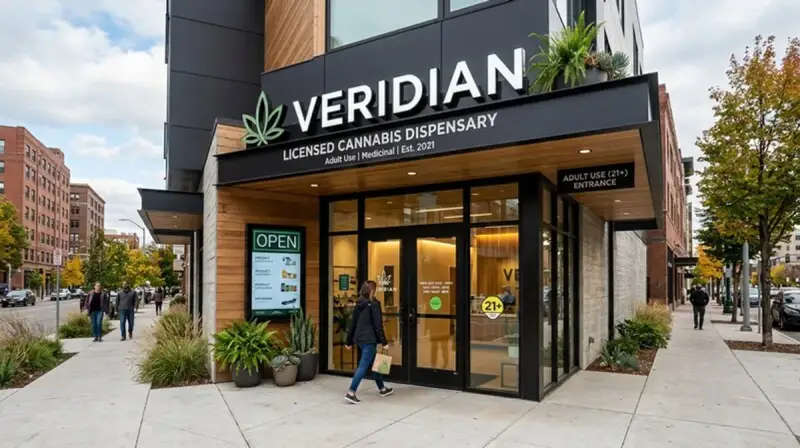
The Minnesota Office of Cannabis Management maintains a public database of licensed adult-use retailers. Minneapolis and St. Paul have the highest concentration of licensed stores. Additional outlets are progressively opening across the state as the OCM processes applications. Always verify a retailer’s OCM license before purchasing.
Are delta-8 THC products legal in Minnesota?
HF 100 brought hemp-derived cannabinoid products, including delta-8 THC, under the OCM’s regulatory umbrella. Products sold at licensed OCM-regulated retailers must meet all testing, labeling, and THC-per-serving standards. Unregulated delta-8 products sold outside the licensed cannabis market are technically not compliant with state law under current OCM guidance.