

- Recreational: Legal (HF100 signed May 2023; possession legal Aug 1, 2023)
- Possession Limit: 2oz flower in public / 2 lbs at home / 8g concentrate / 800mg THC edibles
- Home Grow: 2 plants per adult; up to 8 plants per household
- Purchase Age: 21+
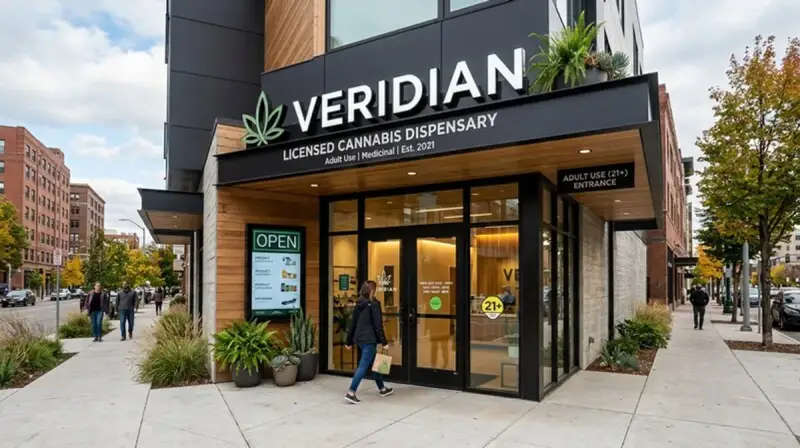
- Dispensaries: Retail sales launched March 2025; licensed dispensaries growing statewide
- Public Consumption: Prohibited in most public spaces
Is Marijuana Legal in Minnesota?
Yes. Minnesota became the 23rd state to legalize recreational cannabis when Governor Tim Walz signed HF100 on May 30, 2023. Unlike many states that passed cannabis legalization through voter ballot initiatives, Minnesota’s legalization came through the state legislature — making it one of a growing group of legislative-path legal states.
The law was structured in phases. Personal cannabis possession became legal for adults 21 and older on August 1, 2023. The licensing and regulation framework was built out through the remainder of 2023 and 2024, and licensed retail cannabis sales to the general public launched in March 2025.
The Office of Cannabis Management (OCM) was established as the state agency responsible for overseeing all aspects of Minnesota’s cannabis industry, including licensing, testing, labeling, and compliance. The OCM works alongside the Department of Health and local government authorities.
Minnesota’s legalization framework also includes significant provisions for tribal nation cannabis compacts, recognizing the sovereignty of Minnesota’s eleven federally recognized tribal nations and allowing them to participate in the legal market through negotiated agreements.
Recreational Possession Limits
Minnesota’s possession limits distinguish between what you can carry in public and what you may store at home.
| Product Type | In Public | At Home |
|---|---|---|
| Cannabis flower | 2 ounces (56g) | 2 pounds (approx. 907g) |
| Cannabis concentrate | 8 grams | No specific limit stated beyond general possession rules |
| Cannabis-infused edibles | 800mg THC | Proportionally higher home storage allowed |
Possession of amounts exceeding the public possession limit is a petty misdemeanor for small excesses. Larger quantities and possession with intent to distribute carry criminal penalties. Possession by minors under 21 carries civil fines and potential referral to drug education programs.
Home Cultivation Rules
Minnesota has a relatively generous home cultivation policy. Adults 21 and older may grow up to 2 cannabis plants at their private residence. For households with multiple adults, the limit scales up to a total of 8 plants per household.
Home grow requirements:
- Plants must be grown in a secure, enclosed area not visible to the general public from any public or adjacent private property.
- Landlords and property owners may restrict or prohibit growing by tenants.
- Home-grown cannabis may not be sold without a license.
- Gifting of home-grown cannabis to other adults in amounts up to 2 ounces is permitted without compensation.
Home cultivation was a popular early benefit of legalization, taking effect with the broader possession legalization on August 1, 2023 — more than a year before retail stores opened. This provided residents a legal way to access cannabis without waiting for the retail market.
Medical Cannabis Program
Minnesota has had a medical cannabis program since 2014, though it was originally highly restrictive (limited to extracts, no flower). The program has expanded over the years and now offers a broader product range including flower.
With full recreational legalization, the medical program continues to serve patients who may benefit from:
- Lower tax rates on medical cannabis purchases compared to recreational
- Access to higher-potency products in some cases
- Protections under medical cannabis patient rights provisions
- Continued prescriber relationship for condition management
Qualifying conditions for the medical program include cancer, terminal illness, glaucoma, HIV/AIDS, Tourette syndrome, ALS, seizure disorders, PTSD, chronic pain, autism spectrum disorder, and others. Patients register through the Minnesota Department of Health.
Dispensary Rules & Purchasing
Minnesota’s retail cannabis market launched in March 2025 after the OCM worked through an extensive licensing process. Tribal nation dispensaries also serve consumers in areas near reservation lands.
| Rule | Details |
|---|---|
| Minimum age | 21+ with valid government-issued photo ID |
| Daily purchase limit | 2oz flower or equivalent per transaction |
| Hours | Varies by municipality; typically 9am–9pm |
| Delivery | Home delivery permitted by licensed retailers |
| Local opt-out | Cities and counties may delay or restrict but not permanently ban retail locations |
Minnesota’s licensing framework includes a prioritization system for social equity applicants — individuals from communities disproportionately impacted by cannabis prohibition. The OCM worked to ensure the licensing process was not prohibitively expensive or bureaucratically complex for smaller applicants.
Cannabis Taxes in Minnesota
Minnesota’s cannabis tax structure applies a state-level excise tax plus standard sales tax:
| Tax Type | Rate | Notes |
|---|---|---|
| Cannabis excise tax | 10% | Applied at retail to adult-use purchases |
| State sales tax | 6.875% | Standard Minnesota state sales tax |
| Local sales tax | Varies (typically 0.5–1%) | Some cities and counties add local tax |
| Effective combined rate | ~17–20% | Approximate total before local add-ons |
Cannabis tax revenue in Minnesota is allocated to the social equity cannabis reinvestment fund, regulatory operations, public health initiatives, substance use disorder treatment, and community development in areas affected by cannabis enforcement histories.
DUI & Impaired Driving
Minnesota prohibits driving while impaired by cannabis. The state’s DUI law applies to any degree of physical or mental impairment from a controlled substance, including cannabis. Minnesota does not currently have a legislatively enacted per se blood THC limit, though the topic has been debated.
Law enforcement uses standardized field sobriety tests, Drug Recognition Experts, and blood testing to establish cannabis impairment. The presence of THC in blood combined with observed impairment indicators supports DUI prosecution.
DUI consequences in Minnesota include license revocation, fines, mandatory education or treatment, and potential incarceration for repeat or aggravated offenses. Minnesota’s implied consent law means that refusing a blood test at a DUI stop can result in automatic license revocation.
Employment & Housing Rights
Minnesota included notable employment protections in its cannabis legalization law:
- Employers are generally prohibited from taking adverse employment action (refusing to hire, firing, disciplining) against an employee solely because they test positive for cannabis metabolites.
- Exceptions apply for safety-sensitive positions, including those in transportation, healthcare, and security, as well as all federally regulated roles.
- Employers may still discipline or terminate employees for cannabis use or impairment during work hours or on work premises.
- Pre-employment drug testing for cannabis is restricted under the Minnesota law for most non-safety-sensitive positions.
- Minnesota’s robust labor protections have made it one of the more employee-friendly cannabis states in terms of off-duty use rights.
Regarding housing, landlords in Minnesota may prohibit cannabis smoking in rental units but generally may not prohibit all forms of cannabis consumption (edibles, vaporizers) based solely on the tenant’s status as a cannabis consumer under state law. Landlords may restrict growing in rental units citing property damage concerns.
Expungement of Prior Cannabis Offenses
Minnesota’s cannabis legalization law included provisions for automatic expungement of prior misdemeanor cannabis possession convictions. For prior offenses involving amounts that are now lawful (up to 2 ounces for possession), the Department of Public Safety was directed to coordinate automatic sealing of records without requiring individual petitions.
More serious prior cannabis convictions require individual petitions and judicial review. The law also created processes for resentencing in cases where individuals were serving sentences for conduct now legal under state law.
Tribal Nation Cannabis Compacts
A distinctive feature of Minnesota’s legalization is the framework for tribal nation cannabis compacts. Minnesota’s eleven federally recognized tribal nations have the option to negotiate agreements with the state to operate cannabis retail businesses on their trust lands and potentially beyond.
Several tribal nations moved quickly to establish cannabis operations, in some cases opening before the state retail market launched in March 2025. Tribal dispensaries may serve both tribal members and the general public under the terms of their compacts.
Public Consumption Rules
Public cannabis consumption is generally prohibited in Minnesota:
- Smoking or vaping cannabis in any location where tobacco smoking is prohibited under the Minnesota Clean Indoor Air Act is illegal.
- Consumption in vehicles (driver or passenger) is prohibited.
- Consumption on school grounds, playgrounds, and public parks is prohibited.
- Municipalities may designate specific areas where consumption is permitted, but most have not done so as of the current review period.
- Licensed cannabis businesses may apply for on-site consumption endorsements, allowing social use facilities to operate.
Cannabis Gifting Rules in Minnesota
Minnesota law permits adults 21+ to gift up to 2 ounces of cannabis to another adult 21+ without compensation. Important considerations:
- Gifts must be without any monetary or non-monetary compensation. “Gift with purchase” arrangements are treated as unlicensed sales.
- Gifting to anyone under 21 is a criminal offense.
- Home-grown cannabis may be gifted to other adults within the 2-ounce limit.
- Gifting during events, pop-ups, or at commercial premises without a license is illegal even if no money changes hands.
Cannabis & Minnesota’s Craft Market
Minnesota’s legalization law created a framework for a craft cannabis market alongside the standard commercial tier. Craft licenses are intended for small-scale producers who grow and process cannabis with a focus on quality, similar to craft beer or artisan food producers. Key features:
- Craft growers are subject to smaller canopy size limits than standard cultivators.
- Craft licensees may be able to sell directly at their grow site under certain endorsements, creating a farm-stand style retail option.
- The OCM designed the craft tier partly to support social equity applicants who may lack the capital for large commercial operations.
- Craft products may carry a distinct designation in retail, similar to craft beer labeling, allowing consumers to support small producers.
Minnesota’s craft cannabis market reflects the broader Midwestern preference for locally sourced, quality products and is expected to be a meaningful component of the state’s cannabis economy over time.
Cannabis Lounges & Social Consumption in Minnesota
Minnesota’s legalization law includes provisions for licensed cannabis businesses to apply for on-site consumption endorsements. These endorsements allow approved facilities to offer designated areas where customers may consume cannabis on the premises. As of the retail sales launch period, on-site consumption facilities are in early stages of development. Key points:
- On-site consumption requires a specific OCM endorsement beyond the base retail or event license.
- Municipalities may impose additional restrictions or require local approval for consumption facilities.
- Cannabis lounges must comply with all indoor air quality and public health rules applicable to smoking facilities in their jurisdiction.
- Cannabis event licenses are also available, permitting consumption at licensed temporary events.
Federal vs. State Conflict
As with all US legal states, Minnesota’s cannabis laws operate in direct conflict with federal Schedule I classification:
- Federal employees, military personnel, and contractors with security clearances remain subject to federal drug-free workplace requirements.
- Cannabis cannot be transported across state lines into or out of Minnesota, even to or from other legal states.
- Federal property in Minnesota (national parks, post offices, federal buildings) prohibits cannabis regardless of state law.
- Non-citizens face potential immigration consequences for cannabis use despite state legal status.
Frequently Asked Questions
Is weed legal in Minnesota?
Yes. Recreational cannabis is legal for adults 21+ following the signing of HF100 in May 2023. Possession became legal August 1, 2023. Licensed retail sales launched in March 2025. The Office of Cannabis Management (OCM) regulates the industry.
When did recreational cannabis sales start in Minnesota?
Licensed retail adult-use cannabis sales launched in Minnesota in March 2025, following the OCM’s multi-year licensing rollout. Tribal nation dispensaries began operating before that date on their respective trust lands.
Can you grow cannabis at home in Minnesota?
Yes. Adults 21+ may grow up to 2 plants per person, with a household maximum of 8 plants. Plants must be in a secure, enclosed space not visible to the public. Home cultivation has been permitted since August 1, 2023.
What are the possession limits for cannabis in Minnesota?
Adults 21+ may possess up to 2oz of flower in public, 8g of concentrate, and 800mg THC in edibles. At home, up to 2 pounds of flower is permitted. Exceeding public limits is a petty misdemeanor.
Does Minnesota protect employees from cannabis drug tests?
Yes — to a significant extent. Minnesota law prohibits most employers from taking adverse action solely based on a positive off-duty cannabis test. Exceptions apply to safety-sensitive and federally regulated positions. On-the-job impairment is still grounds for discipline.