






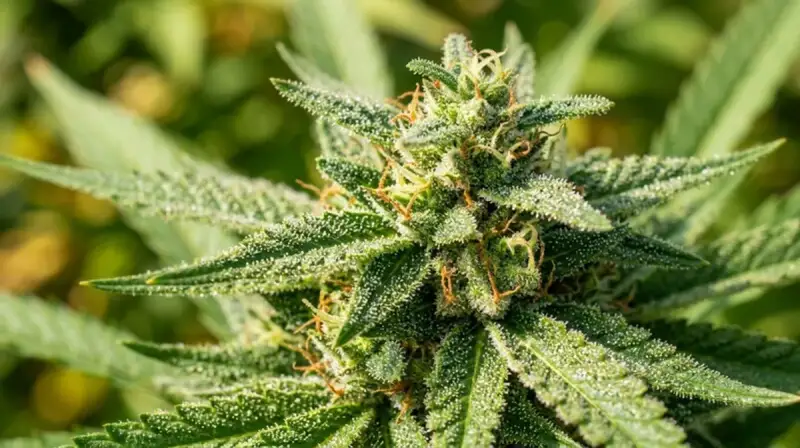
- Epidiolex (cannabidiol) is the only FDA-approved cannabis-derived drug in history, approved in 2018 for Dravet syndrome and Lennox-Gastaut syndrome based on six Phase 3 randomised controlled trials.
- The GWPCARE trials demonstrated 39–44% median seizure reduction with CBD 20 mg/kg/day, versus 13–17% for placebo — a statistically and clinically significant difference.
- CBD’s antiseizure mechanism operates primarily through TRPV1 modulation, sodium channel blocking, and GPR55 antagonism — not through CB1 receptor activation, which distinguishes it fundamentally from THC.
- THC is contraindicated for most epilepsy patients; it is a CB1 agonist that can be pro-convulsant at higher doses and lacks the antiseizure profile of CBD.
- CBD doubles plasma levels of clobazam via CYP2C19 inhibition, requiring dose adjustment and close neurological supervision when co-administered.
- Approved dosing range is 5–20 mg/kg/day in two divided doses; titration begins at 2.5 mg/kg twice daily over two weeks.
- Emerging open-label evidence supports CBD benefit in adult focal epilepsy and CDKL5 deficiency disorder, though these remain off-label indications.
Epilepsy, Drug Resistance, and Why Cannabis Entered the Clinic
Epilepsy affects approximately 50 million people worldwide and 3.4 million in the United States. It is defined by recurrent, unprovoked seizures arising from abnormal, synchronous neuronal discharges. While the majority of patients achieve adequate seizure control with one or two antiepileptic drugs (AEDs), an estimated one-third of patients — roughly 17 million globally — are classified as having drug-resistant or refractory epilepsy. For these individuals, each additional AED trialled carries a response rate of less than 5%, making novel therapeutic mechanisms critically important.
The history of cannabis for seizures predates modern pharmacology. Ancient Indian Ayurvedic texts from approximately 1000 BCE reference cannabis preparations for convulsive disorders. In 1843, British physician W.B. O’Shaughnessy documented dramatic seizure reduction in a young child treated with cannabis tincture. The modern scientific era began with the isolation of CBD by Raphael Mechoulam in 1963, followed by early preclinical work in the 1970s and 1980s demonstrating anticonvulsant properties in animal models.
The pivotal moment came with the case of Charlotte Figi, a child with Dravet syndrome who experienced profound seizure reduction using a high-CBD, low-THC cannabis extract. Her case catalysed formal clinical investigation by GW Pharmaceuticals, ultimately producing the GWPCARE trial programme and FDA approval of Epidiolex in June 2018.
What Is Dravet Syndrome?
Dravet syndrome (Severe Myoclonic Epilepsy of Infancy) is a rare, catastrophic genetic epilepsy typically caused by de novo mutations in the SCN1A gene encoding a sodium channel subunit. Onset occurs in the first year of life, often triggered by fever. Seizures are prolonged, frequent, and highly resistant to conventional AEDs. Cognitive and developmental impairment progresses with age. Before Epidiolex, no pharmacological treatment had received regulatory approval specifically for Dravet syndrome.
What Is Lennox-Gastaut Syndrome?
Lennox-Gastaut syndrome (LGS) is a catastrophic childhood epilepsy characterised by multiple seizure types including atonic (“drop attack”), tonic, and atypical absence seizures, alongside a slow spike-and-wave EEG pattern and significant intellectual disability. It typically begins between ages 3 and 5. LGS accounts for 1–4% of all childhood epilepsies but a disproportionate burden of treatment-resistant cases. Epidiolex received its LGS indication in the same 2018 FDA approval as Dravet syndrome.
The endocannabinoid system and Seizure Threshold
CB1 receptors are highly concentrated in brain regions involved in seizure generation, including the hippocampus, cortex, and basal ganglia. The endocannabinoid system (ECS) plays a critical modulatory role in balancing excitatory and inhibitory neurotransmission — the very balance disrupted in epilepsy. Endocannabinoid signalling acts as a natural “seizure brake” in many experimental models. Importantly, CBD’s antiseizure effects are largely independent of direct CB1 agonism, which is why CBD works where THC can actually lower seizure threshold.
Mechanism of Action: How CBD Stops Seizures
A critical and frequently misunderstood aspect of CBD’s antiseizure activity is that it does not operate primarily through the canonical cannabinoid receptors CB1 and CB2. This distinguishes CBD fundamentally from THC and explains why CBD can be anticonvulsant while THC may be pro-convulsant in certain contexts. CBD’s antiseizure pharmacology involves at least six distinct molecular mechanisms, several of which overlap with those of established AEDs.
TRPV1 Modulation
Transient receptor potential vanilloid type 1 (TRPV1) channels regulate calcium influx in neurons. Pathological TRPV1 activation contributes to seizure generation in some epilepsy models. CBD activates TRPV1 and subsequently desensitises it, reducing calcium-mediated neuronal hyperexcitability. This mechanism is supported by evidence that TRPV1 knockout mice show altered seizure thresholds and altered responses to CBD.
Voltage-Gated Sodium Channel Inhibition
CBD inhibits persistent sodium currents (INaP) in a manner similar to AEDs such as phenytoin, carbamazepine, and lamotrigine. Reducing persistent sodium current directly lowers neuronal excitability and limits repetitive high-frequency firing — a mechanism especially relevant for SCN1A-associated Dravet syndrome, where sodium channel dysfunction is the primary pathological driver.
GPR55 Antagonism
GPR55 is an orphan receptor distributed widely in the brain, including the hippocampus and cerebellum. Activation of GPR55 promotes neuronal excitability and has been linked to seizure propagation in preclinical models. CBD acts as a potent GPR55 antagonist, reducing this excitatory drive. This mechanism was identified relatively recently and may explain some of CBD’s activity in syndromes where the TRPV1 and sodium channel mechanisms are less dominant.
Adenosine Reuptake Inhibition
CBD inhibits the equilibrative nucleoside transporter 1 (ENT1), responsible for adenosine reuptake. Elevated extracellular adenosine activates adenosine A1 receptors, producing endogenous anticonvulsant effects. This mechanism parallels the action of caffeine in reverse: caffeine (an adenosine receptor antagonist) lowers seizure threshold, while CBD raises it via the same pathway. ENT1 inhibition may be particularly relevant in explaining CBD’s efficacy during prolonged or status epilepticus-type seizure events.
GABA Potentiation and Mitochondrial Calcium Regulation
CBD has been shown to potentiate GABAA receptor-mediated inhibitory currents at certain receptor subunit configurations, augmenting the brain’s primary inhibitory neurotransmitter system. Additionally, CBD affects intracellular calcium homeostasis through actions at the mitochondrial membrane permeability transition pore, reducing the calcium dysregulation that can trigger or perpetuate seizure activity.
Crucially, none of these mechanisms involve CB1 receptor agonism. This is why high-THC products are inappropriate for epilepsy: THC’s CB1 agonism can paradoxically lower seizure threshold in certain contexts, and numerous case reports and animal studies have documented THC-associated seizures or seizure worsening.
The GWPCARE Trials: What the Data Actually Show
The clinical evidence base for Epidiolex is built on six Phase 3 randomised, double-blind, placebo-controlled trials known as GWPCARE1 through GWPCARE6, conducted across major academic epilepsy centres in the United States, Europe, and Australia. These trials enrolled hundreds of patients with treatment-resistant Dravet syndrome, Lennox-Gastaut syndrome, and Tuberous Sclerosis Complex.
| Trial | Condition | n | CBD Dose | Median Seizure Reduction (CBD) | Placebo Reduction | Responder Rate (≥50%) |
|---|---|---|---|---|---|---|
| GWPCARE1 (Devinsky 2017, NEJM) | Dravet Syndrome | 120 | 20 mg/kg/day | 38.9% | 13.3% | 43% |
| GWPCARE2 (Devinsky 2018, Lancet Neurol) | Dravet Syndrome | 199 | 10 or 20 mg/kg/day | 46% (20 mg) | 27% | 49% |
| GWPCARE3 (Thiele 2018, Lancet) | Lennox-Gastaut | 225 | 20 mg/kg/day | 41.9% | 17.2% | 44% |
| GWPCARE4 (Devinsky 2018, NEJM) | Lennox-Gastaut | 171 | 10 mg/kg/day | 37.2% | 16.6% | 40% |
| GWPCARE5 | Tuberous Sclerosis | 224 | 25 mg/kg/day | 48.6% | 26.5% | 36% |
| Open-Label Extension | Dravet + LGS combined | 607 | Titrated | >50% maintained | N/A | 51% at 96 weeks |
The responder rate of 43–51% represents a clinically meaningful outcome in a population where most patients have already failed 3–8 prior AEDs. The open-label extension study demonstrated efficacy was maintained over a 96-week follow-up, dispelling early concerns about tolerance development. Notably, 5% of patients in the Dravet trials achieved seizure freedom during treatment, compared with 0% in the placebo group — a paradigm shift for a condition previously associated with zero approved treatments.
Dosing Protocol and Titration
Epidiolex dosing follows a carefully validated titration schedule to maximise efficacy while minimising adverse effects. The approved indication covers patients aged 2 years and older. Dosing is weight-based and administered in two divided daily doses with the oral solution (100 mg/mL in sesame oil).
| Phase | Dose | Duration | Clinical Notes |
|---|---|---|---|
| Initiation | 2.5 mg/kg twice daily (5 mg/kg/day) | Weeks 1–2 | Baseline tolerability; establish liver enzyme baseline |
| Titration Step 1 | 5 mg/kg twice daily (10 mg/kg/day) | Weeks 3–4 | First clinically active range; reassess clobazam dosing |
| Titration Step 2 | 10 mg/kg twice daily (20 mg/kg/day) | Week 5 onward | Maximum recommended dose; greatest trial efficacy level |
| Maintenance maximum | 20 mg/kg/day | Ongoing | Higher doses not associated with additional benefit in RCTs |
Epidiolex must be taken consistently with or without food because food increases bioavailability approximately 5-fold. Liver function tests (ALT, AST) are required at baseline, 1 month, 3 months, and 6 months after initiation, as transaminase elevations occur in approximately 13% of patients — usually asymptomatic and reversible upon dose reduction.
Drug Interactions: CYP450 and AED Co-administration
CBD’s drug interaction profile is one of the most clinically important aspects of its use in epilepsy, given that virtually all patients are already taking one or more AEDs. CBD is both a substrate and an inhibitor of key cytochrome P450 enzymes, creating bidirectional interaction potential requiring careful pharmaceutical management.
The most clinically significant interaction is with clobazam (Onfi/Frisium). CBD is a potent CYP2C19 inhibitor, the primary enzyme metabolising clobazam and its active metabolite N-desmethylclobazam (nCLB). Co-administration raises clobazam levels approximately 60% and nCLB levels roughly double. Since elevated nCLB causes sedation and ataxia, clobazam dose reductions of 30–50% are often required. Some researchers believe this pharmacokinetic interaction partially explains CBD’s apparent efficacy in GWPCARE trials, but CBD also showed efficacy in patients not taking clobazam, confirming independent antiseizure activity.
| AED | Interaction Mechanism | Effect on AED Level | Clinical Management |
|---|---|---|---|
| Clobazam (Onfi) | CYP2C19 inhibition | +60% clobazam; +100% nCLB | Reduce clobazam 30–50%; monitor sedation |
| Valproate | Additive hepatotoxicity | Variable | Monthly LFTs; caution with elevated baseline transaminases |
| Carbamazepine | CYP3A4 inhibition + induction (CBZ) | +15–25% CBZ possible | Monitor CBZ levels; titrate CBD dose accordingly |
| Phenytoin | CYP2C19 + CYP3A4 inhibition | +30% phenytoin possible | Monitor phenytoin levels; watch for toxicity |
| Stiripentol | Mutual CYP2C19/3A4 inhibition | CBD levels increased | Lower CBD dose may be needed |
Evidence by Epilepsy Type
Beyond Dravet syndrome, LGS, and TSC, researchers have investigated CBD across a broader range of epilepsy types. The evidence varies substantially by syndrome; it is important not to extrapolate RCT data from catastrophic childhood epilepsies to other seizure types without qualification.
| Epilepsy Type | Evidence Level | Key Data | Regulatory Status | Clinical Recommendation |
|---|---|---|---|---|
| Dravet Syndrome | Level 1 (RCT) | 39–46% seizure reduction (GWPCARE1&2) | FDA-approved (Epidiolex) | First-line add-on for drug-resistant cases |
| Lennox-Gastaut Syndrome | Level 1 (RCT) | 37–42% drop seizure reduction (GWPCARE3&4) | FDA-approved (Epidiolex) | First-line add-on for drug-resistant cases |
| Tuberous Sclerosis Complex | Level 1 (RCT) | 48.6% seizure reduction (GWPCARE5) | FDA-approved (Epidiolex) | Add-on for TSC-associated seizures |
| CDKL5 Deficiency Disorder | Level 2 (open-label) | 32% median reduction; 30% responder rate | Off-label | Reasonable in refractory cases under specialist supervision |
| Aicardi Syndrome | Level 3 (case series) | Small series suggest benefit; no controlled data | Off-label | Only under specialist supervision |
| Adult Focal Epilepsy | Level 2 (open-label) | Szaflarski 2019: 39% responder rate at 12 months | Off-label | Emerging evidence; clinical trials ongoing |
| Absence Epilepsy | Level 4 (preclinical only) | Animal data mixed; no human RCT data | No indication | Insufficient evidence; not recommended |
Adult Epilepsy: Emerging Evidence
The epilepsy field has historically been dominated by paediatric research when it comes to cannabis-based medicines, largely because Dravet and LGS present in early childhood. However, drug-resistant epilepsy is a major problem in adults too — approximately 800,000 adults in the United States live with drug-resistant epilepsy. As the evidence base for CBD has solidified in children, attention has shifted to whether similar benefits exist for adults with focal and generalised epilepsies.
A prospective cohort study published in Epilepsy & Behavior by Szaflarski et al. (2019) enrolled 72 adults with refractory epilepsy treated with artisanal CBD products under a compassionate use programme. After 12 months, 39% of participants were responders (≥50% seizure reduction), and 9% were seizure-free. A subsequent Alabama open-label study specifically using pharmaceutical-grade CBD in adults with refractory focal epilepsy reported a 44% responder rate at 6 months.
These results are not directly comparable to GWPCARE RCTs due to methodological differences, but they provide encouraging real-world signals. Several randomised controlled trials specifically targeting adult focal epilepsy are ongoing as of 2026, with results expected to materially expand the evidence base.
Practical Guidance for Patients and Caregivers
- Work with a board-certified epileptologist: CBD for epilepsy requires neurological oversight, drug level monitoring, and liver function testing. Access Epidiolex through a prescribing physician rather than attempting to replicate it with over-the-counter CBD products, which vary enormously in actual CBD content.
- Pharmaceutical-grade matters: A 2017 JAMA study found that 43% of tested CBD products contained substantially different amounts than labelled. Epidiolex is the only CBD product with FDA-verified consistency and purity.
- Avoid THC-containing products: Any product containing meaningful THC should generally be avoided in epilepsy unless explicitly approved by the treating neurologist. THC’s CB1 agonism can lower seizure threshold and counteract CBD’s benefits.
- Titrate slowly and consistently: Rushing to the target dose increases the risk of adverse effects (sedation, diarrhoea, elevated liver enzymes) and complicates identification of drug interactions.
- Insurance and access: Epidiolex is FDA-approved and covered by most major insurers and Medicaid programmes in eligible states. Jazz Pharmaceuticals maintains a patient assistance programme for eligible patients without coverage.
- Monitor liver function: Liver enzyme elevations occur in approximately 13% of patients, particularly in those also taking valproate. Routine monitoring at baseline, 1, 3, and 6 months is mandatory.