
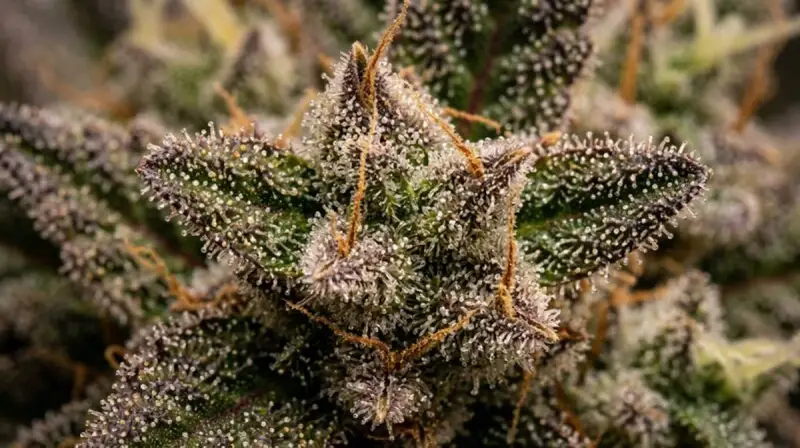









- A well-balanced hybrid born from crossing Lavender and Power Plant, combining floral relaxation with energetic sativa lift.
- THC content typically ranges 16–20%, placing it in the moderate-to-high potency category suitable for intermediate consumers.
- CBD is present at approximately 0.1%, so therapeutic benefits are primarily THC-driven rather than cannabinoid-ratio driven.
- Dominant terpene myrcene potentiates THC uptake and contributes the strain’s signature sweet, musky body-high undertone.
- Secondary terpenes caryophyllene and limonene add anti-inflammatory and mood-elevating qualities respectively.
- Flavor profile is distinctly sweet and floral with notes of vanilla, berry, and subtle earthiness on exhale.
- Effects are described as euphoric, uplifting, and gently sedating — making it popular for afternoon or early-evening use.
- Flowering time indoors is approximately 8–9 weeks with moderate grow difficulty.
- Indoor yields average 400–500 g/m² under optimized lighting; outdoor plants can yield generously in warm climates.
- Commonly selected for managing stress, anxiety, mild depression, and appetite loss among experienced users.
Strain Quick-Reference
| Factor | Detail |
|---|---|
| Genetics | Lavender × Power Plant |
| Breeder | Nirvana Seeds (popularized version) |
| Type | Hybrid (slightly indica-leaning) |
| THC | 16–20% |
| CBD | ~0.1% |
| Primary Terpenes | Myrcene, Caryophyllene, Limonene, Terpinolene |
| Flavors | Sweet, floral, vanilla, berry, light earth |
| Effects | Euphoric, uplifting, relaxed, creative, mildly sedating |
| Flowering Time | 8–9 weeks (indoor); late September–October (outdoor) |
| Indoor Yield | 400–500 g/m² |
| Grow Difficulty | Moderate |
Genetics, Lineage & Origin
Cotton Candy is the product of crossing two distinctive and well-regarded cannabis varieties: Lavender and Power Plant. Lavender, itself a multi-way cross of Afghani Hawaiian, Super Skunk, and Big Skunk Korean genetics, contributes the strain’s hallmark floral sweetness, body-relaxing indica depth, and the pastel-purple coloration that sometimes appears in cooler temperatures. Power Plant, a sativa-dominant landrace-derived strain originating from South African genetics and refined by Dutch Passion, brings potency, vigorous growth, and a cerebral, energizing quality that counterbalances Lavender’s sedating tendencies.
The resulting hybrid leans modestly toward the indica side in terms of physical effect, while retaining the mental clarity and enthusiasm for creative thinking that Power Plant is known for. Nirvana Seeds is widely credited with popularizing the Cotton Candy name and phenotype, releasing seeds that became accessible to home growers and enthusiasts throughout Europe and North America in the early 2000s. The name itself derives from the unmistakably candy-like sweetness of the aroma, reminiscent of spun sugar at a fairground.
Multiple breeders have since developed their own takes on the Cotton Candy concept, with some versions incorporating Bubble Gum or other sweet-profiled strains. The core Lavender × Power Plant lineage, however, remains the most historically recognized and widely grown interpretation, valued for its consistent flavor expression, reliable yields, and well-rounded effect profile that has kept it relevant across two decades of cannabis cultivation.
Effects Profile
Cotton Candy delivers a layered experience that begins with a bright cerebral lift and gradually evolves into a warm, comfortable physical relaxation. The balance between its sativa Power Plant heritage and the indica grounding of Lavender means that users rarely feel locked to the couch at moderate doses, but overconsumption can tip the experience toward heavy-lidded sedation. The 16–20% THC range makes dosing awareness important, particularly for newer consumers.
Onset (0–15 minutes)
The first effects typically arrive within five to ten minutes as a gentle pressure behind the eyes and temples, followed quickly by a mood elevation that can feel almost immediately joyful and sociable. Thoughts may begin to flow more freely, and users often report a light tingling warmth spreading from the crown of the head downward through the shoulders.
Peak (15–90 minutes)
During the peak phase, euphoria is at its fullest — many users find themselves talkative, creatively inspired, and pleasantly unfocused in a dreamy rather than anxious way. Physical relaxation deepens gradually without fully extinguishing the mental brightness, making this window ideal for listening to music, light creative work, or comfortable social interaction.
Tail (90 minutes–3+ hours)
As Cotton Candy’s effects mature, the sativa-driven energy recedes and the indica Lavender genetics take the wheel, producing a mellow, sleepy-adjacent relaxation that settles into the muscles and lower body. The tail phase is often accompanied by increased appetite and a comfortable drowsiness that makes the strain particularly appropriate for early evening use.
Terpene Profile
| Terpene | Typical % | Aroma Note | Effect Role |
|---|---|---|---|
| Myrcene | 0.45–0.65% | Musky, sweet, faintly herbal | Potentiates THC uptake; promotes sedation and muscle relaxation |
| Caryophyllene | 0.20–0.35% | Spicy, peppery, woody | Binds CB2 receptors; anti-inflammatory and analgesic properties |
| Limonene | 0.12–0.22% | Citrus, bright, slightly sweet | Elevates mood; anxiolytic and antidepressant associations |
| Terpinolene | 0.08–0.15% | Floral, fruity, faintly piney | Contributes uplifting, fresh character; mild antioxidant properties |
The dominance of myrcene in Cotton Candy’s terpene profile is responsible for its ability to potentiate the absorption of THC across the blood–brain barrier, which partly explains why the strain’s effects can feel heavier than the raw THC percentage alone might suggest. Caryophyllene’s direct interaction with CB2 receptors adds an anti-inflammatory dimension that is particularly relevant for users managing physical discomfort. Limonene and terpinolene together create the sweet, fruity top notes that give Cotton Candy its name and provide a counterpoint to the heavier myrcene base, resulting in a complex aroma that is simultaneously grounding and cheerful.
Cannabinoid Profile
| Cannabinoid | Typical Range | Notes |
|---|---|---|
| THC | 16–20% | Primary psychoactive driver; moderate-high potency bracket |
| CBD | ~0.1% | Negligible; does not significantly moderate THC intoxication |
| CBG | 0.1–0.5% | Minor precursor cannabinoid; some neuroprotective interest in research |
| CBN | <0.1% | Present in trace amounts; increases with age and oxidation of THC |
Flavor & Aroma Description
Breaking open a well-cured Cotton Candy bud releases an immediately recognizable wave of sweet, almost confectionery fragrance. The dominant impression is of spun sugar and ripe berry — something between strawberry candyfloss and a floral bouquet — which is a direct expression of the myrcene and terpinolene working in concert with the aromatic inheritance from the Lavender parent. There is a faint lavender-floral undertone that becomes more apparent as the bud warms between the fingers.
On inhalation, the flavor closely mirrors the aroma: a smooth, sweet entry with vanilla and berry notes that coat the palate pleasantly without being cloying. The Power Plant genetics introduce a subtle earthiness and a light spicy finish courtesy of caryophyllene, which prevents the sweetness from becoming one-dimensional. Smoke or vapor is generally described as smooth and cool, making Cotton Candy a comfortable strain for extended sessions when consumed in moderation.
The exhale finishes with a mild floral sweetness that lingers for several seconds, and many users note that the room retains a pleasant candy-like scent long after consumption. In well-grown specimens, there can also be faint tropical fruit nuances — mango or guava — attributed to the myrcene and terpinolene interaction, adding further depth to what is already one of the more aromatic profiles in the hybrid category.
Medical Applications
| Condition | Mechanism | Notes |
|---|---|---|
| Stress & Anxiety | THC-mediated amygdala modulation; limonene anxiolytic activity | Best at low-to-moderate doses; high doses may increase anxiety in sensitive individuals |
| Mild Depression | Serotonin-pathway modulation; mood elevation via limonene & THC | Euphoric onset phase particularly noted by users managing low mood |
| Chronic Pain & Inflammation | Caryophyllene CB2 agonism; THC analgesic effect via CB1 | Useful for musculoskeletal discomfort; not a substitute for prescribed pain management |
| Insomnia | Myrcene sedation; indica-dominant tail phase promotes sleep onset | Evening dosing recommended; consume 60–90 minutes before intended sleep |
| Appetite Loss | THC-driven ghrelin release and CB1 stimulation in hypothalamus | Munchies effect typically emerges in the tail phase; useful for nausea-associated appetite suppression |
Growing Information
| Factor | Indoor | Outdoor |
|---|---|---|
| Flowering Time | 8–9 weeks | Late September – mid-October |
| Yield | 400–500 g/m² | 450–600 g per plant (favorable climate) |
| Plant Height | 80–120 cm | 120–180 cm |
| Preferred Climate | 20–26°C; 40–50% RH in flower | Mediterranean or warm temperate; needs dry late season |
| Training | LST or SCROG recommended | Topping in veg increases lateral branching |
| Nutrient Needs | Moderate; avoid excess nitrogen in flower | Responds well to organic amendments in raised beds |
| Resistance | Moderate mold resistance; watch dense colas | Susceptible to botrytis in wet, humid autumns |
Grow Tips
- Manage canopy density early: Cotton Candy tends to produce tightly packed, resin-heavy colas that can trap moisture and become susceptible to botrytis if airflow is restricted. Defoliate lower fan leaves during the transition to flower and ensure circulation fans are positioned to move air through the canopy, not just above it.
- Reduce humidity in final two weeks: Dropping relative humidity to 40–45% in the last two weeks of flowering concentrates terpene production and dramatically reduces mold risk. A dehumidifier with an automatic controller is a worthwhile investment for Cotton Candy grows in humid environments.
- Use SCROG for even light distribution: Because the strain produces vigorous lateral branching, a screen of green setup allows the grower to maximize the number of bud sites exposed to the light source. Begin weaving shoots through the screen from week two of vegetative growth and continue until the screen is approximately 70% filled before flipping to 12/12.
- Flush thoroughly before harvest: Cotton Candy’s sweet terpene profile is best expressed in well-flushed, clean-tasting final product. Run plain pH-balanced water for the final 10–14 days of flower if growing in soil, or 5–7 days in coco/hydro, to clear any residual nutrient salts that might add harshness to the smoke.
- Harvest timing matters for effect: For a more energetic, cerebral-dominant experience, harvest when approximately 15–20% of trichomes have turned amber. For maximum relaxation and the full indica tail, wait until 30–40% amber. Use a jeweler’s loupe or digital microscope to assess trichome maturity accurately.
- Cure for at least four weeks: The candy-sweet flavor that defines this strain becomes significantly more pronounced after a proper cure. Store trimmed buds in glass jars at 58–62% RH using Boveda or Integra packs, burping daily for the first week and then every two to three days for the remaining curing period.
Similar Strains
Frequently Asked Questions
Cotton Candy has a distinctly sweet, floral flavor profile with prominent notes of vanilla, berry, and spun sugar. On the exhale, there is a mild earthy spice from caryophyllene that provides balance, preventing the sweetness from becoming overwhelming. The flavor closely mirrors the aroma, making it one of the more immediately recognizable strains for nose and palate.
Cotton Candy is a hybrid strain with a modest indica lean. It is bred from Lavender (indica-dominant) and Power Plant (sativa-dominant), which means its effects bridge both worlds. Users typically experience an uplifting, euphoric onset from the sativa genetics followed by a relaxing, physically calming wind-down driven by the indica Lavender parentage.
At 16–20% THC, Cotton Candy sits in the moderate-to-high potency range. It is not the most potent strain available, but the dominant myrcene terpene profile enhances THC bioavailability, meaning effects can feel stronger than the percentage alone suggests. Newer consumers should approach with a low starting dose and wait a full 15 minutes before redosing.
Cotton Candy is rated moderate in grow difficulty. It is not an ideal beginner strain due to its sensitivity to humidity and its tendency to produce dense colas that require active airflow management to prevent mold. However, growers with a season or two of experience who understand environmental control and basic training techniques should find it a rewarding and high-yielding cultivar.
Given its arc of effects — energetic and euphoric at onset, settling into body relaxation and appetite stimulation over time — Cotton Candy is best suited for late afternoon or early evening use. Using it in the morning or early afternoon may lead to the sedating tail arriving at an inconvenient time. Evening consumption aligns the drowsy finale with a natural wind-down toward sleep.
At moderate doses, Cotton Candy does not typically cause severe couch-lock — the Power Plant sativa genetics keep enough cerebral energy present to avoid total immobilization. However, at higher doses or in consumers sensitive to myrcene-heavy strains, the indica tail can become quite sedating and physically heavy. Consuming more than your personal threshold on this strain significantly increases the likelihood of a locked-in, sleepy experience.