






- Genetics: Afghani × Skunk #1 — both classic landrace-derived strains; Mr. Nice Seeds (Shantibaba), Amsterdam
- THC Range: 15–22% — moderate to high; accessible for a wider range of consumers than many modern hybrids
- CBD: 5–8% — among the highest CBD content of any commercially established non-CBD-specific strain
- Dominant Terpenes: Myrcene · Caryophyllene · Pinene — earthy, sweet, and citrus character with fresh pine notes
- Primary Effects: Relaxed, happy, sleepy — classic indica profile with CBD-moderated anxiety reduction
- Yield: Exceptionally high — one of the heaviest-yielding indica strains in cultivation; colas require structural support
- Medical Reputation: High-CBD variant widely used in medical programs; standard version valued for balanced THC:CBD ratio
Genetics & Lineage: Shantibaba’s Amsterdam Classic
Critical Mass was developed by Shantibaba (Howard Marks Jr.) under the Mr. Nice Seeds label — one of the most respected European seed banks in cannabis history. The cross of Afghani and Skunk #1 brings together two foundational genetic lineages: Afghani, one of the most important landrace indica genetics from the Hindu Kush mountain region; and Skunk #1, one of the first stable hybrid genetics ever developed, containing Afghani, Colombian Gold, and Acapulco Gold ancestry.
Afghani Parent: The Yield and CBD Foundation
Afghani genetics are the backbone of the indica side of modern cannabis. Originating in the Hindu Kush mountains spanning Afghanistan and Pakistan, Afghani landraces evolved in an environment that selected for dense resin production as protection against UV radiation at altitude. In Critical Mass, the Afghani parent contributes the enormous cola production, the high CBD expression that distinguishes it from most modern hybrids, the dense indica bud structure, and the earthy-hash aroma that defines the strain’s base note.
Skunk #1 Parent: Yield Amplification and Aroma
Skunk #1, developed by Sacred Seeds in the 1970s and refined through subsequent California and Dutch breeding, is famous for two things: exceptional yield and pungent aroma. In Critical Mass, Skunk #1’s genetics amplify the already-heavy Afghani yield potential — a combination that creates the branch-breaking cola production responsible for the strain’s name. The Skunk genetics also contribute the citrus-sweet-earthy aroma complexity that prevents Critical Mass from being aromatically one-dimensional.
The CBD Factor
Critical Mass’s 5–8% CBD content is a direct inheritance from its Afghani genetics — pre-selective-breeding cannabis from the Hindu Kush region produced relatively balanced THC:CBD ratios compared to decades of THC-focused breeding that eliminated CBD from most commercial strains. In Critical Mass, the CBD:THC ratio at moderate expression (15% THC / 5% CBD) represents a 3:1 ratio that is clinically meaningful: CBD moderates some of the anxiety and paranoia risk of THC while contributing independent anti-inflammatory and neuroprotective effects.
Terpene & Cannabinoid Profile
| Compound | Typical Level | Effect Contribution | Aroma Note |
|---|---|---|---|
| THC | 15–22% | Euphoria, relaxation, pain relief | — |
| CBD | 5–8% | Anti-inflammatory, anxiolytic, neuroprotective | — |
| Myrcene | Dominant (0.4–0.65%) | Sedation, muscle relaxation | Earthy, herbal, sweet |
| Caryophyllene | Secondary (0.25–0.45%) | CB2 anti-inflammatory, complements CBD | Spicy, woody, peppery |
| Pinene | Tertiary (0.15–0.3%) | Memory support, alertness, bronchodilation | Sharp pine, clean forest |
| Limonene | Minor (0.1–0.2%) | Mood lift, anxiety modulation | Citrus, lemon rind |
Flavor & Aroma
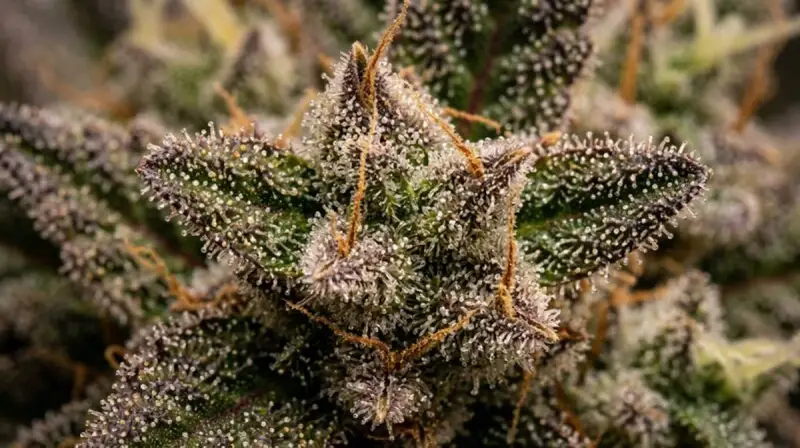
Critical Mass has a complex, layered aroma that reflects its dual Afghani-Skunk heritage. The base note is earthy and sweet — the hash-like earthiness of Afghani genetics grounded in a sweetness from the Skunk lineage. Pine notes from the significant pinene content give it a fresh, clean edge that prevents the profile from being too heavy. On combustion, citrus and sweet-earthy flavors predominate, with a clean exhale and a lingering sweetness. The aroma is less pungent than many modern high-THC hybrids — more classic and complex than the fuel-candy profiles that dominate contemporary dispensaries.
Effects Profile — Balanced Relaxation With CBD Modulation

Onset, Peak & Duration
- Onset: 3–6 minutes — gentler, more gradual than most high-THC strains; the CBD modulates the sharp cerebral spike
- Effect quality: Relaxed, warm, happy — the combined THC+CBD profile produces a smoother, less edgy experience than THC-only strains
- Sleepiness onset: 30–60 minutes — indica genetics assert a progressive sleepiness
- Total duration: 2–3 hours smoked; 4–6 hours edible
- CBD benefit timeline: Anti-inflammatory and anxiolytic CBD effects begin within 20–30 minutes and complement the THC throughout
- Best timing: Evening; late afternoon for lower-dose use
Medical Applications
| Condition | Mechanism | Notes |
|---|---|---|
| Chronic Inflammation | CBD + caryophyllene CB2 dual anti-inflammatory | Among the strongest anti-inflammatory strains commercially available |
| Anxiety / PTSD | CBD anxiolytic moderates THC-induced anxiety | More anxiety-safe than high-THC strains without CBD |
| Chronic Pain | THC CB1 + CBD independent analgesic mechanisms | Broad-spectrum pain coverage |
| Nausea / Appetite | THC antiemetic + appetite stimulation | Used in chemotherapy support contexts |
| Insomnia | Myrcene sedation + THC sleep latency reduction | Gentler option than high-THC indicas for sensitive patients |
Growing Critical Mass — The Yield Challenge
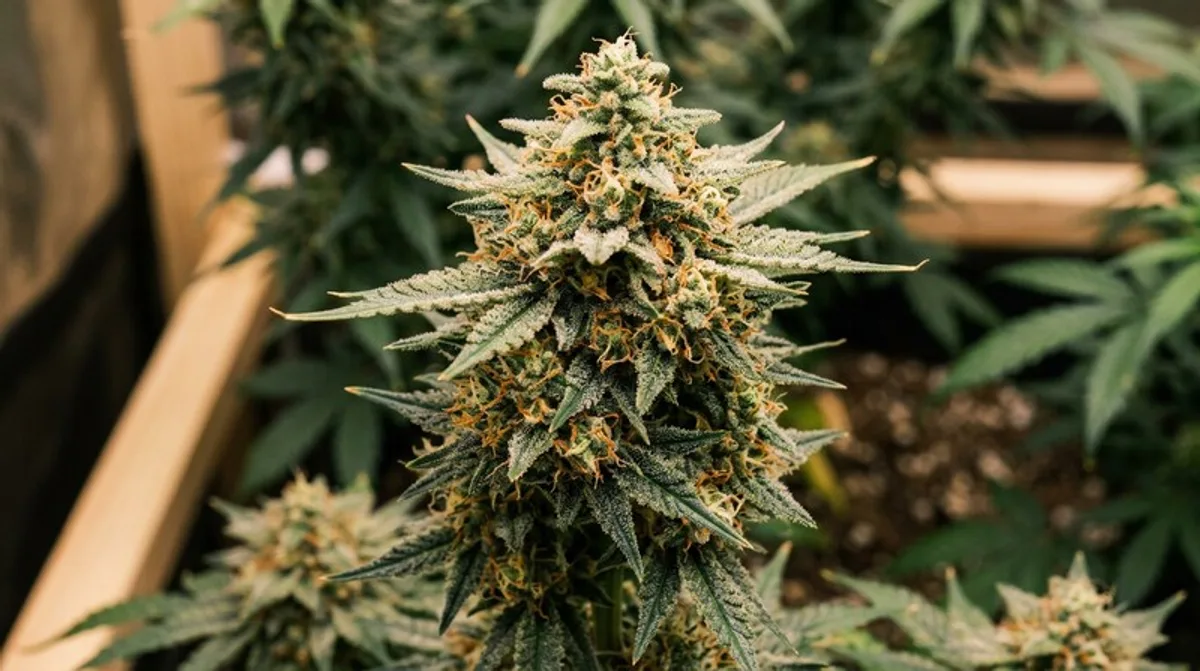
| Parameter | Specification |
|---|---|
| Flower Time | 8 weeks (56 days) |
| Indoor Yield | 18–21 oz/m² — among the highest of any indica strain |
| Outdoor Yield | Up to 28 oz per plant in ideal conditions |
| Structural Support | Required — colas break branches under their own weight |
| Height | Medium (24–36 in indoor) |
| Humidity Sensitivity | High — massive dense colas = bud rot risk; keep below 45% RH |
| Grow Difficulty | Beginner-Intermediate (for standard; CBD versions similar) |
Grow Tips
- Structural support — mandatory: Begin staking main branches by week 3–4 of flower. Cola weight increases exponentially in the final 2 weeks and will break unsupported branches. Use bamboo stakes or a SCROG net for support
- Humidity control: The density of Critical Mass colas creates microenvironments where moisture accumulates — bud rot can establish in 48 hours in humid conditions. Keep RH below 45% from week 5 onward and maintain strong airflow
- Feeding: High-yield strains are heavy feeders — follow a structured nutrient program with strong phosphorus and potassium support in flower; the yield potential will not be realized on minimal feeding
- Harvest timing: 8 weeks is accurate; waiting an extra 3–5 days past 60% amber trichomes maximizes CBD expression — useful for medical growers prioritizing the CBD content
- Drying: Critical Mass’s large colas require extended drying time (10–14 days) compared to standard-sized buds — rushing drying produces harsh smoke and reduced terpene expression
Critical Mass vs. Similar Strains
| Strain | Type | THC / CBD | vs. Critical Mass |
|---|---|---|---|
| Critical Mass | Indica 80/20 | 15–22% / 5–8% | — Reference — |
| Harlequin | Sativa-dominant | 5–10% / 8–16% | CBD-dominant; almost no intoxication; different profile |
| Afghani | Indica | 15–20% / 1–2% | Parent strain; less CBD; earthier, hashier |
| Skunk #1 | Hybrid | 15–19% / <1% | Parent strain; less CBD; skunky-earthy |
| ACDC | Hybrid | 1–6% / 14–20% | CBD-dominant; medical-specific; very low intoxication |
Video: Critical Mass Strain Review
Mr. Nice Seeds’ Critical Mass — how Afghani × Skunk #1 produced a massive-yielding, high-CBD indica that remains a medical cannabis staple decades after its creation.
Frequently Asked Questions
Why is Critical Mass called Critical Mass?
The name describes what happens to the plant in late flowering: the colas (bud clusters) grow so heavy that branches reach a point of critical mass where they break under their own weight without structural support. It is not a metaphor — it is a direct reference to a practical growing problem that Mr. Nice Seeds considered worth naming the strain after. Growers cultivating Critical Mass for the first time are consistently surprised by how much colas weigh at harvest; staking from week 3–4 of flower is standard practice rather than optional.
What is the difference between Critical Mass and CBD Critical Mass?
Standard Critical Mass already contains 5–8% CBD alongside 15–22% THC — a ratio that produces meaningful cannabinoid interaction. CBD Critical Mass is a selectively bred variant developed to maximize CBD at the expense of THC, with some versions reaching 10–14% CBD with THC in the 1–6% range. The choice between them depends on the medical goal: CBD Critical Mass is used by patients seeking CBD benefits with minimal intoxication (pain, epilepsy, inflammation), while standard Critical Mass serves consumers and patients who want both THC and CBD in meaningful quantities and are comfortable with the intoxication component.
Is Critical Mass good for beginners?
Standard Critical Mass is more accessible for less experienced consumers than many modern high-THC strains. At 15–22% THC with 5–8% CBD, the lower end of its range is genuinely moderate, and the CBD content reduces the anxiety and paranoia risk associated with high-THC strains. Complete beginners should still approach with caution — start with one small inhalation and wait 10 minutes before deciding whether to continue. The CBD content does not eliminate the intoxication; it modulates it. For truly beginner-friendly guidance, see our strain database for strains in the 10–15% range.
What medical conditions is Critical Mass best for?
Critical Mass is particularly valuable for conditions where CBD involvement alongside THC improves outcomes. Chronic inflammation and arthritis benefit from the dual caryophyllene + CBD anti-inflammatory mechanism. Anxiety and PTSD patients who need cannabis support but are sensitive to THC-induced anxiety find that the CBD content reduces this risk. Chronic pain benefits from the broad-spectrum CB1 (THC) and independent CBD analgesic mechanisms. And conditions requiring nausea management — chemotherapy support, for example — benefit from THC’s well-established antiemetic properties. The CBD-dominant variants extend these applications further, particularly into epilepsy and neurological conditions where THC is contraindicated. See our full medical cannabis guide for condition-specific information.
Related Strains
Jordan Price has spent over a decade studying cannabis genetics, cultivation science, and consumer pharmacology. All strain guides on ZenWeedGuide are reviewed for factual accuracy before publication.