




Forbidden Fruit Strain Guide
Forbidden Fruit is one of the cannabis world’s most celebrated flavor strains — an indica-dominant hybrid from Humboldt Seed Organisation that delivers what many consider the most complex tropical fruit aroma in cannabis: cherry, mandarin, passionfruit, and creamy sweetness layered over a classic indica body effect. Created from a cross of Cherry Pie and Tangie, it inherits the best qualities of both parents: the body weight and deep relaxation of Cherry Pie’s Granddaddy Purple heritage, and the explosive citrus terpene profile of Tangie’s Tangerine Dream lineage. Its deep purple and violet coloring makes it one of the most visually striking strains in any dispensary. This guide covers its genetics, terpene chemistry, effects, medical applications, and cultivation requirements in full.
- Genetics: Cherry Pie × Tangie (Humboldt Seed Organisation)
- Flavor Profile: Tropical cherry, mandarin orange, passionfruit, creamy sweetness — one of the most complex in cannabis
- THC Range: 20–26% (high potency — approach with caution if new to indica-dominant strains)
- Top Terpenes: Myrcene, Caryophyllene, Limonene, Ocimene
- Main Effects: Heavy body relaxation, foggy euphoria, sedation, calming — classic indica profile
- Medical Uses: Insomnia, chronic stress, chronic pain, muscle tension, appetite stimulation
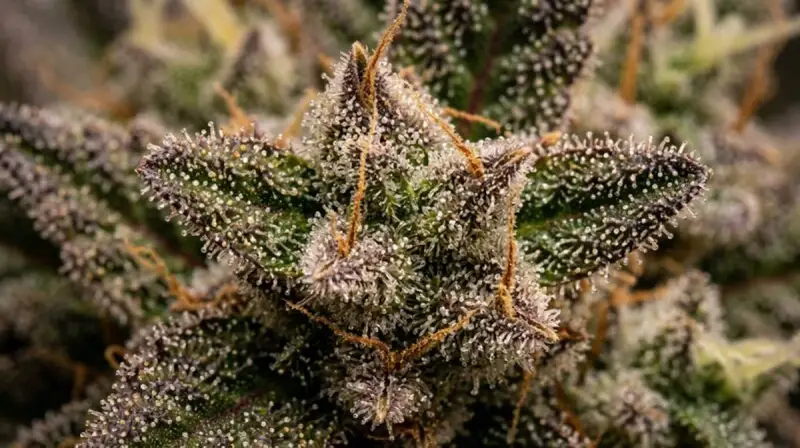
- Visual: Deep purple, violet, and magenta coloring triggered by anthocyanin expression in cool temperatures
- Indoor Yield: ~400–450g/m² | Outdoor: Up to 600g per plant in warm climates
Genetics: Cherry Pie × Tangie and the Flavor Inheritance
Forbidden Fruit was developed by Humboldt Seed Organisation, one of California’s most respected genetics houses, from two parent strains that could hardly be more complementary as flavor contributors. Cherry Pie (Granddaddy Purple × Durban Poison) brings the stone-fruit sweetness, the indica body weight, and critically the anthocyanin genetics that produce the purple coloring. Tangie (a modern re-creation of the classic Tangerine Dream, working with California Orange and Skunk genetics) contributes an explosive citrus-tropical terpene stack dominated by limonene and ocimene that lifts the flavor profile into the upper tier of complexity.
The result is a strain where the indica body-effect inheritance from Cherry Pie’s Granddaddy Purple lineage — that classic Pacific Northwest indica heaviness — is delivered wrapped in a flavor experience that tastes nothing like a traditional indica. The contrast is part of what makes Forbidden Fruit so distinctive: you expect the tropical fruit sweetness of a sativa-leaning strain, then the body hits you like a full indica. It is a deliberate breeders’ achievement, and the success of the cross is reflected in Forbidden Fruit’s consistent presence on California’s top-selling strain lists since its commercial introduction.
The Cherry Pie parent also connects Forbidden Fruit to a broader family tree that includes Granddaddy Purple, one of the most important purple-producing indica genetics in American cannabis history. The Durban Poison component in Cherry Pie contributes a subtle energetic lift that prevents Forbidden Fruit from becoming purely couchlock — there is a brief euphoric phase before the indica dominance settles in. The Tangie citrus influence modulates the terpene ceiling upward, producing a sensory experience that justifies the strain’s position as one of the most discussed flavor profiles in contemporary cannabis.
Terpene & Flavor Profile: The Science Behind the Taste
Forbidden Fruit’s exceptional flavor complexity is driven by four primary terpenes operating in combination. Understanding each compound’s contribution explains why the strain tastes and smells the way it does, and why the effect profile carries both relaxing and mildly uplifting qualities simultaneously. Explore our full terpene guide for broader context on how terpenes shape the cannabis experience.
| Terpene | Aroma/Flavor Note | Effect Contribution | Also Found In |
|---|---|---|---|
| Myrcene | Earthy musk, tropical fruit depth | Potentiates THC absorption; heavy body relaxation; sedative at high concentrations | Mango, hops, lemongrass |
| Caryophyllene | Spicy, peppery undertone | CB2 receptor agonist; anti-inflammatory; reduces physical tension without psychoactivity | Black pepper, cloves, cinnamon |
| Limonene | Bright mandarin orange, citrus zest | Mood elevation; anxiety modulation; provides the uplifting counterbalance to myrcene sedation | Citrus fruit peel, juniper |
| Ocimene | Sweet floral, tropical, passionfruit | Mildly uplifting; contributes to the sweet-fruit complexity on the palate | Basil, mint, orchids |
The interaction between myrcene’s earthiness and tropical depth, limonene’s citrus brightness, and ocimene’s floral sweetness creates the passionfruit-and-cherry impression that defines Forbidden Fruit’s aroma. The caryophyllene adds a spicy backbone that prevents the flavor from becoming cloying and contributes to the physical relaxation component via CB2 receptor activity. This is a textbook example of the entourage effect: each terpene modifies and enhances the others in ways that the individual compounds cannot achieve alone.
Forbidden Fruit vs. Parent Strain Flavor Comparison
The following table positions Forbidden Fruit within its flavor family, showing how it inherits, recombines, and transcends the profiles of its parents. For comparison with the broader colored-strain category, see our Purple Punch and Granddaddy Purple guides.
| Strain | Type | Primary Aroma | Secondary Notes | Flavor Complexity |
|---|---|---|---|---|
| Forbidden Fruit | Indica-dominant Hybrid | Cherry, mandarin, passionfruit | Creamy sweetness, grape, pine | Exceptional — among the top tier in cannabis |
| Cherry Pie | Hybrid | Cherry, sweet dough, berry | Earthy, slight hash | High — stone-fruit sweetness, bakery note |
| Tangie | Sativa-dominant | Tangerine, orange peel, citrus | Tropical, floral, slight skunk | Very high — intensely citrus-forward |
| Granddaddy Purple | Indica | Grape, berry, sweet | Earthy, floral, pine | High — classic purple-indica sweetness |
| Purple Punch | Indica-dominant | Blueberry muffin, grape candy | Vanilla, tart berry | Very high — dessert-like profile |
Effects: Three-Phase High Profile
Forbidden Fruit delivers a distinctly indica-dominant high that follows a predictable three-phase arc. Understanding this arc helps users dose appropriately for their intended purpose. Onset when smoked or vaped: 3–8 minutes. Peak: 30–60 minutes. Duration: 2–3 hours for most users. Read our full cannabis effects guide for dosing context.
Phase 1: Euphoric Head Rush (0–20 min)
The initial impression of Forbidden Fruit is deceptively cerebral. A wave of warm euphoria arrives first, lifting mood rapidly and creating a sense of pleasant mental fog that relaxes the cognitive pressure of the day. This phase is driven by the Tangie parent’s limonene and the strain’s overall THC ceiling — the Durban Poison component in Cherry Pie contributes a brief energetic lift that feels out of place for an indica but makes sense given the lineage. Some users describe a gentle pressure behind the eyes and a loosening of social inhibition during this opening window.
Phase 2: Deep Body Lock (20–90 min)
The indica dominance asserts itself fully in the second phase. Myrcene-driven sedation spreads through the limbs; muscles release tension; the mental fog deepens into a comfortable, dreamy headspace that is neither stimulating nor anxious. Couch-lock is common at moderate to high doses. The tropical flavor that characterized the initial smoking experience lingers on the palate. This is the phase most relevant to medical applications — chronic pain, muscle tension, and insomnia symptoms are typically most effectively addressed in this window. Motivation to undertake complex tasks essentially disappears, which makes Forbidden Fruit a poor choice for daytime or productivity-focused use.
Phase 3: Sedative Resolution (90 min–end)
The tail of Forbidden Fruit’s high is sedative. Most users find it resolves naturally into sleep or a deeply relaxed drowsy state. At high doses or with daily use, the transition from Phase 2 to Phase 3 can be abrupt. The mental fog persists into this phase — sustained cognitive work is not possible. For insomnia patients, this is precisely the desired outcome. For recreational users who overestimate their tolerance, the deep sedation of Phase 3 at high doses can be temporarily disorienting.
Medical Applications
Forbidden Fruit’s high THC content (20–26%), strong myrcene sedative component, and caryophyllene anti-inflammatory activity make it one of the more medically effective strains for conditions that benefit from deep physical relaxation. See our full medical cannabis guide for condition-specific information. Consult a licensed healthcare provider before using cannabis for any medical condition.
| Condition | Mechanism | Evidence Level | Notes |
|---|---|---|---|
| Insomnia | Myrcene sedation + THC sleep latency reduction | Moderate (observational) | Best used 1–2 hours before intended sleep time; tolerance builds quickly |
| Chronic Stress | Caryophyllene CB2 activity + THC limbic modulation | Moderate (user-reported) | Evening use; THC’s biphasic stress response means low-moderate doses optimal |
| Chronic Pain | THC CB1 pain gating + caryophyllene anti-inflammatory | Moderate (clinical) | Most effective for neuropathic and inflammatory pain; not acute pain |
| Muscle Tension / Spasm | Myrcene + THC CB1 muscle relaxation pathway | Anecdotal–Moderate | Body-lock effect directly addresses muscular tension |
| Appetite Loss | THC ghrelin release + palatability enhancement | Strong (clinical) | Munchies effect is significant; not suitable for weight management contexts |
Growing Forbidden Fruit: Color Development & Specifications
Forbidden Fruit is a moderate-difficulty grow that rewards growers who manage humidity carefully and implement temperature differential techniques to trigger anthocyanin color development. The dense, colorful buds that define the strain’s visual appeal require dry conditions during late flowering to avoid botrytis (grey mold), which poses the primary risk given the bud density. Explore our growing guides for full cultivation context.
| Parameter | Indoor | Outdoor | Notes |
|---|---|---|---|
| Flowering Time | 8–9 weeks | Late September – mid-October | Do not harvest early — terpene peak in final 10 days |
| Yield | 400–450g/m² | Up to 600g per plant | Dense buds; support branches in late flower |
| Height | 80–120cm | 100–160cm | Compact indica structure; minimal stretch |
| Difficulty | Moderate | Moderate | Humidity management is critical in late flower |
| Purple Color Trigger | Drop night temp to 15–18°C in final 3 weeks | Occurs naturally in cool autumn nights | 10°C day/night differential produces deepest purple expression |
| Mold Resistance | Moderate — dense buds require <50% RH at flower | Moderate — avoid humid climates | ScrOG or open canopy training reduces risk |
The key to achieving Forbidden Fruit’s signature coloring is a sustained temperature differential during the final three weeks of flowering. Dropping lights-off temperature to 15–18°C while maintaining lights-on temperatures of 25–28°C triggers anthocyanin production in the buds, leaves, and calyxes. The more pronounced the differential and the longer it is maintained, the deeper the purple and violet hues. This does not affect cannabinoid content or yield in any meaningful way — it is purely aesthetic, but in a dispensary context it is commercially significant. Forbidden Fruit buds with full color development command a premium visual impression that is difficult for most other strains to match.
Drug Testing
At 20–26% THC, Forbidden Fruit produces substantial metabolite loads. Detection windows depend on frequency, body composition, and metabolism. See our detailed drug testing guide for full panel information.
| Test Type | Occasional User | Regular User | Daily User |
|---|---|---|---|
| Urine (SAMHSA 50ng/mL) | 3–10 days | 10–21 days | Up to 30+ days |
| Blood | 1–3 days | 3–7 days | 7–14 days |
| Saliva | 24–72 hours | 3–5 days | Up to 7 days |
| Hair Follicle | Up to 90 days | Up to 90 days | Up to 90 days |