










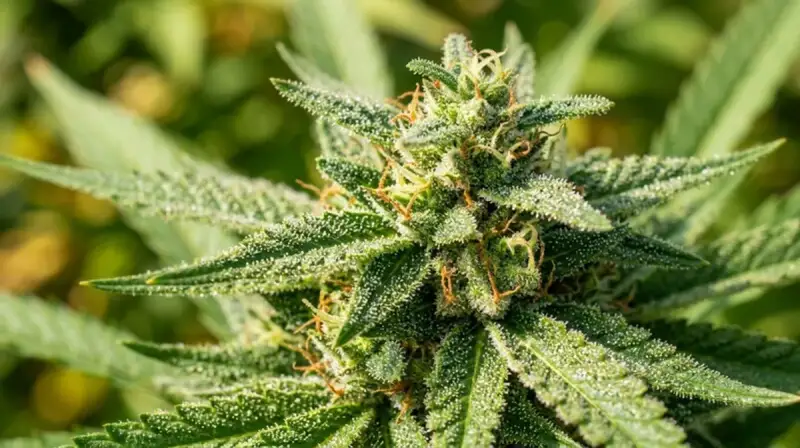
- Indica-dominant hybrid (roughly 55% indica / 45% sativa) despite its energetic onset.
- Chemdawg × Hindu Kush landrace genetics; emerged in Southern California in the early 1990s.
- Myrcene-dominant terpene profile with limonene and caryophyllene producing the iconic OG smell.
- Dual-phase high: fast cerebral rush transitions into full-body relaxation.
- Challenging to grow -- susceptible to powdery mildew; low humidity and good airflow are essential.
- Parent strain of GSC, Headband, Skywalker OG, and dozens more modern classics.
Genetics & Origins
OG Kush first appeared on the Southern California cannabis scene in the early 1990s. While precise provenance has always been debated in cannabis circles, the most widely accepted account traces its lineage to a cross of Chemdawg with a Hindu Kush landrace -- a pure indica originating from the mountain valleys between Afghanistan and Pakistan. Some accounts suggest involvement of a Northern California variety, though this remains unverified.
Early propagators credited for spreading OG Kush include cultivators known as "Bubba" -- who would later create Bubba Kush -- and Josh D, one of the first growers to standardize and distribute authentic OG Kush clones across Los Angeles dispensaries. Josh D's work through the mid-to-late 1990s is widely credited with establishing the strain's identity and consistent phenotype.
The "OG" initials carry two common interpretations. "Original Gangster" is the dominant reading, honoring OG Kush's foundational status in West Coast cannabis culture. The alternative, "Ocean Grown," refers to the SoCal coastal climate that allegedly shaped the strain's terroir. Both interpretations circulate in cultivation communities; neither has been definitively settled.
OG Kush's genetic impact is extraordinary. It went on to parent some of the most commercially successful strains in dispensary history:
- Girl Scout Cookies (OG Kush × Durban Poison)
- Bubba Kush (OG Kush × Hindu Kush phenotype)
- Headband (OG Kush × Sour Diesel)
- Skywalker OG (OG Kush × Skywalker)
- Tahoe OG, Larry OG, Ghost OG -- regional phenotype variations
Aroma & Flavor Profile
OG Kush's aroma is immediately recognizable to anyone who has encountered the strain: a sharp, resinous pine note forms the base, while bright citrus and lemon rind cut through at the top, and a distinctive diesel fuel edge finishes the bouquet. This three-part combination -- pine, citrus, diesel -- is often referred to simply as "the OG smell" and is considered one of the most iconic cannabis aromas in the world.
On the palate, the flavor follows a similar arc: earthy pine dominates the inhale, lemon undertones emerge in the mid-palate, and a faintly spicy, fuel-like finish lingers on the exhale. The smoke is dense and can be harsh for new consumers.
Terpene Profile
Three terpenes define OG Kush's character. Each contributes both to aroma and to the functional properties of the high through the entourage effect.
| Terpene | Aroma | Concentration | Effect Contribution |
|---|---|---|---|
| Myrcene | Earthy, herbal, musky | Dominant | Potentiates THC transport across the blood-brain barrier; deepens body relaxation and sedation |
| Limonene | Bright citrus, lemon rind | Secondary | Elevates mood via serotonin receptor activity; associated with anxiolytic effects at moderate concentrations |
| Caryophyllene | Spicy, pepper, diesel | Secondary | Unique among terpenes for directly binding CB2 receptors; provides anti-inflammatory support without psychoactivity |
| Linalool | Floral, lavender | Trace | Calming; may enhance sedative effects of myrcene in the comedown phase |
Effects: What to Expect
OG Kush's effect profile is often described as "dual-natured" -- it begins cerebrally and lands physically. The indica-dominant genetics become most apparent after the initial sativa-like rush subsides.
Onset (0–15 minutes)
OG Kush hits fast. Most consumers report a sharp, cerebral lift within the first few minutes -- a wave of euphoria and heightened sensory awareness driven primarily by limonene's serotonin receptor interaction and the rapid THC absorption potentiated by myrcene. Creative and social tasks feel effortless during this window. Focus sharpens briefly before giving way to the deeper indica effect.
Peak (15–90 minutes)
At peak intensity, the high becomes distinctly dual-natured. The mind remains engaged -- slightly psychedelic for some users at higher doses -- while myrcene-driven warmth spreads progressively through the limbs. Muscle tension releases, stress dissolves, and the characteristic "couch pull" of OG begins. Appetite stimulation (the munchies) typically kicks in during this phase. Racing thoughts and anxiety tend to subside for most users; however, high-dose consumers with low THC tolerance may experience heightened anxiety or paranoia due to OG's potency.
Tail / Comedown (90–180 minutes)
The descent from OG Kush is gradual and generally comfortable, settling into a calm sedation that many users find ideal for evening wind-down. Dry mouth and dry eyes persist through this phase. Linalool trace terpenes are thought to smooth the transition into relaxation. This makes OG Kush particularly suitable for nighttime use rather than daytime productivity.
OG Kush vs. Similar Strains
How does OG Kush compare to its closest relatives and competitors? The table below highlights the key differentiators across the OG family tree.
| Strain | THC | Type | Key Difference vs. OG Kush |
|---|---|---|---|
| Girl Scout Cookies | 19–28% | Hybrid | Sweeter, cookie-dough terpenes; OG Kush offspring with more pronounced euphoria and higher ceiling THC |
| Chemdawg | 15–20% | Hybrid | Parent strain of OG Kush; sharper diesel dominance, more cerebral / less body |
| Skywalker OG | 20–25% | Indica-dom. | OG Kush offspring; heavier sedation and stronger couch-lock, better for sleep |
| Headband | 17–24% | Hybrid | OG Kush x Sour Diesel offspring; adds a distinctive cranial pressure effect, more energetic |
| Bubba Kush | 14–22% | Indica | OG Kush relative; heavier sedation, chocolate-coffee terpenes, better for insomnia |
| Tahoe OG | 20–25% | Indica-dom. | Regional OG phenotype; often considered the strongest OG variant, potent body stone |
Growing OG Kush
OG Kush is widely regarded as a moderate-to-difficult cultivar. Its performance is rewarding for experienced growers but unforgiving for beginners. The two primary pest and disease threats -- powdery mildew and spider mites -- require consistent environmental management throughout the grow cycle.
| Parameter | Indoor | Outdoor |
|---|---|---|
| Flowering Time | 56–63 days (8–9 weeks) | Early October harvest |
| Yield | 400–500 g/m² | Up to 600 g/plant |
| Plant Height | 60–90 cm | 90–150 cm |
| Temperature | 21–27°C (70–80°F) | Warm, dry Mediterranean |
| Humidity (Flowering) | <45% RH -- critical | Avoid rain/humidity in late season |
| Difficulty | Moderate | Moderate – Hard |
Growing Tips
- Keep humidity below 45% during flowering -- OG Kush is highly susceptible to powdery mildew; high humidity triggers it fast.
- Strong airflow is non-negotiable -- oscillating fans and adequate exhaust prevent stagnant air pockets where mold spores thrive.
- Apply LST (Low-Stress Training) early -- OG Kush's bushy, dense canopy benefits enormously from training that opens up light penetration to lower bud sites.
- Defoliate strategically -- remove large fan leaves that shade bud sites, but avoid over-defoliation; OG Kush stresses relatively easily.
- Monitor for spider mites -- inspect the undersides of leaves weekly; mites proliferate rapidly in warm, dry conditions.
- Nutrient schedule: OG Kush is a moderate-to-heavy feeder during vegetative growth but prefers a gradual reduction in nitrogen once flowering begins.
- Flush thoroughly (7–10 days with plain water before harvest) to preserve terpene expression and avoid a harsh smoke.
Drug Test Detection Windows
THC metabolites from OG Kush -- like all cannabis strains -- are stored in body fat and released gradually. Detection windows depend heavily on frequency of use, body fat percentage, metabolism, and hydration. The figures below represent general population ranges.
| Test Type | Detection Window | Notes |
|---|---|---|
| Urine | 3–30+ days | Single use: ~3 days. Daily use: 30+ days. Most common employment test. |
| Blood | Up to 36 hours | Reflects recent / acute use; used primarily in DUI investigations. |
| Saliva | 24–72 hours | Common for roadside testing; detects active THC, not just metabolites. |
| Hair Follicle | Up to 90 days | Detects historical use only; not a reliable indicator of current impairment. |
Medical & Therapeutic Use
OG Kush's combination of high THC, myrcene, limonene, and caryophyllene makes it one of the more versatile medical strains available. It appears frequently in medical dispensary recommendations for the following conditions -- though individual response varies significantly:
Frequently Asked Questions
Explore More Strains
- Girl Scout Cookies — OG Kush's most famous offspring
- Chemdawg — The diesel-fueled parent of OG Kush
- Skywalker OG — Heavier, more sedating OG Kush cross
- Headband — OG Kush meets Sour Diesel
- Browse all strain guides →