
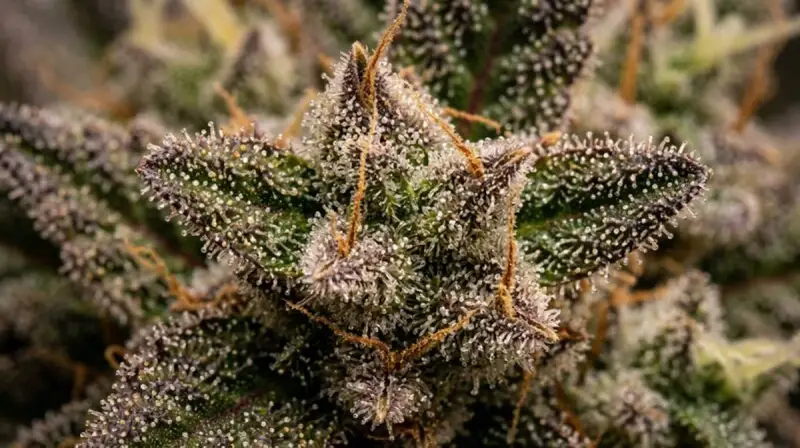







- Type: Sativa-Dominant Hybrid (~65% Sativa / 35% Indica)
- Genetics: Space Queen × Orange Velvet
- Breeder: TGA Genetics (Subcool Seeds)
- THC: 13–17% | CBD: <1% | CBG: ~0.5% | CBN: trace
- Top Terpenes: Limonene, Terpinolene, Ocimene, Caryophyllene, Myrcene
- Effects: Happy, Creative, Uplifted, Energetic, Focused
- Flavors: Orange Candy, Tangerine, Citrus, Tropical, Sweet
- Medical Uses: Depression, Fatigue, Stress, Mild Anxiety, ADHD
- Grow Difficulty: Easy–Intermediate
- Best Time: Morning to afternoon
Genetics & Lineage
Jillybean was created by TGA Genetics (also known as Subcool Seeds), founded by the prolific breeder Subcool. The cross of Space Queen and Orange Velvet draws on two of the most fruit-forward sativa-dominant genetics available. Space Queen (Romulan × Cinderella 99) contributes cerebral, euphoric energy and tropical-fruit terpene brightness; Orange Velvet — bred specifically for its intensely sweet orange-citrus character — amplifies the citrus terpene signature and adds a dense, sweet candy quality to the flavor profile.
The resulting strain leans sativa at approximately 65/35, inheriting the uplifting, creative mental character of both parents while the indica fraction from Romulan’s ancestry in Space Queen provides just enough body substance to prevent the experience from being purely racy. The terpene profile is dominated by limonene and terpinolene — both highly prevalent in sativa-dominant strains with cheerful, energizing effect profiles. Jillybean is frequently cited as a daytime staple for consumers who want a productive, happy high without the intensity of higher-THC sativas.
Jillybean has spawned a lineage of its own: its Space Queen parent is profiled separately, and consumers interested in related strains can explore Cinderella 99 for more of the tropical-sativa character. Orange Cookies and Clementine occupy similar flavor territory and are worth comparing. TGA Genetics produced many beloved cultivars — Jillybean remains one of their most accessible and enduringly popular releases.
Cannabinoid Profile
Jillybean sits at the lower end of the modern commercial THC spectrum at 13–17%, making it one of the more accessible high-quality strains for consumers who prefer moderate potency. This range delivers meaningful psychoactivity without the overwhelming intensity that can push anxious consumers into difficult experiences. The CBG fraction is modest at approximately 0.5%, consistent with sativa-dominant genetics.
| Cannabinoid | Typical % | Role |
|---|---|---|
| THC (Δ9) | 13–17% | Happy euphoria, creativity, mild analgesia |
| CBD | <1% | Minimal modulation |
| CBG | ~0.5% | Possible contribution to mental clarity |
| CBN | Trace | Negligible in fresh material |
Terpene Profile
Jillybean’s terpene matrix is co-dominated by limonene and terpinolene — a combination that research consistently associates with uplifting, happy, cerebral effect profiles in sativa-dominant strains (Hartsel et al., Cannabis and Cannabinoid Research, 2019). Ocimene contributes the sweet herbal tropical quality that rounds out the orange-candy character, while trace caryophyllene provides structural depth without interfering with the cheerful citrus dominance.
| Terpene | Concentration | Aroma | Effect Association |
|---|---|---|---|
| Limonene | 0.5–0.9% | Orange, citrus zest, tangerine | Mood elevation, antidepressant (preclinical), anxiolytic |
| Terpinolene | 0.3–0.6% | Floral, fruity, herbal | Uplifting, cerebral, sativa character |
| Ocimene | 0.15–0.35% | Sweet, tropical, herbal | Candy sweetness contributor |
| Caryophyllene | 0.1–0.2% | Spicy, peppery | Minor anti-inflammatory CB2 activity |
| Myrcene | 0.1–0.2% | Light earthy note | Minimal at this concentration; light body balance |
Effects
Jillybean is best understood as a “sunshine strain” — its defining characteristic is the quality of happiness and cheerfulness it reliably produces. Within 3–5 minutes of inhalation, a wave of warm, uncomplicated positivity arrives. Mood lifts sharply, laughter becomes more accessible, and social interaction feels natural and enjoyable. The creativity it produces is of the playful, associative variety — ideas flow easily and lateral thinking sharpens, making it popular for brainstorming, conversation, and creative collaboration.
Unlike higher-THC sativas that can produce pressurized or anxious mental acceleration, Jillybean’s moderate 13–17% THC range keeps the cerebral experience pleasant and accessible throughout. Body effects are minimal — a light physical ease rather than anything resembling couch-lock. Total duration is typically 2–2.5 hours, with a gradual return to baseline that rarely produces significant fatigue or sedation.
Potential adverse effects include mild dry mouth and dry eyes, both manageable with hydration. Anxiety at standard doses is uncommon but possible in individuals with a history of cannabis-induced anxiety. The moderate THC range is the most significant factor in making Jillybean one of the lower-anxiety-risk sativa options available.
Flavor & Aroma
Jillybean’s aroma is one of the most immediately distinctive and crowd-pleasing in the sativa-dominant category. Opening a jar of well-cured Jillybean releases an explosion of orange candy and tangerine — vivid, sweet, and genuinely reminiscent of the jelly bean candy the strain is named after. The secondary aroma notes include mango and tropical fruit from the terpinolene-ocimene combination, and a very faint floral-herbal background that adds complexity without competing with the orange dominance.
On the palate, the orange candy character is consistent and vivid from inhale to exhale. Combustion preserves the citrus character better than many strains — the flavor does not degrade significantly under heat, which is a notable attribute. Vaporization at 178–190°C captures the full limonene-terpinolene brightness at its most concentrated and clean. The flavor profile is broadly appealing and non-polarizing — unlike fuel, skunk, or garlic-forward strains that require acquired taste, Jillybean’s orange candy character tends to delight first-time and experienced consumers alike.
Medical Uses
Educational content only. Does not constitute medical advice. Consult a licensed healthcare provider.
Jillybean’s happy, mood-elevating effect profile and high limonene content make it a particularly appropriate option for mood-related medical applications. Depression and dysthymia are the primary indications — the reliable happiness and energy boost align directly with therapeutic goals, and the limonene content supports these effects through documented preclinical mechanisms (Guimarães et al., 2013). For medical patients who need to remain functional and clear-headed during the day, Jillybean’s moderate THC and low body sedation make it practical rather than incapacitating.
Fatigue and low-energy conditions — whether related to cancer treatment, autoimmune conditions, chronic illness, or lifestyle factors — respond to the energizing, motivating dimension of Jillybean. Stress management is a broad application where the cheerful, anxiety-reducing effect profile offers relief. Emerging evidence around limonene and terpinolene in ADHD-associated mood dysregulation suggests Jillybean’s profile may support attention and focus in some patients, though this requires individualized assessment. Its accessibility — both in THC level and effect quality — makes it one of the safest entry-point strains for medical patients new to cannabis.
Growing Guide
| Parameter | Value |
|---|---|
| Flowering Time (Indoor) | 49–56 days (7–8 weeks) |
| Outdoor Harvest | Early to mid-October |
| Indoor Yield | 350–450 g/m² |
| Outdoor Yield | 350–500 g per plant |
| Height (Indoor) | 80–140 cm (sativa stretch) |
| VPD Target (Veg) | 0.8–1.1 kPa |
| VPD Target (Flower) | 1.0–1.35 kPa |
| Difficulty | Easy–Intermediate |
| Training Method | LST or topping early in veg to control height; forgiving of mistakes |
Jillybean grows vigorously with the typical sativa stretch — expect the plant to double in height during the first 3 weeks of flowering. Topping at the 4th–5th node in veg, or aggressive LST before the flip, effectively manages height in tent environments. The airy bud structure reduces mold risk compared to dense indica hybrids, making Jillybean more forgiving in marginally humid environments. It is a generous feeder during veg but can be sensitive to nitrogen excess in late flower — reduce nitrogen by week 5 and watch for tip burn. Harvest when trichomes are predominantly milky with less than 10% amber for the most energetic, happy effect expression.
Consumption Methods
Smoking (joint): Jillybean’s flavor profile translates well through a joint. The citrus character is vivid and the smoke is light and enjoyable. It is a popular social strain for exactly this reason.
Vaporization: At 178–190°C, vaporization delivers the limonene-terpinolene profile at maximum clarity. Flavor is notably cleaner than combustion. Recommended for consumers who want the fullest orange candy expression.
Concentrates (live resin): Live resin from Jillybean captures the citrus terpene profile from fresh-frozen material, producing a vibrant orange-candy concentrate that can be genuinely remarkable in aroma intensity. Suitable for dab consumers who prioritize flavor.
Edibles: Jillybean’s happy, uplifting character extends through edible administration. At 5–10mg THC, edibles provide several hours of sustained mood elevation. The lower baseline THC range means that edibles remain manageable and do not typically produce overwhelming sedation as long-acting indicas can. Start at 5mg and allow 2 hours before assessing.
Similar Strains
| Strain | Type | THC | Similarity |
|---|---|---|---|
| Space Queen | Sativa-dom. | 15–20% | Parent strain; tropical-cherry, more intense |
| Cinderella 99 | Sativa-dom. | 16–22% | Grandparent lineage; more racy, tropical |
| Clementine | Sativa-dom. | 17–22% | Citrus sativa peers; mandarin-bright, similar energy |
| Orange Cookies | Hybrid | 14–19% | Orange citrus profile; slightly more balanced |
| Tangie | Sativa-dom. | 19–22% | Citrus sativa; more potent, dankier orange |
Frequently Asked Questions
Medical Disclaimer: This content is for educational purposes only. It does not constitute medical advice, diagnosis, or treatment. Cannabis laws vary by jurisdiction. Consult a licensed healthcare provider before using cannabis for medical purposes.