



- Pure indica — 100% indica, no sativa ancestry — one of few true landrace-adjacent pure indicas
- THC 17–27% — wide phenotypic range; body effect consistently heavy regardless of exact THC%
- Genetics: Hindu Kush × Purple Afghani — both landrace-origin parents
- Origin: Oakland area, California — foundational California medical cannabis strain
- Primary terpenes: myrcene, caryophyllene, pinene — earthy, grape, subtle hash
- Effects: sedating, euphoric, full-body-heavy — the definition of “pure indica” effect
- Medical: chronic pain, insomnia, muscle disorders, anxiety
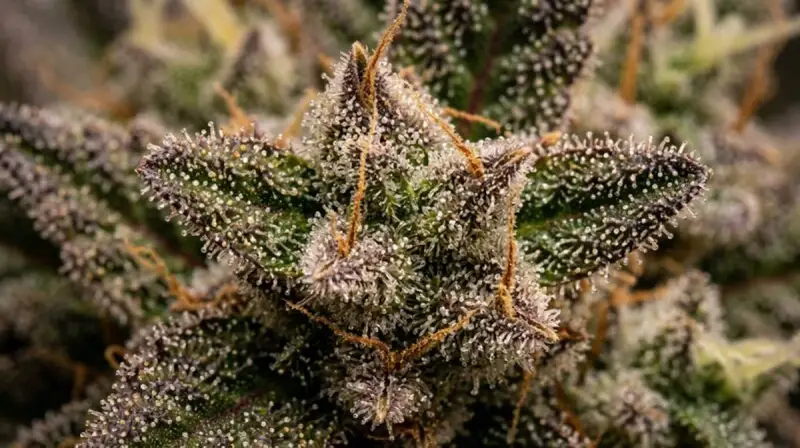
- Anthocyanin-driven purple pigmentation from Purple Afghani parent
- Flowering 8 weeks; compact structure; beginner to moderate grow
Strain Quick-Reference
| Factor | Detail |
|---|---|
| Genetics | Hindu Kush × Purple Afghani |
| Origin | Oakland, California |
| Type | Pure indica (100% indica) |
| THC | 17–27% |
| CBD | <1% |
| Primary Terpenes | Myrcene, Caryophyllene, Pinene |
| Flavors | Earthy grape, hash, subtle berry |
| Effects | Sedating, euphoric, body-heavy |
| Flowering Time | 8 weeks (56 days) |
| Indoor Yield | 350–450 g/m² |
| Grow Difficulty | Beginner to Moderate |
Genetics, Origin & Lineage
Purple Kush is one of the most genuinely landrace-adjacent strains in widespread commercial cultivation — a distinction that matters because most modern cannabis is the result of extensive hybridization that has diluted original landrace characteristics. Purple Kush draws exclusively from two Afghani-origin parents: Hindu Kush, a geographically isolated pure indica landrace from the mountain range spanning Afghanistan and Pakistan, and Purple Afghani, itself derived from the same Central Asian indica gene pool with the addition of the anthocyanin genetics that produce its characteristic purple coloration.
The strain originated in the Oakland, California area, where it became a foundational cultivar in the early California medical cannabis market. The Hindu Kush parent contributes the deep, full-body sedation, earthy-hash aromatic base, and structural compactness (short internodes, wide fan leaves, quick maturation) that define the classic Hindu Kush phenotype. The Purple Afghani parent adds the anthocyanin pigments responsible for the purple-to-deep-violet bud coloration under cool conditions, a sweet grape note to the aroma, and further depth to the body-sedative effect profile.
What makes Purple Kush significant in the broader cannabis landscape is its role as a source of pure indica genetics for breeders who want to add depth, body effect, and compact structure to hybrid projects without the complexity of multiple hybrid parents. Its direct Afghani lineage without OG Kush, Skunk, or Haze ancestors makes it a clean source for indica-dominant crosses. Many California Kush strains have used Purple Kush as a parent to access these specific landrace-adjacent characteristics.
Effects Profile
Purple Kush is the reference point for what “pure indica” effects mean in practice — the experience that defines the indica archetype in consumer understanding. Without any sativa genetics to add cerebral uplift or energetic stimulation, Purple Kush delivers an uncut body-heavy sedation that is both more complete and more pronounced than most indica-dominant hybrids.
Onset (0–20 minutes)
Purple Kush’s onset is distinctive: a warm, enveloping euphoria that builds slowly and gently from the head down. Unlike hybrid strains with a sharp cerebral onset, the initial phase of Purple Kush is more physical than mental — a softening of muscle tension and a warmth in the body that precedes the full sedation. Mood elevation is present and genuine, producing contentment rather than active happiness.
Peak (20–90 minutes)
The full indica body effect establishes completely. Limbs are heavy, movement requires deliberate effort, and the motivation to engage in any activity beyond comfortable rest decreases markedly. The euphoria sustains as a passive warmth and contentment — what consumers often describe as “full-body happiness.” The myrcene-dominant terpene profile amplifies and deepens THC’s CB1 sedative effects. Caryophyllene contributes anti-inflammatory relief that makes this phase particularly valuable for chronic pain patients.
Tail (90 minutes–4+ hours)
Purple Kush has an exceptionally long and deep tail. Sleep onset is common at moderate to high doses, and the sleep produced is genuinely restorative rather than drug-induced restlessness. The Afghani landrace genetics carry a depth of physical sedation that persists well beyond the typical hybrid strain window. Morning grogginess at high doses is possible — patients managing insomnia should calibrate dose carefully to avoid excessive morning effects.
Terpene Profile
| Terpene | Typical % | Aroma Note | Effect Role |
|---|---|---|---|
| Myrcene | 0.9–1.6% | Earthy, herbal, slight grape | Primary sedation; THC potentiation; body-heaviness |
| Caryophyllene | 0.5–0.9% | Earthy, spicy, hash-like | CB2 anti-inflammatory; physical pain relief |
| Pinene | 0.2–0.5% | Fresh pine, subtle mint | Mild alertness counterweight; bronchodilator |
| Linalool | 0.1–0.3% | Floral, grape-sweet | Anxiolytic; complements grape flavor note |
The terpene profile of Purple Kush reflects its Afghani heritage directly. Myrcene dominates, delivering the characteristic earthy-herbal base that defines Central Asian Kush genetics. Caryophyllene adds the spicy, hash-adjacent depth that distinguishes authentic Kush strains from their hybrid descendants. The grape note in the aroma comes from a combination of linalool and the anthocyanin compounds produced by the Purple Afghani parent — not a distinct berry terpene but a synergistic quality that makes the overall aroma experience distinctly “purple grape.”
Cannabinoid Profile
| Cannabinoid | Range | Notes |
|---|---|---|
| THC | 17–27% | Wide phenotypic range; all expressions produce heavy indica effect |
| CBD | <1% | Standard for THC-dominant Kush genetics |
| CBG | 0.3–0.6% | Possible anti-inflammatory and neuroprotective contributions |
| CBN | 0.1–0.3% | Notable for a fresh strain; increases sedation; older material will have more |
Flavor & Aroma Description
Purple Kush’s flavor is an authentic window into what cannabis smelled and tasted like before decades of hybridization introduced Skunk, Haze, and Cookies genetics to the mainstream market. The dominant note is earthy hash — a dense, resinous, slightly sweet earthiness that evokes the hand-pressed hashish from the Hindu Kush region where its parent genetics originate.
The grape element is present and genuine but not as candy-sweet as in GDP or Purple Punch lineages. It reads more as “wine grape” than “grape candy” — deeper, earthier, and more complex. The berry sweetness from the Purple Afghani parent is subtle and appears primarily on the exhale, where it combines with the residual earthy hash note to create a finish that is distinctly different from modern hybrid strains.
At lower vaporizer temperatures (165–175°C), the grape and earthy notes are most distinct. At higher temperatures or through combustion, the hash character becomes more dominant and the fruit notes recede. The full Kush aroma — the dense, slightly spiced, resinous quality that defines the archetype — is most present in the raw, broken bud before heat is applied.
Medical Applications
| Condition | Mechanism | Notes |
|---|---|---|
| Chronic Pain | THC + caryophyllene CB2; body-heavy indica effect | One of the most recommended pure indica strains for sustained pain relief |
| Insomnia | High myrcene; deep body sedation; long tail | Suitable for severe insomnia; dose carefully to avoid morning grogginess |
| Muscle Disorders | Pure indica myorelaxant; full-body muscle release | Particularly noted for MS, fibromyalgia, and muscle spasm conditions |
| Anxiety | Body-sedation reduces physical anxiety symptoms; linalool anxiolytic | Better for physical anxiety manifestations (tension, restlessness) than cognitive anxiety |
| Nausea | CB1 activation; indica body calm | Reliable for nausea management; evening/nighttime dosing preferred |
| PTSD (night use) | Deep sedation; nightmare suppression via REM reduction at higher doses | Used by some PTSD patients specifically for nightmare reduction |
Growing Information
| Factor | Indoor | Outdoor |
|---|---|---|
| Flowering Time | 8 weeks (56 days) | Late September to early October |
| Yield | 350–450 g/m² | 300–500 g/plant |
| Height | 60–90 cm | 80–120 cm |
| Optimal Temp | 20–25°C; drop to 15°C at night for color | Mild climate; tolerates some cold |
| Humidity | <50% throughout; <40% late flower | Low humidity strongly preferred; Kush susceptible to mold |
| Training | Responds well to topping; short structure suits SOG | Natural growth; minimal training needed |
| Difficulty | Beginner to Moderate | Beginner |
Grow Tips
- Humidity control is the primary challenge. The pure indica structure of Purple Kush produces extremely dense buds that are excellent for potency but create significant botrytis risk. Maintain humidity below 40% during the final three weeks of flower and ensure strong horizontal airflow through the canopy.
- Cold nights activate the purple pigmentation. The anthocyanin pigments that produce the characteristic purple-to-violet coloration require night temperatures below 15–18°C to activate. Introducing this temperature drop in the final two to three weeks of flowering maximizes visual appeal without compromising yield or potency.
- Short stature suits tight spaces. At 60 to 90 cm indoors, Purple Kush is one of the most space-efficient strains available. Tent growers and those with vertical limitations find it ideal. SOG setups with 9 to 16 plants per square meter are particularly productive.
- Kush feeding is conservative. Like other Kush-lineage strains, Purple Kush prefers moderate nutrient inputs. Start at 60 to 70% of recommended feeding schedules and increase only if deficiency signs appear. Overfeeding produces nutrient lockout and stunted resin development more readily than in hybrid strains.
- The 8-week timing is reliable. Unlike many hybrid strains where extended finishing improves quality, Purple Kush typically peaks at exactly 8 weeks. Waiting longer often results in amber trichomes and increased CBN, shifting the effect toward even heavier sedation — desirable for insomnia patients, less so for general use.
Similar Strains
- Hindu Kush — direct parent landrace
- Granddaddy Purple — similar berry-indica
- Purple Punch — berry-indica peer
- Bubba Kush — Kush-family peer
- OG Kush — Kush-lineage comparison
- Do-Si-Dos — heavy indica peer
Frequently Asked Questions
Purple Kush derives from two pure landrace indica parents: Hindu Kush from the Afghan-Pakistani mountain range and Purple Afghani. Without any sativa ancestry, it expresses the classic pure indica phenotype: compact structure, wide leaves, short flowering time, and deeply physical sedating effects.
Purple Kush originated in the Oakland area of California, developed from Hindu Kush and Purple Afghani parents. It became a foundational strain in the California medical cannabis scene and remains one of the few widely available pure indicas with direct landrace ancestry.
Purple Kush tests between 17 and 27 percent THC. The pure indica genetics and high myrcene content create an effect consistently heavier than comparably dosed hybrid strains. The body sedation is full and complete rather than partial.
Purple Kush delivers an earthy grape and hash flavor profile reflecting its Afghani and Hindu Kush heritage. The earthy hash note dominates, with a sweet grape quality from the Purple Afghani parent. It is one of the most authentically landrace-flavored strains widely available.
Yes, it is one of the most consistently recommended pure indica strains for chronic pain management. High THC, caryophyllene CB2 binding, and the deep body-heavy effect of pure Afghani genetics create comprehensive physical relief for nociceptive and inflammatory pain.
Purple Kush completes indoor flowering in approximately 8 weeks (56 days). The compact indica structure, true to its landrace ancestry, matures quickly and reliably. Indoor yields typically reach 350 to 450 g/m² under optimized conditions.