
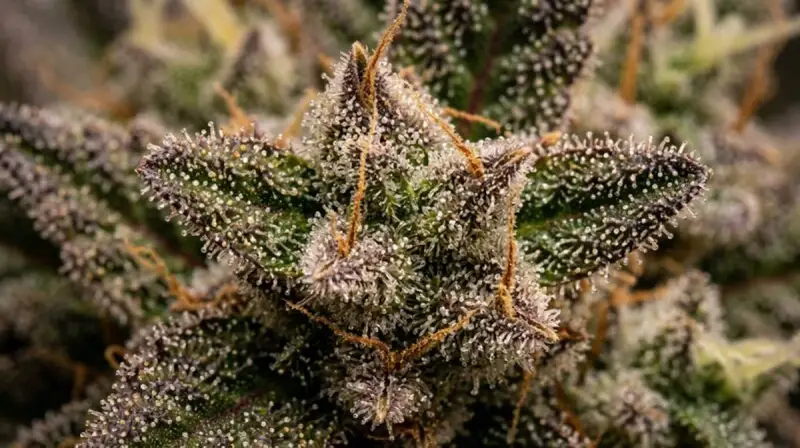

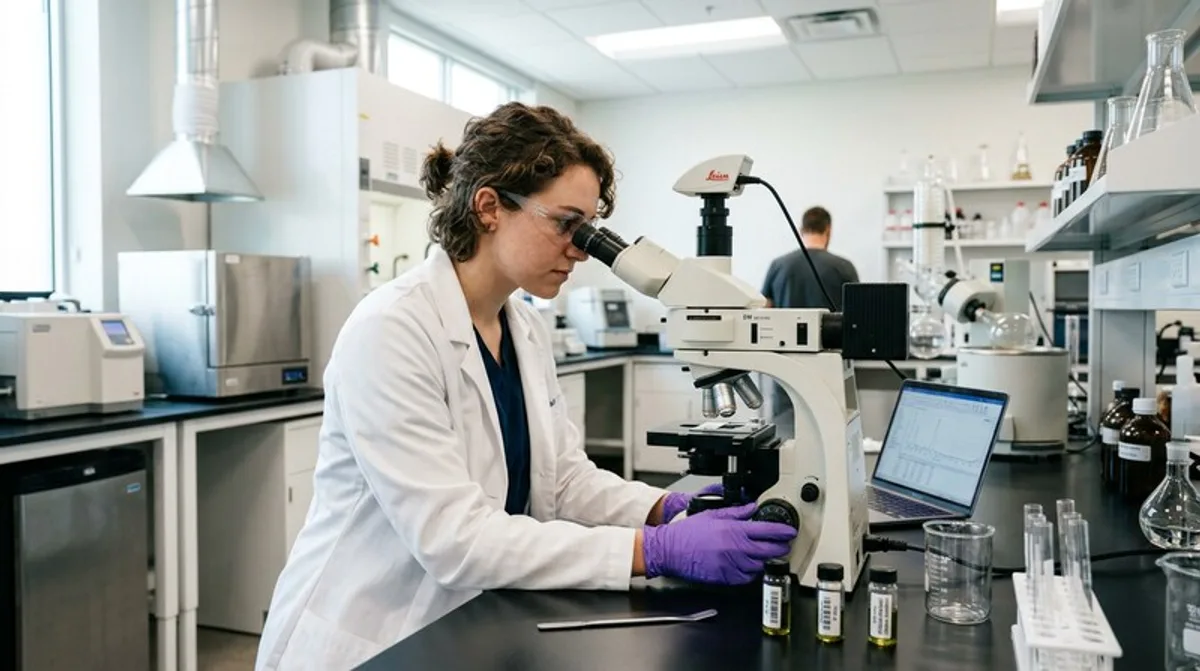







- Structure: C10H16 monocyclic monoterpene, structurally isomeric with alpha-, beta-, and gamma-terpinene; unique aromatic complexity — fresh, floral, herbal, and citrus simultaneously.
- Sedation paradox: Ito & Ito (2013) inhalation study in rodents showed CNS depressant activity (reduced locomotion) at high isolated doses; at normal cannabis concentrations (0.1–1.8%), consumer data consistently shows energetic, uplifting effects. Dose explains the discrepancy.
- antioxidant: Nakayama (2014) demonstrated radical scavenging activity for terpinolene comparable to BHT (butylated hydroxytoluene), a commercial synthetic antioxidant — one of the strongest antioxidant profiles of any cannabis terpene.
- Antitumor (preliminary): AKT1 kinase inhibition in K562 leukemia cell line (Murata et al. 2013); AKT1 is a key cell survival and proliferation regulator overexpressed in multiple cancers.
- Oxidation problem: Terpinolene oxidizes faster than most cannabis terpenes post-harvest; actual concentrations in living plant are higher than retail lab reports suggest. Live resin and fresh-frozen extraction preserve the most accurate profile.
- Strain signature: Dominant terpene in Jack Herer, Ghost Train Haze, XJ-13, Chernobyl — virtually all high-terpinolene strains share sativa-dominant genetics and an energetic, cerebral effect profile.
- Antifungal/antibacterial: Membrane disruption mechanism against multiple pathogens; synergy with tea tree oil terpene complex documented in antimicrobial literature.
What Is Terpinolene?
Terpinolene is a monocyclic monoterpene with molecular formula C10H16 and molecular weight 136.23 g/mol. It shares this formula with its structural isomers alpha-terpinene, beta-terpinene, and gamma-terpinene, but its unique arrangement of double bonds and methyl substituents produces a categorically different aromatic profile. While alpha- and gamma-terpinene carry relatively simple, turpentine-like or woody aromas, terpinolene’s complex structure generates the distinctive multi-note freshness that makes it immediately recognizable to experienced cannabis consumers: simultaneously piney, floral, herbal, and subtly citrusy in a way that resists reduction to any single comparison.
Terpinolene occurs naturally in a range of commercially important plants including nutmeg (Myristica fragrans), tea tree (Melaleuca alternifolia), cumin, lilac, and various conifer species. Its presence in tea tree oil — one of the most extensively researched antimicrobial essential oils — is consistent with terpinolene’s documented antimicrobial properties. In apple trees, terpinolene is a stress-response volatile released when the plant is under attack by pests, highlighting its ecological role as a defense compound.
What distinguishes terpinolene from virtually all other cannabis terpenes is its rarity as a dominant compound. While myrcene dominates the terpene profiles of a large proportion of all commercial cultivars, terpinolene reaches dominant levels only in a narrow subset of primarily sativa or sativa-dominant genetics. This rarity is a reliable diagnostic signal: when a Certificate of Analysis shows terpinolene at the top of the terpene list, the consumer can expect a fundamentally different experience — more active, more focused, more cerebral — than any myrcene-dominant alternative.
Chemical Properties
| Property | Detail |
|---|---|
| IUPAC Name | 1-methyl-4-propan-2-ylidenecyclohex-1-ene |
| Molecular Formula | C10H16 |
| Molecular Weight | 136.23 g/mol |
| Boiling Point | 186°C (367°F) at 1 atm |
| Aroma | Fresh, piney, floral, herbal, citrus-tinged; multi-note complexity |
| Solubility | Lipophilic; poorly water-soluble; miscible with organic solvents and oils |
| Oxidation stability | Low — oxidizes rapidly post-harvest; storage conditions critical |
| Cannabis concentration range | 0.1–1.8% in dominant strains; lower in retail samples due to oxidation |
| Structural isomers | α-terpinene, β-terpinene, γ-terpinene (all C10H16 monocyclic) |
| FDA status | GRAS as food and fragrance ingredient |
Biosynthesis: MEP Pathway and Terpinolene Synthase
Terpinolene biosynthesis in cannabis follows the methylerythritol phosphate (MEP) pathway in plastids, the same route used for all monoterpene production. Geranyl pyrophosphate (GPP, C10) serves as the immediate precursor, undergoing cyclization catalyzed by terpinolene synthase to produce the characteristic monocyclic structure with its exocyclic double bond.
The expression profile of terpinolene synthase genes across cannabis chemovars is particularly narrow compared to myrcene or caryophyllene synthases, which explains why terpinolene dominance is restricted to a small subset of cultivars. The genetics underlying terpinolene expression in cannabis have been partially mapped through chemotype analysis studies, which have identified specific chromosomal loci associated with the sativa terpene chemotype (high terpinolene, high ocimene) versus indica chemotypes (high myrcene, high caryophyllene).
A critical practical consideration is terpinolene’s exceptional oxidation susceptibility. The compound’s exocyclic double bond is highly reactive toward oxygen, and post-harvest exposure — including curing, storage, and handling — progressively converts terpinolene to oxidation products including terpinen-4-ol and related compounds. This means that retail cannabis samples consistently underreport terpinolene relative to the living plant at harvest. Live resin products, which are extracted from fresh-frozen uncured cannabis biomass, preserve the most accurate terpinolene concentrations and provide the most reliable indication of a cultivar’s true terpinolene expression.
Mechanism of Action and Pharmacology
Uplifting and Energetic Effects: The consistent consumer association of terpinolene with energetic, focused, and creative experiences is the most practically significant aspect of its profile. The molecular mechanism behind this uplifting character is less precisely mapped than linalool’s GABA-A activity or limonene’s 5-HT1A agonism, but proposed mechanisms include interactions with dopaminergic and adrenergic signaling systems and possible modulation of adenosine receptor activity. The convergence of consumer survey data, cultivar genetic analysis, and clinical cannabis observation on terpinolene’s energetic character is strong across multiple independent datasets.
The CNS Paradox: Ito and Ito (2013) published an inhalation study demonstrating that high-concentration terpinolene vapor reduced spontaneous locomotor activity in mice — a classic CNS depressant signature. This finding appears to contradict the energetic consumer reports from cannabis use. The resolution lies in dose: the concentrations required to produce CNS depression in animal models significantly exceed what is achievable through normal cannabis flower consumption. At the concentrations encountered in cannabis (0.1–1.8% of terpene fraction), terpinolene appears to act through different pathways than at pharmacological overdose concentrations, producing the observed uplifting effects rather than sedation.
Antioxidant Activity: Nakayama and colleagues (2014) demonstrated potent free radical scavenging activity for terpinolene in standardized DPPH assays, with efficacy comparable to BHT — a widely used synthetic antioxidant in the food industry. This is one of the strongest antioxidant results measured for any cannabis terpene and suggests terpinolene may contribute meaningfully to the neuroprotective and anti-aging properties attributed to full-spectrum cannabis extracts.
AKT1 Inhibition and Antitumor Research: Murata and colleagues (2013) identified terpinolene as an inhibitor of AKT1 kinase expression in K562 leukemia cell lines. AKT1 (Protein Kinase B alpha) is a serine/threonine kinase that is a central node in the PI3K/AKT/mTOR signaling pathway — one of the most commonly dysregulated pathways in human cancer, including breast, prostate, and ovarian cancers. Inhibition of AKT1 reduces cancer cell survival signals and increases apoptosis susceptibility. This is preliminary in vitro research and does not support cancer treatment claims, but it positions terpinolene among the most oncologically interesting terpene candidates for further investigation.
Medical Evidence Table
| Study / Author | Model | Dose / Exposure | Outcome | Evidence Level |
|---|---|---|---|---|
| Ito & Ito (2013) | Rodent, inhalation | High-concentration terpinolene vapor | Reduced locomotor activity; CNS depressant signature at high doses | Moderate (animal, high dose) |
| Nakayama et al. (2014) | In vitro DPPH assay | Standardized radical scavenging assay | Antioxidant comparable to BHT; strong free radical scavenging | Strong (in vitro) |
| Murata et al. (2013) | K562 leukemia cell line | Cell culture treatment | AKT1 kinase inhibition; reduced cancer cell proliferation; apoptosis induction | Preliminary (in vitro) |
| Multiple antimicrobial studies | Bacterial and fungal cultures | MIC assay panels | Growth inhibition of multiple pathogens; membrane disruption mechanism | Moderate (in vitro) |
| Cannabis survey data (Russo 2011) | Consumer cultivar reports | Normal consumption | Consistent uplifting, energetic, creative effect association with terpinolene-dominant strains | Moderate (observational) |
Top Cannabis Strains Dominant in Terpinolene
Terpinolene dominance is a reliable marker for sativa-leaning genetics and an active, cerebral effect profile. The following cultivars consistently place terpinolene at or near the top of their terpene profiles and define the high-terpinolene cannabis experience.
| Strain | Type | Terpinolene % | Co-Terpenes | Primary Effect |
|---|---|---|---|---|
| Jack Herer | Sativa-dominant Hybrid | 0.50–1.30% | pinene, ocimene | Creative, focused, uplifted |
| Ghost Train Haze | Sativa-dominant Hybrid | 0.80–1.80% | Ocimene, myrcene | Intense creative energy, focus |
| XJ-13 | Sativa-dominant Hybrid | 0.60–1.40% | Pinene, limonene | Creative, social, energetic |
| Chernobyl | Sativa-dominant Hybrid | 0.50–1.20% | Limonene, myrcene | Uplifting, relaxed-alert |
| Dutch Treat | Hybrid | 0.40–1.00% | Ocimene, pinene | Calm focus, mild euphoria |
| Durban Poison | Sativa | 0.40–0.90% | Ocimene, myrcene | Energetic, focused, uplifted |
| Super Lemon Haze | Sativa-dominant Hybrid | 0.60–1.50% | Limonene, caryophyllene | Energetic, euphoric, citrus-fresh |
| Pineapple Jack | Sativa-dominant Hybrid | 0.50–1.10% | Ocimene, limonene | Tropical, euphoric, energetic |
Entourage Effect Synergies
| Partner Compound | Interaction Type | Clinical Relevance |
|---|---|---|
| THC (sativa profile) | Additive uplifting | High-terpinolene + high-THC creates classic sativa experience: energetic, creative, socially active |
| Ocimene | Aromatic complementarity + additive uplifting | Together form the distinctive sweet-fresh aroma of Jack Herer, Dutch Treat, Golden Goat |
| Pinene | Additive alertness + memory retention | Clear-headed, memory-intact, focused profile; significant in Jack Herer which contains both |
| Limonene | Additive mood elevation | Enhanced serotonin pathway contribution; Super Lemon Haze and Chernobyl carry both |
| CBD | Modulatory (buffers intensity) | CBD may soften terpinolene’s cerebral intensity; useful for anxiety-prone consumers of high-THC sativa strains |
Non-Cannabis Natural Sources
| Source | Terpinolene Content | Commercial / Traditional Use |
|---|---|---|
| Nutmeg (Myristica fragrans) | Up to 20% of essential oil | Culinary spice, fragrance industry |
| Tea tree (Melaleuca alternifolia) | 3–14% of essential oil | Antimicrobial topical; wound care; skincare |
| Cumin (Cuminum cyminum) | Up to 15% of essential oil | Culinary spice, digestive aid |
| Lilac (Syringa vulgaris) | Detectable in flower volatile | Fragrance, ornamental; lilac EO used in perfumery |
| Apple (Malus domestica) | Minor component in fruit volatile | Defense volatile released under herbivory stress |
| Various pine species | Trace to minor amounts | Conifer resin defense; contributes to forest air terpene blend |
Extraction and Commercial Applications
Terpinolene’s primary commercial applications are in the fragrance industry, where its complex fresh-herbal character is valued as a middle note in perfumes and scented consumer products. It is used in soap, shampoo, cleaning products, and personal care formulations for its pleasant, non-cloying freshness. In the food industry, terpinolene occurs naturally in nutmeg and cumin extracts, and it is classified as GRAS by the FDA.
In cannabis processing, terpinolene’s rapid oxidation is a significant practical challenge. Standard CO2 and hydrocarbon extractions can preserve terpinolene if conducted at low temperatures on fresh biomass, but prolonged exposure to heat, oxygen, or light degrades it rapidly. The live resin and live rosin production methods — which use fresh-frozen cannabis that has never been cured or dried — achieve the most complete terpinolene preservation and allow processors to deliver genuine high-terpinolene concentrate profiles to consumers seeking the energetic Jack Herer experience in extract form.
Consumer demand for terpinolene-dominant concentrates has grown significantly as the legal cannabis market has developed greater terpene literacy. Premium live resin and terp sauce products from terpinolene-dominant cultivars command higher prices based on their distinctive aroma and effect profile, and third-party Certificates of Analysis that show terpinolene as the dominant terpene are now recognized by knowledgeable consumers as a reliable predictor of an energetic, creative experience.
Safety and Toxicology
Terpinolene is classified as GRAS by the FDA for food and fragrance use and has a well-established safety profile from decades of use in the flavor and fragrance industry. EFSA has reviewed terpinolene as a food flavoring agent and identified no safety concerns at typical dietary exposure levels.
At very high concentrations, terpinolene can cause skin sensitization and mild irritation — properties shared by many fragrance terpenes when applied undiluted to skin. At the concentrations encountered in cannabis flower consumption or properly diluted cannabis extracts, these sensitization risks are not clinically relevant. Oxidation products of terpinolene (including terpinen-4-ol, one of the primary active compounds in tea tree oil) are themselves biologically active and are associated with some of terpinolene’s antimicrobial properties.
No carcinogenicity, genotoxicity, or reproductive toxicity has been identified for terpinolene at relevant doses. Acute oral toxicity (LD50) in rodents is estimated in the range of 3–5 g/kg bodyweight, consistent with low acute toxicity. The compound is metabolized hepatically via cytochrome P450 enzymes, producing polar hydroxylated metabolites that are readily excreted.
Frequently Asked Questions
What does terpinolene smell like?
Terpinolene has a complex, multifaceted aroma combining fresh pine top notes with a floral, herbal middle and subtle citrus undertones. Many describe it as “fresh” or “clean” in a way that differs from sharper limonene or resinous pinene. Nutmeg, tea tree, and fresh conifer needles share this quality. In cannabis, classic high-terpinolene strains like Jack Herer have an immediately recognizable fresh, spicy, herbal character that is distinctly different from any other dominant terpene profile.
Is terpinolene energizing or sedating?
At the concentrations found in cannabis flower (0.1–1.8%), terpinolene is consistently associated with uplifting, energetic, creative effects — the opposite of the sedating myrcene profile. However, Ito & Ito (2013) demonstrated CNS depressant activity in rodents at high isolated doses. The paradox resolves through dose: sedation occurs only at pharmacological concentrations far exceeding what normal cannabis consumption delivers. At flower-level concentrations, terpinolene produces the energetic, focused experience documented in consumer surveys and cultivar analyses.
Why does terpinolene appear lower in lab reports than expected?
Terpinolene oxidizes rapidly after harvest, meaning post-curing and post-storage samples consistently show lower readings than the same cultivar at peak freshness. Actual concentrations in the living plant are higher than retail lab reports suggest. For the most accurate terpinolene profile, fresh or live-resin products from fresh-frozen biomass preserve the compound significantly better than cured flower stored for weeks or months.
Which cannabis strains are dominant in terpinolene?
Terpinolene dominance is rare, occurring primarily in sativa or sativa-dominant genetics. Key strains include Jack Herer, Ghost Train Haze, XJ-13, Chernobyl, Dutch Treat, and Durban Poison. All high-terpinolene strains share an uplifting, cerebral, active effect profile. When terpinolene tops a lab Certificate of Analysis, expect a focused, energetic, daytime-suitable experience categorically different from myrcene-dominant alternatives.