
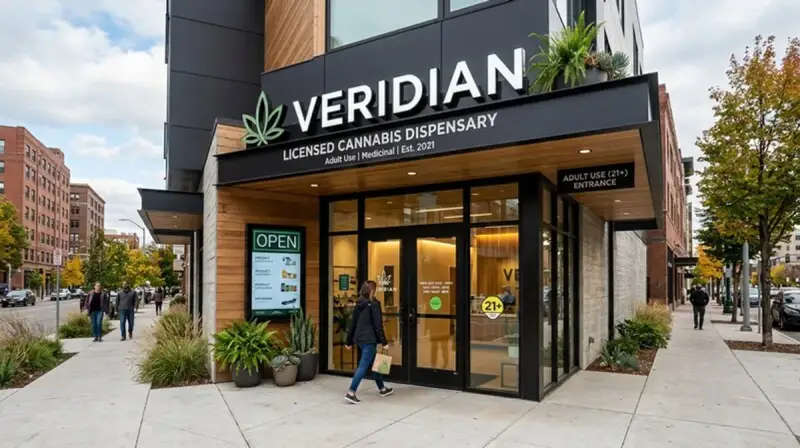
- Legal Status: Recreational cannabis fully legal in Michigan for adults 21+ since December 2019
- Age Requirement: 21+ with valid government-issued photo ID
- Possession Limit: 2.5 oz (71g) in public; 10 oz at private residence
- Average Price: $4–$22/g depending on tier — among the lowest legal prices in the US
- Best Areas: Midtown, Corktown, Hazel Park corridor, New Center, Eastern Market area
- Consumption Lounges: Licensed social consumption venues operating — confirm locations before visiting
- Social Equity: Detroit has one of the nation’s strongest cannabis social equity licensing programs
- State Lines: Never cross — transporting cannabis out of Michigan is a federal crime
Detroit has quietly become one of the most compelling and underrated cannabis destinations in the United States. Michigan voters approved recreational cannabis via Proposal 1 in November 2018, and since then the Motor City has built one of the most mature, most competitively priced, and most socially conscious cannabis markets in the country. The combination of intense retail competition, a robust social equity licensing program, a growing consumption lounge scene, and Detroit’s extraordinary cultural richness — world-class music history, resurgent culinary culture, striking urban architecture, world-famous automotive heritage — makes Detroit a genuinely excellent cannabis travel destination for adults 21 and older.
Price is where Detroit consistently surprises visitors. The saturation of the Michigan market, combined with aggressive competition among hundreds of licensed retailers, has driven flower prices to levels that consistently undercut California, Colorado, Illinois, and almost every other major legal market. Budget flower at $4–$6 per gram is common at value-tier shops; even mid-range and premium products are priced below what most US markets charge for equivalent quality. For the value-conscious cannabis traveler, Detroit is difficult to beat. For complete context on Michigan’s legal framework, see our Michigan cannabis laws guide.
Cannabis Laws for Visitors in Detroit
Michigan’s Michigan Regulation and Taxation of Marihuana Act (MRTMA) governs adult-use cannabis statewide, and Detroit operates under both state law and its own local licensing and zoning framework. The rules for visitors are clear and easy to follow.
What You Can Do
- Purchase up to 2.5 ounces of cannabis flower (or equivalent) per transaction from any licensed recreational dispensary
- Possess up to 2.5 ounces on your person in public at any time
- Consume in a private residence where the property owner permits it (confirm with Airbnb hosts in advance)
- Visit licensed cannabis consumption lounges where social use is approved
- Purchase edibles, concentrates, tinctures, topicals, and vapes alongside flower
- Gift cannabis to another adult 21+ (no money may change hands in an unlicensed transfer)
What You Cannot Do
- Consume in any public space — sidewalks, parks, vehicles (even parked), or festival grounds
- Drive under the influence — Michigan’s zero-tolerance per se law applies to drivers under 21; active impairment laws apply to all drivers
- Transport cannabis across any state line — federal offense; Detroit Metro Airport TSA must report cannabis to law enforcement
- Purchase from unlicensed dealers — black market cannabis in Michigan is a misdemeanor concern and product safety is unverified
- Consume on federal property including national parks, post offices, or airport grounds
Detroit’s Price Advantage: Market Competition Explained
No serious cannabis travel guide to Detroit can avoid the city’s most compelling attraction: the price. Michigan approved recreational cannabis in 2018 and launched adult-use sales in December 2019. The state issued recreational licenses aggressively, and Michigan’s relatively low licensing costs compared to California or New York attracted a large number of entrants. Detroit, as the state’s largest city, became the most densely licensed cannabis market in the Midwest.
The result is genuine price competition across all tiers. Budget dispensaries routinely run deals at $4–$6 per gram on standard flower and $2–$3 per pre-roll. Mid-range shops price competitively at $8–$14 per gram with full edible, concentrate, and vape menus. Even premium craft flower rarely exceeds $22 per gram. Compared to Illinois (Chicago) where mid-range flower often sells for $18–$25/g due to state tax rates and licensing restrictions, or California where $15–$20/g is standard at mid-tier, Detroit delivers extraordinary value.
| Market | Budget Flower/g | Mid-Range/g | Craft/g | Tax Rate (approx) |
|---|---|---|---|---|
| Detroit, Michigan | $4–$8 | $8–$14 | $14–$22 | ~16% |
| Chicago, Illinois | $12–$16 | $18–$25 | $25–$40 | ~40%+ |
| Los Angeles, California | $8–$12 | $14–$20 | $20–$35 | ~30–35% |
| Denver, Colorado | $7–$12 | $12–$18 | $18–$28 | ~25% |
| New York City, NY | $14–$18 | $20–$28 | $28–$45 | ~21% |
Neighborhood Guide: Detroit’s Cannabis Corridor
Detroit’s dispensary scene spans the entire city, but several neighborhoods have emerged as natural cannabis tourism itinerary anchors — combining dispensary access with food, culture, and entertainment options that make for complete day trips.
| Neighborhood | Cannabis Scene | Best For | Other Nearby Attractions |
|---|---|---|---|
| Midtown | Multiple flagship dispensaries; arts district integration | First-time visitors, cultural tourism | Detroit Institute of Arts, MOCAD, Wayne State |
| Corktown | Boutique dispensaries; hip bar and restaurant scene | Craft cannabis seekers, foodies, architecture fans | Michigan Central Station, Tiger Stadium site |
| Eastern Market Area | Value-focused shops; Saturday market proximity | Budget shoppers, market day visitors | Eastern Market, murals, food vendors |
| Hazel Park Corridor | Extremely dense dispensary strip; fiercest price competition | Value hunters; multi-stop comparison shopping | Adjacent to Detroit; easy highway access |
| New Center | Established multi-brand retailers; medical upgrades available | Experienced consumers wanting full menu | Fisher Building, Motown Museum |
| Downtown | Growing retail presence; convenience for hotel visitors | Hotel-based tourists | Little Caesars Arena, Riverwalk, casinos |
The Hazel Park corridor — technically the adjacent city of Hazel Park rather than Detroit proper, but minutes from the city center on John R Street and the surrounding blocks — is where cannabis tourism price competition reaches its peak. Hazel Park issued a high density of dispensary licenses along a commercial strip, creating a situation where multiple shops compete literally side by side. If your priority is finding the best price on any given product, this is where to look. Bring your phone and compare real-time menus on Weedmaps or Leafly before selecting a destination.
Detroit’s Social Equity Cannabis Program
Detroit’s cannabis licensing framework includes one of the most ambitious social equity provisions in the United States. The program prioritizes licenses for individuals from communities most impacted by the historic enforcement of cannabis prohibition — predominantly African American neighborhoods where drug policing rates were dramatically disproportionate. Detroit’s equity program offers expedited licensing, reduced fees, and technical assistance to qualifying applicants.
For cannabis tourists with an interest in the ethical and political dimensions of the industry, seeking out equity-licensed operators is a meaningful way to direct spending. Many Detroit equity operators are first-generation business owners building from scratch — their shops tend to be community-oriented, neighborhood-embedded, and staffed by people with genuine personal stakes in the industry’s social redemption. Ask at any dispensary whether they are equity-licensed or equity-affiliated — in Detroit, many will be proud to confirm it.
Consumption Lounges: Detroit’s Social Cannabis Scene
Detroit has been progressive in licensing social consumption venues, allowing operators to create legal, purpose-built spaces where adults can consume cannabis in a social environment. This is a significant advantage over many other Midwest markets where consumption is effectively limited to private homes.
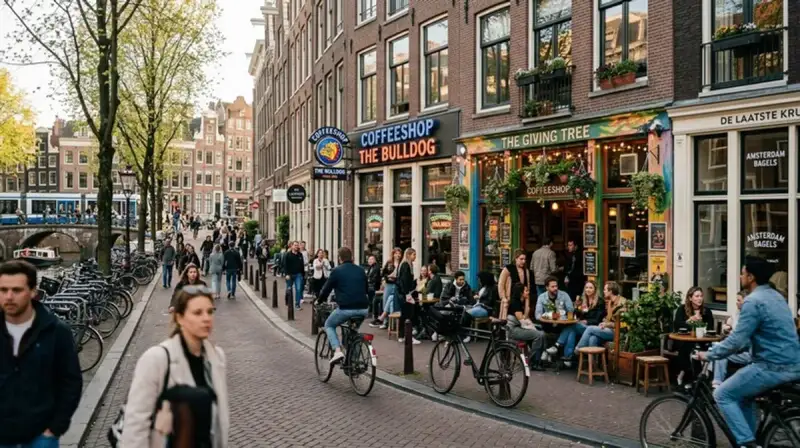
Detroit’s consumption lounges vary in format. Some are attached to retail dispensaries — you purchase at the counter and consume in an adjacent lounge area. Others are standalone social clubs or event venues with consumption permits. The experience at a quality Detroit consumption lounge — ambient music, comfortable seating, knowledgeable staff available for consultations, and a community of fellow consumers — is genuinely comparable to what Amsterdam’s coffee shop scene offers, but in a distinctly American cultural context.
Detroit’s music heritage infuses its cannabis culture in ways that visitors consistently find distinctive. The city that gave birth to Motown, techno, and a significant portion of the American rock canon has venues that combine live music with cannabis in formats that feel entirely organic to the city’s DNA. Check current event listings for dispensary-adjacent music nights and cannabis-friendly concert experiences before your visit.
Best Strains for Detroit
Michigan has developed a robust craft cannabis cultivation sector with genuine local identity. When shopping Detroit dispensaries, always ask for Michigan-grown craft flower — in-state artisan producers often deliver superior freshness, terpene preservation, and unique genetic expressions that nationally distributed brands cannot match.
| Strain | Type | Avg THC | Best For in Detroit |
|---|---|---|---|
| Green Crack | Sativa | 18–24% | Morning dispensary hopping, Eastern Market visits |
| Durban Poison | Pure Sativa | 17–22% | Daytime neighborhood exploration, mural tours |
| Blue Dream | Sativa-dominant Hybrid | 18–22% | Live music, consumption lounge social sessions |
| Wedding Cake | Hybrid | 22–27% | Gallery openings, evening dining in Corktown |
| Grape Pie | Indica | 20–25% | Evening wind-down after full day of touring |
| Biscotti | Indica-dominant Hybrid | 21–26% | Late-night relaxation; pairs with Detroit’s food scene |
| Zkittlez | Indica-dominant | 19–23% | Flavor seekers; evening sessions in private accommodation |
| Michigan Craft (various) | Varies | Varies | Ask budtender for locally grown single-batch releases |
For daytime exploration of Detroit’s neighborhoods, murals, and museums, uplifting sativa-forward cultivars work best. Green Crack remains a Michigan dispensary staple for its sharp citrus profile and clean, energetic effect. Durban Poison — the South African pure sativa landrace — is another consistent Michigan performer: energetic, clear-headed, with a sweet anise aroma that pairs well with coffee and morning exploration. Learn more about energizing options in our effects guide.
For social settings — Detroit’s consumption lounges, live music venues, or art gallery openings — balanced hybrids deliver the best experience. Blue Dream moves enormous volume across Michigan dispensaries for good reason: its balance of gentle body relaxation and creative mental clarity is ideal for engaged social environments. Wedding Cake (Pink Cookies) is equally popular — sweet vanilla-earth flavors with an elevating, mood-positive effect that suits the city’s energetic nightlife culture.
For evening wind-downs, Grape Pie, Biscotti, and Zkittlez are widely available across Michigan and deliver the deep relaxation that makes a Detroit late-night worth savoring. These strains pair naturally with Detroit’s extraordinary restaurant scene — from Corktown’s upscale dining to Eastern Market’s Saturday morning food vendors. Browse our complete strain library to research before you shop.
Practical Travel Tips for Detroit Cannabis Tourists
Using dispensary apps and menus: Detroit dispensaries almost universally maintain real-time online menus through platforms like Leafly and Weedmaps. Browsing before you visit saves time, lets you compare prices across shops, and helps you identify daily specials or new arrivals. Many dispensaries accept online pickup orders — you arrive, confirm your ID, and collect your order without waiting in a full retail queue.
Getting around Detroit: Detroit is a car city, and most cannabis tourism requires wheels. Rideshare (Uber and Lyft both operate) is the strongly recommended option — never drive under the influence. If you’re staying downtown or in Midtown, you can reach nearby dispensaries on foot or by the Q Line streetcar. Hazel Park requires driving from most Detroit hotels — plan rideshare accordingly.
First-time customer discounts: Most Detroit dispensaries offer first-time customer discounts ranging from 10–25% off. These apply once per dispensary per customer. With the density of shops in the city, a single trip can yield multiple first-timer discounts across different locations. Ask at the door before completing your purchase — staff will tell you immediately what introductory offers are available.
The state line warning: Detroit sits directly on the US-Canada border (Windsor, Ontario is literally across the river), and is minutes from Indiana and Ohio by road. Cannabis purchased in Michigan cannot cross any of these borders. The Ambassador Bridge and Detroit-Windsor Tunnel are international crossings with customs and drug interdiction at both ends. Never attempt to leave Michigan with cannabis in any direction by any means. Detroit Metro Airport (DTW) has TSA screening, and while TSA’s primary mission is security rather than drug enforcement, officers are legally required to report cannabis to airport police.
Drug testing awareness: If you have workplace drug testing requirements, THC metabolites can remain detectable in urine for 3–30 days depending on frequency of use, individual metabolism, and test sensitivity threshold. See our comprehensive drug test guide for precise detection windows and how to minimize risk.