




Montréal Cannabis Travel Guide
Montréal is Canada’s most culturally distinct cannabis destination — a bilingual, bicultural city of over 2 million people where French language, European aesthetics, and North American cannabis legalization converge in a combination found nowhere else on earth. Since Canada’s Cannabis Act came into force on October 17, 2018, Montréal residents and visitors have been able to purchase cannabis legally from government-run SQDC stores. But Quebec has taken a distinctively restrictive approach to legalization: a government retail monopoly, the country’s highest minimum age (21), tighter public consumption rules than most provinces, and a history of attempting to restrict home cultivation that courts struck down. Understanding how Quebec differs from the rest of Canada is essential preparation for a Montréal cannabis visit — visitors who arrive assuming they can walk into a private dispensary like in Toronto or Vancouver will be immediately disoriented.
- Legal Status: Fully legal recreational cannabis — Canada Cannabis Act (October 17, 2018)
- Minimum Age: 21 in Quebec — higher than federal minimum (18) and all other Canadian provinces/territories
- Where to Buy: SQDC (Société québécoise du cannabis) government stores only — no private retailers permitted in Quebec
- Possession Limit: 30 grams in public; more permitted at private residence under federal Cannabis Act
- Public Consumption: Prohibited near schools, daycares, health facilities, playgrounds, and on public transit; technically permitted in other outdoor areas but socially constrained
- Home Grow: 4 plants federally legal; Quebec attempted provincial ban but courts upheld federal right — now legal in Quebec
- Cross-Border Transport: Illegal — do not take cannabis across the Canada-US border under any circumstances; US CBP enforces zero tolerance
- Winter Cannabis Storage: Extreme cold (−20°C regular) makes cannabis brittle; store in airtight container at room temperature
Canada’s Cannabis Act: Federal Framework
The Cannabis Act (Bill C-45), which came into force on October 17, 2018, made Canada the second country in the world (after Uruguay) to legalize recreational cannabis at the federal level. The Act established a national framework: adults 18 and over (federal minimum) may possess up to 30 grams in public, purchase from provincially licensed retailers, cultivate up to 4 plants per household, and share up to 30 grams with other adults. Edibles, concentrates, and topicals were added to the regulated market in October 2019.
The federal framework delegated significant responsibility to provinces — specifically retail structure, distribution, and age requirements. Provinces could raise the minimum age above 18 but not lower it. They could choose government retail, private retail, or hybrid models. They could set additional restrictions on consumption locations. Quebec exercised this delegation more aggressively than any other province, producing the most restrictive provincial cannabis framework in Canada.
For international visitors, Canada’s federal legalization means cannabis is fully legal when purchased from SQDC and consumed within CDMX — but the federal border remains a hard line. Canadian law prohibits exporting cannabis, and the Cannabis Act makes no exception for US legal states or any other international destination. Cannabis purchased legally in Montréal must remain in Canada.
The SQDC: Quebec’s Government Cannabis Monopoly
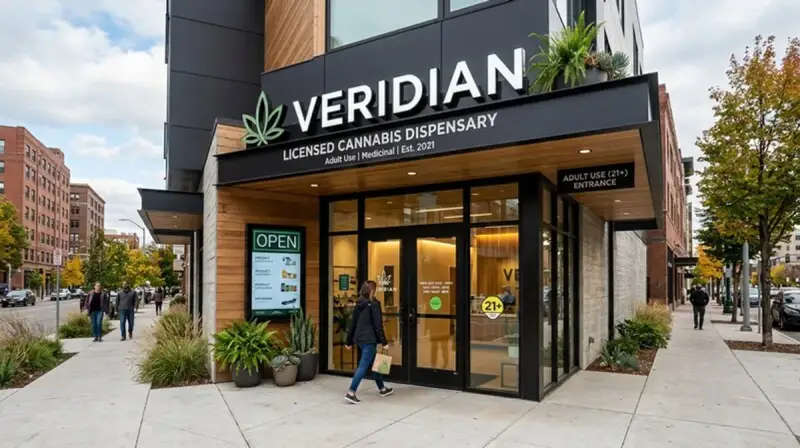
The Société québécoise du cannabis (SQDC) is the sole legal cannabis retailer in Quebec. While Ontario alone has over 1,500 licensed private cannabis stores (and Alberta and British Columbia have robust private retail sectors), Quebec modelled its cannabis retail on its alcohol system — the SAQ (Société des alcools du Québec) — maintaining government control of both procurement and retail. The SQDC launched on October 17, 2018, opening 12 stores across the province on day one; the network has since expanded to cover all major Montréal neighbourhoods and Quebec cities.
For visitors, the SQDC model has specific practical implications. Advantages: consistent quality standards, accurate and regulated THC/CBD labelling, harm reduction-trained staff, and the confidence of purchasing from a government entity. Products sold at SQDC meet Health Canada testing requirements. The SQDC website (sqdc.ca) carries the full current product catalogue with detailed lab information, strain data, and pricing — reviewing it before your visit allows informed purchasing decisions.
The relative disadvantage compared to competitive private markets: less product diversity than Ontario’s enormous private retail sector, fewer boutique craft producers, and a government aesthetic rather than the curated store experience of private cannabis boutiques in Vancouver or Toronto. However, SQDC stores in Plateau and Mile End have knowledgeable staff and stock a genuinely good range of Quebec-sourced and national products.
SQDC Montréal locations are distributed across all major residential areas. The Plateau-Mont-Royal and Mile End stores serve the most cannabis-positive neighbourhoods. Online ordering with home delivery is available — confirm with your accommodation whether delivery is accepted at their address. Quebec-registered delivery addresses are supported; hotel delivery may be restricted depending on the property’s policy.
Quebec vs. Other Provinces: The Differences That Matter
| Rule | Federal Standard | Quebec Specific | Other Provinces (Examples) |
|---|---|---|---|
| Minimum Age | 18 | 21 (raised from 18 in 2020) | 19 (Ontario, BC, Alberta, most others) |
| Retail Model | Provincial choice | Government monopoly (SQDC) | Private (ON/BC/AB), hybrid (some others) |
| Home Grow | 4 plants/household | 4 plants (courts upheld federal right over Quebec ban) | 4 plants (most provinces) |
| Public Consumption | Provincial discretion | Same places as tobacco + near schools/parks restrictions; municipal bylaws add more | BC most permissive; ON/AB more restricted |
| Product Labelling | Health Canada standards | Must include French-language labelling per Quebec language law (Bill 96 context) | English optional in other provinces |
| Edibles | Legal federally since Oct 2019 | Legal; sold at SQDC | Legal in all provinces |
| Concentrates | Legal federally since Oct 2019 | Legal; sold at SQDC | Legal in all provinces |
The 21+ age requirement is the most practically significant Quebec-specific rule for travellers. Canadians visiting Montréal from other provinces who are 18, 19, or 20 years old cannot legally purchase cannabis in Quebec — they could do so legally in their home province. International visitors under 21 are similarly excluded. The SQDC checks ID rigorously. Attempting to use an ID that does not clearly establish 21+ age will result in a refused sale.
The French-language requirement is a distinct Quebec element. All SQDC product packaging must meet Quebec’s language law requirements, including French-language labelling. This has practical implications for producers selling in Quebec — bilingual or French-primary labelling is mandatory. For consumers, it means the product information on Quebec-sold cannabis is bilingual; this is rarely a practical obstacle but reflects Quebec’s distinct regulatory culture.
Montréal Neighbourhoods: Cannabis Culture and Social Life
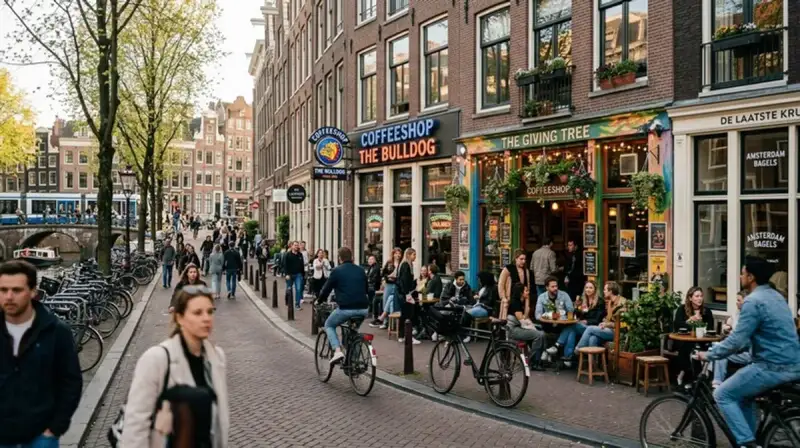
Plateau-Mont-Royal is Montréal’s most iconic neighbourhood for cannabis culture. Its tree-lined streets of colourful Victorian rowhouses (the classic Montréal housing stock with exterior staircases), independent cafés, bistros, and the enormous Parc La Fontaine provide the natural social environment for Montréal’s cannabis culture. Parc La Fontaine, in the heart of Plateau, is one of the most popular gathering spaces in the city and has been central to the city’s summer cannabis culture since legalization. The neighbourhood’s progressive, Francophone bohemian character makes it the natural home for cannabis as a social activity.
Mile End, immediately north of Plateau, is Montréal’s most creatively concentrated neighbourhood — a mix of Jewish heritage, independent music labels and recording studios, design agencies, and some of the city’s most celebrated restaurants (Schwartz’s, Fabergette, multiple Michelin-recognition-level establishments). Its St-Laurent Boulevard / Rue Bernard corridor has an SQDC and a dense café culture. Mile End is the neighbourhood that best captures Montréal’s intersection of Francophone and Anglophone culture — both languages are heard equally, and the creative class is visibly cannabis-friendly.
Mont-Royal Park — the defining landmark of the city, a wooded hill in the centre of the island designed by Frederick Law Olmsted (who also designed Central Park) — is a massive urban park with trails, viewpoints, and open lawns. The summit Kondiaronk Belvedere offers the best city view and attracts a diverse social mix. The forested trail areas are popular for discreet cannabis use, though consumption on park land is technically regulated under both provincial rules and the city’s municipal code.
Rosemont–La Petite-Patrie, east of Plateau, has a more working-class Francophone character and is less visited by international tourists — but has authentic neighbourhood cannabis culture among long-term Montréal residents and is worth exploring beyond the tourist circuit. The St-Denis corridor running through Rosemont offers a genuine Montréal street experience.
Ville-Marie (Downtown) contains SQDC stores serving the hotel district and business areas. Less atmospheric for cannabis tourism than the residential neighbourhoods, but practical for visitors based downtown near Peel, McGill, or the Quartier des Spectacles entertainment area.
Seasonal Considerations and Winter Cannabis Storage
Montréal’s cannabis tourism season peaks in summer (June through August). The city’s jazz festival (late June / early July), Just For Laughs comedy festival (July), and Osheaga music festival (August) draw enormous crowds and characterize the city at its most social and festival-oriented. Outdoor parks are actively used; the terrasses (patios) of bars and restaurants create an outdoor social culture that extends naturally into cannabis use. Summer evenings in Plateau or on the St-Lawrence waterfront at the Old Port are Montréal at its most vibrant.
Winter in Montréal is extreme and requires specific planning for cannabis visitors. Temperatures regularly reach −20°C (−4°F) with wind chill pushing apparent temperatures lower. The underground city (RESO) — a 33km network of underground pedestrian paths connecting the metro, shopping centres, hotels, and buildings — means it is possible to spend days in the city without going outside. Cannabis consumption in the underground city or in any enclosed public space is prohibited.
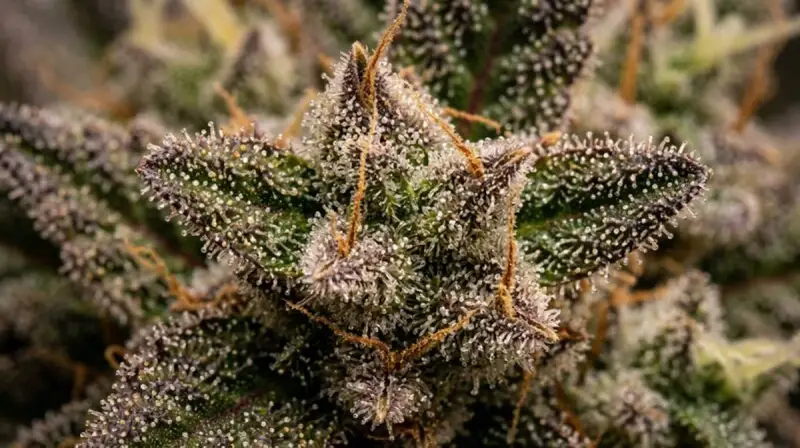
Winter cannabis storage guidance: Extreme cold damages cannabis quality in several ways. Below freezing, trichomes — the resin structures containing cannabinoids and terpenes — become brittle and break away from the plant material with handling, reducing both potency and aroma. Rapid temperature changes between cold outdoor air and warm indoor environments can cause condensation inside imperfectly sealed packaging, introducing moisture that promotes mold. Store cannabis in an airtight glass or rigid container at room temperature (15–21°C is ideal). Do not leave cannabis in vehicles, outdoor bags, or lockers exposed to freezing temperatures. SQDC packaging is typically airtight but not designed for prolonged cold exposure.
Cross-provincial transport: Cannabis purchased legally in Quebec can be transported within Quebec and throughout Canada (the Cannabis Act permits inter-provincial transport of legally purchased cannabis, though some provinces add complexity). Do not transport across the US border in either direction under any circumstances.
Practical Tips for Visiting Montréal
Getting there: Montréal-Trudeau International Airport (YUL) is a major North American hub. Canadian Border Services Agency applies standard rules: do not bring cannabis into Canada from outside the country — even from US legal states, which are irrelevant to Canadian federal law. Do not take cannabis out of Canada. Within Canada, legally purchased Quebec cannabis can be transported within Quebec and inter-provincially.
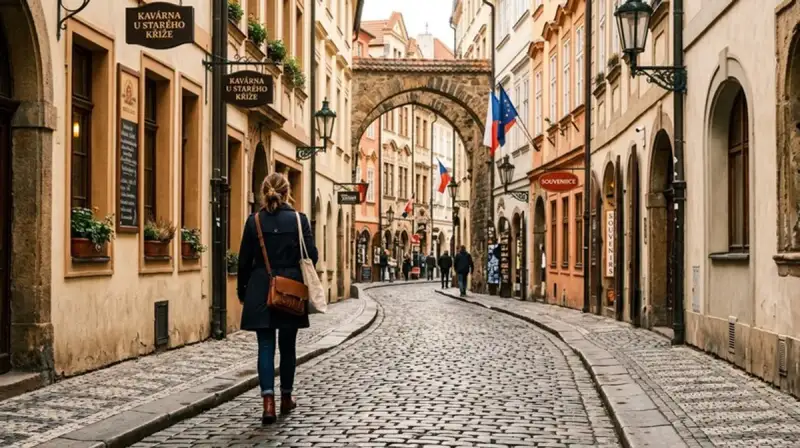
Language: Montréal is a bilingual city where French is official and dominant. SQDC staff are universally bilingual; English service is available throughout tourist areas. Speaking some French — even basic bonjour/merci/s’il vous plaît — is appreciated by locals and meaningfully improves your experience. SQDC product information is bilingual.
Getting around: The Montréal metro (STM) efficiently connects all major cannabis-relevant neighbourhoods. Plateau, Mile End, and Rosemont are served by the Orange and Green lines. Mont-Royal station deposits you at the foot of the mountain. Bixi bike-share is extensively used in summer. In winter, the metro is the essential transport system; the underground city connects downtown nodes.
Marcus Webb — ZenWeedGuide Senior Editor
Marcus covers cannabis policy in legal jurisdictions across Canada, the US, and Europe. He has researched Quebec’s distinctive cannabis framework and the SQDC’s government monopoly model in depth, including its contrast with British Columbia’s private retail market.
Frequently Asked Questions

Montréal’s cannabis culture combines Canada’s federal legalization framework with Quebec’s distinctive restrictions. Understanding the SQDC monopoly, the 21+ age rule, and the prohibition on cross-border transport is essential preparation for any visit.