
- Legal Status: Recreational legal since March 2021 (MRTA). Licensed retail began late 2022 via CAURD program.
- Purchase Age: 21 years old with valid government-issued photo ID.
- Possession Limit: 3 oz (85g) flower in public — the highest limit of any US state. 24g concentrate.
- Where to Buy: State-licensed CAURD dispensaries across all five boroughs. Growing number of licensed stores.
- Tourist Access: Full access at licensed stores — no residency requirement.
- Public Consumption: Allowed where tobacco smoking is permitted. Prohibited on MTA subway/bus, near schools, indoor public spaces.
- Unlicensed Market: Very visible but risky — unregulated, untested products. Always buy from state-licensed stores.
The MRTA: New York’s Landmark Cannabis Law
New York State passed the Marihuana Regulation and Taxation Act (MRTA) in March 2021, signed by Governor Andrew Cuomo. The law was designed not only to create a legal cannabis market but explicitly to address the harms of decades of disproportionate cannabis enforcement against Black and Latino communities — NYC was the cannabis arrest capital of the world for years, with hundreds of thousands of mostly low-income minority New Yorkers arrested for minor possession offenses.
The MRTA’s social equity framework is central to understanding NYC’s licensing structure. The Conditional Adult-Use Retail Dispensary (CAURD) program, which issued the first retail licenses, prioritized applicants who had a prior cannabis conviction (or whose immediate family member did) and who had a background in running a legal business. This "justice-impacted" licensing approach is designed to ensure that the communities most harmed by prohibition are among the first to benefit economically from legalization.
The Office of Cannabis Management (OCM) oversees the state cannabis regulatory framework. Early implementation was slowed by legal challenges from multi-state operators who challenged the CAURD priority licensing as discriminatory, resulting in court injunctions in some regions. Despite these complications, the licensed retail market has grown significantly and continues to expand.
| Rule | Detail | Penalty if Violated |
|---|---|---|
| Public possession up to 3 oz (85g) | Legal | N/A |
| Home possession up to 5 lbs | Legal (for personal use) | N/A |
| Home cultivation | Legal — 6 plants per adult (max 12/household) | Not yet enforced at home scale |
| Smoking where tobacco is permitted | Legal | N/A |
| Smoking in smoke-free areas | Prohibited | Civil violation, fine |
| Smoking on MTA subway or buses | Prohibited | MTA fine |
| Within 100 feet of school entrance (school hours) | Prohibited | Civil fine |
| Driving under the influence | DUI charge | Criminal charges, license suspension |
| Crossing state lines with cannabis | Federal crime | Federal drug charges |
Licensed Dispensaries vs. the Unlicensed Market
New York City presents visitors with a situation unlike any other legal cannabis market: a highly visible, physically pervasive unlicensed market operating alongside a growing but still limited licensed retail system. Understanding the difference is essential for anyone visiting NYC with cannabis in mind.
After legalization in 2021, thousands of unlicensed cannabis shops opened across New York City — many in prominent retail locations, some openly displaying large cannabis-leaf signs and offering drive-through or express service. These operations have been described variously as "smoke shops" or "head shops" but sold cannabis products without state licensure. The city and state have dramatically escalated enforcement against these operations in 2023–2025, closing thousands of unlicensed shops, but the unlicensed market remains.
Unlicensed vendors sell unregulated, untested products. There is no guarantee of potency accuracy, pesticide testing, or microbial contamination testing for products from unlicensed sources. Some products sold by unlicensed vendors have been found to contain synthetic cannabinoids or contaminants that cause adverse health effects. Purchasing from unlicensed vendors also does not support the legal framework that was specifically designed to benefit justice-impacted communities.
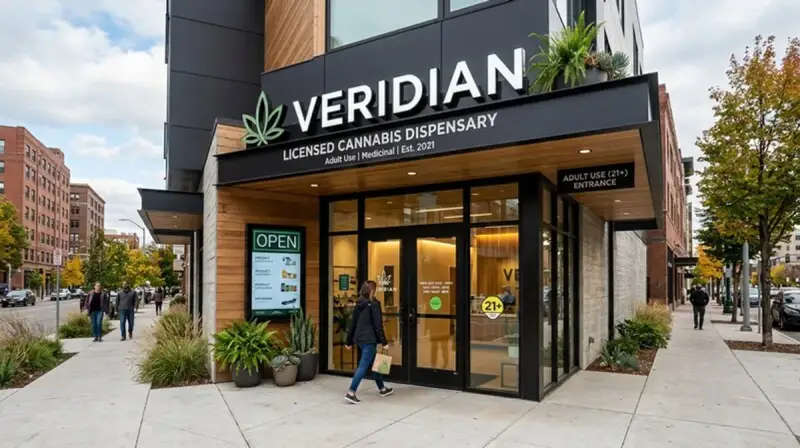
State-licensed CAURD dispensaries carry lab-tested, labeled products meeting New York State OCM standards. These stores are easily identifiable by the OCM license displayed prominently at the entrance, the required age verification at point of sale, and the regulated product labeling including THC percentages, lab test results, and health warnings. The OCM maintains a public list of licensed dispensaries on its website (cannabis.ny.gov).
Neighborhoods and Cannabis Culture by Borough
New York City’s cannabis culture is as diverse as the city itself — spread across five boroughs with distinct neighborhood characters that shape the cannabis retail and consumption experience differently in each area.
Manhattan: The licensed dispensary presence in Manhattan is concentrated in neighborhoods like Harlem, the East Village, and Washington Heights — areas with strong community ties to cannabis justice advocacy. The East Village and Lower East Side have a longstanding countercultural relationship with cannabis that dates to the punk and hip-hop eras. Midtown dispensaries exist but are fewer; the Upper West and Upper East Sides have seen growing licensed retail in recent months.
Brooklyn: Brooklyn has the highest number of licensed dispensaries of any NYC borough. Neighborhoods like Bed-Stuy, Crown Heights, Flatbush, and Bushwick have several justice-impacted CAURD operators serving communities with deep personal stakes in the licensing outcome. Williamsburg and Greenpoint attract a younger, more transient cannabis consumer and have several well-reviewed dispensaries in the area’s dense commercial corridors.
The Bronx and Queens: The Bronx and Queens have growing licensed retail networks, though historically lagged Manhattan and Brooklyn in licensed store density. Both boroughs have significant communities of color that were disproportionately impacted by decades of cannabis enforcement, and the CAURD framework has enabled community members here to become owners of the new legal market.
| Borough / Neighborhood | Character | Cannabis Scene | Best For |
|---|---|---|---|
| East Village / LES, Manhattan | Countercultural, bohemian | Historic advocacy, growing licensed retail | Cultural history, indie stores |
| Harlem, Manhattan | Community, arts | Strong justice-impacted operators | Community-rooted cannabis |
| Williamsburg / Greenpoint, Brooklyn | Young, arts, international | Dense licensed options, competitive | Variety, accessibility |
| Bed-Stuy / Crown Heights, Brooklyn | Residential, community | CAURD operators, community focus | Supporting equity mission |
| Bushwick, Brooklyn | Creative, industrial | Growing licensed scene | Art + cannabis combination |
Practical Tips for Cannabis Visitors to New York City
Verify the License: Before buying from any NYC cannabis retail location, verify it is OCM-licensed. Look for the official New York State cannabis retail license displayed at the entrance. Licensed stores will also require age verification for every purchase. When in doubt, check the OCM’s public dispensary locator at cannabis.ny.gov.
Smoking in Parks: New York City has some of the most park-dense urban geography in North America, and many parks permit tobacco smoking in designated areas or broadly. Under MRTA, cannabis can be consumed where tobacco is permitted — which means some NYC parks allow outdoor consumption. However, NYC Parks rules also prohibit smoking near playgrounds, ballfields, and recreational facilities. Large parks like Prospect Park and Riverside Park have areas where discreet outdoor consumption is widely practiced, though enforcement can vary.
The Subway: Cannabis consumption is prohibited on all MTA subway and bus services. Do not smoke or vape on subway platforms, in subway cars, or on buses. MTA enforcement has increased significantly in recent years. More practically, consuming on transit is unpleasant for fellow passengers and inconsiderate regardless of legal status.
Hotels and Short-Term Rentals: NYC hotels universally prohibit all smoking. Short-term rental hosts vary widely — search for 420-friendly listings. The city’s density means that window consumption can affect neighbors and common spaces. Be considerate and use designated smoking areas or outdoor private spaces where available.
JFK, LGA, and EWR Airports: All three airports serving NYC (JFK, LaGuardia, and Newark) are subject to federal or bi-state authority. Cannabis is prohibited. TSA and federal law enforcement operate at these facilities. Do not bring cannabis to or from any New York area airport.
Frequently Asked Questions — New York City Cannabis Travel
Is cannabis legal in New York City?
Yes. New York State legalized recreational cannabis through the MRTA in March 2021. Adults 21+ can possess up to 3 ounces of flower in public — the highest public possession limit in the US. Licensed CAURD dispensaries operate across all five boroughs.
Where can I legally smoke cannabis in New York City?
Cannabis consumption is permitted wherever tobacco smoking is allowed under NYC law. This includes many outdoor public areas but excludes the MTA subway and buses, indoor public spaces, within 100 feet of school entrances during school hours, and areas with explicit no-smoking signage. Outdoor parks with smoking permissions allow cannabis in those same areas.
Are there licensed cannabis dispensaries in NYC?
Yes. Licensed CAURD dispensaries operate across Manhattan, Brooklyn, Queens, the Bronx, and Staten Island. State-licensed stores carry lab-tested, regulated products and display OCM licenses prominently. Verify license status on cannabis.ny.gov before purchasing. Avoid unlicensed shops selling unregulated, untested products.
What is the unlicensed cannabis market in NYC?
NYC has a historically very large unlicensed cannabis retail market. Unlicensed shops sell unregulated, untested products with no consumer protections and no quality guarantees. The city has significantly increased enforcement against unlicensed retailers but the market persists. Always purchase from state-licensed OCM-registered dispensaries for product safety and to support the legal equity-focused market.
What are the home cultivation rules in NYC?
New York state allows adults to cultivate up to 3 mature and 3 immature plants (6 total), with a household maximum of 12 plants per residence. This is not relevant for most short-stay visitors but reflects New York’s relatively liberal cultivation framework. Home-grown cannabis may not be sold or gifted for commercial value.
Can I fly with cannabis from NYC airports?
No. JFK, LaGuardia, and Newark airports are governed by federal authority. Cannabis is federally illegal. TSA operates under federal law. Do not bring cannabis to any NYC-area airport regardless of your destination, including other legal states. Federal charges for cannabis at airports are disproportionately serious relative to the amounts typically involved.
Best Strains and Products to Buy in NYC Dispensaries
New York’s licensed cannabis market has developed a distinct product culture shaped by the city’s demanding, discerning consumer base. NYC dispensaries carry a broad range of products from both New York-licensed cultivators and established multi-state brands. Because the legal market is still growing, product availability varies significantly by dispensary — online menu browsing before visiting is essential.
New York-Grown Craft Cannabis: New York State has been actively licensing craft cultivators, particularly through equity and craft tier licensing. Look for indoor and greenhouse flower from New York farms — the state’s climate produces distinct terpene profiles in sun-grown outdoor cannabis during the late summer and fall harvest season. Ask budtenders specifically for New York-origin flower; supporting local cultivators helps the state’s agricultural cannabis sector develop.
Concentrates and Extracts: NYC dispensaries carry a strong range of concentrates including live resin, rosin, and live rosin from both state and out-of-state licensed producers. For experienced consumers, concentrates offer the highest potency-per-price ratio in the legal market. Caryophyllene and limonene-dominant concentrates are particularly popular with NYC’s city-active consumers for their balanced energy and focus effects.
Edibles and Beverages: New York has a growing licensed edibles market. THC-infused gummies, chocolates, and beverages are widely available. The state caps single-serving products at 10mg THC per serving and 100mg per package — dosing consistent with what new and moderate consumers need. For first-timers or those returning after a tolerance break, start at 2.5–5mg and wait at least 90 minutes before consuming more.
Pre-Rolls: Pre-rolled joints are the highest-velocity cannabis product in NYC dispensaries, reflecting the city’s on-the-go culture. Look for infused pre-rolls (flower plus concentrate or kief) for enhanced potency, or multi-packs of single-strain standard pre-rolls for sampling variety across multiple sessions.
| Product Category | NYC Market Strength | Price Range (approx after tax) | Best For |
|---|---|---|---|
| NY-grown craft flower | Growing — excellent quality | $15–$25/g premium | Supporting local, terpene exploration |
| Live resin / rosin concentrate | Strong — wide selection | $40–$80/g | Experienced consumers, high potency |
| THC gummies / edibles | Excellent — broad market | $20–$40 per 100mg pack | Discreet consumption, hotel guests |
| Infused pre-rolls | Strong NYC specialty | $12–$20 each | Convenient, social, on-the-go |
| THC beverages | Growing fast | $6–$12 per can | Social settings, low-key dosing |
Drug Testing and Employment Considerations for Visitors
For visitors with jobs that involve pre-employment or random drug testing, consuming cannabis in New York — even legally — carries potential employment consequences. Cannabis metabolites (primarily THC-COOH) are detectable in urine for days to weeks after use depending on consumption frequency, body composition, and the sensitivity of the test used. New York State has enacted relatively strong employee cannabis protections under the Cannabis Law, which generally prohibit employers from taking adverse action based on legal off-duty cannabis use. However, these protections apply to New York State employees, not employees of companies headquartered elsewhere or subject to federal drug testing requirements (transportation, defense contractors, federal employees).
If you are subject to a federal Drug-Free Workplace program, DOT drug testing (for commercial vehicle operators, pilots, railroad workers, etc.), or an employment contract with a zero-tolerance policy that you signed in your home state, consuming cannabis in NYC’s legal market does not shield you from testing consequences. Know your employer’s specific requirements before consuming, regardless of where you are traveling. See our drug test guides for detailed detection window information.
Frequently Asked Questions — New York City Cannabis Travel
Is cannabis legal in New York City?
Yes. New York State legalized recreational cannabis through the MRTA in March 2021. Adults 21+ can possess up to 3 ounces of flower in public — the highest public possession limit in the US. Licensed CAURD dispensaries operate across all five boroughs.
Where can I legally smoke cannabis in New York City?
Cannabis consumption is permitted wherever tobacco smoking is allowed under NYC law. This includes many outdoor public areas but excludes the MTA subway and buses, indoor public spaces, within 100 feet of school entrances during school hours, and areas with explicit no-smoking signage. Outdoor parks with smoking permissions allow cannabis in those same areas.
Are there licensed cannabis dispensaries in NYC?
Yes. Licensed CAURD dispensaries operate across Manhattan, Brooklyn, Queens, the Bronx, and Staten Island. State-licensed stores carry lab-tested, regulated products and display OCM licenses prominently. Verify license status on cannabis.ny.gov before purchasing. Avoid unlicensed shops selling unregulated, untested products.
What is the unlicensed cannabis market in NYC?
NYC has a historically very large unlicensed cannabis retail market. Unlicensed shops sell unregulated, untested products with no consumer protections. The city has significantly increased enforcement against unlicensed retailers but the market persists. Always purchase from state-licensed OCM-registered dispensaries for product safety and to support the legal equity-focused market.
What are the home cultivation rules in NYC?
New York state allows adults to cultivate up to 3 mature and 3 immature plants (6 total), with a household maximum of 12 plants per residence. This is not relevant for most short-stay visitors but reflects New York’s relatively liberal cultivation framework.
Can I fly with cannabis from NYC airports?
No. JFK, LaGuardia, and Newark airports are governed by federal authority. Cannabis is federally illegal. TSA operates under federal law. Do not bring cannabis to any NYC-area airport regardless of your destination, including other legal states. Federal charges for cannabis at airports are disproportionately serious relative to the amounts typically involved.