Senior Cannabis Editor at ZenWeedGuide. Specialist in cannabis pharmacology, the endocannabinoid system, and evidence-based effect guides.
Last reviewed: May 2026
Key Findings
Drug tests do not distinguish between hemp-derived and marijuana-derived THC — they detect the same THC-COOH metabolite regardless of source.
The federal 0.3% dry-weight THC limit on hemp does not prevent accumulation of detectable THC-COOH in heavy hemp product users.
The FDA has documented widespread mislabeling of CBD products — many contain significantly more THC than stated or no CBD at all.
Full-spectrum CBD products carry measurable false-positive drug test risk; broad-spectrum and isolate products carry substantially lower (but not zero) risk.
No legal defense based on CBD use exists under federal drug-free workplace regulations — a positive confirmed THC result stands regardless of the source.
How Drug Tests Work: Why They Can’t Tell Hemp from Marijuana
Standard urine drug tests use immunoassay technology to detect the presence of THC-COOH (11-nor-9-carboxy-THC), the primary urinary metabolite of THC. This metabolite is chemically identical regardless of whether the THC was consumed in a high-THC marijuana product or as trace amounts in a hemp-derived CBD oil. The antibodies used in the immunoassay test bind to the THC-COOH molecule itself, not to any label, certificate, or origin claim on the product.
This is the fundamental problem for CBD users: once THC-COOH enters your urine at detectable concentrations, there is no scientific way for a routine drug test to determine whether it came from a recreational marijuana joint or a legal hemp tincture taken for anxiety. Both produce the same molecule in the same detection matrix.
Gas chromatography-mass spectrometry (GC-MS) confirmation testing can quantify THC-COOH precisely, but it still cannot identify the source of the THC. A Medical Review Officer (MRO) reviewing a confirmed positive has no analytical tool to distinguish hemp-derived from marijuana-derived THC-COOH in the sample.
The 0.3% Federal Threshold: Inadequate for Heavy Hemp Users
The Agriculture Improvement Act of 2018 (the Farm Bill) defined hemp as cannabis containing no more than 0.3% THC by dry weight, federally legalizing hemp cultivation and hemp-derived products including CBD. This threshold was adopted from a 1970s agronomic research paper and was never intended as a consumer safety or drug testing standard.
The practical problem: 0.3% THC in a hemp product is a concentration limit, not a dose limit. Consider a person consuming 1,000 mg of full-spectrum hemp CBD oil daily (not unusual for people using it for pain management). At 0.3% THC by weight, that product contains approximately 3 mg of THC per 1,000 mg dose. Three milligrams of THC daily is a pharmacologically meaningful amount — sufficient to produce measurable THC-COOH accumulation in urine over days to weeks of consistent use.
A 2019 study published in the Journal of Analytical Toxicology demonstrated that participants who consumed 0.5 mg of THC per day via legal hemp products tested positive at the 20 ng/mL urine cutoff within five days. At the standard 50 ng/mL cutoff, results were borderline but variable. This shows that the 0.3% federal threshold provides no guarantee of passing a standard drug test for frequent, high-dose hemp product users.
FDA Warnings on Mislabeled CBD Products
The FDA has issued warning letters to numerous CBD companies for a range of violations, and independent testing programs have consistently found that the CBD market has significant labeling accuracy problems. Key findings from third-party testing programs:
Studies find that approximately 26–43% of commercially sold CBD products contain measurable THC, with many exceeding the labeled amounts.
Some products labeled as “THC-free” or “broad-spectrum” have been found to contain THC at levels that could cause positive drug tests in heavy users.
THC content in tested products has ranged from undetectable to as high as 6.4 mg per serving in products labeled as containing no THC.
CBD content often differs substantially from label claims, with some products containing little to no CBD despite prominent labeling.
The FDA does not pre-approve CBD products before sale (except for the prescription drug Epidiolex), meaning no systematic quality assurance exists at the federal level. The absence of mandatory third-party testing, standardized labeling requirements, or Certificate of Analysis (CoA) requirements for CBD products sold to consumers creates a market where product quality is highly variable and consumer risk is difficult to assess without individual product testing.
Full-Spectrum vs Broad-Spectrum vs Isolate: Risk Comparison
Product Type
THC Content
Drug Test Risk
Entourage Effect
Recommended For Drug-Tested Individuals?
Full-Spectrum CBD
Up to 0.3% legally; often higher in practice
Moderate to High
Full
No — significant risk at high doses
Broad-Spectrum CBD
Typically <0.01%; should be THC-removed
Low (with verified CoA)
Partial
Conditionally yes — only with verified CoA
CBD Isolate
None (>99% pure CBD)
Very Low
None
Yes — lowest risk option
Full-Spectrum Hemp Oil (high dose)
Up to 0.3% per serving
High at doses >500mg/day
Full
No
“THC-Free” labeled (unverified)
Variable — may contain THC
Moderate (label unreliable)
Variable
Not without independent batch CoA
Understanding Certificates of Analysis (CoA)
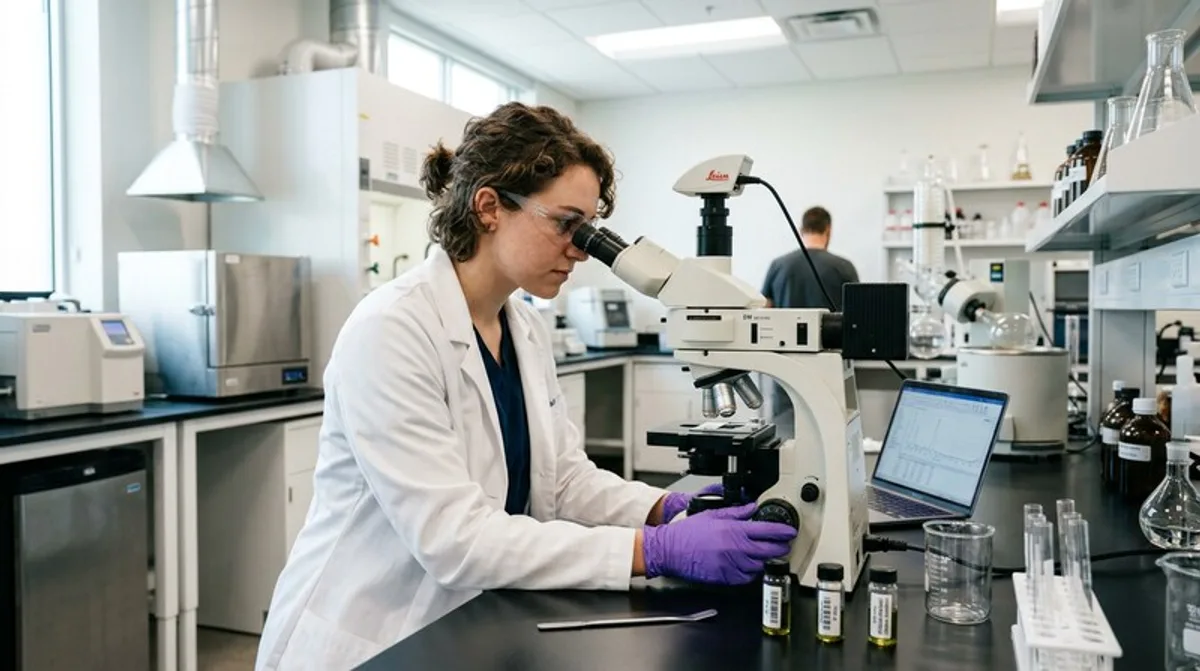
A Certificate of Analysis is a document provided by a third-party laboratory confirming the cannabinoid content and (ideally) contaminant levels of a specific product batch. CoAs are the primary tool available to consumers for verifying that a CBD product matches its label claims.
When evaluating a CoA for drug testing risk:
Batch-specific: The CoA should reference the specific batch number of the product you purchased, not a generic “typical analysis”
Accredited lab: Look for ISO 17025 accreditation; state-licensed cannabis testing labs in states with regulated programs are generally reliable
THC quantification: The CoA should report THC content as a specific number (e.g., <0.01% or “not detected”), not merely “compliant” or “passes”
Recency: Formulations change; a CoA from 18 months ago may not reflect the current product composition
Scan QR codes: Many reputable brands now include QR codes linking directly to their batch CoA database — verify the link is genuine and the batch matches
Even a clean CoA from a reputable lab does not provide a 100% guarantee of passing a drug test for a high-dose user, but it substantially reduces risk by verifying the stated THC content.
Certified Sports and Workplace-Safe CBD Programs
For individuals subject to workplace drug testing or athletic anti-doping programs, third-party certification programs provide an additional layer of assurance beyond manufacturer-provided CoAs:
Informed Sport: A UK-based certification program that batch-tests products for over 250 prohibited substances in sport, including THC. Products bearing the Informed Sport mark have been independently tested to verify they do not contain prohibited substance levels that would cause a doping violation. This certification is widely recognized by WADA-governed sports organizations.
NSF Certified for Sport: A US-based program that tests for WADA-prohibited substances, heavy metals, and other contaminants. The NSF database allows verification of specific product certifications. This certification is endorsed by several major US professional and collegiate sports organizations.
Both programs test each batch independently rather than just accepting manufacturer-provided CoAs, making them substantially more reliable for high-stakes testing situations than uncertified products.
The Risk Accumulation Problem with Daily Hemp Use
Even if a specific CBD product genuinely contains only 0.01% THC (well below the legal limit), daily high-dose use creates a cumulative exposure problem. THC’s lipophilic nature means it does not simply pass through the system the same day it’s consumed; it accumulates in fat tissue and is slowly released and excreted over days. A person who takes a high-dose hemp product every day may never clear their urine THC-COOH concentration to baseline between doses, gradually building toward detectable levels.
This is distinct from a one-time exposure: a person who takes a single hemp supplement once may metabolize the trace THC within 24 hours without ever reaching the 50 ng/mL threshold. But a person who takes the same supplement every day for two weeks may have accumulated sufficient THC to test positive, even though each individual dose was legally compliant. Usage frequency matters as much for hemp-derived THC as for marijuana-derived THC.
Employer Communication and Documentation
Federal drug-free workplace regulations do not recognize CBD use as a mitigating factor for a confirmed positive THC drug test. A Medical Review Officer who reviews a confirmed positive result at or above the GC-MS confirmation cutoff of 15 ng/mL is required to report it as a positive regardless of the donor’s explanation regarding CBD use, because no analytical method exists to distinguish the source of THC-COOH.
However, employer discretion exists outside the regulated federal testing context. For employees in non-DOT, non-federal positions, employers may choose to consider context and documentation. If you are in this situation:
Retain purchase records and batch CoAs for any CBD products used
Request to speak with the MRO before the result is reported to the employer — you have this right under federal workplace testing guidelines
Provide documentation in writing to HR if you believe the positive resulted from hemp product use
Understand that in states with employee cannabis protections, some employers are now prohibited from taking adverse employment action for off-duty cannabis use — though the interaction with drug testing policies varies by state
For pre-employment situations, the safest approach for individuals subject to drug testing remains avoiding full-spectrum hemp products entirely and using only NSF or Informed Sport certified CBD isolate products in documented doses.
Delta-8 and Novel Hemp Cannabinoids
Delta-8-THC, delta-10-THC, HHC, and other hemp-derived novel cannabinoids have emerged as a significant additional drug testing risk. These compounds are typically derived from hemp CBD via chemical synthesis processes and are sold in hemp product channels due to regulatory gaps. They metabolize via the same pathways as delta-9-THC and produce THC-COOH in urine, which is identical to the metabolite produced by conventional cannabis use. Standard drug tests cannot distinguish delta-8 from delta-9 THC metabolites. Users of these products are at high risk of positive drug test results. Our detailed delta-8 drug test guide covers this comprehensively.
Frequently Asked Questions
State Law Developments: Employee Protections for CBD Use
A growing number of US states have enacted laws protecting employees from adverse employment actions based solely on off-duty cannabis use. However, these protections do not uniformly extend to hemp CBD product use that triggers a positive drug test. The interaction between these state protections and hemp-derived THC positives is legally unsettled in many jurisdictions.
States that have enacted employee cannabis protections (such as California, New York, New Jersey, Minnesota, and others) generally prohibit discrimination based on off-duty adult-use cannabis consumption. In these states, a positive drug test resulting from legal CBD use might theoretically trigger these protections — but the analytical reality that THC-COOH is identical regardless of source means the legal argument would need to be made in employment proceedings rather than through the testing process itself.
Federal employees and federally regulated safety-sensitive workers (DOT-covered positions) have no state-law protection; federal drug-free workplace policy supersedes state cannabis laws for these workers. Employees in private positions should consult state-specific guidance on whether their jurisdiction’s cannabis employment protections could apply to their situation. See our state-by-state employer drug testing guide.
How to Evaluate CBD Products Before Buying
A practical evaluation framework for cannabis-tested individuals shopping for CBD products:
Start with product type: Choose CBD isolate or verified broad-spectrum. Avoid full-spectrum for any situation involving drug testing.
Look for third-party certification: Prefer Informed Sport or NSF Certified for Sport products if subject to athletic anti-doping rules. For general workplace testing, look for products with batch-specific ISO 17025 accredited lab CoAs.
Verify the CoA: Scan the QR code or look up the batch number on the manufacturer’s website. Confirm the THC line reads “ND” (not detected) or <0.01%. Be suspicious of any CoA that doesn’t include a specific THC value.
Check for regulatory approval: Epidiolex is the only FDA-approved CBD drug; it is THC-free. Everything else is a supplement with no FDA pre-market review.
Start low: If you are subject to testing and choose to use CBD, start with the lowest effective dose (typically 10–25 mg/day) to minimize any residual THC exposure even from a low-THC product.
Document everything: Keep purchase receipts, product labels, and CoA screenshots. If you ever face a positive test, this documentation is the only evidence available to support your explanation.
Frequently Asked Questions
Can hemp CBD products cause a failed drug test?
Yes. Full-spectrum hemp CBD products contain trace THC that can accumulate to detectable levels with heavy daily use. FDA investigations have documented numerous mislabeled products with THC levels far exceeding stated amounts. The drug test cannot distinguish hemp-derived from marijuana-derived THC-COOH.
What is the difference between full-spectrum and broad-spectrum CBD for drug testing?
Full-spectrum contains all cannabinoids including trace THC. Broad-spectrum has THC removed via additional processing. CBD isolate is pure CBD only. For drug testing, broad-spectrum and isolate products carry substantially lower risk than full-spectrum, but only when verified by batch-specific third-party CoA.
Does the 0.3% federal THC limit protect hemp users from failing drug tests?
Not reliably. The 0.3% threshold applies to plant dry weight, not to dose. High-dose daily use of compliant hemp products can still accumulate enough THC-COOH to exceed the 50 ng/mL urine cutoff, as demonstrated in controlled research.
What should I tell my employer if I fail a drug test due to CBD products?
Document your CBD product use with purchase records and batch CoAs. Request to speak with the MRO before the result is finalized. Understand that federal drug-free workplace rules do not recognize CBD use as a legal defense for a confirmed THC positive, though employer discretion may apply in non-federal testing contexts.