Why cannabis causes anxiety at high doses: amygdala CB1 pharmacology, genetic factors, bidirectional dose response, CBD as a buffer, and evidence-based prevention strategies.
CBD mitigation: CBD at 1:1 to 2:1 ratio with THC significantly reduces anxiety risk
Highest-risk terpene profile: High terpinolene + high THC + minimal CBD + no caryophyllene
Recovery: Most cannabis anxiety episodes self-resolve within 30–90 minutes as THC clears
The Bidirectional Dose Response: Why Cannabis Both Relieves and Causes Anxiety
Cannabis is one of the few psychoactive substances with a well-documented bidirectional dose-response relationship with anxiety. At low doses, it reliably reduces anxiety in most users. At high doses, the same substance reliably induces anxiety — sometimes severe. Understanding why requires understanding the dual role of CB1 receptors in the amygdala.
The amygdala is the brain’s primary fear and threat-detection center. It receives sensory input, evaluates threat level, and initiates fear responses including the fight-or-flight cascade. Critically, the amygdala contains both CB1 receptors on glutamatergic (excitatory) neurons and CB1 receptors on GABAergic (inhibitory) interneurons.
At low THC doses, CB1 activation on GABAergic interneurons predominates. These interneurons normally limit amygdala excitability; when THC inhibits them, paradoxically the amygdala becomes less reactive overall — an anxiolytic effect. This is the mechanism behind cannabis-mediated stress relief and PTSD symptom reduction.
At high THC doses, CB1 activation on excitatory glutamatergic neurons becomes significant. Excessive excitatory activation of the amygdala overwhelms the inhibitory balance, driving fear circuit activation. The result is cannabis-induced anxiety, paranoia, and sometimes full panic attacks that can be deeply distressing even while being physically harmless.
The FAAH Gene and Individual Anxiety Susceptibility
Not all users experience cannabis anxiety at the same dose. Individual variation is enormous, and a significant portion of it is genetic. The FAAH gene encodes fatty acid amide hydrolase, the enzyme responsible for degrading anandamide (the endogenous cannabinoid).
The C385A single nucleotide polymorphism in the FAAH gene produces a less efficient FAAH enzyme, resulting in higher baseline anandamide levels. Carriers of this variant have:
Higher endocannabinoid tone (more anandamide present at baseline)
Upregulated CB1 sensitivity due to higher natural ligand exposure
Greater amplitude of response to exogenous cannabinoids like THC
Paradoxically lower baseline anxiety (higher anandamide is anxiolytic) but dramatically higher THC-induced anxiety at elevated doses
The practical implication: people who appear naturally calm and anxiety-free may in fact carry FAAH variants that make them more vulnerable to high-dose THC anxiety than users who experience mild baseline anxiety. This counterintuitive finding explains why some of the most intense cannabis anxiety experiences happen to otherwise relaxed individuals who underestimate their sensitivity to THC.
High-THC Strains Most Likely to Cause Anxiety
Not all high-THC strains produce equal anxiety risk. The combination of very high THC, low CBD, low beta-caryophyllene (the CB2-active anxiety-buffering terpene), and high terpinolene or limonene creates the profile most likely to trigger anxiety — particularly in susceptible users.
Strain
THC %
Anxiety Risk Factor
Safer Alternative
Ghost Train Haze
25–28%
Very high THC, minimal CBD, terpinolene-dominant, extreme cerebral stimulation
Jack Herer (lower THC, more balanced terpene profile)
Trainwreck
18–25%
Energetic sativa with strong amygdala activation at higher doses
Blue Dream (more balanced, myrcene buffer provides grounding)
Chocolope
18–21%
Very cerebral, racing thoughts, no CBD buffer, anxiety-prone in low-tolerance users
Harlequin (CBD-rich equivalent with similar sativa character)
THCV amplifies CB1 sensitivity; fine at low dose but anxiety-prone at high doses
Cinex at lower dose with CBD supplementation
Terpenes That Reduce Cannabis-Induced Anxiety
Strategic terpene selection is one of the most practical tools for minimizing cannabis anxiety risk. These terpenes act as pharmacological buffers against THC’s amygdala-activating effects:
5-HT1A agonism; mood-elevating action provides positive valence to buffer anxious THC peaks
Super Lemon Haze, Sour Diesel, GSC
CBD as a Pharmacological Buffer Against THC Anxiety
CBD is the most evidence-supported intervention for cannabis-induced anxiety. Its mechanisms are well-characterized and directly target the pathways through which THC causes anxiety:
Negative allosteric CB1 modulation: CBD acts as a negative allosteric modulator at CB1 receptors, reducing the efficacy of THC at the same receptor. This doesn’t completely block THC but moderates the amplitude of CB1 activation, preventing the extreme over-activation that drives anxiety.
5-HT1A agonism: CBD directly activates serotonin 5-HT1A receptors, producing anxiolytic effects independent of the cannabinoid system. This creates a dual anti-anxiety mechanism when CBD is co-administered with THC.
TRPV1 activation: CBD activates TRPV1 vanilloid receptors, which have been shown to reduce anxiety-like behavior in preclinical models through a distinct pathway from both cannabinoid and serotonin systems.
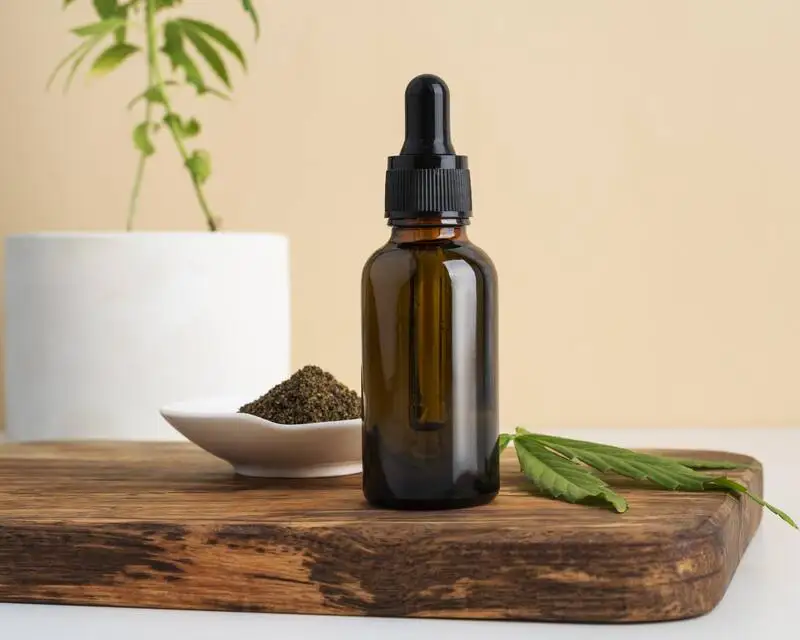
Practical CBD dosing for anxiety prevention: for every 10mg THC consumed, a 10–20mg CBD co-administration substantially reduces anxiety risk. CBD can also be taken reactively when anxiety begins — most users report benefit within 15–30 minutes of sublingual or oral CBD administration.
Who Is Most Susceptible to Cannabis Anxiety?
Low tolerance / infrequent use: CB1 receptor sensitivity is highest in naive or infrequent users. The same dose comfortable for a regular user may be overwhelming for someone who hasn’t used in several weeks.
Pre-existing anxiety disorders: Individuals with GAD, social anxiety disorder, or panic disorder have baseline hyperactivation of fear circuits. Cannabis at any dose can amplify this, though some find low-dose CBD-rich cannabis paradoxically helpful.
FAAH gene variants: Higher baseline endocannabinoid tone means greater amplitude response to exogenous THC.
Unfamiliar settings: The contextual amplification property of CB1 activation means novel, unpredictable environments dramatically increase anxiety risk regardless of dose.
High-THC concentrates: Dabbing, high-potency extracts, and modern 30%+ THC flower can deliver 50–100mg THC in a single inhalation — far above any anxiolytic threshold for most users.
Begin with 2.5–5mg THC; wait 15–20 min before considering supplementation
Choose high-CBD strains
CBD:THC ratio of 1:1 or 2:1 dramatically reduces the anxiety floor for most users
Select caryophyllene-rich strains
GSC, Blue Dream, Bubba Kush have strong CB2-mediated anxiety buffers built in
Familiar environment
First use of any new strain in a private, comfortable, known setting with trusted people
Have CBD on hand
20–50mg CBD oil readily available for reactive dosing if anxiety begins
The black pepper trick
Sniffing or chewing black peppercorns delivers beta-caryophyllene for rapid anxiety reduction via CB2 activation
What to Do During a Cannabis Anxiety Episode
Cannabis anxiety is uncomfortable but not medically dangerous in otherwise healthy adults. It self-resolves as THC clears. Evidence-based interventions to hasten resolution:
Change environment: Move to a quieter, more familiar space. Reduce sensory input. The contextual amplification effect works both ways — a calm environment actively reduces amygdala activation.
Controlled breathing: Slow diaphragmatic breathing (4 counts in, 7 hold, 8 out) activates the parasympathetic nervous system via vagal tone, directly reducing sympathetic anxiety drive.
CBD oil: 25–50mg sublingual CBD can begin reducing anxiety within 15–30 minutes through direct CB1 modulation and 5-HT1A activation.
Black pepper: Beta-caryophyllene in black pepper provides rapid-onset CB2 activation that buffers amygdala CB1 over-activation. Sniffing or chewing 2–3 peppercorns is a well-known folk remedy with solid pharmacological basis.
Wait and reassure yourself: Most cannabis anxiety episodes resolve completely within 60–90 minutes as THC plasma levels decline. The anxiety will pass and the episode causes no lasting harm.
The Role of Tolerance in Cannabis Anxiety
Tolerance development profoundly affects cannabis anxiety susceptibility over time. With regular use, CB1 receptors undergo desensitization and downregulation — the receptor becomes less sensitive to activation. For anxiety, this produces a two-phase effect:
Phase 1 (developing tolerance): As CB1 receptors in the amygdala desensitize, users often find that the anxiety-inducing effects of THC decrease with regular use. Long-term daily users typically report that strains or doses that previously caused anxiety no longer do. This is because the over-activation threshold has shifted upward.
Phase 2 (tolerance break rebound): When a regular user takes a tolerance break (1–2+ weeks without cannabis), CB1 receptors upregulate back toward naive sensitivity levels. The first use after a tolerance break can trigger significant anxiety at doses that previously felt comfortable. This is why tolerance breaks require starting back at lower doses.
The clinical implication: anxiety from cannabis is not a fixed trait but a dynamic relationship between individual baseline sensitivity, current tolerance level, dose, and context. Managing tolerance through intentional breaks and dose restraint is the most reliable strategy for preventing cannabis anxiety over time.
Cannabis Anxiety vs. Panic Disorder: Understanding the Difference
Cannabis-induced anxiety and clinical panic disorder share superficial similarities but differ in important ways. Cannabis anxiety is:
Dose-dependent and predictable once individual thresholds are known
Time-limited and self-resolving as the substance clears
Preventable through dose reduction and strain selection
Not associated with persistent changes in anxiety baseline (in most non-daily users)
If cannabis anxiety episodes are triggering panic disorder symptoms that persist beyond the acute episode, or if cannabis use is worsening baseline anxiety over time, this is a signal to reduce or discontinue use and consult a mental health professional. For cannabis specifically indicated for anxiety relief, see our dedicated cannabis anxiety relief guide.