










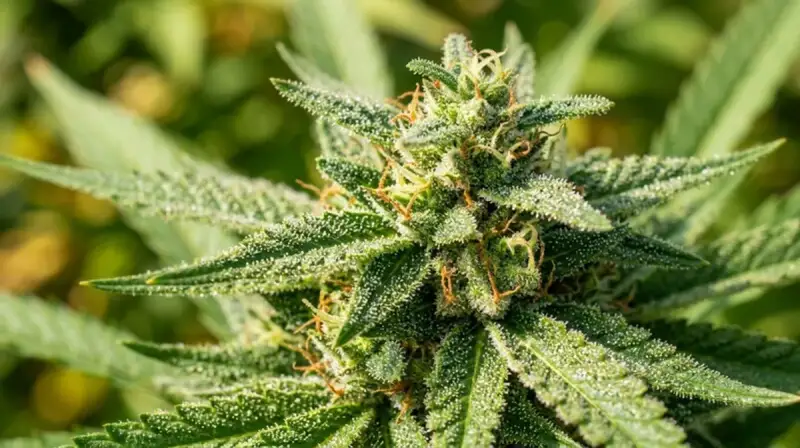
- Bergamaschi et al. (2011, Neuropsychopharmacology) found CBD 600mg significantly reduced anxiety in social anxiety disorder patients during a simulated public speaking test, with effects comparable to the pharmaceutical anxiolytic ipsapirone.
- Shannon et al. (2019, The Permanente Journal) reported that 79% of patients using CBD oil (25mg starting dose) showed decreased anxiety scores within the first month of treatment.
- THC has a biphasic relationship with anxiety: low doses (2.5–5mg) tend to be anxiolytic; doses above 10mg frequently induce or worsen anxiety, paranoia, and elevated heart rate.
- The amygdala’s CB1 receptors are central to cannabis-mediated anxiety modulation — CBD reduces amygdala reactivity to threat stimuli, while high-dose THC can paradoxically increase it.
- CBD acts via 5-HT1A serotonin receptor agonism — the same receptor family targeted by buspirone and SSRIs — providing a plausible mechanism for its anxiolytic effects independent of the endocannabinoid system.
- PTSD has the strongest clinical evidence base among anxiety-related conditions, with multiple studies supporting cannabis for intrusive memories, nightmares, and hyperarousal.
- People with a personal or family history of psychosis or schizophrenia should not use THC-containing cannabis for anxiety, as THC is a documented trigger for psychotic episodes in predisposed individuals.
The Anxiety Paradox: How Cannabis Can Both Relieve and Worsen Anxiety
No other pharmacological property of cannabis creates more confusion — or more clinical risk — than its biphasic, paradoxical relationship with anxiety. Cannabis is simultaneously one of the most commonly self-reported remedies for anxiety and one of the most frequently cited causes of anxiety-related adverse events in emergency department visits. Understanding why requires separating the contributions of individual cannabinoids, doses, and the conditions under which cannabis is consumed.
The core paradox is this: at low doses, THC activates CB1 receptors in anxiety-regulating brain circuits in a way that reduces stress signaling. At higher doses, that same receptor activation becomes overstimulatory, generating tachycardia, hypervigilance, intrusive thoughts, and frank paranoia. CBD, by contrast, consistently shows anxiolytic effects across dose ranges in clinical studies, without the dose-dependent reversal seen with THC. This distinction makes cannabinoid ratio — not just total potency — the most clinically relevant factor when considering cannabis for anxiety treatment.
Neuroscience: The Endocannabinoid System and Anxiety Regulation
Amygdala CB1 Receptors
The amygdala is the brain’s primary threat detection center. It receives sensory input, evaluates threat relevance, and triggers the autonomic fear response — elevating heart rate, activating the HPA axis, and encoding fear memories. CB1 receptors are densely expressed in the basolateral amygdala (BLA), where they modulate the intensity of fear responses. When endocannabinoids bind to these CB1 receptors, they suppress glutamate release and dampen excitatory transmission — effectively reducing the amplitude of the amygdala’s alarm signals. This is the mechanism by which a functional endocannabinoid system maintains emotional homeostasis. In anxiety disorders, this system is often underactive: research in PTSD patients consistently finds reduced circulating anandamide levels and downregulated CB1 receptor expression, suggesting a deficit in this natural anxiety brake.
Anandamide and the FAAH Enzyme
Anandamide (AEA) is the primary endogenous cannabinoid relevant to anxiety regulation. It binds CB1 receptors in the amygdala and prefrontal cortex to suppress fear responses and promote emotional extinction — the process by which learned fear memories are dampened over time. Anandamide is broken down by the enzyme fatty acid amide hydrolase (FAAH). Individuals with a genetic variant that reduces FAAH activity have elevated anandamide levels and demonstrate measurably less amygdala reactivity to threat stimuli, along with lower rates of anxiety and stress-related disorders. This genetics research provides direct evidence that the endocannabinoid system is not merely adjacent to anxiety regulation — it is a primary control mechanism. Compounds that elevate anandamide or mimic its CB1 activity offer a pharmacologically rational basis for cannabis-based anxiety treatment.
CBD Mechanism: 5-HT1A Serotonin Receptor Agonism
CBD’s anxiolytic effects appear to operate through a different primary mechanism than anandamide’s CB1 pathway. CBD is a partial agonist at 5-HT1A serotonin receptors — the same receptor family targeted by the anxiolytic drug buspirone and, indirectly, by SSRIs. Activation of 5-HT1A receptors in the dorsal raphe nucleus and hippocampus produces anxiolytic and antidepressant effects, reduces amygdala reactivity, and promotes contextual fear extinction. The Bergamaschi et al. 2011 study confirmed these effects clinically: 600mg CBD administered orally before a simulated public speaking test reduced anticipatory anxiety, cognitive impairment, and autonomic arousal in social anxiety disorder patients compared to placebo. Additionally, CBD acts as an allosteric modulator that reduces amygdala reactivity through its 5-HT1A actions, providing a dual mechanism for its anti-anxiety profile.
THC Mechanism: Biphasic CB1 Activity
THC binds directly to CB1 receptors, the same receptors that anandamide targets endogenously. At low doses, THC mimics anandamide’s anxiolytic CB1 signaling in the amygdala and prefrontal cortex. At higher doses, CB1 receptor overstimulation in the prefrontal cortex impairs threat assessment and executive control, while paradoxical increases in amygdala excitability generate the anxiety, paranoia, and tachycardia associated with cannabis-induced adverse events. The transition between these two phases occurs at different doses for different individuals, depending on baseline CB1 receptor density, genetic cannabinoid metabolism variation (CYP2C9 polymorphisms), prior cannabis exposure, and the setting in which cannabis is consumed.
Key Clinical Studies on Cannabis and Anxiety
| Study | Year | Dose / Type | Condition | Primary Outcome | Notes |
|---|---|---|---|---|---|
| Bergamaschi et al. | 2011 | CBD 600mg oral, single dose | Social Anxiety Disorder (SAD) | Significant reduction in anticipatory anxiety, cognitive impairment, and autonomic arousal vs. placebo in public speaking test | Published in Neuropsychopharmacology. Double-blind RCT. 24 treatment-naive SAD patients. |
| Linares et al. | 2019 | CBD 150mg, 300mg, 600mg (dose-response) | Healthy volunteers, induced anxiety (SPST) | 300mg CBD significantly reduced anxiety vs. placebo; 150mg and 600mg showed less effect, suggesting inverted-U dose-response curve | Important finding: CBD has a non-linear dose-response; 300mg may be optimal for acute anxiety. Published in Frontiers in Pharmacology. |
| Shannon et al. | 2019 | CBD oil 25mg/day (primary), titrated up to 175mg | Anxiety and sleep complaints (mixed population) | 79.2% showed decreased anxiety at 1 month; 66.7% showed improved sleep at 1 month | Published in The Permanente Journal. Retrospective case series. N=72. Anxiety scores sustained at 3 months. |
| Turna et al. | 2017 | Self-reported cannabis use, various types | GAD, panic disorder, social anxiety (community sample) | Cannabis users with anxiety disorders reported significant symptom relief; CBD-dominant products preferred for daytime anxiety management | Published in Depression & Anxiety. Cross-sectional survey. N=1,429. Observational limitations apply. |
| Zuardi et al. | 2017 | CBD 300mg/day, 8 weeks | PTSD (treatment-resistant) | Significant reduction in PTSD symptom clusters, particularly intrusive memories and hyperarousal. Nightmares reduced. | Case series design (N=11). Limitations: small sample, no placebo control. Published in Journal of Clinical Pharmacy and Therapeutics. |
| Crippa et al. | 2011 | CBD 400mg, single dose | Social Anxiety Disorder (SAD) | CBD significantly reduced subjective anxiety and altered regional cerebral blood flow in limbic areas (amygdala, hippocampus) associated with anxiety | Neuroimaging (SPECT) study. Provides direct neural evidence for CBD’s amygdala-modulating mechanism. |
Anxiety Conditions: Evidence by Disorder
| Condition | Evidence Level | Best-Supported Cannabinoid | Notes |
|---|---|---|---|
| PTSD | Moderate — multiple clinical studies, some RCTs | CBD; low-dose THC for nightmares (Nabilone studies) | Strongest evidence base among anxiety-spectrum conditions. Several US states include PTSD as a qualifying condition. Nabilone (synthetic THC) RCT data exists for nightmares. |
| Social Anxiety Disorder (SAD) | Moderate — multiple CBD RCTs (Bergamaschi 2011, Crippa 2011) | CBD (high acute dose for situational SAD; lower daily dose for chronic) | Most directly studied. Neuroimaging evidence confirms amygdala mechanism. High-THC products can worsen social anxiety significantly. |
| Generalized Anxiety Disorder (GAD) | Low-moderate — observational and preclinical primarily | CBD-dominant, full-spectrum with low THC | Direct RCT evidence limited. Extrapolation from mechanistic and observational data. CBD’s 5-HT1A agonism is particularly relevant given GAD’s serotonergic component. |
| Panic Disorder | Low — case reports and preclinical primarily | CBD; THC contraindicated in acute panic | High-THC cannabis is a well-documented trigger for panic attacks. CBD may offer prevention benefit via 5-HT1A mechanism but clinical trial data is absent. |
Cannabinoid Ratio Recommendations for Anxiety
The cannabinoid ratio of a product is the single most important variable for anxiety management. Here is how different ratios are typically used clinically:
| Ratio (CBD:THC) | Best For | Key Advantages | Risks / Limitations |
|---|---|---|---|
| CBD-dominant (20:1 or higher) | Daily anxiety management, high-sensitivity patients, first-time users | No psychoactive effects; no anxiety-worsening risk from THC; safe for work/driving in most contexts; no dependency risk | May have ceiling effect for more severe anxiety; some patients need THC component for full relief |
| Balanced 1:1 CBD:THC | Moderate anxiety with co-occurring pain or sleep issues; patients with some THC tolerance | Entourage effect may enhance overall efficacy; THC adds muscle relaxation and sleep benefit; CBD moderates THC anxiety risk | Psychoactive effects present; not suitable for sensitive patients; impairs driving |
| Low THC (5:1 to 10:1 CBD:THC) | Patients who need mild psychoactive effect but primarily want anxiety relief | Mild euphoria without paranoia risk; good for evening use; more accessible for patients uncomfortable with high-CBD-only products | Still impairs; more titration needed than CBD-only; some patients still experience THC anxiety |
| THC-dominant (high potency) | Generally not recommended as primary anxiety treatment | May suit established high-tolerance users with specific indications | High risk of anxiety worsening, paranoia, and panic in anxiety disorder patients; dose-response curve works against therapeutic use |
Medical Cannabis vs. Conventional Anxiety Treatments
| Factor | CBD (Cannabis) | SSRIs (e.g. sertraline) | Benzodiazepines (e.g. diazepam) | Buspirone |
|---|---|---|---|---|
| Onset | 30 min–2h (oral); acute (inhalation) | 2–6 weeks for full effect | 15–60 minutes (immediate relief) | 2–4 weeks |
| Dependency Risk | None established for CBD; low for low-dose THC; moderate for heavy THC use | Low (discontinuation syndrome possible) | High — physiological dependence after weeks of use | Very low |
| Side Effects | CBD: fatigue, diarrhoea at high doses; THC: impairment, anxiety (paradoxical) | Nausea, sexual dysfunction, weight change, insomnia initially | Sedation, cognitive impairment, tolerance, withdrawal | Dizziness, nausea, headache; no sedation |
| Withdrawal | None for CBD; mild-moderate for heavy THC use (irritability, sleep disruption) | Discontinuation syndrome possible; taper required | Severe — seizure risk; medically supervised taper required | Minimal |
| Evidence Level | Moderate for CBD; preclinical and observational for THC | High — multiple large RCTs, gold standard for GAD/SAD | High for short-term acute anxiety; not recommended long-term | Moderate — effective for GAD, slow onset limits acute use |
| Availability | Varies by jurisdiction; increasingly accessible | Widely available by prescription globally | Prescription only; increasingly restricted due to dependency concerns | Prescription only; underused despite good profile |
Who Is NOT a Good Candidate for Cannabis-Based Anxiety Treatment
Not every patient with anxiety should consider cannabis. The following groups face elevated risks that typically outweigh potential benefits:
- Personal or family history of psychosis or schizophrenia: THC is a documented trigger for psychotic episodes in genetically predisposed individuals. Even CBD-dominant products carry some risk if THC is present. This is an absolute contraindication for THC-containing cannabis.
- Adolescents and young adults under 25: The developing brain is significantly more vulnerable to cannabinoid disruption. Cannabis use during adolescence is associated with increased risk of anxiety disorders, depression, and psychotic spectrum conditions in longitudinal studies.
- Patients with very high baseline anxiety and no prior cannabis experience: The paradoxical anxiety-worsening effect of THC is most pronounced in first-time users and those with high-anxiety baselines. Starting with cannabis in this population carries meaningful risk even at low doses.
- Patients on benzodiazepines: CBD inhibits CYP450 enzymes responsible for metabolising many drugs, including benzodiazepines, potentially elevating plasma levels and deepening sedation or CNS depression.
- Pregnant or breastfeeding individuals: Cannabis use during pregnancy is associated with adverse fetal outcomes. No safe dose has been established.
How to Access Medical Cannabis for Anxiety
Access routes vary significantly by country. Here is a general overview of major markets:
- United Kingdom: Since 2018, cannabis-based medicines have been legally prescribable by specialist physicians. Private medical cannabis clinics (Sapphire Medical, Releaf, Alternaleaf, and others) offer prescribing pathways for patients who have not responded adequately to two conventional treatments. Products are prescribed as unlicensed medicines; costs are not covered by NHS for anxiety indications currently.
- Canada: Federal medical cannabis programme allows access with a healthcare practitioner’s medical document. Anxiety and PTSD are among the most common approved conditions. Licensed Producer direct shipping to patients is standard practice.
- United States: Medical cannabis programmes vary by state. Approximately 35 states include anxiety or PTSD as qualifying conditions. A certifying physician evaluation is required. Dispensary access follows with a valid medical card.
- Australia: The Therapeutic Goods Administration (TGA) Authorised Prescriber pathway allows specialist physicians to prescribe cannabis-based medicines for anxiety when conventional treatments have been inadequate. GP access is expanding via Special Access Scheme category B.
- Germany: Since 2024, limited recreational cannabis has been legalised. Medical cannabis has been available since 2017 via pharmacy with prescription; anxiety and mental health conditions are accessible indications with appropriate specialist documentation.
Dosing Guidance for Cannabis and Anxiety
Dosing for anxiety management follows the principle of “start low, go slow” regardless of cannabinoid type. The following represents general guidance based on published clinical data and medical cannabis programme standards — it is not a substitute for personalised medical advice:
- CBD starting dose: 25–50mg daily, taken in divided doses (morning and evening). This aligns with the Shannon et al. starting protocol that showed significant anxiety reduction in 79% of patients at one month.
- CBD titration: Increase by 25mg every 1–2 weeks based on response and tolerability. Clinical studies have used doses up to 600mg for acute anxiety events; for chronic daily management, 50–150mg is the typical therapeutic range.
- THC starting dose: 2.5mg, taken in the evening initially to allow tolerance assessment before daytime use. Many anxiety patients benefit from THC only for nighttime use (sleep and nightmare suppression), keeping daytime management CBD-only.
- THC maximum for anxiety-prone patients: Remain below 10mg per dose. The majority of THC-induced anxiety adverse events occur at doses above 10mg, particularly in low-tolerance individuals.
- Route of administration: Oral (oil, capsule) provides longer duration and avoids inhalation risks; sublingual provides faster onset (15–45 minutes); inhalation is fastest but hardest to dose consistently and carries pulmonary risk with combustion.
Frequently Asked Questions
Also see: How Cannabis Affects Anxiety | CBD Effects Guide | All Medical Cannabis Guides