










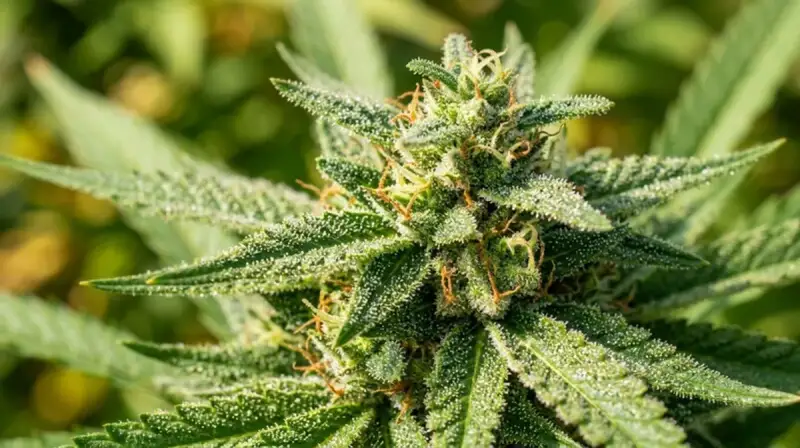
- Terpenes are aromatic hydrocarbon compounds produced in cannabis trichomes alongside cannabinoids. Over 200 terpenes have been identified in cannabis; 8–12 appear consistently at meaningful concentrations across most commercial strains.
- myrcene is typically the dominant terpene in most commercial cannabis strains, accounting for 20–65% of total terpene content in many indica-leaning varieties, and is associated with sedating, heavy effects.
- caryophyllene is unique among cannabis terpenes in that it also acts as a CB2 receptor agonist—making it pharmacologically active in the endocannabinoid system in a way most terpenes are not.
- Terpenes degrade faster than cannabinoids. Light, heat, and time all reduce terpene content; a properly cured, freshly opened jar of cannabis will have a significantly richer terpene profile than old or improperly stored flower.
- Dispensary menus increasingly list terpene percentages from COA lab results; typical ranges are myrcene 0.1–0.5%, caryophyllene 0.05–0.3%, limonene 0.05–0.2%.
- The entourage effect hypothesis holds that terpenes and cannabinoids work synergistically, meaning the full terpene profile contributes to the overall effect in ways that isolated THC does not replicate.
How to Use Terpene Data from Dispensary COAs
Most licensed dispensaries now include terpene data on their menus and product labels, sourced from Certificate of Analysis (COA) documents produced by licensed third-party testing labs. This data is one of the most useful tools for predicting how a cannabis strain will feel before you buy it—often more useful than the sativa/indica binary, which is largely a marketing construct.
When reading a COA or dispensary menu, terpene data typically appears as a percentage of the total product weight. A strain showing myrcene at 0.35%, caryophyllene at 0.18%, and limonene at 0.12% has a readable effect profile: high myrcene suggests sedating, heavy effects; caryophyllene adds anti-inflammatory and mild anti-anxiety characteristics; limonene lifts the mood slightly. This combination is typical of a classic relaxing evening strain.
Not all dispensaries display full terpene panels. Many show only the top 2–3 terpenes. This is still sufficient for basic strain selection. When a dispensary lists no terpene data at all, ask if COAs are available for the products you are considering—reputable brands make this information accessible.
The 8 Most Important Cannabis Terpenes
| Terpene | Scent | Effect Profile | When to Choose It | Common Strains | Also Found In |
|---|---|---|---|---|---|
| Myrcene | Earthy, musky, cloves, mango | Sedating, relaxing, heavy body feel; enhances THC uptake across blood-brain barrier | Relaxation, sleep, evening use, pain relief | OG Kush, Granddaddy Purple, Blue Dream | Mango, hops, thyme, lemongrass |
| Caryophyllene | Spicy, peppery, woody, cloves | Anti-inflammatory; CB2 receptor agonist; potential anti-anxiety; warming | Inflammation, stress, anxiety, pain without heavy sedation | GSC (Girl Scout Cookies), Bubba Kush, Sour Diesel | Black pepper, cloves, cinnamon, basil |
| Limonene | Citrus, lemon, orange | Uplifting, mood-elevating, energetic; anti-anxiety in some research | Daytime use, mood lift, anxiety with energy, creativity | Super Lemon Haze, Durban Poison, Jack Herer | Lemon peel, orange peel, juniper |
| linalool | Floral, lavender, light spice | Calming, anxiolytic, sedating; stress-reducing; potential anticonvulsant properties | Anxiety, stress, insomnia, tension relief | Lavender, LA Confidential, Do-Si-Dos | Lavender, rose, neroli, birch |
| Terpinolene | Fresh, piney, floral, herbaceous | Uplifting, energetic, creative; mildly sedating in some users | Daytime, creative work, social use, focus | Jack Herer, Ghost Train Haze, Dutch Treat | Apples, cumin, lilac, nutmeg |
| Alpha-pinene | Pine, fresh forest, rosemary | Alertness, memory retention; bronchodilator (opens airways); counteracts some THC-induced memory impairment | Focus, outdoor activity, daytime use; balancing heavy THC strains | Jack Herer, Blue Dream, Island Sweet Skunk | Pine needles, rosemary, basil, parsley |
| Humulene | Earthy, woody, hoppy, herbal | Anti-inflammatory; appetite-suppressing (unlike most cannabis terpenes); subtle relaxing | Pain and inflammation without appetite stimulation; evening | White Widow, Headband, GSC | Hops, sage, ginseng, coriander |
| Bisabolol | Floral, sweet, light chamomile | Gentle relaxing, skin-soothing, mild anti-inflammatory; soft sedating quality | Gentle relaxation, sensitive users, skin-related use, mild anxiety | ACDC, Harle-Tsu, some Headband phenotypes | German chamomile, candeia tree |
How Terpenes Are Listed on Dispensary Menus
Dispensary menus and product labels display terpene data as a percentage of total product weight, sourced from lab COA results. Understanding what typical ranges look like helps you assess a product’s terpene quality at a glance.
Typical terpene concentration ranges in tested commercial flower:
Myrcene: 0.1–0.5% (dominant in most strains; above 0.3% indicates a strongly myrcene-forward strain). Caryophyllene: 0.05–0.3% (second most common; above 0.2% produces noticeable spice/pepper character). Limonene: 0.05–0.2% (present in many strains but rarely dominant). Linalool: 0.02–0.15% (lower concentrations than myrcene but highly bioactive). Terpinolene: 0.05–0.3% (when dominant, strongly shapes the strain toward a terpinolene-type effect profile). Alpha-Pinene: 0.03–0.15%. Humulene: 0.03–0.15%. Bisabolol: 0.01–0.1%.
Total terpene content of high-quality commercial flower typically ranges from 1–3%. Very high-quality flower from craft producers may test above 3% total terpenes. Products below 0.5% total terpenes are considered low in terpene content and will have a less distinct effect profile and flavor.
Using Terpenes to Choose Cannabis by Goal
Once you understand the basic effect tendencies of the major terpenes, you can use terpene data as a practical selection tool at the dispensary. Here is a goal-based guide:
| Goal | Primary Terpene | Secondary Terpene | Why It Works | Example Strain |
|---|---|---|---|---|
| Relaxation and sleep | Myrcene | Linalool | Myrcene sedates; linalool calms anxiety and aids sleep onset | Granddaddy Purple, Bubba Kush |
| anxiety relief | Linalool | Caryophyllene | Linalool anxiolytic; caryophyllene CB2 activity reduces stress without heavy sedation | Lavender, Do-Si-Dos |
| Pain relief | Caryophyllene | Myrcene | Caryophyllene anti-inflammatory via CB2; myrcene enhances cannabinoid delivery and adds body relaxation | GSC, OG Kush |
| Focus and energy | Terpinolene | Limonene | Terpinolene lifts and energizes; limonene elevates mood and reduces mental fog | Jack Herer, Durban Poison |
| Creativity | Limonene | Alpha-Pinene | Limonene uplifts mood; pinene supports alertness and memory retention | Super Lemon Haze, Jack Herer |
| Inflammation without sedation | Caryophyllene | Humulene | Both anti-inflammatory; humulene adds subtle relaxation without heavy myrcene sedation | White Widow, Headband |
| Gentle daytime relaxation | Bisabolol | Linalool | Gentle floral relaxation without heavy sedation; good for sensitive users | ACDC, Harle-Tsu |
The practical application is straightforward: when browsing a dispensary menu, look for strains whose top terpene or terpene combination matches your goal. A strain with myrcene 0.4%, linalool 0.1%, caryophyllene 0.12% will behave very differently from a strain with terpinolene 0.28%, limonene 0.15%, alpha-pinene 0.08%—even if both test at 22% THC.
Why the Same Terpene Smells Different in Different Strains
New cannabis consumers are often surprised to find that two strains with myrcene as the dominant terpene can smell and feel quite different from each other. The explanation is terpene synergy: no terpene exists in isolation. The full terpene profile of a strain—including minor terpenes present at very low concentrations—creates a combined aromatic and pharmacological signature that is more complex than any single compound.
A strain with myrcene 0.38% and a background of linalool, bisabolol, and caryophyllene will smell and feel different from a strain with the same myrcene level accompanied by terpinolene, limonene, and alpha-pinene. The dominant terpene sets the general direction; the supporting terpenes shape the specific character.
Additionally, terpene concentration matters. A strain with myrcene at 0.45% will express that earthy, musky, mango character much more strongly than a strain where myrcene is at 0.12% with other terpenes at similar concentrations. Low-concentration terpenes contribute to the background profile without dominating the nose or the effect.
Terpene Degradation: Preserving Your Cannabis Terpene Profile
Terpenes are volatile organic compounds with relatively low molecular weights. They evaporate more readily than cannabinoids and are more sensitive to environmental conditions. Proper storage is essential for maintaining the terpene profile of your cannabis.
Heat: Terpenes begin to evaporate at room temperature and degrade significantly with heat. Do not store cannabis near heat sources, in cars during summer, or in any warm environment. Ideal storage temperature is 60–70°F (15–21°C).
Light: UV light degrades both cannabinoids and terpenes. Store cannabis in opaque or UV-blocking glass containers. Clear plastic bags offer essentially no light protection. Amber glass jars are the gold standard for long-term storage.
Oxygen exposure: Each time you open a cannabis container, oxygen enters and terpenes slowly oxidize. Use appropriately sized containers to minimize headspace. Vacuum sealing or nitrogen flushing preserves terpene content for long-term storage.
Time: Even with perfect storage, terpene content decreases over time. Cannabis that is 6–12 months old will have noticeably less terpene content than freshly cured flower. For the most terpene-rich experience, buy fresh flower from a dispensary with high turnover and consume within 1–3 months of purchase.
Frequently Asked Questions
What terpenes make cannabis sedating?
Myrcene is the most studied sedating terpene and is dominant in most indica-leaning strains. Linalool (also found in lavender) contributes calming and sedating effects. Bisabolol has a gentle relaxing quality. Strains high in myrcene plus linalool, such as Granddaddy Purple or Bubba Kush, are typically the most sedating options on a dispensary menu.
Which terpene is best for anxiety?
Linalool and caryophyllene are the two terpenes most supported by research for anxiety reduction. Linalool has anxiolytic effects in animal models and is associated with the calming properties of lavender. Caryophyllene is unique as a terpene that also acts as a CB2 receptor agonist, potentially providing anti-anxiety effects. Strains high in both, such as Lavender or Do-Si-Dos, are worth considering for anxiety management.
How do I find terpene information?
Most licensed dispensaries publish terpene data on their menus, either as a percentage breakdown or as a top-3 terpene list. Look for the Certificate of Analysis (COA) for any product you are considering; a full COA will include terpene content by percentage. Many dispensary apps and websites allow filtering by terpene. Ask dispensary staff for strains high in a specific terpene if you have a target effect in mind.
Do terpenes affect the high?
Yes. Terpenes are pharmacologically active and contribute to the overall effect profile of cannabis through what researchers call the entourage effect. Myrcene is associated with sedating, heavy effects. Limonene with uplifted mood. Terpinolene with energetic, creative effects. Caryophyllene with anti-inflammatory and potential anti-anxiety effects via CB2 receptor activity. The same THC percentage in two strains with very different terpene profiles can produce noticeably different experiences.