
- Adults 21+ may possess up to 1 ounce of cannabis flower in public and up to 8 ounces at a private residence under Oregon’s Measure 91, passed in 2014.
- Home cultivation of up to 4 plants per household is legal, provided plants are not visible from any public space.
- Measure 110, passed in 2020, decriminalized personal possession of small amounts of all drugs in Oregon—not just cannabis—but was partially rolled back in 2024 amid implementation concerns.
- Oregon has consistently reported among the lowest average cannabis retail prices in the United States, driven by oversupply and a highly competitive licensed market.
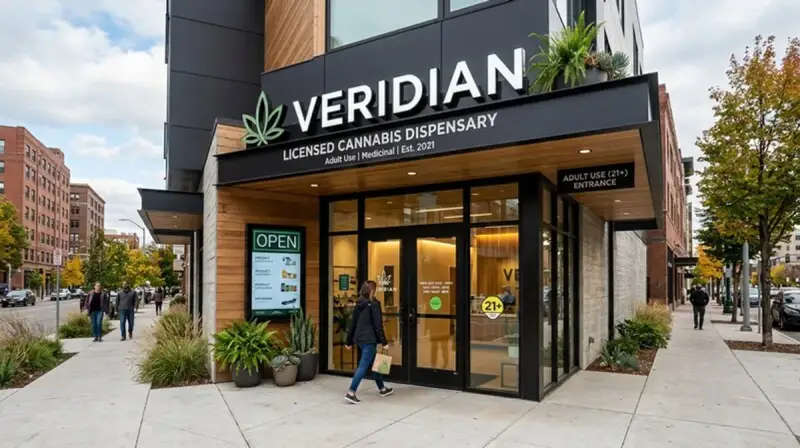
- Cannabis dispensaries in Oregon are licensed by the OLCC and operate statewide; delivery is legal and social consumption permits are available in qualifying jurisdictions.
- Oregon’s medical cannabis program (OMMP) remains active alongside the recreational market, with higher possession limits and qualifying patient protections.
Measure 91: Oregon Recreational Cannabis
Oregon voters approved Measure 91 in November 2014, making Oregon the third US state to legalize recreational cannabis after Colorado and Washington. The measure took effect in 2015 and authorized adults 21 and older to possess, use, and home-cultivate cannabis. Licensed retail sales began in October 2015 for medical patients and opened to recreational customers in January 2016.
The Oregon Liquor and Cannabis Commission (OLCC) oversees the recreational market, setting licensing requirements for producers, processors, wholesalers, and retailers. The Oregon Health Authority (OHA) retains oversight of the medical program. Together these agencies regulate what is one of the most mature and saturated legal cannabis markets in the country.
Oregon’s regulatory approach has generally emphasized market access over restriction. The state has licensed a large number of producers and retailers relative to its population, which has driven intense competition and the lowest average cannabis prices in the country—a significant benefit for consumers but an ongoing challenge for industry profitability.
Possession Limits in Oregon
| Location | Flower (usable cannabis) | Concentrate / Extract | Edibles (solid) | Plants |
|---|---|---|---|---|
| In public | 1 oz (28 g) | 5 g | 16 oz by weight | N/A |
| At private residence | 8 oz (227 g) | 5 g | 16 oz solid; 72 oz liquid | 4 plants per household |
| Medical patient (OMMP) | 24 oz flower | Proportionally higher | Higher limits | 6 mature, 18 immature |
The 1-ounce public possession limit covers cannabis in any form when outside the home. Adults may transport up to 1 ounce in a vehicle; it must be stored in a closed container not accessible to the driver. Cannabis may not be consumed in a vehicle, in public spaces, or anywhere smoking or tobacco is prohibited.
OLCC-licensed retailers are required to check ID for any transaction. The 21+ age requirement applies at the point of sale for all recreational cannabis purchases.
Home Cultivation Rules
Oregon allows home cultivation of up to 4 cannabis plants per household, not per person. The 4-plant limit applies regardless of how many adults live at the address. Plants may be grown indoors or outdoors but must not be visible from any public space, including streets, sidewalks, parks, and neighboring properties visible without aid.
There is no licensing requirement for personal home cultivation. However, cannabis grown at home may not be sold. Any home-cultivated cannabis exceeding the allowed possession amount must be disposed of; there is no mechanism to sell excess home-grown cannabis into the licensed market.
Renters should be aware that landlords retain the right to prohibit cannabis cultivation on rental properties. Federal housing regulations prohibit cannabis in federally subsidized housing regardless of state law. Oregon cities and counties may not outright ban home cultivation but may impose reasonable regulations.
Measure 110: Drug Decriminalization in Oregon
Oregon made national and international headlines in November 2020 when voters approved Measure 110 by a 58% margin—the first US state to decriminalize personal possession of small amounts of all controlled substances, not just cannabis. Under Measure 110, possession of small amounts of heroin, methamphetamine, cocaine, and other drugs became a Class E civil violation carrying a $100 fine rather than a criminal misdemeanor.
The measure also redirected cannabis tax revenue to fund addiction treatment and recovery services. A network of Behavioral Health Resource Networks (BHRNs) was established statewide to provide low-barrier access to drug treatment without requiring criminal justice system involvement.
However, implementation was widely criticized. Addiction treatment infrastructure expanded too slowly. Uptake of the voluntary health assessments offered as an alternative to fines was extremely low. Visible drug use in public spaces increased in Portland and other cities, generating significant political pressure. By early 2024, the Oregon legislature voted to partially roll back Measure 110, recriminalizing public possession of small amounts of hard drugs as a misdemeanor, effective September 2024.
Importantly, this rollback did not affect cannabis law. Recreational cannabis possession within legal limits remained fully legal. Oregon’s cannabis framework operates independently of the Measure 110 situation.
Why Oregon Has the Lowest Cannabis Prices in the US
Oregon consistently reports the lowest average retail cannabis prices in the country. Average retail flower prices in Oregon range from $4–$7 per gram at mid-range dispensaries, compared to $10–$18 per gram in markets like New York or Florida. Several factors drive this persistent price gap.
Climate advantage for outdoor cultivation: Oregon’s Willamette Valley and southern regions provide ideal conditions for large-scale outdoor cannabis cultivation. Outdoor-grown cannabis costs a fraction of indoor-grown cannabis to produce, and Oregon has a large outdoor production base.
Market saturation: The OLCC licensed a large number of producers early in the market’s history, creating substantial oversupply. With more licensed cannabis than the state’s population can consume, market prices fell sharply and have remained low.
Competitive retail environment: Oregon has more dispensaries per capita than most states. Price competition between retailers is intense. Promotional pricing, loyalty programs, and daily deals are common practice.
Early legalization maturity: Oregon’s market has been operating longer than most states, allowing price discovery and efficiency improvements that newer markets have not yet achieved.
Oregon Medical Cannabis Program (OMMP)
Oregon’s medical cannabis program, the Oregon Medical Marijuana Program (OMMP), predates recreational legalization by nearly two decades. Oregon legalized medical cannabis via Measure 67 in 1998. The OMMP continues to operate alongside the recreational market and offers patients meaningful benefits including higher possession limits, the ability to designate a personal grower, and access to products not available on the recreational market.
Medical patients may possess up to 24 ounces of usable cannabis, grow up to 6 mature and 18 immature plants at a registered grow site, and may designate up to two growers. Qualifying conditions include cancer, glaucoma, HIV/AIDS, PTSD, and other debilitating conditions as determined by a physician.
Medical patients are exempt from the 17% recreational cannabis tax, which represents significant savings for patients who use cannabis regularly for medical purposes. Given Oregon’s already-low retail prices, the tax exemption remains a meaningful benefit for high-frequency medical users.
Dispensaries, Delivery, and Social Consumption
OLCC-licensed dispensaries operate across Oregon, with concentrations in Portland, Eugene, Salem, Bend, and Ashland. Dispensaries may sell cannabis flower, concentrates, edibles, topicals, and accessories. Delivery of cannabis is legal for licensed dispensaries; consumers may order from licensed retailers online or by phone for home delivery, subject to age verification and possession limit compliance.
Oregon allows local jurisdictions to permit social consumption—cannabis lounges or consumption spaces where patrons may consume on-premises. Portland and several other Oregon cities have moved toward permitting social consumption sites, creating a legal venue for cannabis use outside private residences. Not all Oregon cities participate; municipalities retain the right to opt out of social consumption permitting.
Oregon also allows cannabis businesses to operate cannabis events with a temporary license, creating legal pathways for festivals and other gatherings where cannabis consumption takes place.
Penalties for Violations
Possession above recreational limits: Possessing more than 1 ounce in public or more than 8 ounces at home is a misdemeanor. Larger quantities above 1 pound escalate to felony charges.
Public consumption: Consuming cannabis in public spaces where smoking is prohibited is a Class B violation (civil fine). Oregon cities may impose additional penalties for public consumption.
Sale without a license: Unlicensed sale of cannabis remains a serious criminal offense regardless of recreational legalization. This includes gifting cannabis in exchange for other goods or services.
Providing cannabis to minors: Delivering or making cannabis accessible to anyone under 21 is a felony. Penalty enhancements apply.
Driving under the influence: Driving impaired by cannabis is a DUI offense in Oregon, equivalent to alcohol DUI. Oregon does not have a per se THC blood level limit; impairment is assessed by officer observation and standardized field sobriety testing.
Frequently Asked Questions
Is cannabis legal in Oregon?
Yes. Oregon legalized recreational cannabis via Measure 91 in 2014, with licensed retail sales beginning in 2015. Adults 21 and older may possess up to 1 ounce in public, up to 8 ounces at home, and cultivate up to 4 plants per household. Cannabis is sold at OLCC-licensed dispensaries throughout the state.
How much cannabis can I have in Oregon?
In public: up to 1 ounce of flower, 5 grams of concentrate, and 16 ounces of solid edibles. At a private residence: up to 8 ounces of flower. Medical patients may possess more under the OMMP program. Home cultivation allows 4 plants per household regardless of how many adults live there.
Is Oregon the cheapest state for cannabis?
Oregon consistently ranks among the lowest-priced legal cannabis markets in the US, driven by a favorable outdoor growing climate, market oversupply, high dispensary density, and long market maturity. Average flower prices of $4–$7 per gram are common at Oregon dispensaries, compared to $10–$18 in newer or more restricted markets.
What is Measure 110 in Oregon?
Measure 110, passed in 2020, decriminalized personal possession of small amounts of all controlled substances in Oregon. It made possession a civil violation rather than a criminal offense and redirected cannabis tax revenue to addiction treatment. Oregon partially rolled back Measure 110 in 2024 by recriminalizing public possession of small amounts of hard drugs, though recreational cannabis possession within legal limits was unaffected.