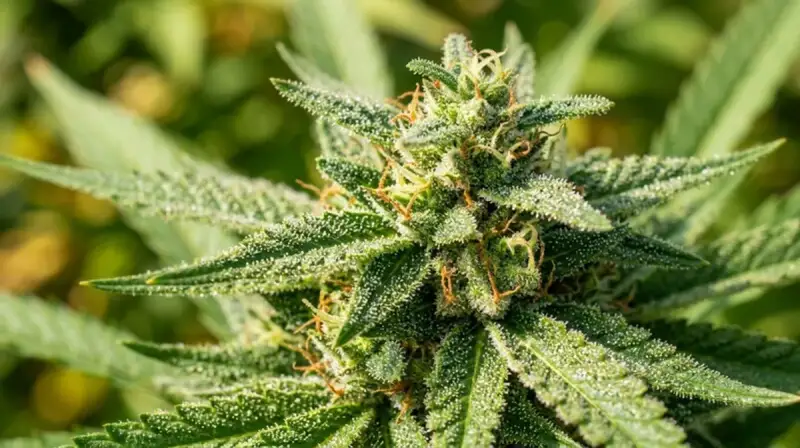
Too High: What to Do When You’ve Had Too Much Cannabis
No one has ever died from cannabis alone. Here is exactly what to do,
what to expect, and how to recover faster.
Fact-checked: No confirmed fatal cannabis-only overdose exists in medical literature.
THC does not suppress respiratory drive. This guide reflects current pharmacological consensus.
Getting too high — sometimes called greening out — is one of the most common adverse
cannabis experiences. It is intensely unpleasant but medically benign for healthy adults.
Understanding what is happening in your body, and knowing what actually works to bring you down,
makes the difference between a panic spiral and a manageable wait.
Key Findings
Cannabis overdose is not lethal — no recorded cannabis-only fatality exists in medical literature
THC overstimulates CB1 receptors, triggering cortisol release and the fight-or-flight response
CBD directly counteracts THC anxiety via negative allosteric modulation at CB1 —
keep CBD oil on hand as an emergency kit
Black pepper contains beta-caryophyllene, a CB2 agonist that may reduce paranoia and anxiety
Edibles cause roughly 90% of too-high incidents due to delayed onset misread as ‘not working’
The 5-4-3-2-1 grounding technique interrupts the anxiety spiral more effectively than distraction alone
What Happens Physiologically When You Are Too High
THC binds to CB1 cannabinoid receptors throughout the brain and nervous system.
At moderate doses this produces euphoria, relaxation, and sensory enhancement.
At high doses — relative to your individual tolerance — CB1 receptor overstimulation
triggers the hypothalamic-pituitary-adrenal axis. Cortisol and adrenaline spike.
Your amygdala, the brain’s threat-detection center, interprets this activation as danger
even though there is no actual threat.
The result is a cascade: racing heart, shallow breathing, sweating, depersonalization
(feeling outside your body), derealization (the world feeling unreal), time distortion,
and intense anxiety or paranoia. None of these are signs of medical emergency in a healthy adult.
They are the predictable pharmacological outcome of CB1 overstimulation resolving itself
as your liver metabolizes the THC.
The endocannabinoid system has no off switch comparable to an opioid antagonist like naloxone.
The only guaranteed cure is time. But several evidence-informed interventions can reduce
the subjective intensity while you wait.
Hydrate, find a comfortable seat, slow breathing, change environment
Moderate
Significant paranoia, racing heart (80–120 bpm), nausea, time distortion
CBD oil sublingually, black pepper technique, grounding exercise, lie down in dark room
Severe
Panic attack, vomiting, depersonalization, shaking, feeling of impending doom 30+ min
CBD 40–50mg, cold water on wrists/face, 5-4-3-2-1 grounding, call a trusted person
Immediate Actions: What Actually Helps
Stop consuming immediately. Do not take more cannabis to “balance
out” — this never works and almost always worsens the experience.
Move to a calm environment. Dim lights, lower noise, cooler temperature.
Sensory overload amplifies THC anxiety. Your bedroom or a quiet outdoor space is ideal.
Lie down, not upright. Horizontal position reduces orthostatic blood
pressure changes that amplify dizziness and nausea.
Hydrate with water or juice. Avoid caffeine (stimulant, worsens racing
heart) and alcohol (raises THC blood plasma levels by up to 35%).
Try the black pepper technique. Sniff or lightly chew 2–3 whole
black peppercorns. See the dedicated section below for the pharmacological mechanism.
Take CBD oil if available. 20–50mg broad-spectrum CBD tincture,
sublingual. Hold under tongue for 60 seconds. Effects begin in 10–20 minutes.
Do not watch the clock. Time distortion under THC makes waiting feel
infinite. Put your phone face-down. Use passive audio — audiobook or familiar podcast
— rather than active screen use.
Use the 5-4-3-2-1 grounding technique. Name 5 things you can see,
4 you can physically feel, 3 you can hear, 2 you can smell, 1 you can taste.
This activates the prefrontal cortex and interrupts the amygdala’s anxiety loop.
Remind yourself of the pharmacology. Repeating “I took too much
cannabis. This is temporary. My body is metabolizing it. I am safe.” re-engages
the rational brain and dampens the panic response.
The Black Pepper Technique: Why It Works
The black pepper trick is one of cannabis culture’s most widely repeated
harm-reduction tips — and it has more scientific basis than most folk remedies.
Black pepper (Piper nigrum) contains three compounds relevant to cannabis pharmacology:
Beta-caryophyllene: A sesquiterpene that is a full agonist at CB2 receptors.
CB2 activation may reduce the anxiogenic component of CB1 overstimulation
via cross-receptor crosstalk.
Alpha-pinene: A monoterpene found in both black pepper and many cannabis strains.
Dr. Ethan Russo’s 2011 paper in the British Journal of Pharmacology proposed
that alpha-pinene counteracts THC-induced short-term memory impairment
via acetylcholinesterase inhibition.
Piperine: May potentiate bioavailability of other terpene compounds
and has mild anxiolytic properties in animal models.
Large-scale clinical trials on black pepper and cannabis specifically do not yet exist.
The evidence is mechanistic and anecdotal. But the pharmacological pathway is plausible
and the risk profile is zero, making it a reasonable first-line intervention.
CBD as an Antidote: The Mechanism
CBD (cannabidiol) does not simply “cancel out” THC. CBD acts as a
negative allosteric modulator at CB1 receptors. This means it does not bind
at the same site as THC, but changes the receptor’s shape in a way that reduces
THC’s binding efficiency. The result is reduced CB1 overstimulation without a complete blockade.
For acute use: broad-spectrum CBD tincture (retains cannabinoids and terpenes for entourage effect)
at 20–50mg taken sublingually is the most effective delivery route.
Effects begin within 10–20 minutes. CBD capsules or edibles take 45–90 minutes
and are less useful for acute intervention.
Emergency kit recommendation: Keep a 1000mg broad-spectrum CBD tincture
in your medicine cabinet. A few drops under the tongue is a legitimate, fast-acting
intervention for THC overconsumption.
Why Edibles Cause 90% of Incidents
The delayed onset of edibles is the single biggest driver of cannabis overconsumption.
The sequence is almost always the same:
User takes an edible (commonly 10mg)
45 minutes pass with minimal effect
User concludes the edible “isn’t working” or was underpotent
User takes a second (or third) dose
At 75–90 minutes the first dose hits full force
At 90–120 minutes the second dose compounds it
User is now at 2–4× intended dose at peak liver conversion to 11-hydroxy-THC
The rule with edibles is absolute: wait a full 2 hours before considering a second dose.
For cannabis-naive users: wait 3 hours. Feeling nothing at 45 minutes is normal pharmacokinetics,
not evidence the edible failed.
Recovery Timeline
Method
Onset of Too-High
Peak Distress
Functional Recovery
Full Resolution
Smoked / Vaped
10–30 min
30–60 min
1.5–2 hours
2–3 hours
Edibles (standard)
45–120 min
2–4 hours
4–6 hours
6–8 hours
Edibles (high dose)
60–150 min
3–5 hours
6–9 hours
8–12 hours
Concentrates / Dabs
5–15 min
20–45 min
1–2 hours
2–4 hours
When to Seek Medical Help
The following symptoms indicate a situation beyond normal overconsumption and
require emergency medical attention:
Loss of consciousness that cannot be reversed by voice or touch
Severe chest pain — actual pressure or pain (not just fast heartbeat),
particularly with radiation to the left arm
Difficulty breathing that does not resolve with slow deliberate breathing
Seizure activity — very rare with cannabis alone but possible
in individuals with pre-existing seizure disorders
Suspected adulteration: Unlicensed-source products risk fentanyl contamination.
Extreme drowsiness, slow breathing, or blue lips = immediate 911
Be honest with medical staff about what was consumed. Emergency rooms in legal states
see cannabis overconsumption regularly and treat it without judgment.
Anxiety Spiral Management: 5-4-3-2-1 Grounding
The anxiety loop during a too-high episode is self-reinforcing: physical symptoms (racing heart)
cause cognitive alarm, which causes more adrenaline, which worsens symptoms.
The 5-4-3-2-1 technique interrupts this loop by forcing the prefrontal cortex back online.
5 things you can see: Name them specifically. Not “the wall”
but “the white paint on the left side of the window frame.”
4 things you can physically feel: Fabric texture, air temperature,
the weight of your body on the surface beneath you.
3 things you can hear: Background sounds you were tuning out —
the hum of the refrigerator, traffic outside, your own breathing.
2 things you can smell: Even faint smells. Force yourself to seek them out.
1 thing you can taste: Take a sip of water and describe the taste precisely.
Repeat the cycle as needed. Naming sensory details activates the prefrontal cortex
and reduces amygdala firing rate. This is the same technique used in clinical PTSD treatment.
The Next-Day Feeling
After significant overconsumption, particularly with edibles, many people experience
a mild “weed hangover” the following morning. Contributing factors:
Dehydration: THC inhibits antidiuretic hormone, increasing urinary output.
Drink 500ml of water before sleeping and again first thing in the morning.
Sleep architecture disruption: High-dose THC suppresses REM sleep.
You may feel rested in hours but mentally less sharp.
Residual 11-hydroxy-THC: With very high edible doses, trace levels
may persist in the bloodstream into the morning. This clears with time.
Blood sugar: Heavy munchie eating causes blood sugar fluctuation.
A light protein-containing breakfast helps morning recovery.
Prevention: Start Low, Go Slow
Tolerance Level
Smoked Starting Dose
Edible Starting Dose
Edible Wait Before Redosing
Cannabis-naive (first time)
1–2 puffs, wait 15 min
2.5–5mg
3 hours minimum
Occasional user (<once/week)
2–3 puffs, wait 10 min
5–10mg
2.5 hours
Regular user (weekly)
3–5 puffs, assess
10–15mg
2 hours
Daily user
Standard session
15–25mg
2 hours
Frequently Asked Questions
Can you die from too much cannabis?
No confirmed death from cannabis-only overdose has ever been recorded in medical literature.
THC does not suppress the brainstem respiratory centers the way opioids do.
The estimated LD50 in humans is many thousands of times a typical recreational dose.
The primary risk with extreme overconsumption is psychological distress,
not physical harm to a healthy adult.
How long does being too high last?
For smoked or vaped cannabis, most effects peak within 30–60 minutes
and resolve within 2–3 hours. For edibles, the peak can occur 2–4 hours
after ingestion, with effects lasting 6–8 hours and occasionally into the following
morning at very high doses. Duration depends heavily on dose, tolerance, and metabolism.
Does CBD help when you’re too high?
For many people, yes. CBD acts as a negative allosteric modulator at CB1 receptors,
reducing THC’s binding efficiency. A sublingual dose of 20–50mg broad-spectrum
CBD tincture, held under the tongue for 60 seconds, can produce noticeable anxiety reduction
within 10–20 minutes. It is pharmacologically sound and low-risk, though not
a guaranteed reversal for everyone.
What is the black pepper trick for cannabis?
Sniffing or lightly chewing 2–3 black peppercorns when feeling too high.
The mechanism involves beta-caryophyllene (a CB2 agonist in pepper) and alpha-pinene,
which may counteract THC-induced cognitive disruption via acetylcholinesterase inhibition.
The scientific evidence is mechanistic rather than from large clinical trials,
but risk is zero and many users report meaningful relief.
Senior Cannabis Editor with 9+ years covering US cannabis policy,
harm reduction, and consumer education.
Specializes in pharmacology-based explainers for general audiences.