










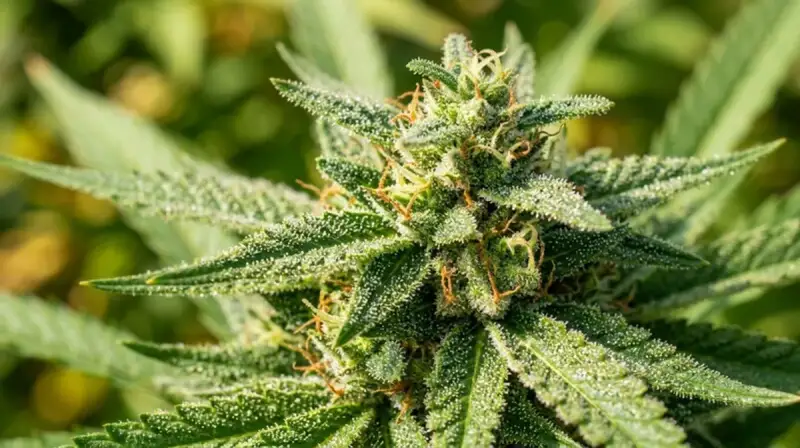
- Cannabis produces 100+ cannabinoids; only a handful are present in significant concentrations
- THC binds CB1 receptors in the brain and central nervous system, producing psychoactivity
- CBD is non-psychoactive: it modulates CB2 receptors and elevates natural endocannabinoid tone via FAAH inhibition
- CBG is the biosynthetic precursor to THC, CBD, and CBC — sometimes called the “mother cannabinoid”
- THCA and CBDA are the raw, unheated forms of THC and CBD; decarboxylation converts them via heat
- The entourage effect means full-spectrum preparations outperform isolates for most therapeutic applications
- COA total THC = THC + (THCA × 0.877) — always verify before purchasing
What Are Cannabinoids?
Cannabinoids are a class of chemical compounds that bind to cannabinoid receptors distributed throughout the human body and brain. The endocannabinoid system (ECS) is a cell-signaling network that regulates mood, pain perception, appetite, memory, inflammation, and immune response. The ECS operates via two primary receptor types: CB1 and CB2.
There are three sources of cannabinoids: phytocannabinoids (produced by cannabis and a few other plants), endocannabinoids (synthesized on demand by your own body), and synthetic cannabinoids (laboratory-produced compounds). When people discuss “cannabinoids” in the context of cannabis, they are referring to phytocannabinoids — plant-derived molecules that mimic or interact with the same receptors your body’s natural endocannabinoids use.
The Endocannabinoid System: CB1 and CB2 Receptors
The ECS consists of receptors, endogenous ligands (endocannabinoids), and the enzymes that synthesize and degrade them. The two primary receptors are:
CB1 receptors are concentrated in the brain and central nervous system — particularly the hippocampus (memory), cerebellum (motor coordination), basal ganglia (movement), and prefrontal cortex (executive function). THC binds directly to CB1 as a partial agonist, which is the mechanism behind psychoactivity, euphoria, and altered time perception. CB1 receptors are also found in the spinal cord (pain modulation) and peripheral tissues.
CB2 receptors are found primarily in the immune system, spleen, and peripheral tissues. They play a central role in regulating inflammation and immune response. CBD modulates CB2 activity (it is not a direct agonist but an indirect modulator) which partially explains its anti-inflammatory properties. CB2 receptors are also present in the gut, liver, and peripheral nervous system.
Your body produces two primary endocannabinoids: anandamide (AEA), sometimes called the “bliss molecule,” and 2-arachidonoylglycerol (2-AG). Both are synthesized from arachidonic acid on demand — unlike classical neurotransmitters, endocannabinoids are not stored in vesicles but produced at the moment of need and immediately degraded by enzymes (FAAH degrades AEA; MAGL degrades 2-AG). Phytocannabinoids like THC and CBD interfere with this system by mimicking or blocking these natural signals.
Major Cannabinoids: Complete Reference Table
| Cannabinoid | Abbrev. | Psychoactive? | Primary Mechanism | Key Effects | Evidence Level |
|---|---|---|---|---|---|
| Tetrahydrocannabinol | THC | Yes | CB1 partial agonist | Euphoria, pain relief, appetite, nausea control | High (FDA-approved forms) |
| Cannabidiol | CBD | No | CB2 modulator, 5-HT1A, FAAH inhibition | Anxiety, inflammation, seizures, sleep | High (Epidiolex approved) |
| Cannabigerol | CBG | No | CB1/CB2 agonist, GABA reuptake inhibition | Antibacterial, anti-inflammatory, appetite | Moderate (preclinical) |
| Cannabinol | CBN | Mild | Weak CB1 agonist (THC degradation product) | Sedation, sleep, antibacterial | Emerging |
| Tetrahydrocannabinolic acid | THCA | No (raw) | Converts to THC via heat (decarboxylation) | Anti-inflammatory, anti-nausea (unheated) | Emerging |
| Cannabidiolic acid | CBDA | No (raw) | Converts to CBD via heat; COX-2 inhibition | Anti-nausea, anti-inflammatory (raw juice) | Emerging |
| Cannabichromene | CBC | No | TRP channel activation, synergy with THC/CBD | Anti-inflammatory, antidepressant (entourage) | Emerging |
| Tetrahydrocannabivarin | THCV | At high doses | CB1 antagonist (low dose) / agonist (high dose) | Appetite suppression, glycemic control | Early clinical |
| Cannabidivarin | CBDV | No | TRPV1/TRPA1 channels, similar to CBD | Anti-seizure potential, autism spectrum research | Early clinical |
THC: The Primary Psychoactive Cannabinoid
Delta-9-tetrahydrocannabinol (THC) is a direct partial agonist of CB1 receptors — it binds to the same receptor sites as your body’s natural endocannabinoid anandamide, but with higher affinity and longer duration. This is why cannabis produces effects your body’s own ECS cannot sustain naturally.
THC’s key pharmacological actions include: inhibition of adenylyl cyclase (reducing cyclic AMP), modulation of potassium and calcium channels, and suppression of glutamate and GABA release. Together these mechanisms produce the characteristic effects of pain relief, appetite stimulation (via hypothalamic feeding circuits), anti-nausea signaling (via the dorsal vagal complex), and psychoactive euphoria.
Detection windows vary significantly by frequency of use: a single use may clear urine drug screens within 3 days; daily use over months can produce detectable metabolites (THC-COOH) for 30+ days because THC is lipophilic and accumulates in fat tissue. Blood THC itself clears within hours, but urinary metabolites persist far longer.
CBD: Non-Psychoactive with Multi-Target Action
Cannabidiol is one of the most pharmacologically complex cannabinoids due to its multi-target mechanism. Unlike THC, CBD is not a direct CB1 or CB2 agonist. Instead it works through several pathways simultaneously:
- 5-HT1A serotonin receptor activation — directly relevant to its anxiolytic and antidepressant effects; CBD acts as a partial agonist at this receptor at higher doses
- FAAH inhibition — CBD inhibits fatty acid amide hydrolase, the enzyme that degrades anandamide, thereby elevating natural endocannabinoid tone without directly binding CB1
- CB2 allosteric modulation — CBD modulates CB2 receptor signaling, contributing to anti-inflammatory effects in peripheral tissues and the immune system
- GPR55 antagonism — GPR55 is sometimes called the “third cannabinoid receptor”; CBD blocks it, which may contribute to anti-cancer and anti-seizure effects
- TRPV1 channel activation — transient receptor potential vanilloid channels are involved in pain and inflammation signaling; CBD desensitizes these channels
The FDA approved Epidiolex (pharmaceutical CBD) in 2018 for Dravet syndrome and Lennox-Gastaut syndrome epilepsy — the first cannabis-derived medicine with full approval. Clinical doses used in epilepsy trials (600–1200mg/day) far exceed what OTC CBD products contain (typically 10–50mg/serving).
CBG: The Mother Cannabinoid
Cannabigerol (CBG) holds a unique position in cannabis biochemistry: it is the precursor from which THC, CBD, and CBC are all biosynthesized. The plant first produces cannabigerolic acid (CBGA), which is then converted by different enzymes into THCA, CBDA, or CBCA. Because most CBGA is converted early in the plant’s life cycle, mature cannabis typically contains only 1% CBG or less — though specialized high-CBG strains bred for elevated CBG content have become commercially available.
Pharmacologically, CBG acts as both a CB1 and CB2 agonist (at higher doses) and inhibits GABA reuptake, which may explain its muscle-relaxing and anxiolytic properties. Preclinical research has shown strong antibacterial activity (including against MRSA), anti-inflammatory effects via CB2, and appetite-stimulating properties in rodent models. Human clinical data remains limited but growing.
CBN: Degradation Product with Sleep Applications
Cannabinol (CBN) is not directly produced by the cannabis plant — it forms as THC degrades over time through oxidation and exposure to light and air. This is why aged or poorly stored cannabis develops higher CBN concentrations and a more sedating, “couch-lock” character. CBN is a weak partial CB1 agonist (roughly 10% the potency of THC) and produces mild psychoactivity only at high concentrations.
CBN is heavily marketed in sleep products based on its reputation for sedation. However, a 2021 Steep Hill study and several subsequent reviews found limited evidence that CBN itself is a significant sedative when isolated from other cannabinoids and terpenes. The sedating effects of aged cannabis are more likely attributable to the combined degradation of terpenes (particularly the loss of stimulating terpenes like limonene) and accumulated CBN together, rather than CBN alone.
THCA and CBDA: Raw Cannabinoids Before Decarboxylation
Fresh, living cannabis does not contain significant amounts of THC or CBD. The plant primarily produces their acidic precursors: THCA (tetrahydrocannabinolic acid) and CBDA (cannabidiolic acid). These acidic forms have a carboxyl group (COOH) attached that prevents them from fitting into CB1 receptors — which is why raw cannabis does not produce a psychoactive effect.
Decarboxylation is the process of removing the carboxyl group via heat. At approximately 105–115°C (220–240°F), THCA converts to THC and CBDA converts to CBD. Smoking and vaporizing accomplish this instantly; oven decarboxylation for edibles requires 30–40 minutes at 110°C. Without decarboxylation, cannabis butter or oil infusions will not produce psychoactive effects regardless of how much flower is used.
THCA and CBDA are not without value in their raw form — both show anti-inflammatory and anti-nausea properties in preclinical research. Some medical patients consume raw cannabis juice or CBDA-rich supplements specifically to avoid psychoactivity while accessing these benefits.
CBC, THCV, and CBDV: The Minor Cannabinoids
Cannabichromene (CBC) is typically the third or fourth most abundant cannabinoid in cannabis, though it remains far less studied than THC or CBD. CBC is non-psychoactive and activates TRP channels (TRPV1 and TRPA1) involved in pain signaling. It does not bind CB1 or CB2 directly but appears to enhance the effects of THC and CBD through synergistic interactions. Preclinical research suggests potential antidepressant effects and anti-proliferative activity in certain cancer cell lines.
Tetrahydrocannabivarin (THCV) has a unique biphasic pharmacology: at low doses it acts as a CB1 antagonist (blocking THC’s appetite-stimulating effects), but at higher doses it flips to a CB1 agonist producing mild psychoactivity. This CB1 antagonism makes THCV particularly interesting for metabolic research — early clinical trials have explored THCV for type 2 diabetes and glycemic control, with some promising results for fasting glucose and insulin sensitivity.
Cannabidivarin (CBDV) is structurally analogous to CBD but with a shorter side chain. Like CBD, it is non-psychoactive and acts primarily on TRP channels. GW Pharmaceuticals conducted clinical trials of CBDV (EPX-001) for Angelman syndrome and Rett syndrome, two rare neurological disorders. While the primary trial endpoints were not met, CBDV remains an active area of pediatric neurology research.
The Entourage Effect: Why Whole-Plant Matters
The entourage effect describes the hypothesis — and growing body of evidence — that the combination of cannabinoids, terpenes, flavonoids, and other cannabis plant compounds produces therapeutic outcomes superior to any single isolated molecule. The concept was formally articulated by Mechoulam and Ben-Shabat in 1998 and expanded by Russo in his landmark 2011 review in the British Journal of Pharmacology.
Practical implications: CBD moderates THC-induced anxiety and paranoia by modulating CB1 signaling, which is why high-CBD strains or CBD co-administration reduces the unpleasant side effects of THC for many users. Terpenes like myrcene enhance sedation and pain relief; limonene contributes to mood elevation; linalool has anxiolytic properties. Full-spectrum extracts (containing all plant compounds) outperform broad-spectrum (terpenes + cannabinoids, no THC) which outperform isolates for most therapeutic purposes. Isolates remain the right choice when THC avoidance is critical (workplace drug testing, pediatric epilepsy dosing).
How to Read a Cannabinoid Lab Report (COA)
A Certificate of Analysis (COA) from an accredited lab is the only reliable way to know what is actually in a cannabis product. Key figures to look for:
| COA Field | What It Means | Formula / Notes |
|---|---|---|
| THCA % | Unactivated THC in raw flower | Multiply by 0.877 for decarboxylated THC equivalent |
| THC % | Already-activated THC (minor in fresh flower) | Add to (THCA × 0.877) for total active THC |
| Total THC | What you’ll get after smoking/vaping/decarbing | THC + (THCA × 0.877) |
| Total CBD | Active CBD after decarboxylation | CBD + (CBDA × 0.877) |
| Minor cannabinoids | CBG, CBN, CBC, THCV percentages | Present at <1% in most cultivars; higher in specialized strains |
| Terpenes panel | Top terpenes by % (myrcene, caryophyllene, etc.) | Total terpene content >2% indicates aromatic, potent flower |
| Residual solvents | Pass/fail for concentrates and extracts | Butane, propane, ethanol must be below state action limits |
| Pesticides / heavy metals | Pass/fail for contamination | Essential check for medical patients and edibles |
Example calculation: A flower sample showing 25% THCA and 0.5% THC converts to: (25 × 0.877) + 0.5 = 21.9 + 0.5 = 22.4% total active THC. Marketing labels that display “25% THC” when the majority is actually THCA are technically inaccurate (though common) — always verify using this formula on the underlying COA data.