






- The yield equation: Yield = Genetics × Light × CO2 × Nutrients × Environment × Training × Harvest Timing. Every factor multiplies the others — optimising only one while neglecting others produces diminishing returns.
- Light is the single highest-leverage factor: Doubling PPFD from 400 to 800 µmol/m²/s at canopy approximately doubles yield (with adequate nutrients and environment). No other intervention has this magnitude of direct effect.
- CO2 only works above the light saturation threshold: CO2 enrichment to 1,200-1,500 ppm increases yield 20-40%, but only when PPFD exceeds 800-1,000 µmol/m²/s. Below this, plants are light-limited, not CO2-limited.
- Training is the highest free yield multiplier: SCROG or LST costs nothing but time and produces 30-60% more yield from the same light footprint, plant count, and grow space.
- DWC beats soil in yield per harvest; soil beats DWC in flavour: Hydroponic methods consistently produce higher g/m² in a single harvest. Organic soil grows tend to produce superior terpene profiles. Choose based on your primary goal.
- VPD is the environmental master variable: Incorrect VPD (wrong combination of temperature and humidity) throttles transpiration, which throttles nutrient uptake via the transpiration stream. A plant cannot maximise yield in wrong VPD regardless of light or nutrients.
- The final 2 weeks of flower contribute 15-25% of total yield: Bud weight increases significantly in the final 1-2 weeks as calyxes swell and resin production peaks. Harvesting even one week early leaves significant yield on the plant.
The Yield Equation: Understanding What Controls Your Harvest
Cannabis yield is not determined by any single factor. It is the product of every variable in the grow environment, operating simultaneously and multiplying each other’s effects. Understanding this multiplicative relationship is the key insight that separates high-yield growers from average ones. The yield equation looks like this:
Yield = Genetics × Light × CO2 × Nutrients × Environment (VPD/Temp) × Training × Harvest Timing
Consider the practical implication: a grower who achieves excellent light (800 µmol/m²/s) but neglects training will get reasonable yield, but a competitor with the same light who also implements SCROG, correct VPD, and harvests at peak trichome maturity will produce 50-80% more weight from the same space. Conversely, a grower with perfect training cannot compensate for insufficient light — the ceiling is always set by the most limiting factor.
This guide examines each variable in the yield equation in order of its leverage on the final harvest, providing specific targets and implementation strategies. For medium-specific nutrient approaches, see our super soil guide, cal-mag guide, and cultivation basics.
Factor 1: Light — The Primary Yield Driver
Light is the energy source for photosynthesis — the process that converts CO2 and water into the carbohydrates and secondary metabolites (cannabinoids, terpenes) that constitute cannabis yield. In the absence of light limitation, every other yield factor becomes meaningless. Conversely, maximising light while neglecting other factors produces rapidly diminishing returns.
The key metric for cannabis light management is PPFD (Photosynthetic Photon Flux Density), measured in µmol/m²/s. This measures the number of photosynthetically active photons striking a square metre of canopy per second. Wattage is irrelevant as a yield predictor — what matters is how many PAR photons reach the canopy, not how many watts the fixture consumes.
| PPFD at Canopy | CO2 Level | Expected Relative Yield | Suitable Light | Notes |
|---|---|---|---|---|
| 200–400 µmol/m²/s | Ambient (420 ppm) | 20–40% of maximum | T5 fluorescent, low-power CFL | Seedlings and clones only. Severely light-limited for full flowering. |
| 400–600 µmol/m²/s | Ambient | 40–60% of maximum | Older LED panels, 250-400W HPS | Viable for small grows but significantly below yield potential |
| 600–800 µmol/m²/s | Ambient | 60–80% of maximum | 600W HPS, mid-range LED | Good for most home growers. CO2 at this level provides minimal benefit. |
| 800–1,000 µmol/m²/s | Ambient or mild enrichment | 80–95% of maximum | 1,000W HPS, quality LED 600W+ | CO2 enrichment begins to provide real benefit at 900+ µmol. |
| 1,000–1,500 µmol/m²/s | 1,200–1,500 ppm CO2 | 95–100% of maximum | 1,000W+ LED, double-ended HPS | Maximum yield territory. Requires full environmental control to manage heat. |
Factor 2: CO2 Supplementation
At ambient CO2 levels (approximately 420 ppm), cannabis photosynthesis is partially CO2-limited above 600-800 µmol/m²/s PPFD. Enriching the grow environment to 1,200-1,500 ppm CO2 — approximately 3x ambient — allows the plant to photosynthesise faster at higher light intensities, directly increasing the rate of carbohydrate production and biomass accumulation. The yield increase from CO2 enrichment in a properly light-saturated grow is typically 20-40%.
Critical requirement: CO2 enrichment only works when light is at or above the saturation point for ambient CO2 (approximately 800-1,000 µmol). In low-light grows, the additional CO2 cannot be used — the plant is light-limited, not CO2-limited. CO2 enrichment at low light is a waste of equipment, gas, and money.
| CO2 Level | Minimum Light Required | Yield Increase vs. Ambient | Optimal Temp | Equipment |
|---|---|---|---|---|
| 420 ppm (ambient) | Any | Baseline | 22–26°C | None needed |
| 800 ppm | 600+ µmol/m²/s | 5–15% | 24–28°C | CO2 bag or small generator |
| 1,200 ppm | 900+ µmol/m²/s | 20–30% | 26–29°C | CO2 tank with regulator/controller, or propane burner |
| 1,500 ppm | 1,200+ µmol/m²/s | 30–40% | 26–30°C | Dedicated CO2 system; CO2 controller essential |
| >1,500 ppm | Maximum available | Diminishing returns; no benefit above 1,800 | >30°C (heat stress risk) | Not recommended without experienced setup |
Factor 3: Training Methods — Yield by Technique
| Method | Yield Increase vs. Untrained | Veg Time Added | Difficulty | Best Suited To |
|---|---|---|---|---|
| LST (Low Stress Training) | 30–50% | 1–2 weeks | Beginner | Any medium, any plant count |
| Topping (single) | 20–30% | 1 week recovery | Beginner | Plants with adequate height headroom |
| Fimming | 20–40% (4+ tops) | 1 week recovery | Beginner-Intermediate | Maximising tops without excessive veg extension |
| SCROG | 40–65% | 2–4 weeks | Intermediate | 1-4 plants per m²; space-limited setups |
| Manifolding / mainlining | 50–70% | 4–6 weeks | Advanced | High-quality single-plant grows where veg time is not limiting |
| SOG (Sea of Green) | Maximises annual m² yield via frequency | Reduces (early flip) | Intermediate | Clone-based grows; commercial or frequent-harvest setups |
Yield by Grow Method: Indoor Average Benchmarks
| Growing Method | Average Yield (g/m² per harvest) | Ceiling (expert, high-light) | Difficulty | Best For |
|---|---|---|---|---|
| Organic soil (super soil) | 250–400 g/m² | 500–600 g/m² | Intermediate | Quality-first, terpene maximisation |
| Synthetic soil + liquid nutrients | 300–500 g/m² | 600–700 g/m² | Beginner-Intermediate | Versatile; widely applicable |
| Coco coir + daily fertigation | 400–600 g/m² | 700–800 g/m² | Intermediate-Advanced | High-yield home and semi-commercial grows |
| DWC (Deep Water Culture) | 500–700 g/m² | 800–1,000 g/m² | Advanced | Maximum yield; experienced growers only |
| NFT (Nutrient Film Technique) | 400–600 g/m² | 700–900 g/m² | Advanced | Commercial-style setups; high air exchange required |
| Autoflower (any medium) | 150–350 g/m² | 400–500 g/m² | Beginner | Beginner growers; stealth; fast cycle |
Harvest Timing: The Overlooked Yield Factor
Harvest timing is often treated as a quality-only consideration (terpene expression, effect profile), but it is also a yield factor. Cannabis bud weight continues to increase significantly in the final 1-2 weeks of the flowering period as the calyxes swell and resin glands expand to their maximum volume. Research on commercial cannabis yields consistently shows that harvesting one week early reduces final dry weight by 10-25% depending on strain and growing conditions.
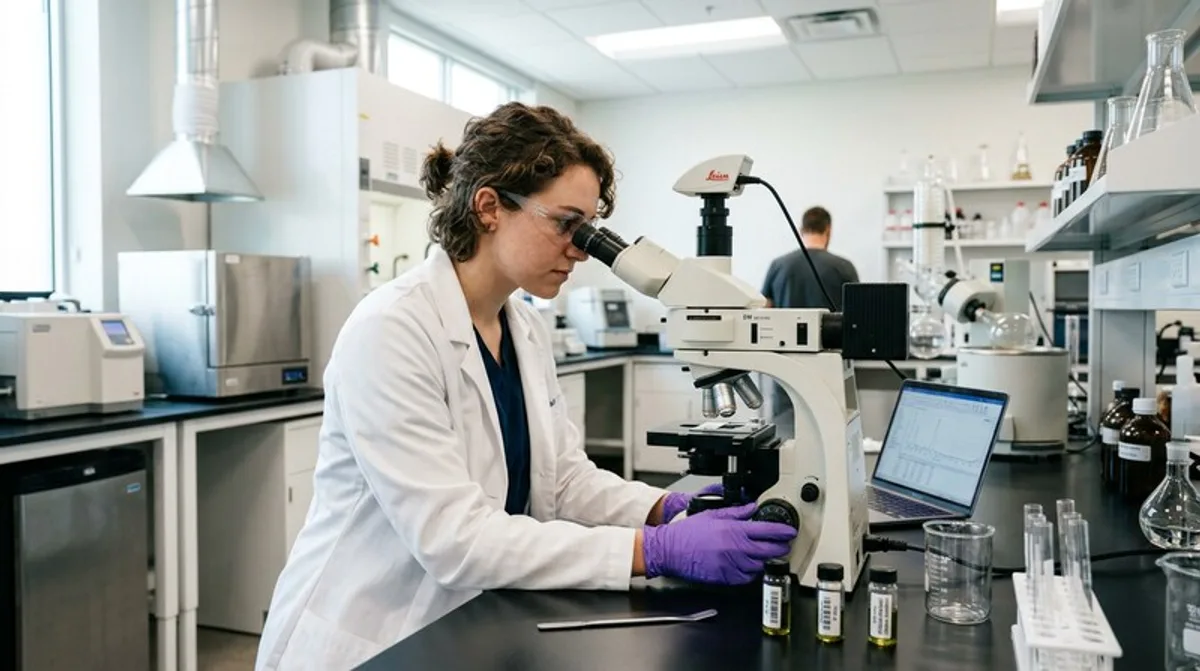
The only reliable harvest timing indicator is trichome assessment under 60x magnification or higher. Clear trichomes indicate immature THC production. Cloudy/milky trichomes indicate peak THC. Amber trichomes indicate THC converting to CBN (typically producing more sedative effects). For maximum yield combined with peak potency, target 70-90% cloudy trichomes with 5-15% amber. Never harvest based on the breeder’s advertised flower time alone — these are averages, not guarantees, and your specific phenotype, environment, and growing conditions will determine actual maturity date.
Air Exchange and VPD: The Environmental Foundation
All the light, CO2, and nutrients in the world cannot be converted to yield if environmental conditions prevent the plant from transpiring effectively. Transpiration is the process by which water (and nutrients) is pulled from the roots up through the plant and evaporated from the leaf surface through stomata. When VPD is incorrect — too high (hot and dry, stomata close to prevent moisture loss) or too low (cool and humid, no transpiration gradient) — nutrient uptake via the transpiration stream slows or stops.
Target VPD ranges: Seedling: 0.4-0.8 kPa. Vegetative: 0.8-1.2 kPa. Early flower: 1.0-1.4 kPa. Late flower: 1.2-1.8 kPa. Air exchange rate should be sufficient to replace the grow room volume of air every 1-3 minutes — this maintains CO2 supply at ambient levels (if not supplementing), removes heat from lights, and prevents humidity buildup that drives botrytis in late flower.
Highest-Yielding Strains
- Critical+ — 600-750g/m² reports; bred specifically for maximum indoor yield
- Big Bud — classic commercial high-yield genetics; large, dense calyxes
- Northern Lights — consistent 500-600g/m² with minimal training; reliable performer
- Blue Dream — high-yielding sativa hybrid with excellent SCROG performance